William Roseberry – författare
Visar alla böcker från författaren William Roseberry. Handla med fri frakt och snabb leverans.
4 produkter
4 produkter
811 kr
Skickas inom 3-6 vardagar
Golden Ages, Dark Ages: Imagining the Past in Anthropology and History explores how anthropologists and historians construct narratives of the past, often framing cultural differences in terms of temporal distance. This book critiques the tendency to view non-Western or "traditional" cultures as remnants of the past, arguing that such perspectives obscure the modern processes that create and redefine cultural diversity. By drawing on influential works such as Benedict Anderson's Imagined Communities and Hobsbawm and Ranger's The Invention of Tradition, the authors highlight how modern traditions are often projected as ancient and authentic, serving both academic and ideological purposes.The book examines how oppositional models, like traditional versus modern or primitive versus civilized, dominate the discourse of anthropology and history. These dichotomies, the authors argue, often simplify complex realities, imposing Western categories on non-Western contexts and perpetuating a pseudohistorical understanding of cultural and social change. By critiquing such frameworks, the essays in this volume reveal how "traditional" forms are often constructed through modern social, political, and economic processes, challenging readers to reconsider assumptions about the past and its relationship to the present. The collection ultimately calls for a more nuanced understanding of cultural and historical difference, one that situates traditions within the specific contexts of their creation and transformation.This title is part of UC Press's Voices Revived program, which commemorates University of California Press’s mission to seek out and cultivate the brightest minds and give them voice, reach, and impact. Drawing on a backlist dating to 1893, Voices Revived makes high-quality, peer-reviewed scholarship accessible once again using print-on-demand technology. This title was originally published in 1991.
1 469 kr
Skickas inom 3-6 vardagar
Golden Ages, Dark Ages: Imagining the Past in Anthropology and History explores how anthropologists and historians construct narratives of the past, often framing cultural differences in terms of temporal distance. This book critiques the tendency to view non-Western or "traditional" cultures as remnants of the past, arguing that such perspectives obscure the modern processes that create and redefine cultural diversity. By drawing on influential works such as Benedict Anderson's Imagined Communities and Hobsbawm and Ranger's The Invention of Tradition, the authors highlight how modern traditions are often projected as ancient and authentic, serving both academic and ideological purposes.The book examines how oppositional models, like traditional versus modern or primitive versus civilized, dominate the discourse of anthropology and history. These dichotomies, the authors argue, often simplify complex realities, imposing Western categories on non-Western contexts and perpetuating a pseudohistorical understanding of cultural and social change. By critiquing such frameworks, the essays in this volume reveal how "traditional" forms are often constructed through modern social, political, and economic processes, challenging readers to reconsider assumptions about the past and its relationship to the present. The collection ultimately calls for a more nuanced understanding of cultural and historical difference, one that situates traditions within the specific contexts of their creation and transformation.This title is part of UC Press's Voices Revived program, which commemorates University of California Press’s mission to seek out and cultivate the brightest minds and give them voice, reach, and impact. Drawing on a backlist dating to 1893, Voices Revived makes high-quality, peer-reviewed scholarship accessible once again using print-on-demand technology. This title was originally published in 1991.
387 kr
Skickas inom 7-10 vardagar
A distinguished international group of historians, anthropologists, and sociologists examines the production, processing, and marketing of coffee. Using this important commodity as a common denominator and focusing on landholding patterns, labor mobilization, class structure, and political ideologies, the authors examine how Latin American countries of the late 19th and early 20th centuries responded to the growing global demand for coffee.
397 kr
Skickas inom 5-8 vardagar
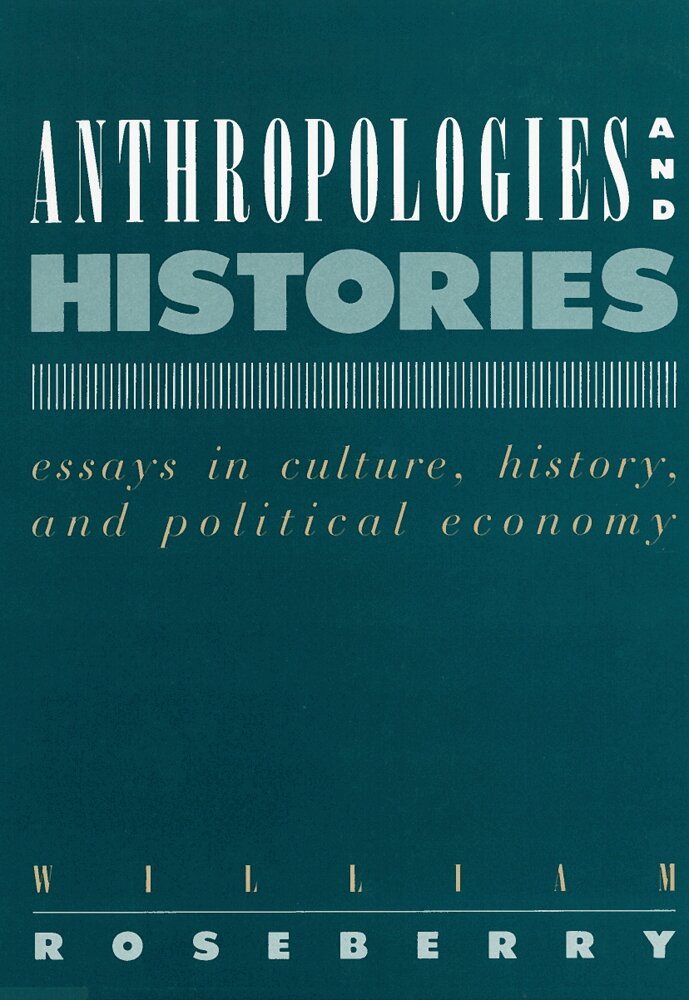
"Elegantly written essays. . . . Roseberry is the real gem, an anthropologist with extensive Latin American field experience and an impressive scholarly grasp of the histories of anthropology and Marxist theory."--Micaela di Leonardo, The Nation"An extremely stimulating volume . . . rich and provocative, and codifies a new depature point."--Choice"As a critic . . . Roseberry writes with sustained force and clarity. . . . his principal points emerge with a directness that will make this book attractive to a wide range of readers."--American Anthropologist"Roseberry in among the most astute, careful, and theoretically cogent of the anthropologists of his generation. . . . [This book] illustrates well the breadth and coherence of his thinking and guides the reader through the complicated intersections of anthropology with history, political economy, Marxism, and Latin American studies."--Jane Schneider, CUNY In Anthropologies and Histories,William Roseberry explores some of the cultural and political implications of an anthropological political economy. In his view, too few of these implications have been explored by authors who dismiss the very possibility of a political economic understanding of culture. Within political economy, readers are offered sophisticated treatments of uneven development, but when authors turn to culture and politics, they place contradictory social experiences within simplistic class or epochal labels. Within cultural anthropology, history is often little more than new terrain for extending anthropological practice. Roseberry places culture and history in relation to each other, in the context of a reflection on the political economy of uneven development. In the first half of this books, he looks at and critiques a variety of anthropological understandings of culture, arguing for an approach that sees culture as socially constituted and socially constitutive. Beginning with a commentary on Clifford Geertz's seminal essay on the Balinese cockfight, Roseberry argues that Geertz and his followers pay insufficient attention to cultural differentiation, to social and political inequalities that affect actors' different understandings of the world, other people, and of themselves. Sufficient attention to such questions, Roseberry argues, requires a concern for political economy. In the second half of the book, Roseberry explores the assumptions and practices of political economy, indicates the kind of problems that should be central to such an approach, and reviews some of the inadequacies of anthropological studies. William Roseberry is a professor of anthropology at the New School for Social Research.