Stefan Draminski – illustratör
Upptäck titlar med illustrationer av Stefan Draminski.
4 produkter
4 produkter
Del 346 - New Vanguard
Nagato-class Battleships 1920–46
The Imperial Japanese Navy's super-dreadnoughts
Häftad, Engelska, 2026
151 kr
Skickas inom 7-10 vardagar
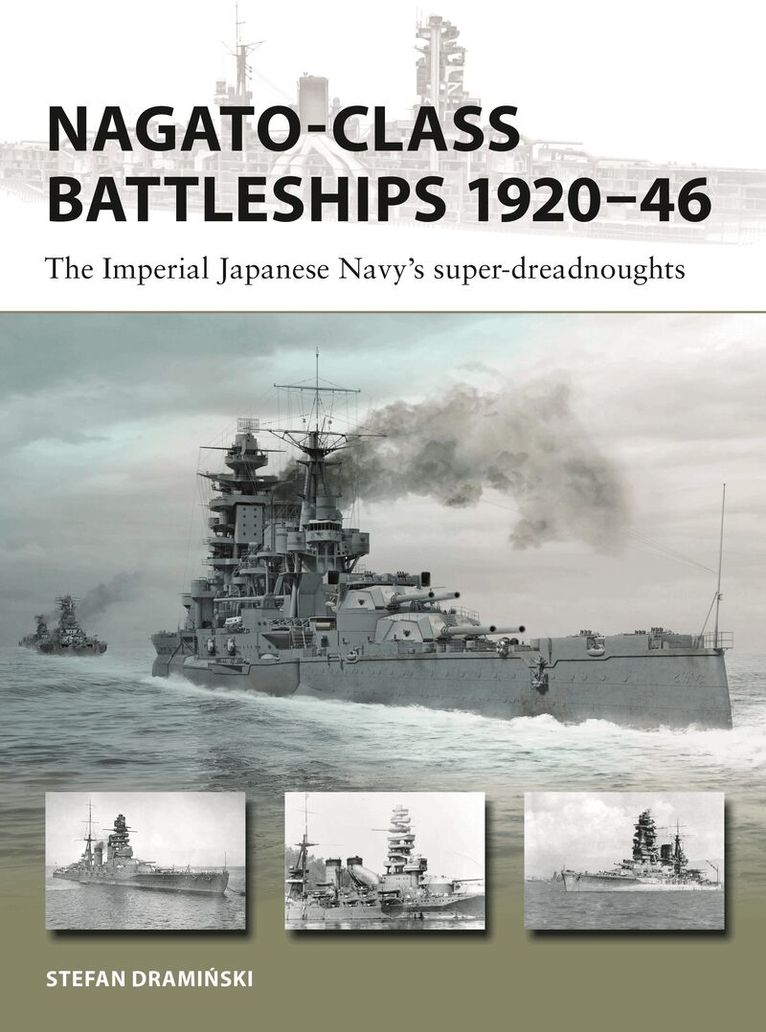
An illustrated study of Japan’s Nagato-class battleships: the IJN’s powerful super-dreadnoughts, which were heavily modernized to fight in World War II. Illustrated with the author’s much-acclaimed 3D reconstructions, naval researcher Stefan Draminski offers a technical and operational study of Nagato and Mutsu, Japan’s most powerful battleships of the dreadnought era. They were the world’s first battleships to mount 16-inch guns, and signalled Japan’s determination to build a fleet that qualitatively outmatched the world’s leading navies. Entering service in the 1920s, they would be heavily modernized before the outbreak of the Pacific War, which Nagato would start as Yamamoto’s flagship for the Pearl Harbor attack. Both ships were present at the Battle of Midway, and though Mutsu would be sunk by a magazine explosion in 1943, Nagato fought at Philippine Sea and Leyte Gulf, before being modified again and moored at Yokosuka as an antiaircraft battery. The last Japanese battleship afloat on VJ-Day, Nagato was sunk in 1946 at Bikini Atoll in the Crossroads nuclear test. Drawing on Japanese-language sources and original documentation, this is a concisely detailed account of these formidable battleships, superbly illustrated with archive photos and artwork showing the ships through their careers and in action.

651 kr
Kommande
HJMS Fuso, and her sistership the Yamashiro was commissioned during World War I and were thefirst Japanese super-dreadnoughts within the "8 x 8" program. With 30,600 tons trial displacement and twelve 356mm guns in her main armament, the Fuso was the biggest and most powerful battleship in the world.In nearly 30 years of service both ships underwent numerous modifications and modernisations, being converted to launch aircraft and having the distinctive pagoda towers added, making them visible in many operations of the Imperial Japanese Grand Fleet during the Pacific War. Both ships would eventually met their demise during the battle of Leyte Gulf when they went down in the Surigao Strait, targeted by torpedoes and gunfire from US battleships and cruisers.This stunning new addition to the Anatomy of the Ship series uses detailed full-colour artwork and meticulous research to compare these two fascinating vessels in the Imperial Japanese Navy, showing the differences in the way that the two ships were designed and equipped.
538 kr
Skickas inom 7-10 vardagar
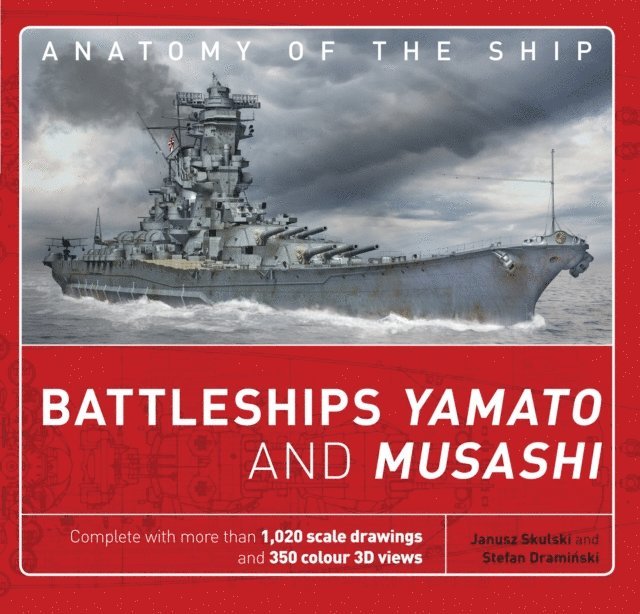
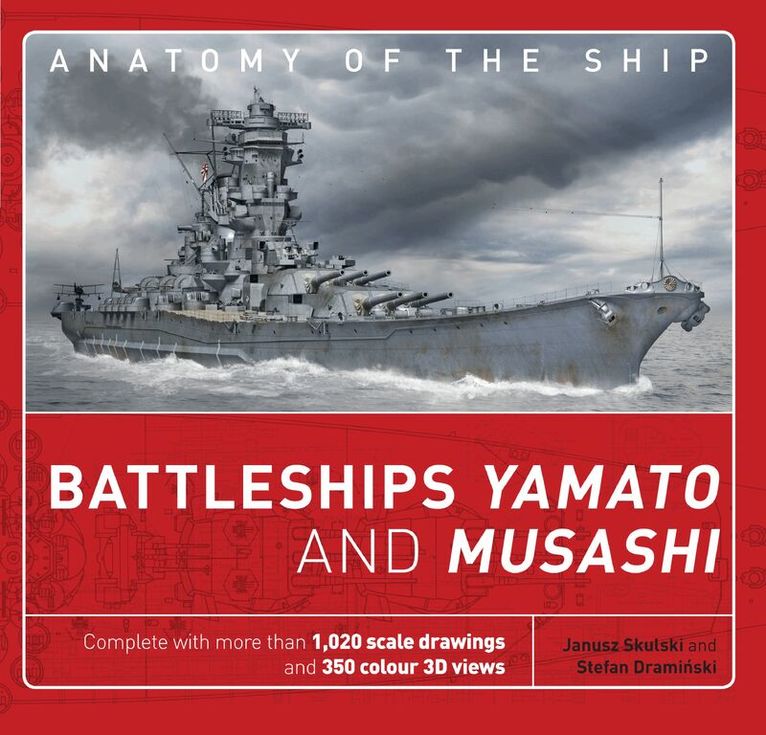
A uniquely detailed visual representation of the legendary Japanese warships.Equipped with the largest guns and heaviest armour and with the greatest displacement of any ship ever built, the Yamato proved to be a formidable opponent to the US Pacific Fleet in the Second World War. The book contains a full description of the design and construction of the battleship including wartime modifications, and a career history followed by a substantial pictorial section with rare onboard views of Yamato and her sister ship Musashi, a comprehensive portfolio of more than 1,020 perspective line artworks, 350 colour 3D views, and 30 photographs.Janusz Skulski’s comprehensive anatomies of these renowned ships coupled with 3D artist Stefan Draminski's superb realistic renditions of the ships bring the topic to life with the most detailed renditions of these ships ever seen.
151 kr
Skickas inom 7-10 vardagar
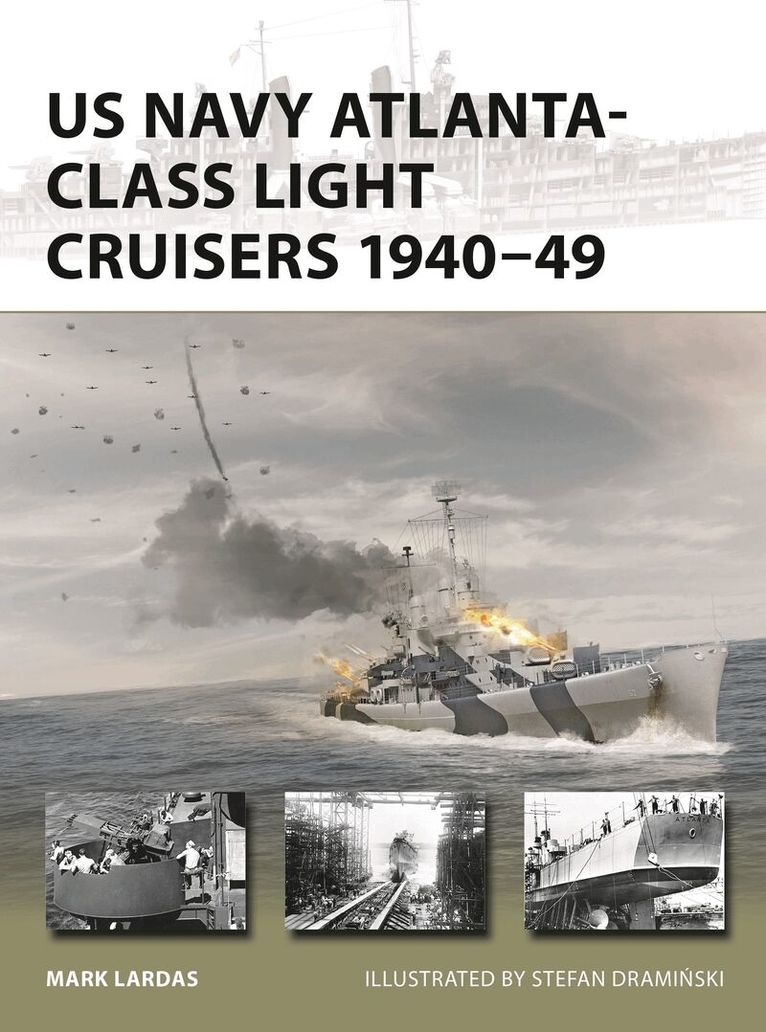
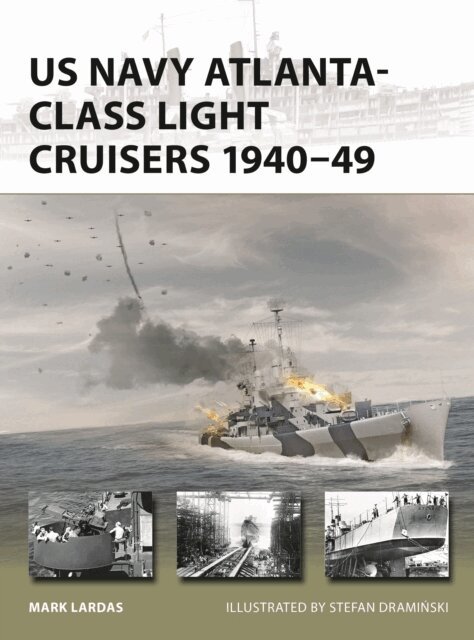
A comprehensively illustrated account of the Atlanta-class cruisers, warships that found a surprising key role in the Pacific War as the US Navy's superb antiaircraft warships.In the late 1930s, the US Navy created a class of small, light cruisers intended as a versatile destroyer leader. The Atlantas could provide antiaircraft support, lead and launch torpedo attacks, serve as antisubmarine vessels, and outgun other light warships in a surface engagement. The wartime reality was different. In every surface action they fought, they found themselves pitted against bigger cruisers (or even battleships) instead of the destroyers they were designed to defeat.In this book, naval historian Mark Lardas explains that despite their flaws, they proved one of the most useful warships in the US Navy: with a main battery of sixteen 5in guns, they proved to be superb antiaircraft cruisers. From the battle of Midway onwards, they protected the Navy’s most valuable ships – its aircraft carriers – so effectively that later Atlantas were built to a modified design as specialist antiaircraft ships. The Navy even ordered a follow-on class postwar and considered building a “super-Atlanta,” armed only with heavy antiaircraft guns.Packed with illustrations, this book examines the history, development, and modifications of these unusual warships, and their impact on the Pacific War.