1 461 kr
Beställningsvara. Skickas inom 7-10 vardagar. Fri frakt över 249 kr.
Beskrivning
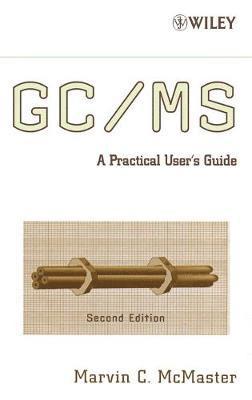
This Second Edition of the classic handbook details how to set up an HPLC system that capitalizes on the latest innovations. It covers new techniques in high-temperature, micro-flow, and ultra-fast chromatography, the linking of an HPLC to a mass spectrometer, and more. Complete appendices and supplementary material online, this guide has everything chromatographers need to know to confidently separate, identify, purify, and quantify compounds.
Produktinformation
- Utgivningsdatum:2007-01-12
- Höjd:163 x 241 x 20 mm
- Vikt:499 g
- Språk:Engelska
- Antal sidor:256
- Upplaga:2
- Förlag:John Wiley & Sons Inc
- EAN:9780471754015
Utforska kategorier
Mer om författaren
MARVIN C. MCMASTER, PHD, is a consultant as well as an Adjunct Professor of Chemistry at the University of Missouri St. Louis. Dr. McMaster has served as a researcher and product developer for DuPont, Kraft Foods, and Ciba-Geigy. Among his other publications, Dr. McMaster is author of LC/MS: A Practical User's Guide and coauthor of GC/MS: A Practical User's Guide (both published by Wiley).
Innehållsförteckning
- Preface xiI HPLC Primer 11 Advantages and Disadvantages of HPLC 31.1 How It Works 41.1.1 A Separation Model of the Column 51.1.2 Basic Hardware: A Quick, First Look 71.1.3 Use of Solvent Gradients 81.1.4 Ranges of Compounds 91.2 Other Ways to Make My Separation 91.2.1 FPLC—Fast Protein Liquid Chromatography 101.2.2 LC—Traditional Liquid Chromatography 101.2.3 GLC—Gas Liquid Chromatography 111.2.4 SFC—Supercritical Fluid Chromatography 111.2.5 TLC—Thin Layer Chromatography 121.2.6 EP—Electrophoresis 121.2.7 CZE—Capillary Zone Electrophoresis 132 Selecting an HPLC System 152.1 Characteristic Systems 162.1.1 Finding a Fit: Detectors and Data Processing 162.1.2 System Models: Gradient Versus Isocratic 162.1.3 Vendor Selection 172.1.4 Brand Names and Clones 172.1.5 Hardware–Service–Support 182.2 System Cost Estimates 192.2.1 Type I System—QC Isocratic (Cost: $10–15,000) 192.2.2 Type II System—Research Gradient (Cost: $20–25,000) 192.2.3 Type III System—Automated Clinical (Cost: $25–35,000) 202.2.4 Type IV System—Automated Methods (Cost: $30–50,000) 212.3 Columns 212.3.1 Sizes: Analytical and Preparative 212.3.2 Separating Modes: Selecting Only What You Need 222.3.3 Tips on Column Use 233 Running Your Chromatograph 253.1 Set-up and Start-up 253.1.1 Hardware Plumbing 101: Tubing and Fittings 263.1.2 Connecting Components 283.1.3 Solvent Clean-up 303.1.4 Water Purity Test 333.1.5 Start-up System Flushing 343.1.6 Column Preparation and Equilibration 353.2 Sample Preparation and Column Calibration 363.2.1 Sample Clean-up 363.2.2 Plate Counts 373.3 Your First Chromatogram 373.3.1 Reproducible Injection Techniques 383.3.2 Simple Scouting for a Mobile Phase 393.3.3 Examining the Chromatogram 403.3.4 Basic Calculations of Results 41II HPLC Optimization 434 Separation Models 454.1 Partition 454.1.1 Separation Parameters 484.1.2 Efficiency Factor 494.1.3 Separation (Chemistry) Factor 534.2 Ion Exchange Chromatography 564.3 Size Exclusion Chromatography 574.4 Affinity Chromatography 595 Column Preparation 615.1 Column Variations 615.2 Packing Materials and Hardware 645.3 Column Selection 666 Column Aging, Diagnosis, and Healing 736.1 Packing Degrading—Bonded-Phase Loss 746.2 Dissolved Packing Material—End Voids 776.3 Bound Material 786.4 Pressure Increases 816.5 Column Channeling—Center-Voids 836.6 Normal Phase, Ion Exchange, and Size Columns 846.7 Zirconium and Polymer Columns 867 Partition Chromatography Modifications 897.1 Reverse-Phase and Hybrid Silica 897.1.1 Ionization Suppression 907.1.2 Ion Pairing 917.1.3 Organic Modifiers 927.1.4 Chelation 927.2 Acidic Phase Silica 937.3 Reverse-Phase Zirconium 937.4 Partition Mode Selection 948 “Nonpartition” Chromatography 958.1 Ion Exchange 968.1.1 Cationic: Weak and Strong 968.1.2 Anionic: Weak and Strong 978.2 Size Exclusion 988.2.1 Organic Soluble Samples 988.2.2 Hydrophilic Protein Separation 998.3 Affinity Chromatography 1018.3.1 Column Packing Modification 1028.3.2 Chelation and Optically Active Columns 1039 Hardware Specifics 1059.1 System Protection 1059.1.1 Filters, Guard Columns, and Saturation Columns 1069.1.2 Inert Surfaces and Connections 1079.2 Pumping 1089.2.1 High- and Low-Pressure Mixing Controllers 1099.2.2 Checking Gradient Performance 1129.3 Injectors and Autosamplers 1139.4 Detectors 1169.4.1 Mass Dependent Detectors 1169.4.2 Absorptive Detectors 1199.4.3 Specific Detectors 1229.5 Fraction Collectors 1239.6 Data Collection and Processing 12310 Troubleshooting and Optimization 12510.1 Hardware and Tools—System Pacification 12510.2 Reverse Order Diagnosis 12910.3 Introduction to Data Acquisition 13210.4 Solvent Conservation 133III HPLC Utilization 13511 Preparative Chromatography 13711.1 Analytical Preparative 13811.2 Semipreparative 13911.3 “True” Preparative 13912 Sample Preparation and Methods Development 14312.1 Sample Preparation 14312.1.1 Deproteination 14412.1.2 Extraction and Concentration 14512.1.3 SFE (Cartridge Column) Preparations 14512.1.4 Extracting Encapsulated Compounds 14712.1.5 SFE Trace Enrichment and Windowing 14812.1.6 Derivatives 15112.2 Methods Development 15112.2.1 Standards Development 15212.2.2 Samples Development 15412.3 Gradient Development 15613 Application Logics: Separations Overview 15913.1 Fat-Soluble Vitamins, Steroid, and Lipids 15913.2 Water-Soluble Vitamins, Carbohydrates, and Acids 16013.3 Nucleomics 16113.4 Proteomics 16213.5 Clinical and Forensic Drug Monitoring 16313.6 Pharmaceutical Drug Development 16413.7 Environmental and Reaction Monitoring 16413.8 Application Trends 16514 Automation 16714.1 Analog-to-Digital Interfacing 16714.2 Digital Information Exchange 16914.3 HPLC System Control and Automation 16914.4 Data Collection and Interpretation 17014.4.1 Preinjection Baseline Setting 17114.4.2 Peak Detection and Integration 17114.4.3 Quantitation: Internal/External Standards 17214.5 Automated Methods Development 17214.5.1 Automated Isocratic Development 17314.5.2 Hinge Point Gradient Development 17614.6 Data Exportation to the Real World 17714.6.1 Word Processors: .ASC, .DOC, .RTF, .WS, .WP Formats 17714.6.2 Spread Sheets: .DIF, .WK, .XLS Formats 17814.6.3 Databases: .DB2 Format 17814.6.4 Graphics: .PCX, .TIFF, .JPG Formats 17814.6.5 Chromatographic Files: Metafiles and NetCDF 17815 Recent Advances in LC/MS Separations 18115.1 A LC/MS Primer 18115.1.1 Quadrupole MS and Mass Selection 18315.1.2 Other Types of MS Analyzers for LC/MS 18515.1.3 LC/MS Interfaces 18715.1.4 LC/MS Computer Control and Data Processing 18915.2 Microflow Chromatography 19115.3 Ultrafast HPLC Systems 19215.4 Chip HPLC Systems 19215.5 Standardized LC/MS in Drug Design 19316 New Directions in HPLC 19516.1 Temperature-Controlled Chromatography 19516.2 Ultrafast Chromatography 19616.3 Monolith Capillary Columns 19616.4 Micro-Parallel HPLC Systems 19716.5 Two-Dimensional HPLC Systems 19716.6 The Portable LC/MS 198Appendices 201Appendix A Personal Separations Guide 203Appendix B FAQs for HPLC Systems and Columns 205Appendix C Tables of Solvents and Volatile Buffers 211Appendix D Glossary of HPLC Terms 213Appendix E HPLC Troubleshooting Quick Reference 221Appendix F HPLC Laboratory Experiments 227Laboratory 1—System Start-up and Column Quality Control 227Laboratory 2—Sample Preparation and Methods Development 229Laboratory 3—Column and Solvent Switching and Pacification 231Appendix G Selected Reference List 233Index 235
Hoppa över listan


Du kanske också är intresserad av
- Nyhet
- -30%
- Nyhet
- Signerad!
Del 3
- Nyhet
- Signerad!
SIGNERAD - Där färgen får styra : En berättelse i akvarell
Maximilian Svensson, Linda Newnham
Inbunden
319 kr