The Origins of the Modern State in Europe, 13th to 18th Centuries – serie
Visar alla böcker i serien The Origins of the Modern State in Europe, 13th to 18th Centuries. Handla med fri frakt och snabb leverans.
7 produkter
7 produkter
2 662 kr
Skickas inom 5-8 vardagar
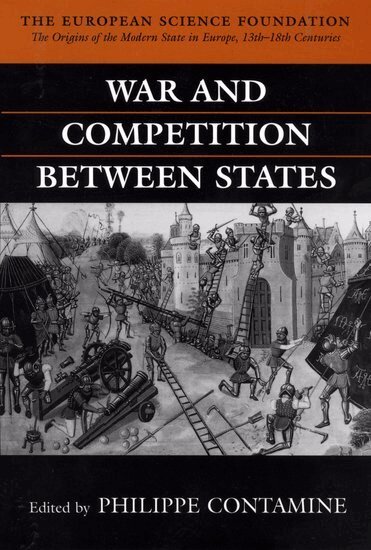
In the five hundred years covered by this volume there was scarcely a year which passed without either war or some open demonstration of hostility between the many sovereign powers which governed Europe. States and peoples lived under the shadow of war, were ceaselessly prompted to consider the possibility of war, had to find ways of dealing with the consequences of war. This volume in the Origins of the Modern State in Europe series focuses on the crucial role of war in the formation of state systems. It starts from the assumption that interstate rivalries and conflicts were at the heart not only of the demarcation of territories, but also of the ever-growing need to mobilize resources for warfare. Institutionalization was consequently highly dependent on such competition. It was for military reasons, and with military aims, that the state secured control of time and space, both at sea and on land.The Origins of the Modern State in Europe series arises from an important international research programme sponsored by the European Science Foundation. The aim of the series, which comprises seven volumes, is to bring together specialists from different countries, who reinterpret from a comparative European perspective different aspects of the formation of the state over the long period from the beginning of the thirteenth to the end of the eighteenth century. One of the main achievements of the research programme has been to overcome the long-established historiographical tendency to regard states mainly from the viewpoint of their twentieth-century borders.
Economic Systems and State Finance
The Origins of the Modern State in Europe 13th to 18th Centuries
Inbunden, Engelska, 1995
3 335 kr
Skickas inom 5-8 vardagar
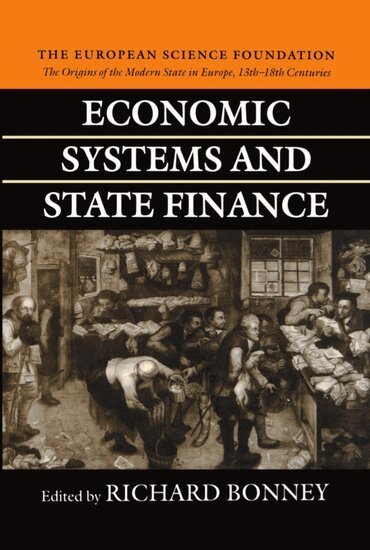
This is the first volume to appear in the 'Origins of the Modern State in Europe' series, which arises from an important international research programme sponsored by the European Sciences Foundation.The aim of the series, which comprises seven volumes, is to bring together specialists from different countries, who reinterpret from a comparative European perspective, different aspects of the formation of the state over the long period from the beginning of the thirteenth to the end of the eighteenth century. One of the main achievements of the research programme has been to overcome the long-established historiographical tendency to regard states mainly form the viewpoint of their twentieth-century borders.Economic Systems and State Finance offers a new approach to the development of the state finance and fiscal systems in Europe. It covers a broad chronological span, beginning with a reassessment of the feudal system and beginnings of state finance, and counting with developments within a comparative European framework as far as 1815 when Britain emerged as the only state to have achieved economic hegemony. The conclusions are presented in four thematic chapters on expenditure, revenues, public credit, and the fiscal burden. The text is underpinned by the comprehensive apparatus of 97 figures, drawn from an important research database established during the research programme. Economic Systems and State Finance is a significant work of scholarship, which will make a permanent contribution to historical debate.
3 559 kr
Skickas inom 5-8 vardagar
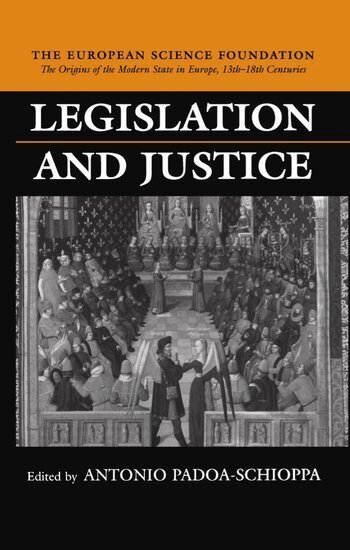
No enquiry into the making of the modern European state can ignore the part played by law. This comprehensive scholarly volume examines in detail how states availed themselves of juridicial techniques in order to mould their institutions, to take control over their territory, and to exercise power over their subjects. The contributors are leading scholars in the field, who explore the administration of justice and the promulgation of legislation across Europe over a period of several centuries, in order to uncover the role of the law in the birth and development of the European state. The Origins of the Modern State in Europe series arises from an important international research programme sponsored by the European Science foundation. the aim of the series, which comprises seven volumes, is to bring together specialists from different countries, who reinterpret from a comparative European perspective different aspects of the formation of the state over the long period from the beginning of the thirteenth to the end of the eighteenth century. One of the main achievments of the research programme has been to overcome the long-established historiographical tendency to regard states mainly from the viewpoint of their twentieth-century borders.
3 425 kr
Skickas inom 5-8 vardagar
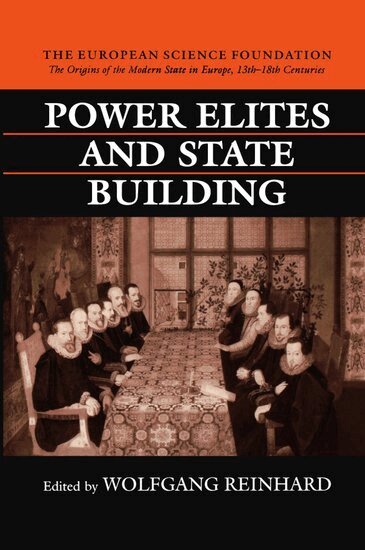
The modern European state, defined by a continuous territory with a distinct borderline and complete external sovereignty, by the monopoly of every kind of legitimate use of force, and by a homogeneous mass of subjects each of whom has the same rights and duties, is the outcome of a thousand years of shifting political power and developing notions of the state. This major study, in the Origins of the Modern State in Europe series, sets out to examine the processes of state formation and the creation of power élites. A team of leading European historians explores the dominant institutions and ideologies of the past, and their role in the creation of the contemporary nation-state.
4 008 kr
Skickas inom 5-8 vardagar
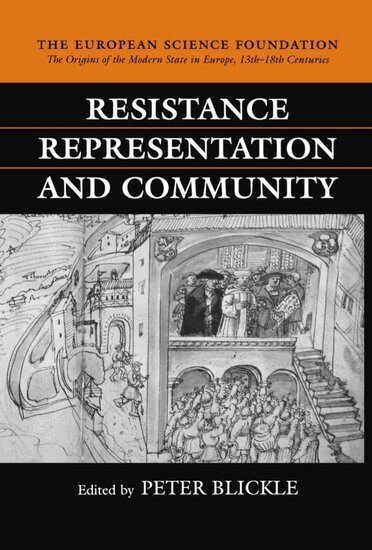
By focusing on three key aspects of life and change as the European state developed, Peter Blickle brings together a wealth of scholarly experience from all over the continent to discuss the subject's role in State formation. Europe has undergone a remarkable process of democratization since the end of the Second World War, shifting the thrust of government policy away from foreign affairs and towards internal matters, and rendering social interest and conflict the driving forces in the historical process. This widespread acceptance of democracy has led to a renewed study of the history of the estates, and a corresponding increase in debate over the concept of representation. Here the debate is taken further with an examination of the role of the city constitution, and developments in rural settlements. Inextricably linked with the advent of wide-scale representation was an increase in resistance: this book examines the geographical spread of such uprisings, and offers explanations of why revolts were so few in Northern Europe but so prevalent in the Central states. The questions of who gained from the uprisings, and what they contributed to the development of the different forms of representation and community are addressed from a pan-European angle. The cities and villages of the late Middle Ages and early modern period were instrumental in building the political structure of the time. These settlements were determinative of the spirit of community, and a close inspection of these communities throws interesting light on the differences between peasant and burgher morality, and how these norms and values were integrated into the legitimizing of the state. This fascinating work examines the citizen's role in European development with a theoretical and conceptual, but also practical and pragmatic approach. The discussion crosses all national boundaries, and in a Europe which is constantly evolving is a relevant and timely addition to the series.
3 674 kr
Skickas inom 5-8 vardagar
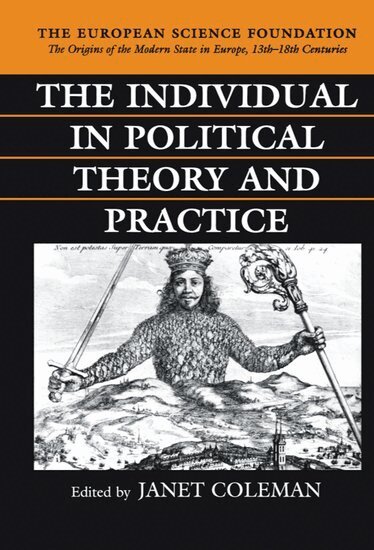
In this major study, a team of leading European scholars explores ways in which the concept of the individual developed in various areas of political and social life. The story concerns the changing nature of individual identity, community interest and corporate groups, as they were gradually redefined by common western European experiences of universal Catholicism, feudalism, civic republicanism and absolutism, Reformation and Counter-Reformation, commerce and capitalism. As European societies evolved into increasingly centralised national states, there emerged a range of religious and secular discourses which expressed the autonomy of individual agents not only as political subjects but also as private selves.
3 380 kr
Skickas inom 5-8 vardagar
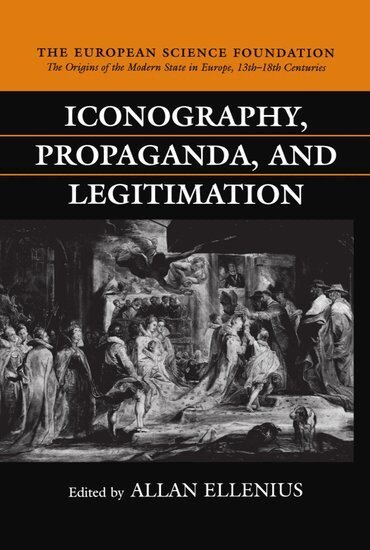
Representations of political power play an important role in Western art history from the late Middle Ages up to modern times. This volume by leading experts is a wide-ranging survey of significant trends in the development of political imagery. It is a study in the rhetoric of images as it developed from the late Middle Ages to the early nineteenth century. Symbols and metaphors were created in order to represent the power of political systems and particularly to confirm the overall importance of rulership. The preferred ideas and visual images were those taken from classical mythology and the tradition of religious iconography. Among the most important concepts was that of the king's two bodies, one belonging to the terrestrial, the other to the symbolic sphere of life. A wealth of images was produced to fulfil the demands of `ceremonial space', which included state portraiture and allegorical imagery as well as coronations, funerals, royal entries, and other kinds of royal pageantry. The Origins of the Modern State in Europe series arises from an important international research programme sponsored by the European Science Foundation. The aim of the series, which comprises seven volumes, is to bring together specialists from different countries, who reinterpret from a comparative European perspective different aspects of the formation of the state over the long period from the beginning of the thirteenth to the end of the eighteenth century. One of the main achievements of the research programme has been to overcome the long-established historiographical tendency to regard states mainly from the viewpoint of their twentieth-century borders.