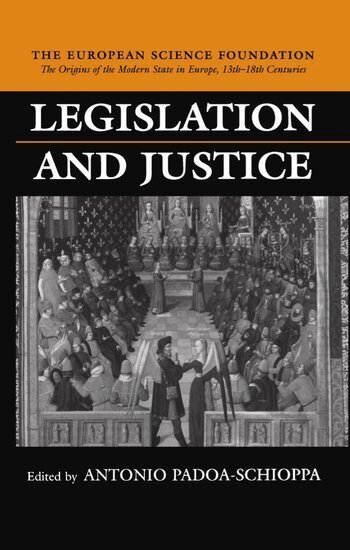
No enquiry into the making of the modern European state can ignore the part played by law. This comprehensive scholarly volume examines in detail how states availed themselves of juridicial techniques in order to mould their institutions, to take control over their territory, and to exercise power over their subjects. The contributors are leading scholars in the field, who explore the administration of justice and the promulgation of legislation across Europe over a period of several centuries, in order to uncover the role of the law in the birth and development of the European state. The Origins of the Modern State in Europe series arises from an important international research programme sponsored by the European Science foundation. the aim of the series, which comprises seven volumes, is to bring together specialists from different countries, who reinterpret from a comparative European perspective different aspects of the formation of the state over the long period from the beginning of the thirteenth to the end of the eighteenth century. One of the main achievments of the research programme has been to overcome the long-established historiographical tendency to regard states mainly from the viewpoint of their twentieth-century borders.
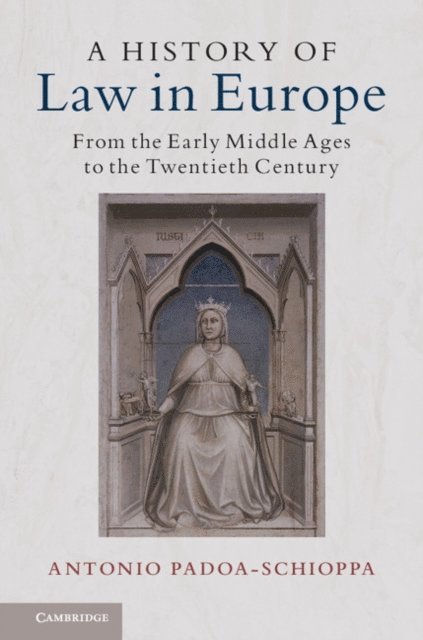
With its roots in ancient Greece, Roman law and Christianity, European legal history is the history of a common civilisation. The exchange of legislative models, doctrines and customs within Europe included English common law and has been extensive from the early middle ages to the present time. In this seminal work which spans from the fifth to the twentieth century, Antonio Padoa-Schioppa explores how law was brought to life in the six main phases of European legal history. By analysing a selection of the institutions of private and public law which are most representative of each phase and of each country, he also sheds light on the common features throughout the history of European legal culture. Translated in English for the first time, this new edition has been revised to include the recent developments of the European Union and the legal-historical works of the last decade.
An der Festschrift für den Tübinger Rechtshistoriker und Zivilrechtler Knut Wolfgang Nörr haben sich - als Geschenk zu akademischen Jubiläen im Jahr 2001 - über 50 Forscher aus der ganzen Welt zusammengefunden; aufgefächert wird von ihnen das ganze Spektrum der Rechtsgeschichte. In diese wurde Knut Wolfgang Nörr vor vielen Jahren hineingestoßen, ohne recht darin Schwimmen gelernt zu haben, wie er selbst in seiner Antrittsrede in der Heidelberger Akademie der Wissenschaften formulierte. Dabei hat er wie kaum ein anderer die Ozeane (und Weiher) der Rechtsgeschichte mit Seemannsglück durchmessen. Die Aufsätze dieses Bandes berühren nahezu alle Themen, die von Nörr bearbeitet wurden. Beiträge zur mittelalterlichen Kanonistik finden sich ebenso wie solche zum antiken römischen Recht. Fragen des Zivilrechts in allen Epochen bis zur Jetztzeit werden erörtert, ebenso Probleme des Wirtschaftsrechts. Die Spanne der Themen reicht von Cicero bis zu einer Volksrichterin der DDR, von canonical juries im mittelalterlichen England über Zigeunerrecht des 18. bis zum Reichsfinanzhof im 20. Jahrhundert.