Culture and Power in German-Speaking Europe, 1918-1989 – serie
Visar alla böcker i serien Culture and Power in German-Speaking Europe, 1918-1989. Handla med fri frakt och snabb leverans.
5 produkter
5 produkter
Del 1 - Culture and Power in German-Speaking Europe, 1918-1989
Günter Grass and the Genders of German Memory
From The Tin Drum to Peeling the Onion
Inbunden, Engelska, 2021
1 337 kr
Skickas inom 7-10 vardagar
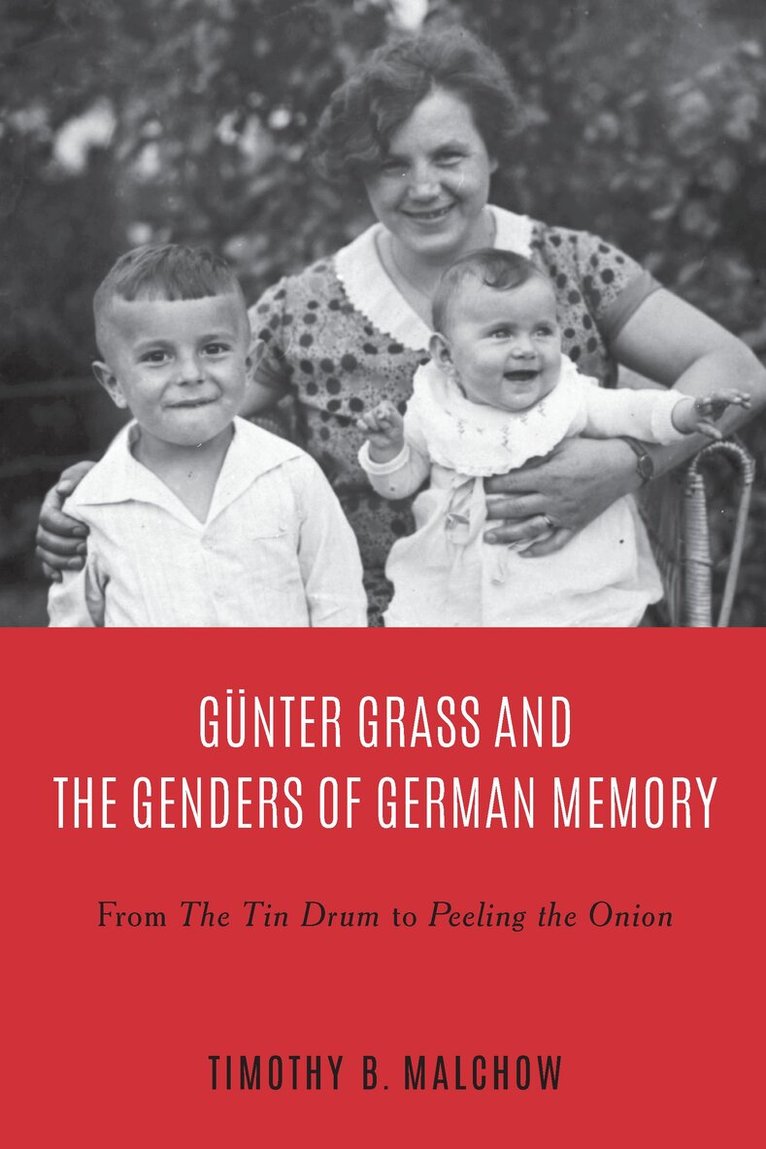
The first book to examine the connection between gender and memory in Grass's oeuvre, which is especially timely in light of current concerns about male privilege.Günter Grass (1927-2015) was a fixture at the heart of German cultural life, a self-styled spokesman of the Kulturnation (cultural nation) who imagined it linking him to canonical male literary figures and their authority. He was also the object of valid feminist criticism: a rigid conception of gender permeates his works, belying his professed skepticism toward ideologies. A heterosexual male, Grass lent his representative persona a natural veneer by appropriating his era's gendered discursive constructs, including Heimat, the Bildungsroman, and narratives about German wartime victims and perpetrators. Such appropriation elevated his remembering artist's masculinity above that of the status quo's defenders and exploiters of memory.This book is the first to evaluate the connection between gender and memory in Grass's oeuvre and its legacy in light of current concerns about male privilege. It highlights his breakthrough novel The Tin Drum (1959) and his memoir Peeling the Onion (2006). The former establishes the gendered persona that Grass would develop in subsequent decades to relate contemporary issues to Nazi-era memories. The latter reclaims the novel's autobiographical material but fails to account for his decades-long silence about having served in the Nazi Waffen-SS. Instead, it foregrounds his mourning for his mother, allowing for a more personal reading of his oeuvre and its gendered imagery.
Del 3 - Culture and Power in German-Speaking Europe, 1918-1989
East German Novel of Socialist Construction
Laboring Affect
Inbunden, Engelska, 2026
1 197 kr
Skickas inom 7-10 vardagar
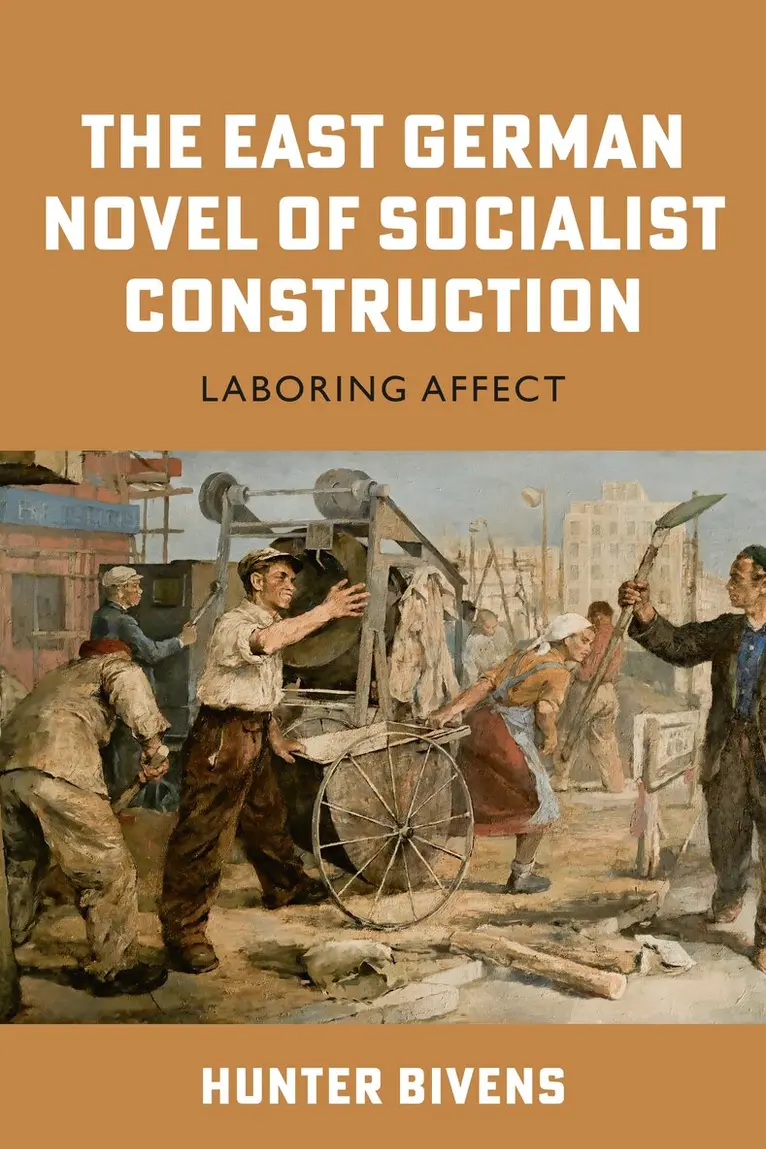
Examines an important novelistic genre of the early German Democratic Republic for what it tells us about the country's aspirations to remake labor affectively and thus to build a socialist society.In a series of socialist realist novels written in the early 1950s, East German authors sought to capture "the new feeling of work" under socialism, to portray the collective enthusiasm of building a new world out of the ruins of fascism and war. In the GDR, this construction literature received an ambiguous reception even at the time; in the West it was dismissed as propaganda; and it is now largely forgotten. Why revisit it now? Drawing on the theorization of living labor elaborated in Oskar Negt and Alexander Kluge's work, particularly their monumental treatise History and Obstinacy, and on contemporary Marxist feminist accounts of social reproduction theory, this book argues that East German construction literature provides us with a set of case studies in the social reorganization of work and the emotions and infrastructures that attend to it, even as these novels attempt to contain these transformations through socialist realist aesthetic strategies. The much-bemoaned awkwardness of these novels, then, is perhaps not only to be found in their didacticism but in the limits of that didacticism, where they seek both to portray and to disavow the transformation of work and the working class in the GDR. This book confronts the question: what was socialist affective labor and what could it have been?
Del 2 - Culture and Power in German-Speaking Europe, 1918-1989
Secret Police Dossier of Herta Müller
A “File Story” of Cold War Surveillance
Inbunden, Engelska, 2023
1 337 kr
Skickas inom 7-10 vardagar
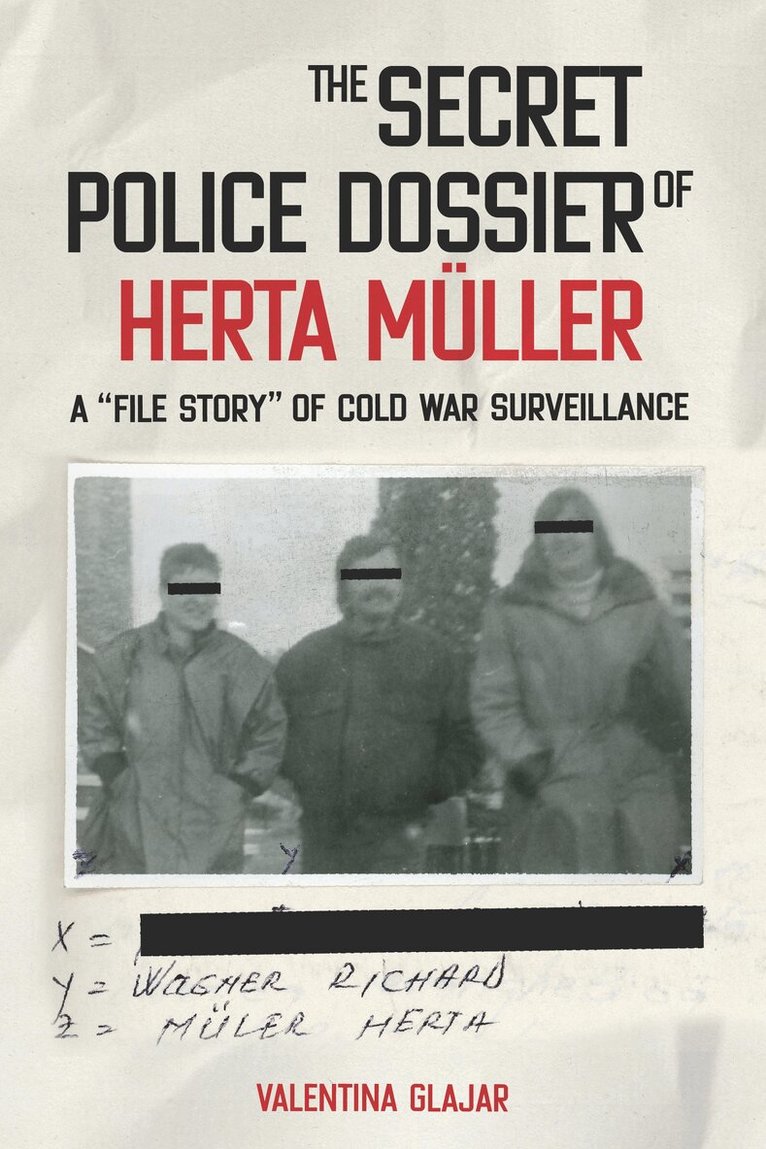
WNNER: British Association for Eastern European and Slavonic Studies' George Blazyca Prize for 2025An in-depth investigation of the Romanian secret police's file on Müller, winner of the 2009 Nobel Prize for Literature, re-creating a "file story" of her surveillance."Herta Müller should share her Nobel with the Securitate." This comment by a former officer in the Romanian secret police, or Securitate, was in reaction to hearing that Müller, a German writer originally from Romania, had won the 2009 Nobel Prize for Literature. Communist Romania's infamous secret police was indeed a protagonist in Müller's work, though an undesired and dreaded one: most of her writings are deeply and explicitly anchored in Ceaușescu's Romania and her own traumatic experiences with the Securitate. Müller's file traces her surveillance from 1983 until after she emigrated to West Germany in 1987. She has written extensively in reaction to reading her file, but primarily addresses its gaps, begging the question what information the file does in fact contain.This book is an in-depth investigation of Müller's file, and engages with other related files, including that of her then-husband, the writer Richard Wagner. Valentina Glajar treats the files as primary sources in order to re-create the story of Müller's surveillance by the Securitate. In such an intrusive culture of surveillance, surviving the system often meant a certain degree of entanglement: for victims, collaborators, and implicated subjects alike. Veiled in secrecy for decades, these compelling and complex documents shed light on a boundary between victims and perpetrators as porous as the Iron Curtain itself.
Del 5 - Culture and Power in German-Speaking Europe, 1918-1989
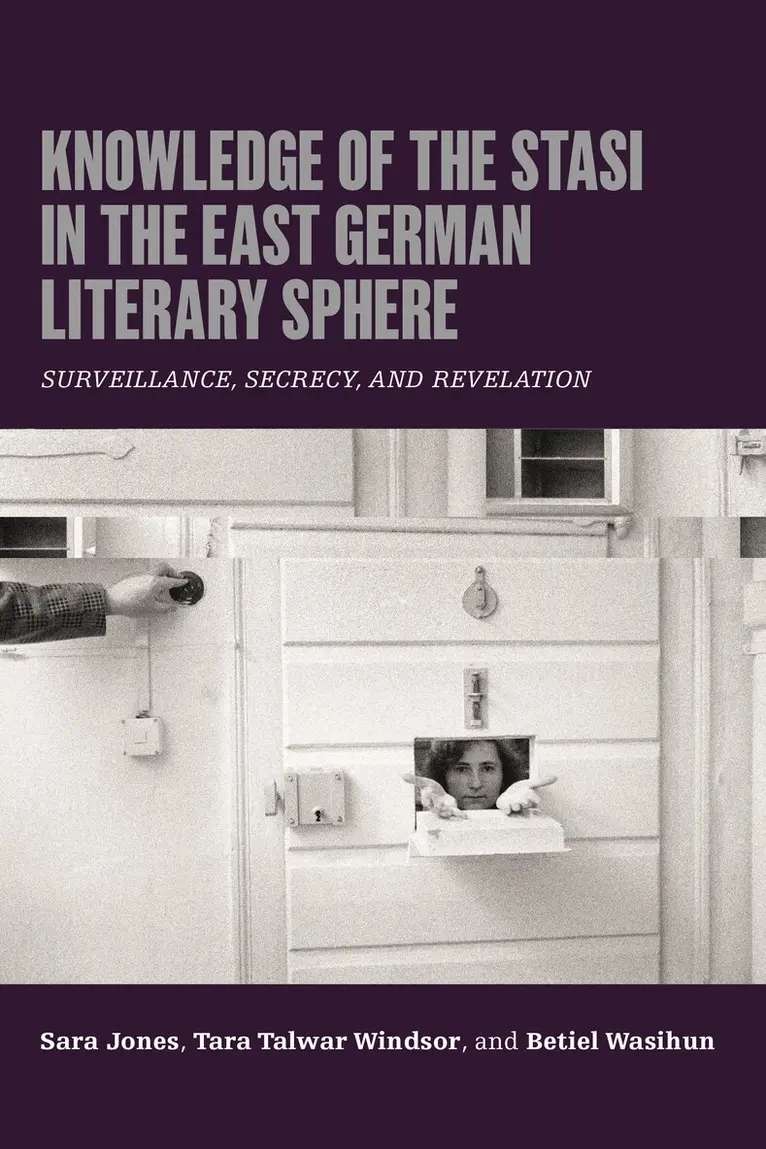
Knowledge of the Stasi in the East German Literary Sphere
Surveillance, Secrecy, and Revelation
Inbunden, Engelska, 2026
2 009 kr
Skickas inom 3-6 vardagar
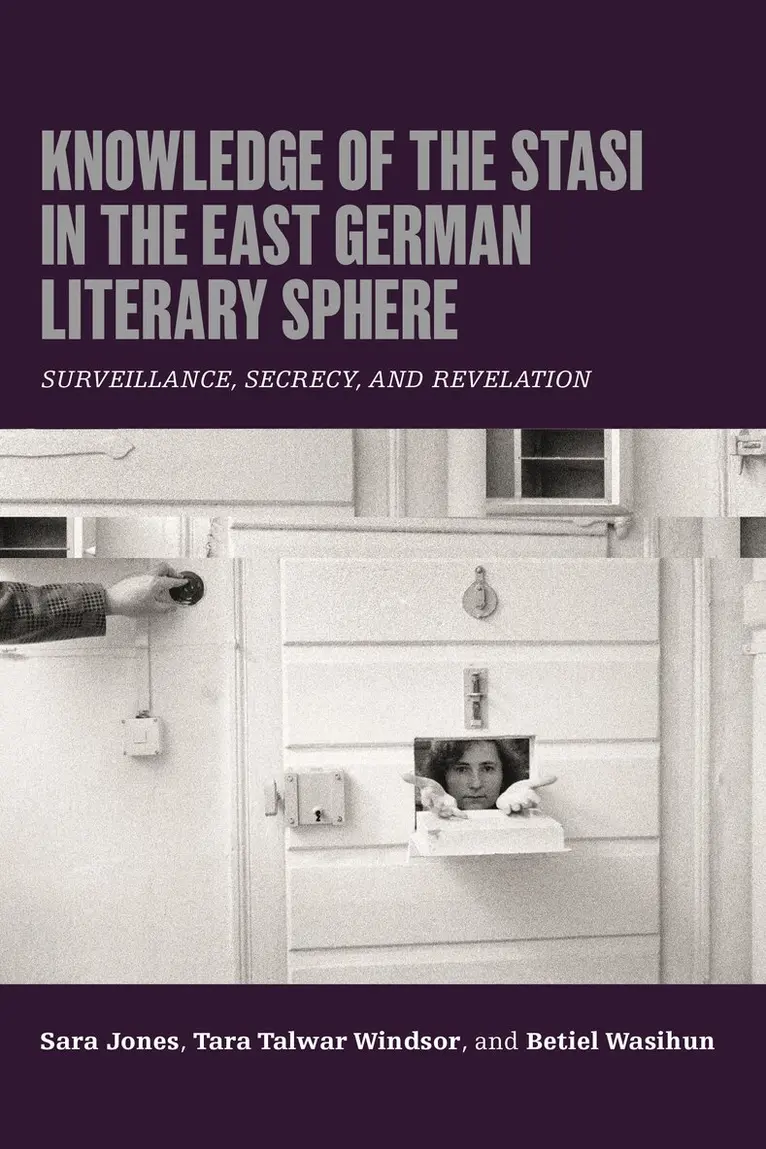
The first book to investigate what writers, publishers, and editors knew about the Stasi and how, rethinking the relationship between knowledge, secrecy, intuition, trust, and agency under an authoritarian regime.While much scholarship has explored what the East German Ministry for State Security - the Stasi - knew about writers, publishers, editors, and others involved in the GDR's literary sphere, none has asked what these groups knew about the Stasi, how they acquired that knowledge, and how it circulated. The present book flips the approach of existing scholarship to ask those questions, thus offering an innovative approach to studying the production and circulation of literature in East Germany. It uncovers the myriad ways in which those who wrote, published, or supported literary production that was critical of the state negotiated, circumvented, and actively confronted the threat posed by surveillance and control. The study draws on original interviews, Stasi files, and writings by Uwe Kolbe, Ekkehard Maaß, Christa Moog, Gabriele Stötzer, Bernd Wagner, and Bettina Wegner, as well as works by Stefan Heym, Ralf-Günter Krolkiewicz, Günter Kunert, and Christa Wolf. The book shows that the Stasi was a kind of "public secret"-a known unknown that was positioned between revelation and concealment. It engages with theoretical frameworks drawn from anthropology, sociology, psychology, philosophy, surveillance studies and cultural studies to reconceptualize the relationship between knowledge, secrecy, intuition, trust, and agency in an authoritarian context.This book is available as Open Access under the Creative Commons license CC BY-NC-ND.SARA JONES is Professor of Languages, Cultures, and Societies at the University of Birmingham, UK. TARA TALWAR WINDSOR is Lecturer in German Studies at the University of Leeds, UK. BETIEL WASIHUN is Lecturer in Cultural and Literary Theory at the Humboldt University of Berlin, Germany.
Del 5 - Culture and Power in German-Speaking Europe, 1918-1989
Knowledge of the Stasi in the East German Literary Sphere
Surveillance, Secrecy, and Revelation
Häftad, Engelska, 2026
445 kr
Skickas inom 3-6 vardagar
The first book to investigate what writers, publishers, and editors knew about the Stasi and how, rethinking the relationship between knowledge, secrecy, intuition, trust, and agency under an authoritarian regime.While much scholarship has explored what the East German Ministry for State Security - the Stasi - knew about writers, publishers, editors, and others involved in the GDR's literary sphere, none has asked what these groups knew about the Stasi, how they acquired that knowledge, and how it circulated. The present book flips the approach of existing scholarship to ask those questions, thus offering an innovative approach to studying the production and circulation of literature in East Germany. It uncovers the myriad ways in which those who wrote, published, or supported literary production that was critical of the state negotiated, circumvented, and actively confronted the threat posed by surveillance and control. The study draws on original interviews, Stasi files, and writings by Uwe Kolbe, Ekkehard Maaß, Christa Moog, Gabriele Stötzer, Bernd Wagner, and Bettina Wegner, as well as works by Stefan Heym, Ralf-Günter Krolkiewicz, Günter Kunert, and Christa Wolf. The book shows that the Stasi was a kind of "public secret"-a known unknown that was positioned between revelation and concealment. It engages with theoretical frameworks drawn from anthropology, sociology, psychology, philosophy, surveillance studies and cultural studies to reconceptualize the relationship between knowledge, secrecy, intuition, trust, and agency in an authoritarian context.This book is available as Open Access under the Creative Commons license CC BY-NC-ND.SARA JONES is Professor of Languages, Cultures, and Societies at the University of Birmingham, UK. TARA TALWAR WINDSOR is Lecturer in German Studies at the University of Leeds, UK. BETIEL WASIHUN is Lecturer in Cultural and Literary Theory at the Humboldt University of Berlin, Germany.