AAR Religion in Translation – serie
Visar alla böcker i serien AAR Religion in Translation. Handla med fri frakt och snabb leverans.
15 produkter
15 produkter
Inbunden, Engelska, 2017
1 732 kr
Skickas inom 5-8 vardagar
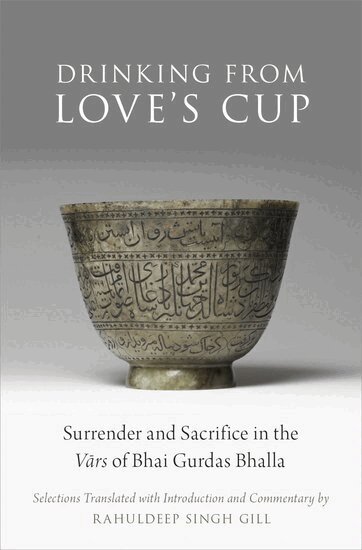
Bhai Gurdas Bhalla (d. 1636 CE) is widely considered the most important non-canonical poet in Sikh history, having shaped the theology and ethics of the tradition for centuries. His beautiful poems, which offer an authoritative illustration of Sikh life in the early seventeenth century, defined Sikh identity during a tumultuous period of upheaval. In Drinking from Love's Cup Rahuldeep Gill brings together for the first time a collection of the revered poet's early work, masterfully translated into English, along with the original Punjabi text.The magic of Gurdas's poetry, says Gill, lies in its fusion of Islamicate narrative traditions with the heroic literature of India to speak about death, martyrdom, and the spirit's absolution in love. Rhythmic, elegant, and lucid, the poems weave Sikh scripture into the lyrical fabric of Sikh spirituality. Challenging traditional scholarship surrounding the dates of Gurdas's writing, Gill suggests that Gurdas wrote his poetry to console the Sikh community, which was in mourning over the execution of the fifth of the Sikh founders, Guru Arjan (d. 1606), by agents of the Mughal Empire. Ranking among the best of the Punjabi language troubadours, Gurdas in his verses immortalized the fifth Guru's role as a martyr. His poems were written to encourage the faithful to stay involved in the community, resist hegemony, and reinforce Sikh beliefs during sectarian upheaval. This book brings a contemporary flair to Gurdas's moving stanzas, and also unearths fresh insights about his life and context.
Inbunden, Engelska, 2017
1 509 kr
Skickas inom 5-8 vardagar
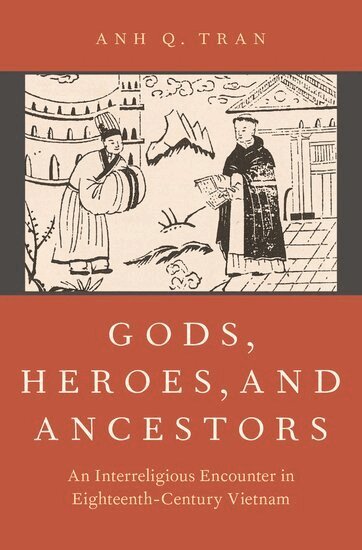
Though a minority religion in Vietnam, Christianity has been a significant presence in the country since its arrival in the sixteenth-century. Anh Q. Tran offers the first English translation of the recently discovered 1752 manuscript Tam Giáo Ch(u V.ong (The Errors of the Three Religions). Structured as a dialogue between a Christian priest and a Confucian scholar, this anonymously authored manuscript paints a rich picture of the three traditional Vietnamese religions: Confucianism, Buddhism, and Daoism. The work explains and evaluates several religious beliefs, customs, and rituals of eighteenth-century Vietnam, many of which are still in practice today. In addition, it contains a trove of information on the challenges and struggles that Vietnamese Christian converts had to face in following the new faith.Besides its great historical value for studies in Vietnamese religion, language, and culture, Gods, Heroes, and Ancestors raises complex issues concerning the encounter between Christianity and other religions: Christian missions, religious pluralism, and interreligious dialogue.
Inbunden, Engelska, 2017
1 664 kr
Skickas inom 5-8 vardagar
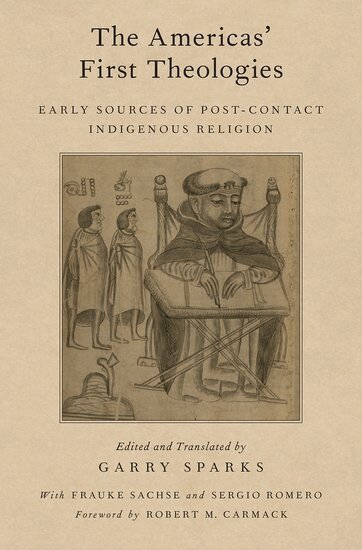
The Theologia Indorum by Dominican friar Domingo de Vico was the first Christian theology written in the Americas. Made available in English translation for the first time, Americas' First Theologies presents a selection of exemplary sections from the Theologia Indorum that illustrate Friar Vico's doctrine of god, cosmogony, moral anthropology, understanding of natural law and biblical history, and constructive engagement with pre-Hispanic Maya religion. Rather than merely condemn the Maya religion, Vico appropriated local terms and images from Maya mythology and rituals that he thought could convey Christianity. His attempt at translating, if not reconfiguring, Christianity for a Maya readership required his mastery of not only numerous Mayan languages but also the highly poetic ceremonial rhetoric of many indigenous Mesoamerican peoples. This book also includes translations of two other pastoral texts and parts of a songbook and a catechism. These texts, written in Highland Mayan languages by fellow Dominicans, demonstrate the wider influence of Vico's ethnographic approach shared by a particular school of Dominicans. Altogether, The Americas' First Theologies provides a rich documentary case example of the translation, reception, and reaction to Christian thought in the indigenous Americas.
Inbunden, Engelska, 2019
1 281 kr
Skickas inom 5-8 vardagar
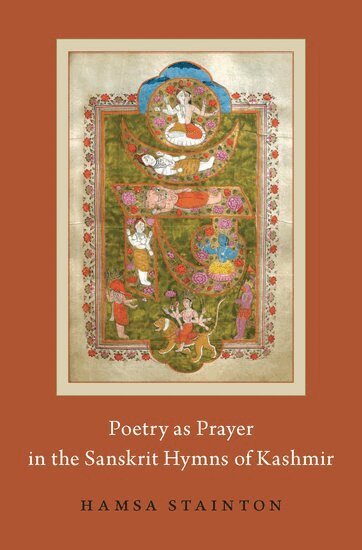
Historically, Kashmir was one of the most dynamic and influential centers of Sanskrit learning and literary production in South Asia. In Poetry as Prayer in the Sanskrit Hymns of Kashmir, Hamsa Stainton investigates the close connection between poetry and prayer in South Asia by studying the history of Sanskrit hymns of praise (stotras) in Kashmir. The book provides a broad introduction to the history and general features of the stotra genre, and it charts the course of these literary hymns in Kashmir from the eighth century to the present. In particular, it offers the first major study in any European language of the Stutikusumāñjali, an important work of religious literature dedicated to the god Śiva and one of the only extant witnesses to the trajectory of Sanskrit literary culture in fourteenth-century Kashmir. The book also contributes to the study of Śaivism by examining the ways in which Śaiva poets have integrated the traditions of Sanskrit literature and poetics, theology (especially non-dualism), and Śaiva worship and devotion. It substantiates the diverse configurations of Śaiva bhakti expressed and explored in these literary hymns and the challenges they present for standard interpretations of Hindu bhakti. More broadly, this study of stotras from Kashmir offers new perspectives on the history and vitality of prayer in South Asia and its complex relationships to poetry and poetics.
Inbunden, Engelska, 2019
1 290 kr
Skickas inom 5-8 vardagar
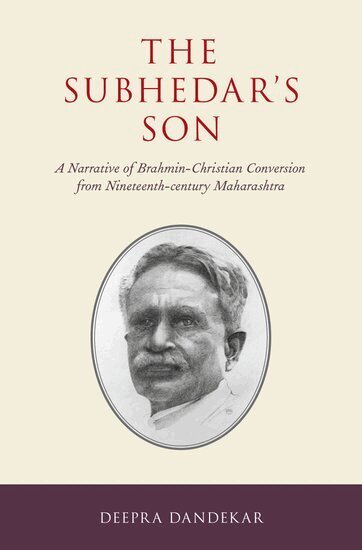
The 19th century was a pioneering age for vernacular texts in India. Vernacular writings became popular for making the 'first' interventions of their kind, written by Indians for Indians, and establishing new genres such as the novel. The Subhedar's Son, an award-winning Marathi novel, was written in 1895 and published by the Bombay Tract and Book Society. The novel comprises overlapping personal and political trajectories.The author, The Rev. Dinkar Shankar Sawarkar, inscribed multiple viewpoints into his narrative, including that of his own father, the Shankar Nana (1819-1884), a Brahmin who was one of the early converts of the Church Missionary Society in Western India and served the CMS and the Anglican Church in various capacities for many years. Apart from Shankar Nana's conversion-story, Sawarkar provides readers with a blueprint of what a Brahminical journey towards Christian conversion encompassed, while describing his personal background of having lived a Christian life as a product of both Brahminism and Christianity. He in effect attempts to deconstruct Brahmanism through Christianity and as a Christian he claims Brahmin roots, with the aim of combatting the stigma of Christian conversion. Contextualized by the history of Maharashtra's early missions and the specificities of individual conversions, the novel allows modern researchers to appreciate the particularity of regional and vernacular Indian Christianity. This culturally-specific Christianity spurred the production of Christian vernacular print culture, associating 'being Marathi' with broader and more universal frameworks of Christianity. But this new genre also produced nativist forms of Christian devotion and piety. Deepra Dandekar introduces this annotated translation of The Subhedar's Son, with: an examination of the Church Missionary Society's socio- political context; a biography of Shankar Nana gleaned from archival sources; a brief summary of Sawarkar's biography; and an analysis of the multiple political opinions framing the book. An appendix contains a transcription of Shankar Nana's Christian witness.
Inbunden, Engelska, 2021
1 049 kr
Skickas inom 5-8 vardagar
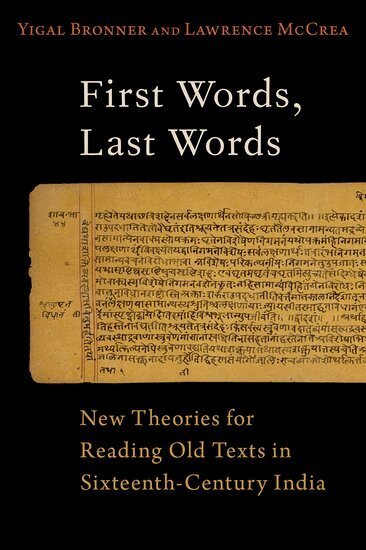
First Words, Last Words charts an intense "pamphlet war" that took place in sixteenth-century South India. Yigal Bronner and Lawrence McCrea explore this controversy as a case study in the dynamics of innovation in early modern India, a time of great intellectual innovation. This debate took place within the traditional discourses of Vedic Hermeneutics, or Mīmāṃsā, and its increasingly influential sibling discipline of Vedānta, and its proponents among the leading intellectuals and public figures of the period.Bronner and McCrea examine the nature of theoretical innovation in scholastic traditions by focusing on a specific controversy regarding scriptural interpretation and the role of sequence-what comes first and what follows later-in determining our interpretation of a scriptural passage.Vyāsatīrtha and his grand-pupil Vijayīndratīrtha, writers belonging to the camp of Dualist Vedānta, purported to uphold the radical view of their founding father, Madhva, who believed, against a long tradition of Mīmāṃsā interpreters, that the closing portion of a scriptural passage should govern the interpretation of its opening. By contrast, the Nondualist Appayya Dīkṣita ostensibly defended his tradition's preference for the opening. But, as this volume shows, the debaters gradually converged on a profoundly novel hermeneutic-cognitive theory in which sequence played little role, if any.First Words, Last Words traces both the issue of sequence and the question of innovation through an in-depth study of this debate and through a comparative survey of similar problems in Judaism, Christianity, and Islam, revealing that the disputants in this controversy often pretended to uphold traditional views, when they were in fact radically innovative.
Inbunden, Engelska, 2022
1 971 kr
Skickas inom 3-6 vardagar
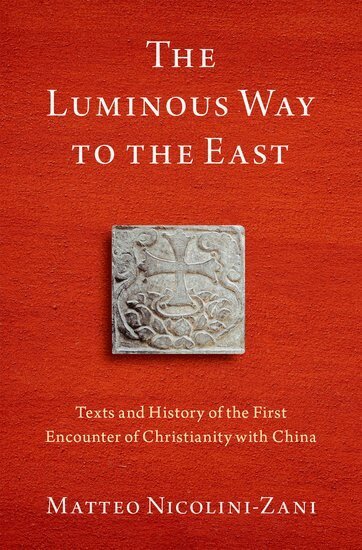
The Luminous Way to the East offers a comprehensive survey of the historical, literary, epigraphic, and archaeological sources of the first stage of the Christian mission to China. It explores the complex and multifaceted process of the interaction with the different cultural and religious milieux that the Church of the East experienced in its diffusion throughout Central Asia and into China during the first millennium.Matteo Nicolini-Zani provides an overview of the Christian presence in China during the Tang dynasty (618-907) by reconstructing the composition and organization of Christian communities, the geographical location of Christian monasteries, and the related historical events attested by the sources. Through a new and richly annotated English translation of the Chinese Christian texts produced in Tang China, the volume provides a documented look at what was the earliest, and perhaps the most extraordinary, encounter of Christianity with Chinese culture and religions (Confucianism, Daoism, and Buddhism). It shows how East Syriac Christianity in its eastward expansion along the Silk Road from Persia to China was open to the adoption of other languages and imagery and was able to enculturate the Christian teaching into new cultural and religious forms without losing its identity.
Inbunden, Engelska, 2023
1 049 kr
Skickas inom 5-8 vardagar
Religious texts are not stable objects, passed down unchanged through generations. The way in which religious communities receive their scriptures changes over time and in different social contexts. This book considers religious reading through a study of the Pushtimarg, a Hindu community whose devotional practices and community identity have developed in close relationship with Vārtā Sāhitya (Chronicle Literature), a genre of Hindi prose hagiography written during the 17th century. Through hagiographies that narrate the relationships between the deity Krishna and the Pushtimarg's early leaders and their disciples, these hagiographies provide community history, theology, vicarious epiphany, and models of devotion. While steeped in the social world of early-modern north India, these texts have continued to be immensely popular among generations of modern devotees, whose techniques of reading and exegesis allow them to maintain the narratives as primary guides for devotional living in Gujarat-the western state of India where the Pushtimarg thrives today. Combining ethnographic fieldwork with close readings of Hindi and Gujarati texts, the book examines how members of the community engage with the hagiographies through recitation and dialogue in temples and homes, through commentary and translation in print publications and on the Internet, and even through debates in courts of law. The book argues that these acts of "reading" inform and are informed by both intimate negotiations of the family and the self, and also by politically potent disputes over matters such as temple governance. By studying the texts themselves, as well as the social contexts of their reading, Religious Reading and Everyday Lives in Devotional Hinduism provides a distinct example of how changing class, regional, and gender identities continue to shape interpretations of a scriptural canon, and how, in turn, these interpretations influence ongoing projects of self and community fashioning.
Inbunden, Engelska, 2023
747 kr
Skickas
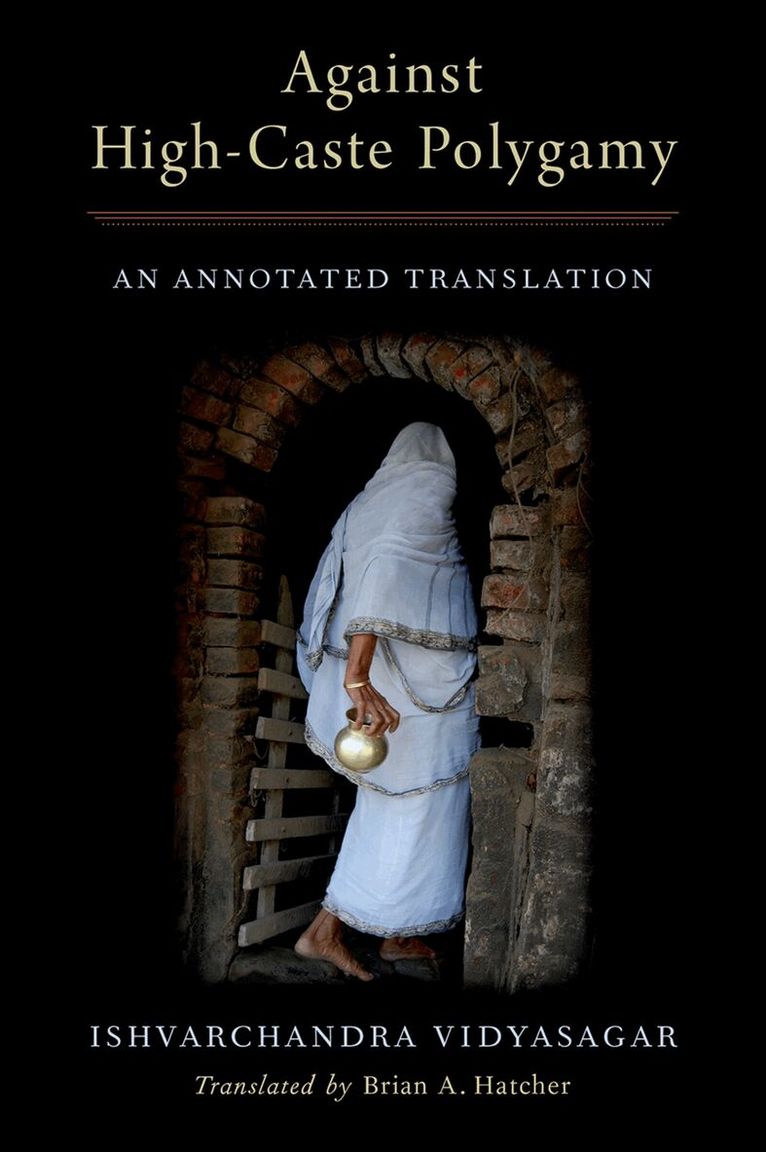
Against High-Caste Polygamy offers a complete, annotated translation of Ishvarchandra Vidyasagar's 1871 tract arguing against the practice of high-caste Kulin marriage in Bengal. Vidyasagar published this work fifteen years after passage of the Hindu Widow's Remarriage Act, which owed so much to his earlier reform leadership. However, in the wake of the Rebellion of 1857 British and Indian attitudes toward official intervention in customary practices underwent a sea change.The British were increasingly reluctant to create unrest, while many Indian leaders began to question the legitimacy of seeking government assistance for social change. The age of active collaboration between the British officials and Indian reformers had passed. In Against High-Caste Polygamy, Vidyasagar demonstrates both his continued faith in an earlier approach to reform and his frustration at the new tenor of the times.Against High-Caste Polygamy is not a treatise on polygamy in general. Rather, it addresses a subset of polygamous marriage as practiced among the highest Hindu castes in eastern India, or what then constituted the Bengal Presidency of British India. This particular form of polygamy came to be known in English as Kulinism, from the term for a person who holds high clan rank (known in Bengali as a kulina). As Vidyasagar shows, Kulinism rests on a highly articulated and historically entrenched system of status and rank that trapped women in wretched domestic situations. Against High-Caste Polygamy is Vidysagar's attempt to open the eyes of Bengali readers as well as the government to the extent and dire ramifications of polygamous practices that often left women ostracized, neglected, and abused. This translation makes Vidyasagar's polemic available to English-language readers for the first time. It features a scholarly introduction, extensive notes, and a variety of supplementary critical tools.
Inbunden, Engelska, 2024
889 kr
Skickas inom 5-8 vardagar
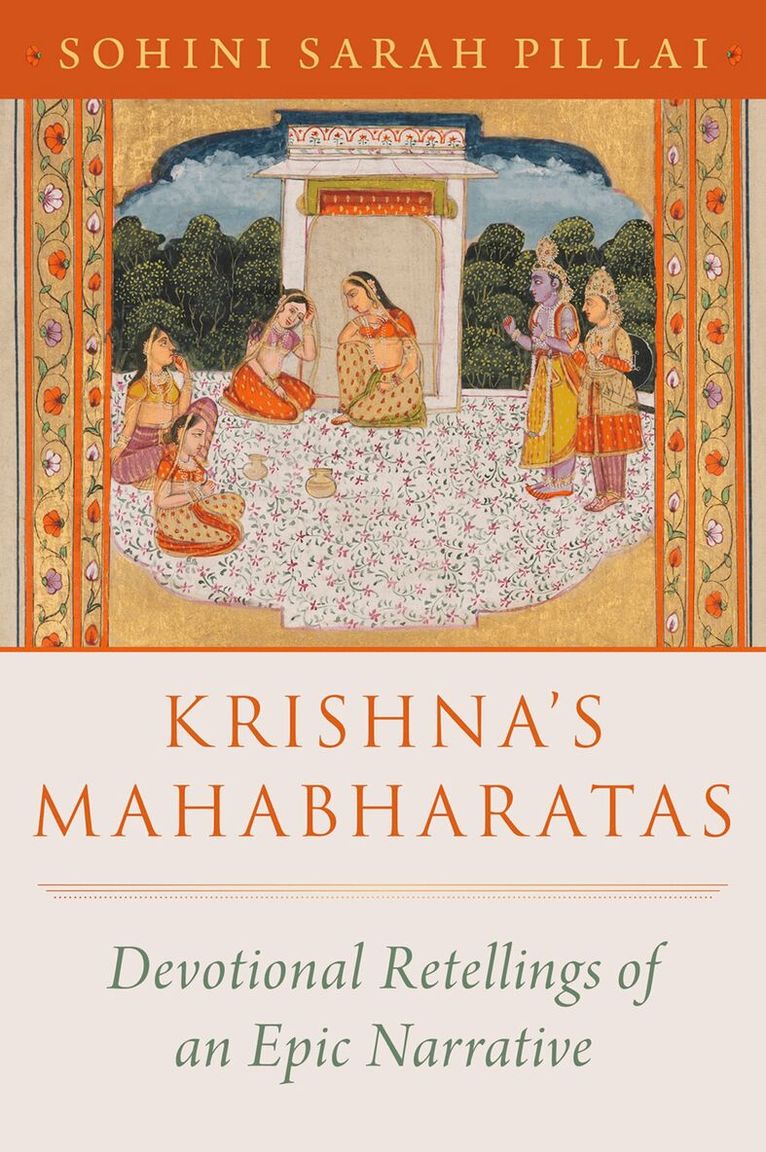
Recognized as the longest poem ever composed, the ancient Sanskrit Mahabharata epic tells the tale of the five Pandava princes and the cataclysmic battle they wage with their one hundred cousins, the Kauravas. This story is one of the most popular and widely-told narratives in South Asia, let alone the world. Between 800 and 1700 CE, a plethora of Mahabharatas were created in Assamese, Bengali, Gujarati, Hindi, Kannada, Konkani, Malayalam, Marathi, Oriya, Tamil, Telugu, and several other regional South Asian languages. Krishna's Mahabharatas: Devotional Retellings of an Epic Narrative is a comprehensive study of premodern regional Mahabharata retellings. This book argues that Vaishnavas (devotees of the Hindu god Vishnu and his various forms) throughout South Asia turned this epic about an apocalyptic, bloody war into works of ardent bhakti or “devotion” focused on the beloved Hindu deity Krishna. Examining over forty retellings in eleven different regional South Asian languages composed over a period of nine hundred years, it focuses on two particular Mahabharatas: Villiputturar's fifteenth-century Tamil Paratam and Sabalsingh Chauhan's seventeenth-century Bhasha (Old Hindi) Mahahbharat.Through close comparative readings, this book reveals the similar ways poets from opposite ends of the Indian sub-continent transform the story of the Sanskrit Mahabharata into devotional narratives centered on Krishna. At the same time, it also shows how these Mahabharatas are each unique pieces of religious literature that speak to different local audiences in premodern South Asia.
Inbunden, Engelska, 2024
961 kr
Skickas inom 5-8 vardagar
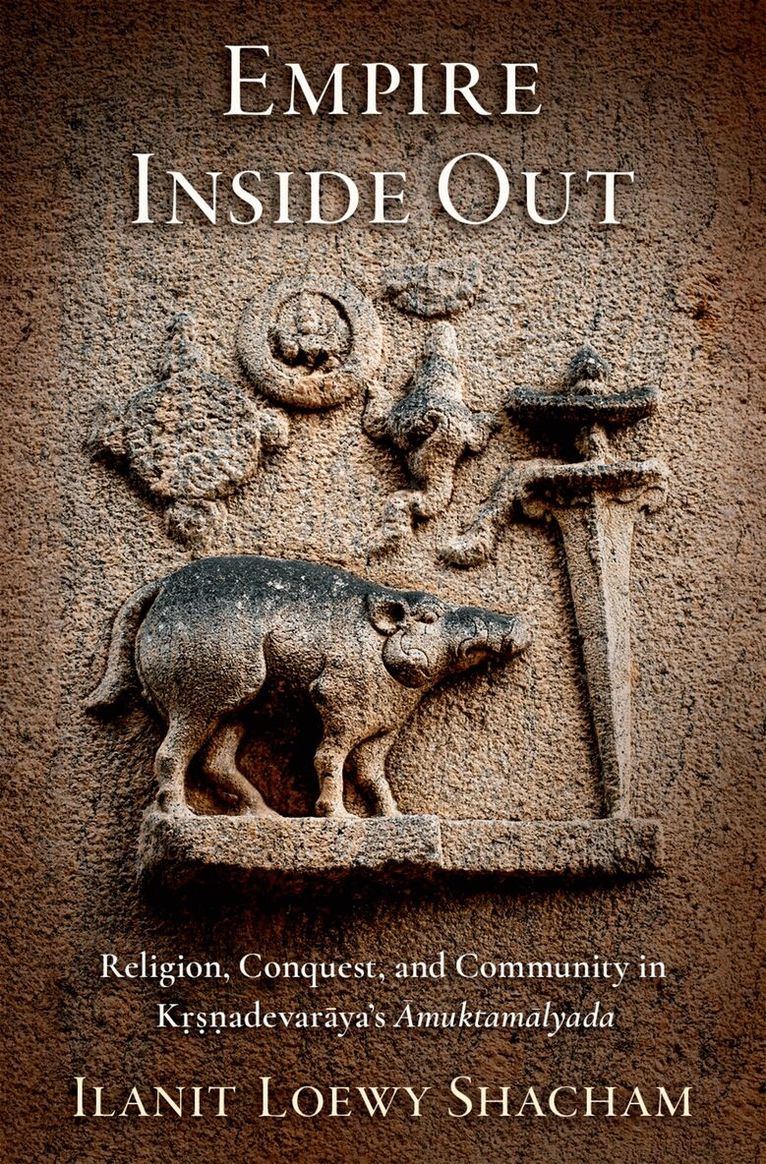
Examining the interplay of religion, history, and literature through a case study of King Krsnadevaraya's celebrated Telugu poem Āmuktamālyada, Ilanit Loewy Shacham showcases the groundbreaking worldview that this often-overlooked poem embodies. Krsnadevaraya (r.1509-1529) ruled over the Vijayanagara Empire during its heyday, and his monumental poem situates all power and authority not in the imperial center, but in the villages and temples at the empire's outskirts; not in the royal court, but in a religious community - a worldview radically different from how literary and political histories portray the king and his empire. Empire Inside Out explores the Āmuktamālyada as a reflection of one of South Asia's most culturally complex periods, highlighting its rich religious, political, historical and ethnographic detail. Moreover, Loewy Shacham examines the Āmuktamālyada as the work of a king imparting personal insights on empire, kingship, and individuality - specifically, that it is possible to be unbounded by the institution of kingship that he himself embodies. This book demonstrates that Krsnadevaraya's text connects the imperial domain to the village and temple settings, and to the south Indian community of Srivaisnava devotees-and indeed that it situates the source of authority and power not in the royal court but in the margins, where Srivaisnavism originated, giving the far Tamil south a central role in its imperial vision.Employing close textual analysis of the Āmuktamālyada, supplemented by a rich corpus of texts in different languages and genres, Empire Inside Out illuminates a piece of literature that has been fairly neglected, owing to the particularized linguistic and literary training required. The core of the book is based in the historical context of sixteenth-century Vijayanagara, from which it moves to the various pasts that helped shape the Āmuktamālyada, and to our contemporary times and the use of the text in constructing (at times rewriting) history.
Inbunden, Engelska, 2025
1 206 kr
Skickas inom 5-8 vardagar
Hampeya Harihara lived between the late twelfth and early thirteenth centuries in Hampe (a.k.a. Hampi) and wrote in Kannada, a language of the south-Indian Dravidian family. With the aim of reaching large segments of the population, Harihara set out to develop a new style of narrative literature in Kannada, one that introduced straightforward plotting, quotidian characters, moderate use of literary ornamentation, simple prosody, and highly emotional expressivity. The work he composed in this style, the Shivasharanara Ragalegalu ("Stories of Shiva's Saints Written in the Ragale Meter") inaugurated a new era in Kannada literature. As the first English translation of eighteen stories from this work, this book serves as an invitation to contemporary readers to enjoy and appreciate a text that is rich with religious fervor, antinomian social agendas, raucous characters, and gripping drama-but also delicate poetry and significant historical importance.Stories of Shiva's Saints reveals Harihara's inclusive and flexible religious and social vision, according to which Shiva devotees from different backgrounds can share devotional practices and values while maintaining communal and personal commitments of different kinds. Harihara's work is of major historical significance as the first text to narrate the lives of important religious figures and vachana poets of the time, such as Allama Prabhu and Akka, and in particular Basava, the most well-known leader of the nascent tradition today identified with the Virashaivas/Lingayats.
Inbunden, Engelska, 2025
991 kr
Skickas inom 5-8 vardagar
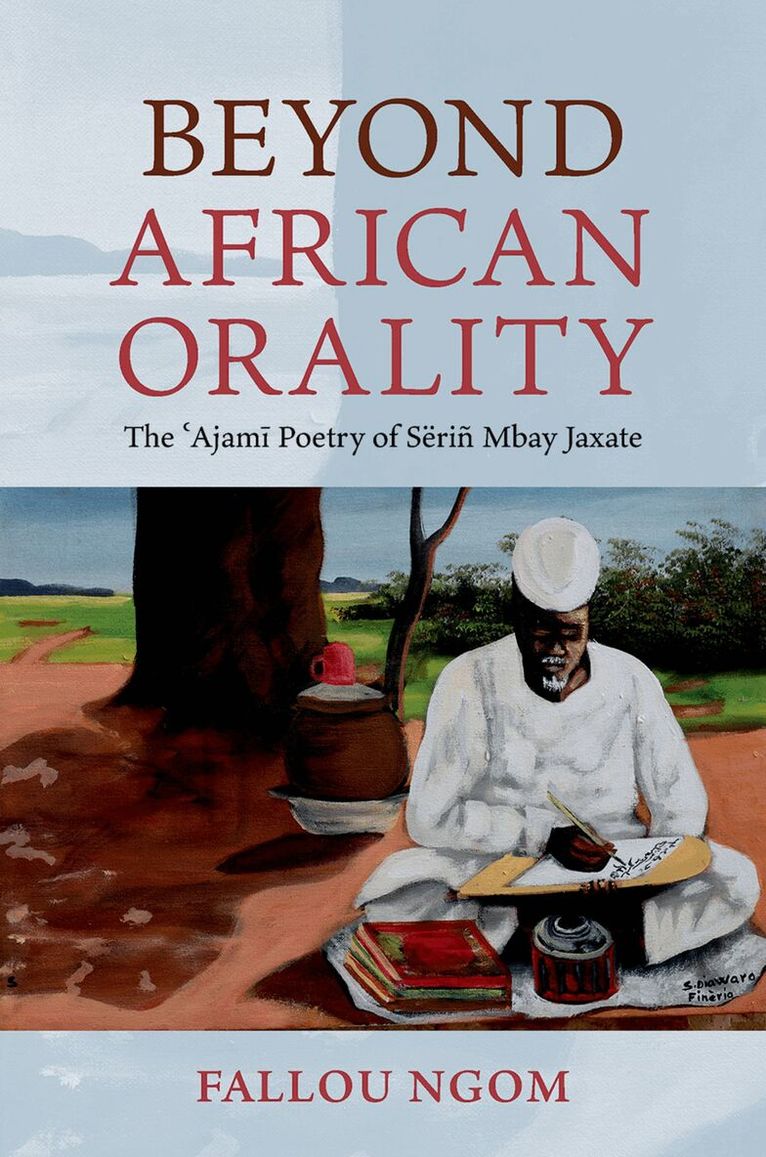
Beyond African Orality offers the first English translation and interpretation of sixty Wolof Ajami poems (Wolof written with an enriched form of the Arabic script) by Sëriñ Mbay Jaxate (c. 1876-1947), a follower of the Senegalese Muridiyya Sufi order founded by Shaykh Ahmadu Bamba Mbàkke (1853-1927). Sëriñ Mbay Jaxate was one of the greatest Sufi poets of Africa — a wise moralist and an astute social critic, he kept a sharp eye on his compatriots and the unfolding historical, cultural, and religious transformations in his society. His poems focused on praising the virtues of his Sufi master, Shaykh Ahmadu Bamba, and fostering the pursuit of spiritual and moral excellence, which he construed as the best investment to achieve success in this life and paradise in the hereafter. His Ajami poems capture every facet of rural Wolof farming communities of his time. To communicate more effectively with his audiences, he deployed numerous metaphors drawn from the local fauna, flora, livestock, farming activities, planting and harvesting seasons, sports such as wrestling and target shooting, hunting, culinary habits, and the climate. Unlike his Muslim colleagues who often code-switched between classical Arabic and the local lingua franca of Wolof and included Quranic or Arabic liturgical quotes in their poems, Sëriñ Mbay Jaxate opted to minimize Arabic structures in his work, preferring rural Wolof words for more efficient communication with his agrarian African audiences. His work demonstrates how Ajami has served as a key literary medium and source of knowledge in Muslim Africa.
Inbunden, Engelska, 2026
1 223 kr
Kommande
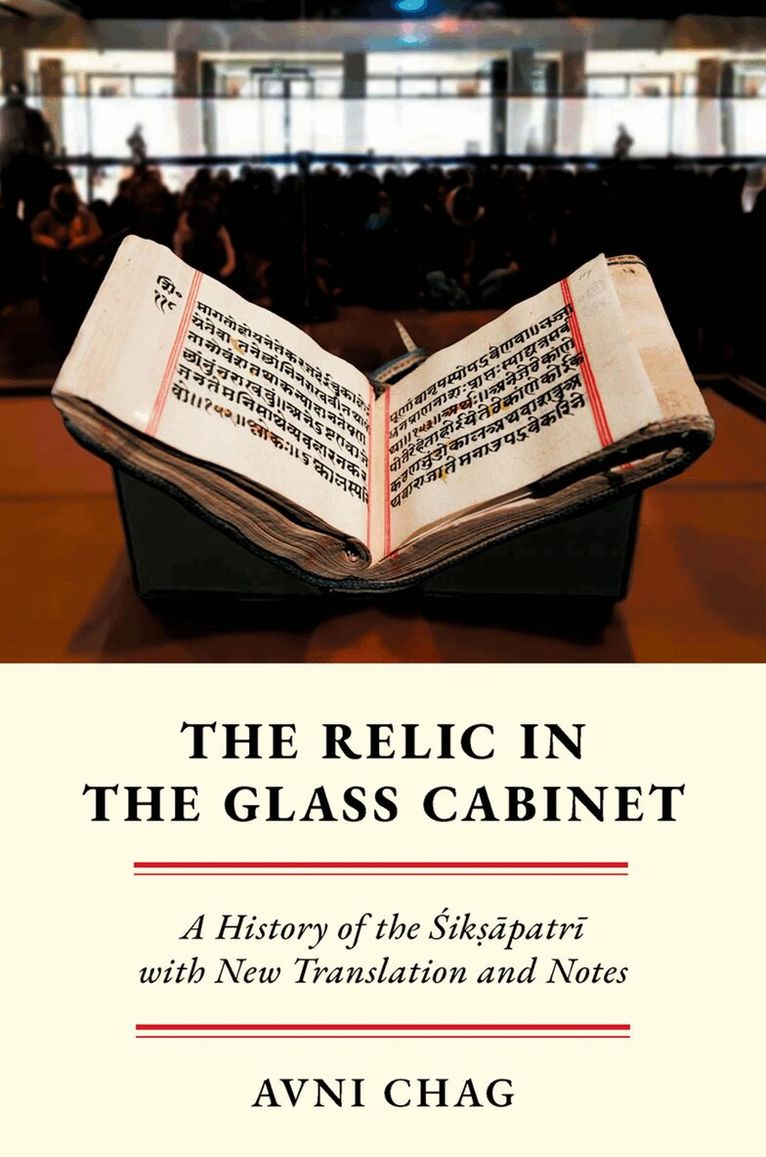
The Shikshapatri (1826) is a scripture presented as a letter to devotees from Swaminarayan (1781-1830), the founder and principal deity of the eponymous Swaminarayan tradition. Designated by millions as a revelatory scripture down to the belief of its divine authorship, the text is treated as a succinct and authoritative index of Swaminarayan beliefs and practices. Early manuscripts of the text are so cherished that some, like the one enclosed in a glass cabinet in the Oxford Bodleian libraries, are treated as relics.For the first time, Avni Chag's thorough text and historical analysis of the Shikshapatri adds nuance to the story of its canonization. Featuring the first English translation of an earlier, shorter version of the text (1823), The Relic in the Glass Cabinet submits the text's authorship, intent, and historical development to critical scrutiny. Based on a comparative study of two Shikshapatri recensions, Chag demonstrates that the text did not originally align with the specific Vaisnava theological identity it now claims. Instead, doctrinal commitments were added after Swaminarayan's passing, fundamentally reshaping how the text, its author, and his tradition have been understood. The Relic in the Glass Cabinet offers novel dimensions to existing scholarly interpretations of early Swaminarayan history, theology, and literature. It tells an untold story of the complex histories of textual production, exploring the interplay between historically contingent circumstances and inherited, albeit negotiated, religious ideas and practices, all at the formative moment of a tradition's inception in early nineteenth-century western India, present day Gujarat.
Inbunden, Engelska, 2026
1 156 kr
Skickas inom 5-8 vardagar
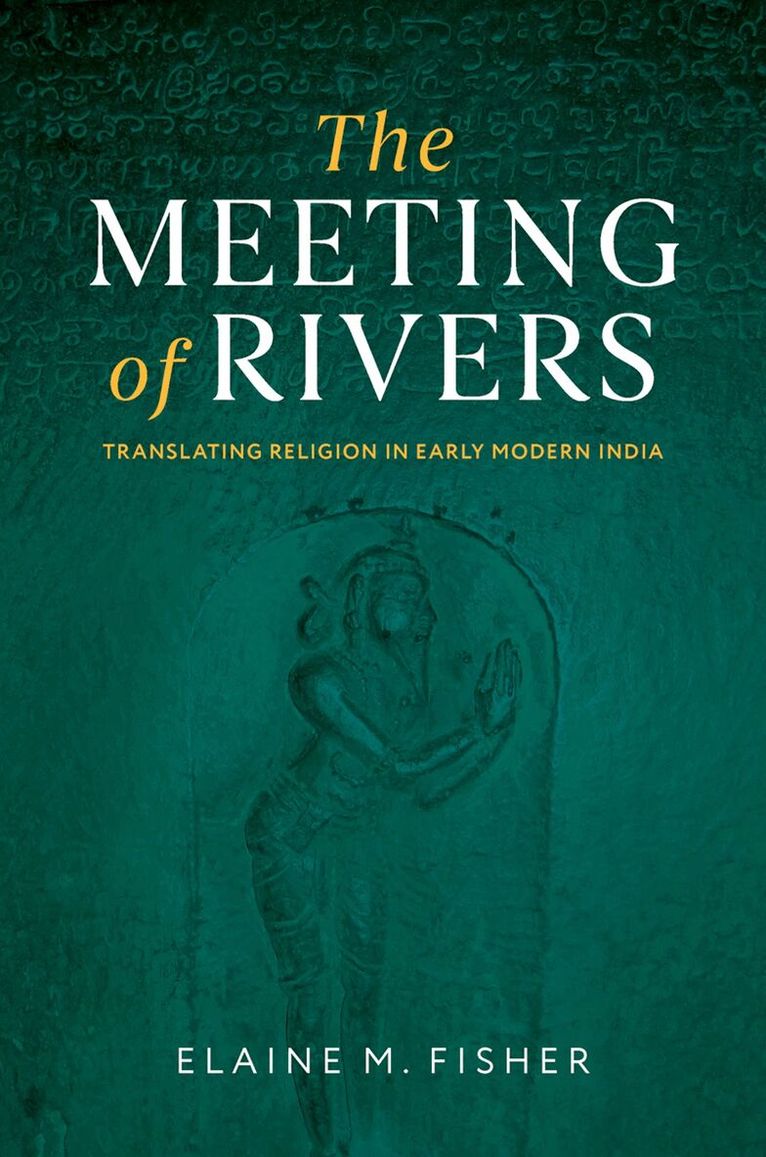
The Meeting of Rivers reconstructs the prehistory of India's newest religion, Virasaivism (or Lingayatism) from its own voices, drawing on unstudied and unpublished archival sources in several south Indian languages. By radically reframing our understanding of the origins of Virasaivism, Elaine Fisher provides a counterpoint to inherited models of both Hindu devotional traditions as well as the history of vernacularization in South Asia. According to conventional wisdom, Virasaivism was a strictly monolingual, vernacular devotional (bhakti) movement, restricted to the Kannada language, born in the twelfth century as a social protest against caste and the retrogressive Sanskrit language. The voice of the archive, however, tells a different story--Virasaivism was a multilingual religion from its inception. Its rejection of caste never entailed the rejection of Sanskrit; rather, its Sanskrit inheritance is pivotal to understanding the tradition's enduring legacy of anti-caste sentiment. By questioning the historical relationship between caste, religion, and language, this monograph highlights the contributions of premodern voices from diverse non-brahmana castes to India's religious history. Simultaneously, The Meeting of Rivers articulates a new conceptual vocabulary for speaking in comparative theoretical terms about multilingualism and translation. It proposes a shift from a unidirectional model of vernacularization in South Asia in favor of a horizontal model of multilingual exchange in which religious content and subjectivities were shaped by multidirectional flows. As such flows traversed cultural zones across India's linguascape, local Virasaivisms--in the plural--were “translated” into being, irreducible to a singular monolingual social revolution.