Emilia Bachrach – författare
Visar alla böcker från författaren . Handla med fri frakt och snabb leverans.
4 produkter
4 produkter
Inbunden, Engelska, 2023
1 084 kr
Skickas inom 5-8 vardagar
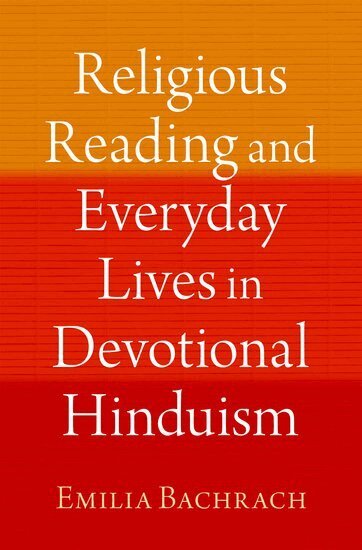
Religious texts are not stable objects, passed down unchanged through generations. The way in which religious communities receive their scriptures changes over time and in different social contexts. This book considers religious reading through a study of the Pushtimarg, a Hindu community whose devotional practices and community identity have developed in close relationship with Vārtā Sāhitya (Chronicle Literature), a genre of Hindi prose hagiography written during the 17th century. Through hagiographies that narrate the relationships between the deity Krishna and the Pushtimarg's early leaders and their disciples, these hagiographies provide community history, theology, vicarious epiphany, and models of devotion. While steeped in the social world of early-modern north India, these texts have continued to be immensely popular among generations of modern devotees, whose techniques of reading and exegesis allow them to maintain the narratives as primary guides for devotional living in Gujarat-the western state of India where the Pushtimarg thrives today. Combining ethnographic fieldwork with close readings of Hindi and Gujarati texts, the book examines how members of the community engage with the hagiographies through recitation and dialogue in temples and homes, through commentary and translation in print publications and on the Internet, and even through debates in courts of law. The book argues that these acts of "reading" inform and are informed by both intimate negotiations of the family and the self, and also by politically potent disputes over matters such as temple governance. By studying the texts themselves, as well as the social contexts of their reading, Religious Reading and Everyday Lives in Devotional Hinduism provides a distinct example of how changing class, regional, and gender identities continue to shape interpretations of a scriptural canon, and how, in turn, these interpretations influence ongoing projects of self and community fashioning.
E-bok
PDF, Engelska, 2022941 kr
Läs direkt efter köp
Religious texts are not stable objects, passed down unchanged through generations. The way in which religious communities receive their scriptures changes over time and in different social contexts. This book considers religious reading through a study of the Pushtimarg, a Hindu community whose devotional practices and community identity have developed in close relationship with V?rt? S?hitya (Chronicle Literature), a genre of Hindi prose hagiography written during the 17th century. Through hagiographies that narrate the relationships between the deity Krishna and the Pushtimarg''s early leaders and their disciples, these hagiographies provide community history, theology, vicarious epiphany, and models of devotion. While steeped in the social world of early-modern north India, these texts have continued to be immensely popular among generations of modern devotees, whose techniques of reading and exegesis allow them to maintain the narratives as primary guides for devotional living in Gujarat-the western state of India where the Pushtimarg thrives today. Combining ethnographic fieldwork with close readings of Hindi and Gujarati texts, the book examines how members of the community engage with the hagiographies through recitation and dialogue in temples and homes, through commentary and translation in print publications and on the Internet, and even through debates in courts of law. The book argues that these acts of "reading" inform and are informed by both intimate negotiations of the family and the self, and also by politically potent disputes over matters such as temple governance. By studying the texts themselves, as well as the social contexts of their reading, Religious Reading and Everyday Lives in Devotional Hinduism provides a distinct example of how changing class, regional, and gender identities continue to shape interpretations of a scriptural canon, and how, in turn, these interpretations influence ongoing projects of self and community fashioning.
E-bok
Engelska, 2022941 kr
Läs direkt efter köp
Religious texts are not stable objects, passed down unchanged through generations. The way in which religious communities receive their scriptures changes over time and in different social contexts. This book considers religious reading through a study of the Pushtimarg, a Hindu community whose devotional practices and community identity have developed in close relationship with V?rt? S?hitya (Chronicle Literature), a genre of Hindi prose hagiography written during the 17th century. Through hagiographies that narrate the relationships between the deity Krishna and the Pushtimarg''s early leaders and their disciples, these hagiographies provide community history, theology, vicarious epiphany, and models of devotion. While steeped in the social world of early-modern north India, these texts have continued to be immensely popular among generations of modern devotees, whose techniques of reading and exegesis allow them to maintain the narratives as primary guides for devotional living in Gujarat-the western state of India where the Pushtimarg thrives today. Combining ethnographic fieldwork with close readings of Hindi and Gujarati texts, the book examines how members of the community engage with the hagiographies through recitation and dialogue in temples and homes, through commentary and translation in print publications and on the Internet, and even through debates in courts of law. The book argues that these acts of "reading" inform and are informed by both intimate negotiations of the family and the self, and also by politically potent disputes over matters such as temple governance. By studying the texts themselves, as well as the social contexts of their reading, Religious Reading and Everyday Lives in Devotional Hinduism provides a distinct example of how changing class, regional, and gender identities continue to shape interpretations of a scriptural canon, and how, in turn, these interpretations influence ongoing projects of self and community fashioning.
Inbunden, Engelska, 2027
1 098 kr
Kommande
Foregrounds the centrality of women across diverse Hindu traditions spanning time and geographyWomen in Hindu Traditions showcases the centrality of women in the ritual and artistic traditions, religious institutions, and literature of Hindu traditions. It considers women's roles as everyday practitioners, gurus, epic protagonists, poet-saints, and performers across time and geography.The volume shows that Hindu women have long reworked elite theologies, scriptures, and rituals in ways that may perpetuate, challenge, and/or innovate upon so-called normative traditions. In this vein, the book is careful to include discussions about Hindu women from various caste and class backgrounds in multiple regions of the Indian subcontinent, as well as the global diaspora.In illuminating the many ways in which women are represented in and have contributed to Hindu traditions, Women in Hindu Traditions emphasizes the flexibility and fluidity of Hinduism more broadly. It discusses elite practices and texts—such as ancient Sanskrit narratives attributed to male authors—in conversation with vernacular texts and practices performed and authored by women in both historical and contemporary contexts. These discussions include an exploration of rituals that reveal women's roles in domestic, public, and temple spaces in India and beyond, poem-songs in devotion to various gods and goddesses, and different iterations of female-authored epics, such as retellings of the Ramayana and Mahabharata.Women in Hindu Traditions displays the incredible multiplicity of Hindu traditions, arguing for the value of comprehending religious traditions through women's narratives and lives.