Addison-Wesley Professional Computing Series - Böcker
305 kr
Skickas inom 7-10 vardagar
The authoritative resource to writing clear and idiomatic Go to solve real-world problems
Google’s Go team member Alan A. A. Donovan and Brian Kernighan, co-author of The C Programming Language, provide hundreds of interesting and practical examples of well-written Go code to help programmers learn this flexible, and fast, language. It is designed to get you started programming with Go right away and then to progress on to more advanced topics.
Basic components : an opening tutorial provides information and examples to get you off the ground and doing useful things as quickly as possible. This includes: command-line arguments gifs URLs web servers Program structure : simple examples cover the basic structural elements of a Go program without getting sidetracked by complicated algorithms or data structures. Data types: Go offers a variety of ways to organize data, with a spectrum of data types that at one end match the features of the hardware and at the other end provide what programmers need to conveniently represent complicated data structures. Composite types : arrays slices maps structs JSON test and HTML templates Functions : break a big job into smaller pieces that might well be written by different people separated by both time and space. Methods : declarations with a pointer receiver struct embedding values and expressions Interfaces : write functions that are more flexible and adaptable because they are not tied to the details of one particular implementation. Concurrent programming : Goroutines, channels, and with shared variables. Packages : use existing packages and create new ones. Automated testing : write small programs that check the code. Reflection features : update variables and inspect their values at run time. Low-level programming : step outside the usual rules to achieve the highest possible performance, interoperate with libraries written in other languages, or implement a function that cannot be expressed in pure Go.Each chapter has exercises to test your understanding and explore extensions and alternatives. Source code is freely available for download and may be conveniently fetched, built, and installed using the go get command.
465 kr
Skickas inom 7-10 vardagar
371 kr
Skickas inom 7-10 vardagar
The Art of UNIX Programming poses the belief that understanding the unwritten UNIX engineering tradition and mastering its design patterns will help programmers of all stripes to become better programmers. This book attempts to capture the engineering wisdom and design philosophy of the UNIX, Linux, and Open Source software development community as it has evolved over the past three decades, and as it is applied today by the most experienced programmers. Eric Raymond offers the next generation of "hackers" the unique opportunity to learn the connection between UNIX philosophy and practice through careful case studies of the very best UNIX/Linux programs.
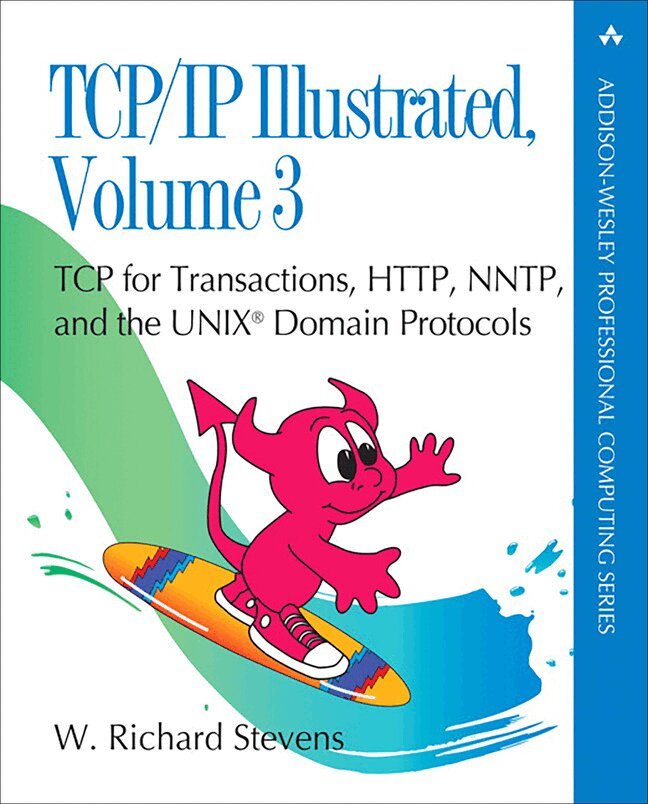
TCP/IP Illustrated, Volume 3
TCP for Transactions, HTTP, NNTP, and the UNIX Domain Protocols
986 kr
Skickas inom 3-6 vardagar
546 kr
Kommande
474 kr
Skickas inom 7-10 vardagar
348 kr
Skickas inom 7-10 vardagar
280 kr
Skickas inom 7-10 vardagar
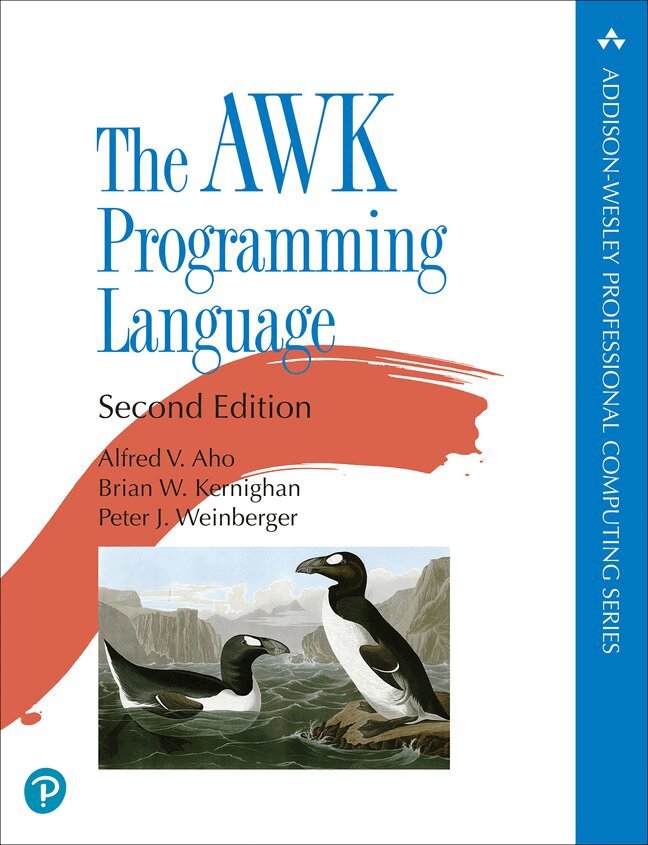
Awk was developed in 1977 at Bell Labs, and it's still a remarkably useful tool for solving a wide variety of problems quickly and efficiently. In this update of the classic Awk book, the creators of the language show you what Awk can do and teach you how to use it effectively.
Here's what programmers today are saying: "I love Awk." "Awk is amazing." "It is just so damn good." "Awk is just right." "Awk is awesome." "Awk has always been a language that I loved."
It's easy: "Simple, fast and lightweight." "Absolutely efficient to learn because there isn't much to learn." "3-4 hours to learn the language from start to finish." "I can teach it to new engineers in less than 2 hours."
It's productive: "Whenever I need to do a complex analysis of a semi-structured text file in less than a minute, Awk is my tool." "Learning Awk was the best bang for buck investment of time in my entire career." "Designed to chew through lines of text files with ease, with great defaults that minimize the amount of code you actually have to write to do anything."
It's always available: "AWK runs everywhere." "A reliable Swiss Army knife that is always there when you need it." "Many systems lack Perl or Python, but include Awk."
Register your book for convenient access to downloads, updates, and/or corrections as they become available. See inside book for details.
339 kr
Skickas inom 7-10 vardagar
The Network File System (NFS) protocol that enables remote access to files is now a key element of any LAN. It is also currently and increasingly used as a key technology with the Web and wide area networks.
Written for programmers creating NFS-based applications, network engineers creating new implementations of NFS, and network managers, NFS Illustrated promotes a thorough understanding of that protocol through extensive diagrams and real protocol traces that show NFS in action. Covering NFS versions 2 and 3, the book also looks into WebNFS and the new NFS version 4, with Internet support. Detailed and authoritative, the book not only examines NFS in depth, but also describes the protocols that underlie and support it, including External Data Representation (XDR), Remote Procedure Call (RPC), the NFS MOUNT protocol, and the NFS Lock Manager protocol. It discusses several NFS variants and compares NFS to a number of alternative file systems.
You will find a detailed discussion on the NFS filesystem model and a procedure-by-procedure description of NFS versions 2 and 3, illustrated through the use of snoop traces that capture and display protocol packets from the network. In addition, the book addresses real-world implementation issues faced by those building an NFS client or server, factors that affect NFS performance, and critical performance benchmarks.
Specific topics of interest include:
NFS version 4, highlighting performance improvements, security features, and cross-platform interoperability for Internet operation RPC authentication and security Differences between NFS versions 2 and 3 Implementation issues for clients and servers Read-ahead and write-behind Caching policies The Lock Manager protocol Automounting NFS variants, including Spritely NFS, NQNFS, Trusted NFS, and NASD NFS NFS competitors: RFS, AFS, DCE/DFS, and CIFS The PCNFS protocol for implementing NFS on PC operating systems SPEC SFS benchmarks, WebNFS, and firewallsComprehensive and current, NFS Illustrated is an essential resource for network professionals who want to use this widespread and evolving technology to its fullest.
635 kr
Kommande
371 kr
Skickas inom 7-10 vardagar
421 kr
Skickas inom 7-10 vardagar
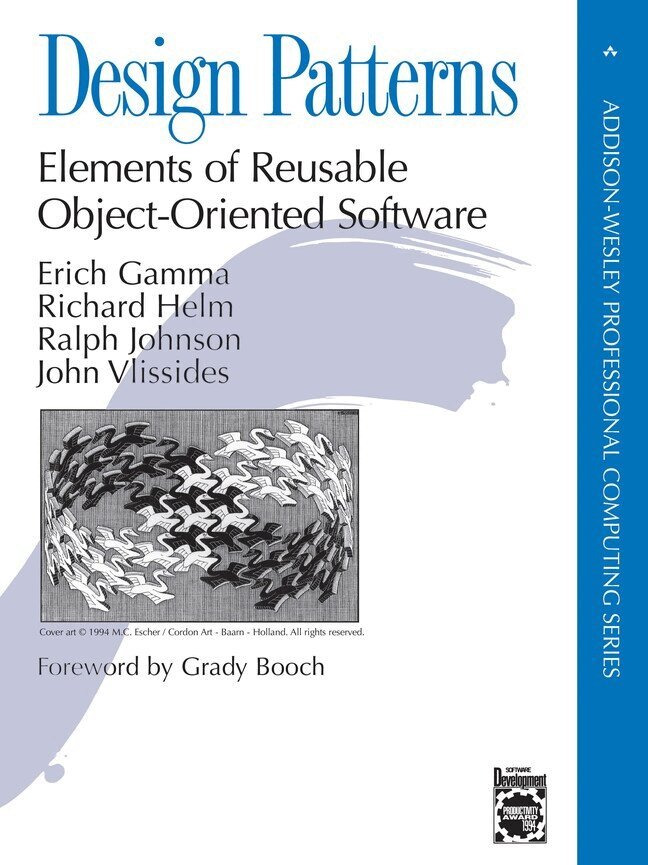
The authors begin by describing what patterns are and how they can help you design object-oriented software. They then go on to systematically name, explain, evaluate, and catalog recurring designs in object-oriented systems. With Design Patterns as your guide, you will learn how these important patterns fit into the software development process, and how you can leverage them to solve your own design problems most efficiently.
Each pattern describes the circumstances in which it is applicable, when it can be applied in view of other design constraints, and the consequences and trade-offs of using the pattern within a larger design. All patterns are compiled from real systems and are based on real-world examples. Each pattern also includes code that demonstrates how it may be implemented in object-oriented programming languages like C++ or Smalltalk.
505 kr
Skickas inom 7-10 vardagar
1 107 kr
Skickas inom 3-6 vardagar
546 kr
Skickas inom 7-10 vardagar
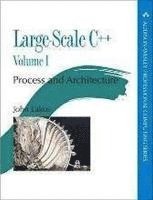
Writing reliable and maintainable C++ software is hard. Designing such software at scale adds a new set of challenges. Creating large-scale systems requires a practical understanding of logical design — beyond the theoretical concepts addressed in most popular texts. To be successful on an enterprise scale, developers must also address physical design, a dimension of software engineering that may be unfamiliar even to expert developers. Drawing on over 30 years of hands-on experience building massive, mission-critical enterprise systems, John Lakos shows how to create and grow Software Capital. This groundbreaking volume lays the foundation for projects of all sizes and demonstrates the processes, methods, techniques, and tools needed for successful real-world, large-scale development.Up to date and with a solid engineering focus, Large-Scale C++, Volume I: Process and Architecture, demonstrates fundamental design concepts with concrete examples. Professional developers of all experience levels will gain insights that transform their approach to design and development by understanding how to
Raise productivity by leveraging differences between infrastructure and application development Achieve exponential productivity gains through feedback and hierarchical reuse Embrace the component’s role as the fundamental unit of both logical and physical design Analyze how fundamental properties of compiling and linking affect component design Discover effective partitioning of logical content in appropriately sized physical aggregates Internalize the important differences among sufficient, complete, minimal, and primitive software Deliver solutions that simultaneously optimize encapsulation, stability, and performance Exploit the nine established levelization techniques to avoid cyclic physical dependencies Use lateral designs judiciously to avoid the “heaviness” of conventional layered architectures Employ appropriate architectural insulation techniques for eliminating compile-time coupling Master the multidimensional process of designing large systems using component-based methodsThis is the first of John Lakos’s three authoritative volumes on developing large-scale systems using C++. This book, written for fellow software practitioners, uses familiar C++ constructs to solve real-world problems while identifying (and motivating) modern C++ alternatives. Together with the forthcoming Volume II: Design and Implementation and Volume III: Verification and Testing, Large-Scale C++ offers comprehensive guidance for all aspects of large-scale C++ software development. If you are an architect or project leader, this book will empower you to solve critically important problems right now — and serve as your go-to reference for years to come.
Register your book for convenient access to downloads, updates, and/or corrections as they become available. See inside book for details.
371 kr
Skickas inom 7-10 vardagar
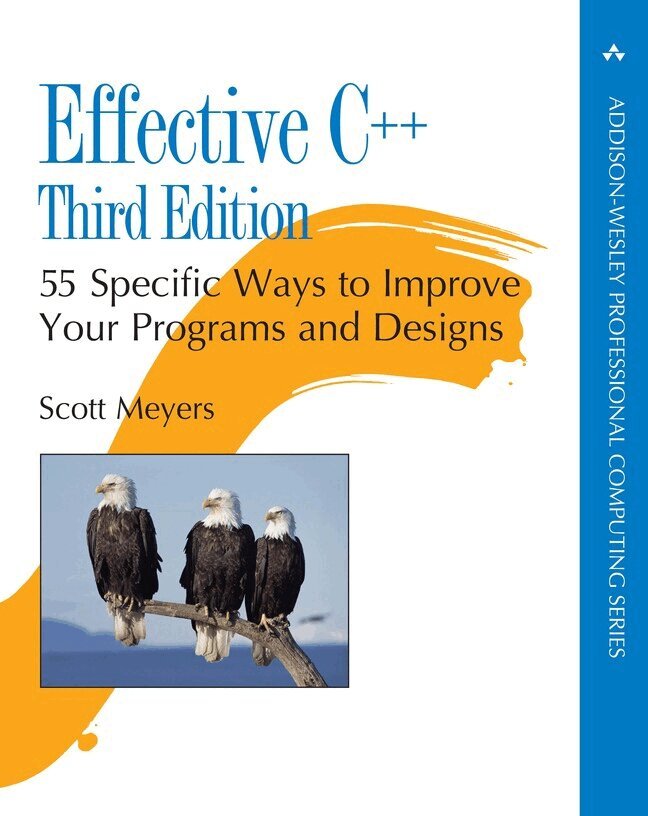
The first two editions of Effective C++ were embraced by hundreds of thousands of programmers worldwide. The reason is clear: Scott Meyers’ practical approach to C++ describes the rules of thumb used by the experts — the things they almost always do or almost always avoid doing — to produce clear, correct, efficient code.
The book is organized around 55 specific guidelines, each of which describes a way to write better C++. Each is backed by concrete examples. For this third edition, more than half the content is new, including added chapters on managing resources and using templates. Topics from the second edition have been extensively revised to reflect modern design considerations, including exceptions, design patterns, and multithreading.
Important features of Effective C++ include:
Expert guidance on the design of effective classes, functions, templates, and inheritance hierarchies. Applications of new “TR1” standard library functionality, along with comparisons to existing standard library components. Insights into differences between C++ and other languages (e.g., Java, C#, C) that help developers from those languages assimilate “the C++ way” of doing things.458 kr
Skickas inom 7-10 vardagar
“For an engineer determined to refine and secure Internet operation or to explore alternative solutions to persistent problems, the insights provided by this book will be invaluable.”
—Vint Cerf, Internet pioneer
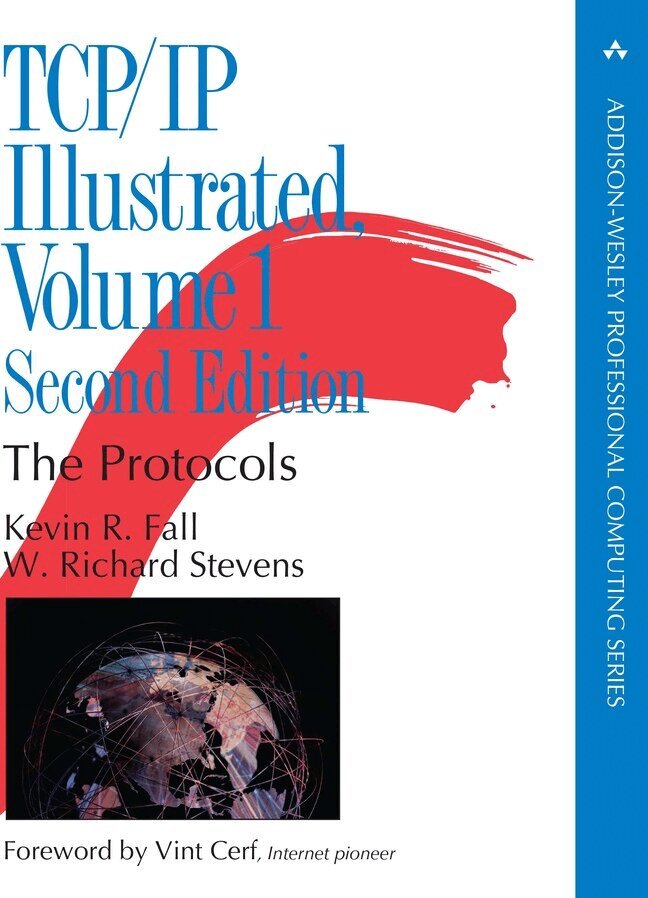
TCP/IP Illustrated, Volume 1, Second Edition, is a detailed and visual guide to today’s TCP/IP protocol suite. Fully updated for the newest innovations, it demonstrates each protocol in action through realistic examples from modern Linux, Windows, and Mac OS environments. There’s no better way to discover why TCP/IP works as it does, how it reacts to common conditions, and how to apply it in your own applications and networks.
Building on the late W. Richard Stevens’ classic first edition, author Kevin R. Fall adds his cutting-edge experience as a leader in TCP/IP protocol research, updating the book to fully reflect the latest protocols and best practices. He first introduces TCP/IP’s core goals and architectural concepts, showing how they can robustly connect diverse networks and support multiple services running concurrently. Next, he carefully explains Internet addressing in both IPv4 and IPv6 networks. Then, he walks through TCP/IP’s structure and function from the bottom up: from link layer protocols–such as Ethernet and Wi-Fi–through network, transport, and application layers.
Fall thoroughly introduces ARP, DHCP, NAT, firewalls, ICMPv4/ICMPv6, broadcasting, multicasting, UDP, DNS, and much more. He offers extensive coverage of reliable transport and TCP, including connection management, timeout, retransmission, interactive data flow, and congestion control. Finally, he introduces the basics of security and cryptography, and illuminates the crucial modern protocols for protecting security and privacy, including EAP, IPsec, TLS, DNSSEC, and DKIM. Whatever your TCP/IP experience, this book will help you gain a deeper, more intuitive understanding of the entire protocol suite so you can build better applications and run more reliable, efficient networks.
474 kr
Skickas inom 7-10 vardagar
Practical, in-depth knowledge of the system programming interfaces that drive the UNIX and Linux kernels
Building on W. Rich Stevens’ pioneering work, this third edition of the classic was updated by Steve Rago, a colleague of Stevens, to reflect technical advances and best practices aligning with Version 4 of the Single UNIX Specification.
This edition covers more than seventy interfaces including:
POSIX asynchronous I/O Spin locks Barriers POSIX semaphoresSteve carefully retains the spirit and approach that have made this book so valuable, starting with files, directories, and processes, carefully laying the groundwork for more advanced techniques, such as signal handling and terminal I/O. And he thoroughly covers threads and multithreaded programming, and socket-based IPC.
Filled with examples, case-studies, and access to thousands of lines of downloadable code, Advanced Programming in the UNIX® Environment has helped generations of programmers write code with exceptional power, performance, and reliability.
573 kr
Skickas inom 7-10 vardagar
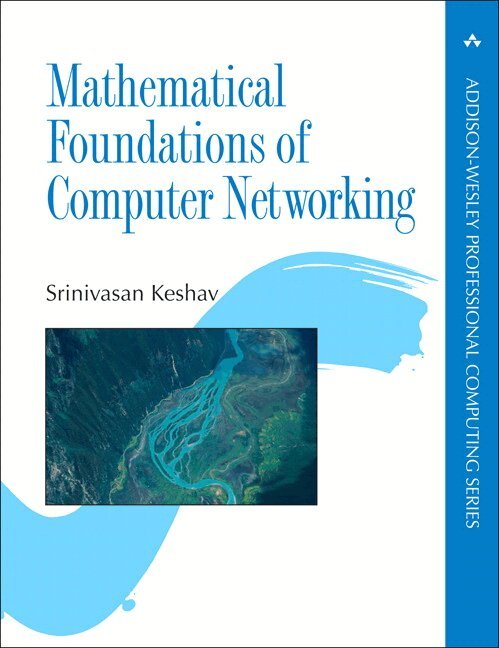
“To design future networks that are worthy of society’s trust, we must put the ‘discipline’ of computer networking on a much stronger foundation. This book rises above the considerable minutiae of today’s networking technologies to emphasize the long-standing mathematical underpinnings of the field.”
–Professor Jennifer Rexford, Department of Computer Science, Princeton University
“This book is exactly the one I have been waiting for the last couple of years. Recently, I decided most students were already very familiar with the way the net works but were not being taught the fundamentals–the math. This book contains the knowledge for people who will create and understand future communications systems."
–Professor Jon Crowcroft, The Computer Laboratory, University of Cambridge
The Essential Mathematical Principles Required to Design, Implement, or Evaluate Advanced Computer Networks
Students, researchers, and professionals in computer networking require a firm conceptual understanding of its foundations. Mathematical Foundations of Computer Networking provides an intuitive yet rigorous introduction to these essential mathematical principles and techniques.
Assuming a basic grasp of calculus, this book offers sufficient detail to serve as the only reference many readers will need. Each concept is described in four ways: intuitively; using appropriate mathematical notation; with a numerical example carefully chosen for its relevance to networking; and with a numerical exercise for the reader.
The first part of the text presents basic concepts, and the second part introduces four theories in a progression that has been designed to gradually deepen readers’ understanding. Within each part, chapters are as self-contained as possible.
The first part covers probability; statistics; linear algebra; optimization; and signals, systems, and transforms. Topics range from Bayesian networks to hypothesis testing, and eigenvalue computation to Fourier transforms.
These preliminary chapters establish a basis for the four theories covered in the second part of the book: queueing theory, game theory, control theory, and information theory. The second part also demonstrates how mathematical concepts can be applied to issues such as contention for limited resources, and the optimization of network responsiveness, stability, and throughput.