Advances in New Institutional Analysis series - Böcker
Visar alla böcker i serien Advances in New Institutional Analysis series. Handla med fri frakt och snabb leverans.
6 produkter
6 produkter
1 874 kr
Skickas inom 7-10 vardagar
This timely book presents practical applications of modern economic theories to trade, transaction costs and institutions within both business and governmental realms. Frank A.G. den Butter explains the importance and means of keeping transaction costs as low as possible. He illustrates how this transaction management can contribute to making firms and nations more competitive by exploiting gains from the division of labour and international fragmentation of production, and uses relevant case studies to illustrate how value is created by reducing transaction costs. Policy recommendations for strengthening the competitive position of trading nations and reducing implementation costs of government policy are presented, and management methods for creating value in organizing production on a global scale are prescribed. A wide-ranging audience encompassing economists in academia, government and business; managers in industry and government; and students of economics, business and globalization will find this book to be a crucial reference tool.
2 444 kr
Skickas inom 7-10 vardagar
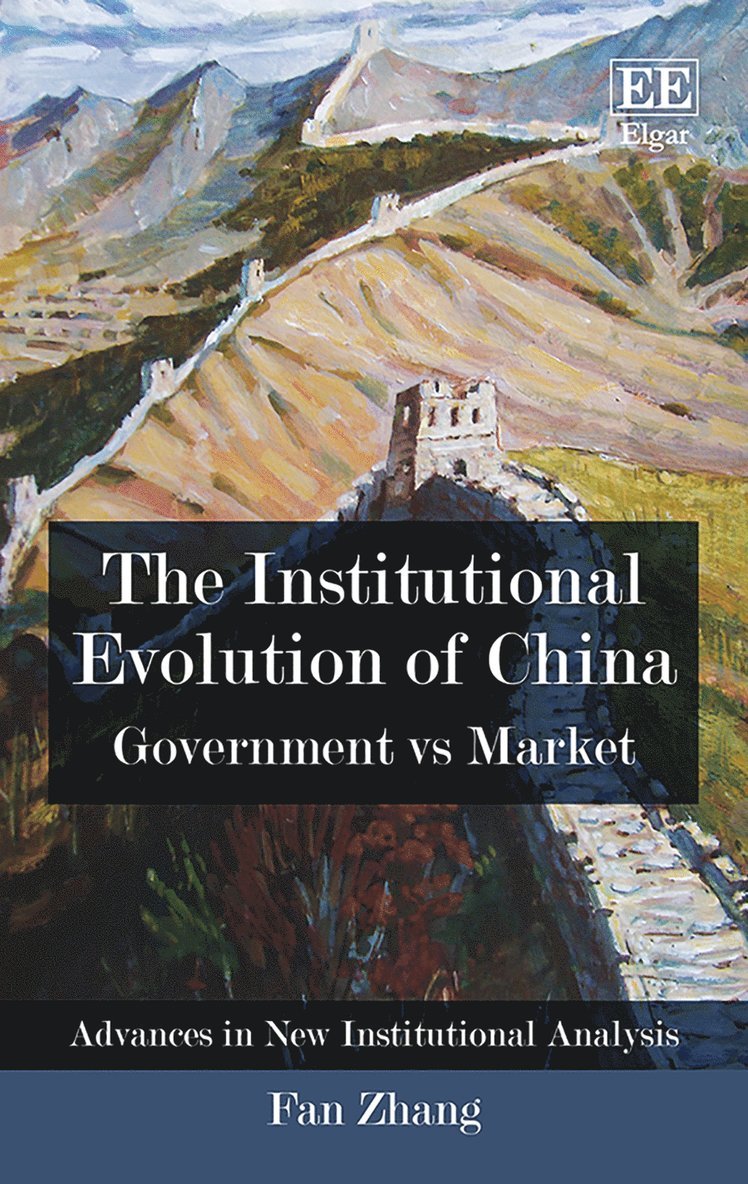
China's recent evolution is not only a story of extraordinary economic growth but also a story of great institutional change. Fan Zhang challenges traditional theory to explain the real origins of China's reform, the political and economic forces driving it, and the reasoning behind its stagnation. The institutional re-arrangement of government and market has been crucial in this marketization process.Using a wealth of documents and cases, Zhang provides a detailed analysis of China's institutional changes over the past 40 years, focusing on the government-market relationship. A theoretical framework is presented to explain the targets and incentives of government and business firms in a bureaucratic-market system, which promoted economic growth, but also fostered corruption and resulted in a re-centralisation of the system. Using an index of marketization in China since 1978, Zhang shows that overall, market expansion has continued but with diminishing marginal gains. The government control of financial resources that had previously been relaxed in the early years of reform has been enhanced to some extent as a result of the changing institutional environment. Policy makers dealing with China-related policies, researchers and postgraduate students in political science, economics and Chinese studies will find this book a compelling exploration of the current and constant cooperation and conflict between government and market.
1 398 kr
Skickas inom 7-10 vardagar
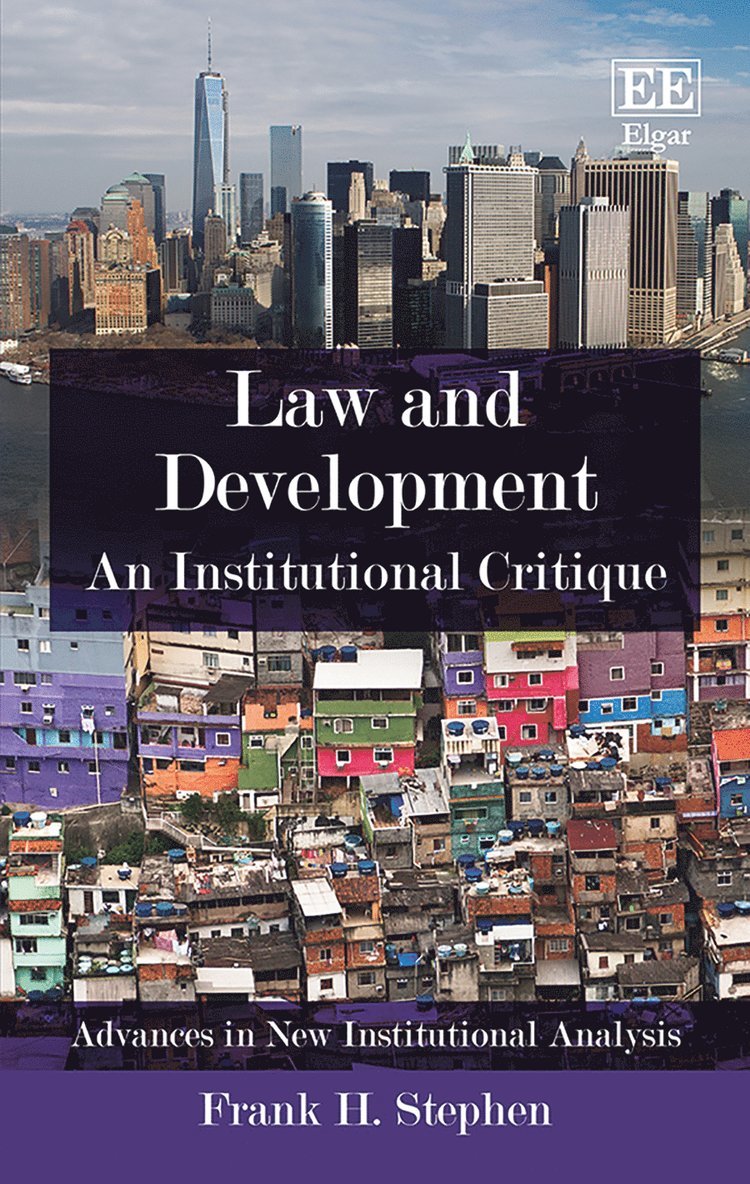
As development policy moves away from considering the state as the primary driver of economic growth it is necessary to consider the institutional foundations of the market economy. It has been argued that without legal systems that allow for innovation and enterprise, all other attempts to improve economic growth are destined to fail. Law and Development offers an unparalleled assessment of the role of legal systems in development by extending the analytical framework of New Institutional Economics (NIE). Using empirical tests to critique Legal Origin Theory, and assess the role of culture in the formation of the legal environment, this book proposes that cultural factors are much more significant than allowed for by previous frameworks. This book will be invaluable for students of law and development, as well as academics researching the role of institutions. It provides a sound framework for considering legal reform and offers nuanced insights for policymakers interested in economic development.
1 764 kr
Skickas inom 7-10 vardagar
A landmark contribution to our understanding of economic development.This significant book argues that fundamental changes in deeply rooted institutions do not happen because of outsiders' money, advice, pressures, or even physical force; which explains why foreign aid has not, and can not, improve institutions. The impetus for changing institutions must come from within a society, and the author shows how groups of local scholars contribute to institutional change and development when the political opportunity presents itself. Both economic research and the history of foreign aid suggest that the largest barriers to development arise from a society's institutions - its norms and rules. The author draws on 35 years experience to explain how institutions drive economic development. She goes beyond the abstractions usually used to define institutions, providing numerous examples to illustrate the complex, interlocking, and persistent nature of real world rules and norms. This significant book argues that fundamental changes in deeply rooted institutions do not happen because of outsiders' money, advice, pressures, or even physical force; which explains why foreign aid has not, and can not, improve institutions. The impetus for changing institutions must come from within a society, and the author shows how groups of local scholars contribute to institutional change and development when the political opportunity presents itself. Providing an overview of how market supporting institutions evolved in Europe and why these institutions are weak or absent in most countries of the world, this book will be of interest to a wide audience of aid and development policymakers, academics, and students of economics, political science, management, and law.
2 444 kr
Skickas inom 7-10 vardagar
Building on Oliver Williamson's original analysis, the contributors introduce new ideas, different perspectives and provide tools for better understanding changes in the approach to regulation, the reform of public utilities, and the complex problems of governance. They draw largely upon a transaction cost approach, highlighting the challenges faced by major economic sectors and identifying critical flaws in prevailing views on regulation. Deeply rooted in sector analysis, the book conveys a central message of new institutional economics: that theory should be continuously confronted by facts, and reformed or revolutionized accordingly. With its emphasis on the institutional embeddedness of regulatory issues and the problems generated by the 'benign neglect' of institutional factors in the reform of major public utilities, this book will provide a wide-ranging audience with challenging views on the dynamics of regulatory approaches. Economists, political scientists, postgraduate students, researchers and policymakers with an interest in institutional economics and economic organization will find the book to be a stimulating and enlightening read.
833 kr
Skickas inom 7-10 vardagar
Building on Oliver Williamson's original analysis, the contributors introduce new ideas, different perspectives and provide tools for better understanding changes in the approach to regulation, the reform of public utilities, and the complex problems of governance. They draw largely upon a transaction cost approach, highlighting the challenges faced by major economic sectors and identifying critical flaws in prevailing views on regulation. Deeply rooted in sector analysis, the book conveys a central message of new institutional economics: that theory should be continuously confronted by facts, and reformed or revolutionized accordingly. With its emphasis on the institutional embeddedness of regulatory issues and the problems generated by the 'benign neglect' of institutional factors in the reform of major public utilities, this book will provide a wide-ranging audience with challenging views on the dynamics of regulatory approaches. Economists, political scientists, postgraduate students, researchers and policymakers with an interest in institutional economics and economic organization will find the book to be a stimulating and enlightening read.