Advancing Human Rights series - Böcker
Visar alla böcker i serien Advancing Human Rights series. Handla med fri frakt och snabb leverans.
14 produkter
14 produkter
1 783 kr
Tillfälligt slut
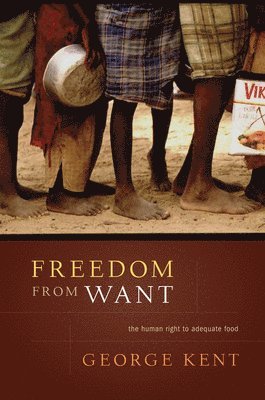
There is, literally, a world of difference between the statements "Everyone should have adequate food," and "Everyone has the right to adequate food." In George Kent's view, the lofty rhetoric of the first statement will not be fulfilled until we take the second statement seriously. Kent sees hunger as a deeply political problem. Too many people do not have adequate control over local resources and cannot create the circumstances that would allow them to do meaningful, productive work and provide for themselves. The human right to an adequate livelihood, including the human right to adequate food, needs to be implemented worldwide in a systematic way.Freedom from Want makes it clear that feeding people will not solve the problem of hunger, for feeding programs can only be a short-term treatment of a symptom, not a cure. The real solution lies in empowering the poor. Governments, in particular, must ensure that their people face enabling conditions that allow citizens to provide for themselves.In a wider sense, Kent brings an understanding of human rights as a universal system, applicable to all nations on a global scale. If, as Kent argues, everyone has a human right to adequate food, it follows that those who can empower the poor have a duty to see that right implemented, and the obligation to be held morally and legally accountable, for seeing that that right is realized for everyone, everywhere.
698 kr
Skickas inom 5-8 vardagar
There is, literally, a world of difference between the statements "Everyone should have adequate food," and "Everyone has the right to adequate food." In George Kent's view, the lofty rhetoric of the first statement will not be fulfilled until we take the second statement seriously. Kent sees hunger as a deeply political problem. Too many people do not have adequate control over local resources and cannot create the circumstances that would allow them to do meaningful, productive work and provide for themselves. The human right to an adequate livelihood, including the human right to adequate food, needs to be implemented worldwide in a systematic way. Freedom from Want makes it clear that feeding people will not solve the problem of hunger, for feeding programs can only be a short-term treatment of a symptom, not a cure. The real solution lies in empowering the poor. Governments, in particular, must ensure that their people face enabling conditions that allow citizens to provide for themselves. In a wider sense, Kent brings an understanding of human rights as a universal system, applicable to all nations on a global scale.If, as Kent argues, everyone has a human right to adequate food, it follows that those who can empower the poor have a duty to see that right implemented, and the obligation to be held morally and legally accountable for seeing that that right is realized for everyone, everywhere.
698 kr
Skickas inom 5-8 vardagar
Ours has been called a global "age of rights," an era in which respect for human rights is considered the highest aspiration of the international democratic community. Since the United Nation's 1948 Universal Declaration of Human Rights, a wide variety of protections - civil, political, economic, social, and cultural - have been given legal validation as countries ratify treaties, participate in intergovernmental organizations, and establish human rights tribunals and truth and reconciliation commissions. Yet notable human rights failures have marred the post-Declaration era, including ongoing state violence toward citizens, the selectivity of humanitarian intervention (evidenced by the international community's failure to respond in Rwanda), and recent legislation in advanced democracies that trades some rights for protection against the threat of terrorism. How are we to reconcile the language of rights with the reality? And do we live in an age of rights after all? In "Protecting Human Rights", Todd Landman provides a unique quantitative analysis of the marked gap between the principle and practice of human rights.Applying theories and methods from the fields of international law, international relations, and comparative politics, Landman examines data from 193 countries over 25 years (1976-2000) to assess the growth of the international human rights regime, the effect of law on actual protection, and global variation in human rights norms. Landman contends that human rights foreign policy remains based more on geo-strategic interest than moral internationalism. He argues that the influence human rights ideals have begun to have on states cannot be separated from the broader impact of socioeconomic changes that swept the globe in the late twentieth century. Landman concludes that international law alone will not suffice to fully protect human rights - it must be accompanied by democratic government, effective conflict resolution, and just economic systems.
1 674 kr
Skickas inom 7-10 vardagar
Ours has been called a global "age of rights," an era in which respect for human rights is considered the highest aspiration of the international democratic community. Since the United Nation's 1948 Universal Declaration of Human Rights, a wide variety of protections—civil, political, economic, social, and cultural—have been given legal validation as countries ratify treaties, participate in intergovernmental organizations, and establish human rights tribunals and truth and reconciliation commissions. Yet notable human rights failures have marred the post-Declaration era, including ongoing state violence toward citizens, the selectivity of humanitarian intervention (evidenced by the international community's failure to respond in Rwanda), and recent legislation in advanced democracies that trades some rights for protection against the threat of terrorism. How are we to reconcile the language of rights with the reality? Do we live in an age of rights after all? In Protecting Human Rights, Todd Landman provides a unique quantitative analysis of the marked gap between the principle and practice of human rights. Applying theories and methods from the fields of international law, international relations, and comparative politics, Landman examines data from 193 countries over 25 years (1976-2000) to assess the growth of the international human rights regime, the effect of law on actual protection, and global variation in human rights norms. Landman contends that human rights foreign policy remains based more on geo-strategic interest than moral internationalism. He argues that the influence human rights ideals have begun to have on states cannot be separated from the broader impact of socioeconomic changes that swept the globe in the late twentieth century. Landman concludes that international law alone will not suffice to fully protect human rights—it must be accompanied by democratic government, effective conflict resolution, and just economic systems.
1 939 kr
Tillfälligt slut
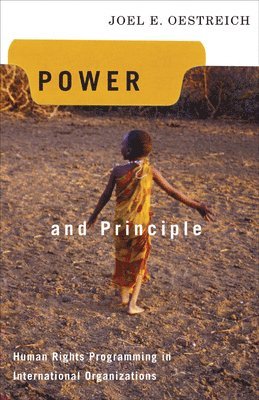
The UN Secretary-General, Kofi Annan, has instructed all UN specialized agencies and other affiliated organizations to consider how their work might advance the cause of human rights around the world. Many of these bodies have taken this call to heart, with a wide range of intergovernmental organizations (IGOs) trying to play a more active role in promoting human welfare. "Power and Principle" is a comparative study of how and why IGOs integrate human rights standards into their development operations. It focuses on the process of policy innovation in three UN-related IGOs: the UN Children's Fund (UNICEF,) the World Bank, and the World Health Organization (WHO). In his comprehensive analysis, Joel E. Oestreich uses case studies to demonstrate how their policies have evolved during the past two decades to reflect important human rights considerations. Drawing on interviews with dozens of staffers from IGOs, Oestreich creates a gripping narrative of the inner workings of these large bureaucracies.In each study he describes how the organization first became interested in human rights standards, how these standards were adopted as a priority, how the organization defined rights in the context of their work, and what a rights-based approach has meant in practice. The book argues that IGOs ought to be seen as capable of meaningful agency in international politics, and describes the nature of that agency. It concludes with an examination of these organizations and their ethical responsibilities as actors on the world stage.
518 kr
Skickas inom 3-6 vardagar
The UN Secretary-General, Kofi Annan, has instructed all UN specialized agencies and other affiliated organizations to consider how their work might advance the cause of human rights around the world. Many of these bodies have taken this call to heart, with a wide range of intergovernmental organizations (IGOs) trying to play a more active role in promoting human welfare. "Power and Principle" is a comparative study of how and why IGOs integrate human rights standards into their development operations. It focuses on the process of policy innovation in three UN-related IGOs: the UN Children's Fund (UNICEF,) the World Bank, and the World Health Organization (WHO). In his comprehensive analysis, Joel E. Oestreich uses case studies to demonstrate how their policies have evolved during the past two decades to reflect important human rights considerations. Drawing on interviews with dozens of staffers from IGOs, Oestreich creates a gripping narrative of the inner workings of these large bureaucracies.In each study he describes how the organization first became interested in human rights standards, how these standards were adopted as a priority, how the organization defined rights in the context of their work, and what a rights-based approach has meant in practice. The book argues that IGOs ought to be seen as capable of meaningful agency in international politics, and describes the nature of that agency. It concludes with an examination of these organizations and their ethical responsibilities as actors on the world stage.
1 939 kr
Tillfälligt slut
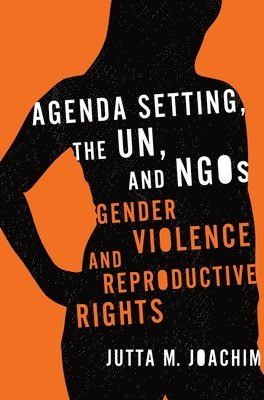
In the mid-1990s, when the United Nations adopted positions affirming a woman's right to be free from bodily harm and to control her own reproductive health, it was both a coup for the international women's rights movement and an instructive moment for nongovernmental organizations (NGOs) seeking to influence UN decision making.Prior to the UN General Assembly's 1993 Declaration on the Elimination of All Forms of Violence against Women and the 1994 decision by the UN's Conference on Population and Development to vault women's reproductive rights and health to the forefront of its global population growth management program, there was little consensus among governments as to what constituted violence against women and how much control a woman should have over reproduction. Jutta Joachim tells the story of how, in the years leading up to these decisions, women's organizations got savvy—framing the issues strategically, seizing political opportunities in the international environment, and taking advantage of mobilizing structures—and overcame the cultural opposition of many UN-member states to broadly define the two issues and ultimately cement women's rights as an international cause. Joachim's deft examination of the documents, proceedings, and actions of the UN and women's advocacy NGOs—supplemented by interviews with key players from concerned parties, and her own participant-observation—reveals flaws in state-centered international relations theories as applied to UN policy, details the tactics and methods that NGOs can employ in order to push rights issues onto the UN agenda, and offers insights into the factors that affect NGO influence. In so doing, Agenda Setting, the UN, and NGOs departs from conventional international relations theory by drawing on social movement literature to illustrate how rights groups can motivate change at the international level.
611 kr
Skickas inom 7-10 vardagar
In the mid-1990s, when the United Nations adopted positions affirming a woman's right to be free from bodily harm and to control her own reproductive health, it was both a coup for the international women's rights movement and an instructive moment for nongovernmental organizations (NGOs) seeking to influence UN decision making. Prior to the UN General Assembly's 1993 Declaration on the Elimination of All Forms of Violence against Women and the 1994 decision by the UN's Conference on Population and Development to vault women's reproductive rights and health to the forefront of its global population growth management program, there was little consensus among governments as to what constituted violence against women and how much control a woman should have over reproduction.Jutta Joachim tells the story of how, in the years leading up to these decisions, women's organizations got savvy - framing the issues strategically, seizing political opportunities in the international environment, and taking advantage of mobilizing structures - and overcame the cultural opposition of many UN-member states to broadly define the two issues and ultimately cement women's rights as an international cause. Joachim's deft examination of the documents, proceedings, and actions of the UN and women's advocacy NGOs - supplemented by interviews with key players from concerned parties, and her own participant-observation - reveals flaws in state-centered international relations theories as applied to UN policy, details the tactics and methods that NGOs can employ in order to push rights issues onto the UN agenda, and offers insights into the factors that affect NGO influence. In so doing, "Agenda Setting, the UN, and NGOs" departs from conventional international relations theory by drawing on social movement literature to illustrate how rights groups can motivate change at the international level.
611 kr
Skickas inom 7-10 vardagar
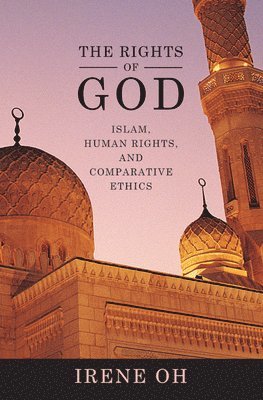
Promoting Islam as a defender of human rights is laden with difficulties. Advocates of human rights will readily point out numerous humanitarian failures carried out in the name of Islam. In "The Rights of God", Irene Oh looks at human rights and Islam as a religious issue rather than a political or legal one and draws on three revered Islamic scholars to offer a broad range of perspectives that challenge our assumptions about the role of religion in human rights. The theoretical shift from the conception of morality based in natural duty and law to one of rights has created tensions that hinder a fruitful exchange between human rights theorists and religious thinkers. Does the static identification of human rights with lists of specific rights, such as those found in the Universal Declaration of Human Rights, make sense given the cultural, historical, and religious diversity of the societies in which these rights are to be respected and implemented? In examining human rights issues of the contemporary Islamic world, Oh illustrates how the value of religious scholarship cannot be overestimated.Oh analyzes the commentaries of Abul A'la Maududi, Sayyid Qutb, and Abdolkarim Soroush - all prominent and often controversial Islamic thinkers - on the topics of political participation, religious toleration, and freedom of conscience. While Maududi and Qutb represent traditional Islam, and Soroush a more reform and Western-friendly approach, all three contend that Islam is indeed capable of accommodating and advocating human rights. Whereas disentangling politics and culture from religion is never easy, Oh shows that the attempt must be made in order to understand and overcome the historical obstacles that prevent genuine dialogue from taking place across religious and cultural boundaries.
1 872 kr
Tillfälligt slut
Promoting Islam as a defender of human rights is laden with difficulties. Advocates of human rights will readily point out numerous humanitarian failures carried out in the name of Islam. In "The Rights of God", Irene Oh looks at human rights and Islam as a religious issue rather than a political or legal one and draws on three revered Islamic scholars to offer a broad range of perspectives that challenge our assumptions about the role of religion in human rights. The theoretical shift from the conception of morality based in natural duty and law to one of rights has created tensions that hinder a fruitful exchange between human rights theorists and religious thinkers. Does the static identification of human rights with lists of specific rights, such as those found in the Universal Declaration of Human Rights, make sense given the cultural, historical, and religious diversity of the societies in which these rights are to be respected and implemented? In examining human rights issues of the contemporary Islamic world, Oh illustrates how the value of religious scholarship cannot be overestimated.Oh analyzes the commentaries of Abul A'la Maududi, Sayyid Qutb, and Abdolkarim Soroush - all prominent and often controversial Islamic thinkers - on the topics of political participation, religious toleration, and freedom of conscience. While Maududi and Qutb represent traditional Islam, and Soroush a more reform and Western-friendly approach, all three contend that Islam is indeed capable of accommodating and advocating human rights. Whereas disentangling politics and culture from religion is never easy, Oh shows that the attempt must be made in order to understand and overcome the historical obstacles that prevent genuine dialogue from taking place across religious and cultural boundaries.
341 kr
Skickas inom 7-10 vardagar
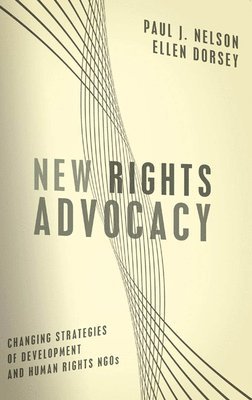
After World War II dozens of non-governmental organizations (NGOs) emerged on the global scene, committed to improving the lives of the world's most vulnerable people. Some focused on protecting human rights; some were dedicated to development, aimed at satisfying basic economic needs. Both approaches had distinctive methods, missions, and emphases. In the 1980s and 90s, however, the dividing line began to blur. In the first book to track the growing intersection and even overlap of human rights and development NGOs, Paul Nelson and Ellen Dorsey introduce a concept they call 'new rights advocacy'. New rights advocacy has at its core three main trends: the embrace of human rights-based approaches by influential development NGOs, the adoption of active economic and social rights agendas by major international human rights NGOs, and the surge of work on economic and social policy through a human rights lens by specialized human rights NGOs and social movement campaigns.Nelson and Dorsey draw on rich case studies of internationally well-known individual NGOs such as Amnesty International, Human Rights Watch, Oxfam, CARE, ActionAid, and Save the Children, and employ perspectives from fields of human rights, international relations, the sociology of social movements and of complex organizations, and development theory, in order to better understand the changes occurring within NGOs.In questioning current trends using new theoretical frameworks, this book breaks new ground in the evolution of human rights-development interaction. The way in which NGOs are reinventing themselves has great potential for success - or possibly failure - and profound implications for a world in which the enormous gap between the wealthiest and poorest poses a persistent challenge to both development and human rights.
1 014 kr
Skickas inom 7-10 vardagar
After World War II dozens of non-governmental organizations (NGOs) emerged on the global scene, committed to improving the lives of the world's most vulnerable people. Some focused on protecting human rights; some were dedicated to development, aimed at satisfying basic economic needs. Both approaches had distinctive methods, missions, and emphases. In the 1980s and 90s, however, the dividing line began to blur. In the first book to track the growing intersection and even overlap of human rights and development NGOs, Paul Nelson and Ellen Dorsey introduce a concept they call 'new rights advocacy'. New rights advocacy has at its core three main trends: the embrace of human rights-based approaches by influential development NGOs, the adoption of active economic and social rights agendas by major international human rights NGOs, and the surge of work on economic and social policy through a human rights lens by specialized human rights NGOs and social movement campaigns.Nelson and Dorsey draw on rich case studies of internationally well-known individual NGOs such as Amnesty International, Human Rights Watch, Oxfam, CARE, ActionAid, and Save the Children, and employ perspectives from fields of human rights, international relations, the sociology of social movements and of complex organizations, and development theory, in order to better understand the changes occurring within NGOs.In questioning current trends using new theoretical frameworks, this book breaks new ground in the evolution of human rights-development interaction. The way in which NGOs are reinventing themselves has great potential for success - or possibly failure - and profound implications for a world in which the enormous gap between the wealthiest and poorest poses a persistent challenge to both development and human rights.
391 kr
Skickas inom 5-8 vardagar
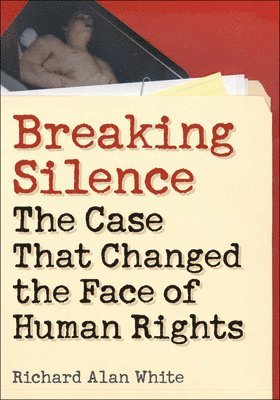
Young seventeen-year-old Joelito Filartiga was taken from his family home in Asuncion, Paraguay, brutally tortured, and murdered by the Paraguayan police. "Breaking Silence" is the inside story of the quest for justice by his father - the true target of the police - Paraguayan artist and philanthropist Dr. Joel Filartiga. That cruel death, and the subsequent uncompromising struggle by Joelito's father and family, led to an unprecedented sea change in international law and human rights. The author, Richard Alan White, first became acquainted with the Filartiga family in the mid-1970s while doing research for his dissertation on Paraguayan independence. Answering a distressed letter from Joelito's father, he returned to Paraguay and journeyed with the Filartiga family on their long and difficult road to redress. White gives the reader a compelling first-hand, participant-observer perspective, taking us into the family with him, to give witness to not only their agony and sorrow, but their resolute strength as well - strength that led to a groundbreaking 10 million legal decision in Filartiga v. Pena.(Americo Norberto Pena-Irala was the Paraguayan police officer responsible for Joelito's abduction and murder, whom the Filartigas had arrested after finding him hiding in Brooklyn). That landmark decision, based on the almost obscure Alien Tort Claims Act of 1789, ruled that U.S. courts could accept jurisdiction in international cases - recognizing the right of foreign human rights victims to sue - even though the alleged violation occurred in another country by a non-American and against a non-American. So fundamentally has the Filartiga precedent changed the landscape of international human rights law, that it has served as the basis for nearly 100 progeny suits, and grown to encompass not only human rights abuses, but also violations of international environmental and labor rights law. Today, there are dozens of class action suits pending against corporate defendants ranging from oil conglomerates destroying the Amazon rainforest to designer clothing companies running sweatshops abroad."Breaking Silence" is a remarkable, consuming story, documenting not only the most celebrated case in the international human rights field - but also the tragic and touchingly human story behind it that gives it life. In 2001, Dr. Filartiga was nominated for the Nobel Peace Prize and the Alien Tort Claims Act continues to be hotly debated among politicians and lawmakers.
611 kr
Skickas inom 7-10 vardagar
In 1948 the General Assembly of the United Nations adopted the Universal Declaration of Human Rights which declared that every human being, without "distinction of any kind," possesses a set of morally authoritative rights and fundamental freedoms that ought to be socially guaranteed. Since that time, human rights have arguably become the cross-cultural moral concept and evaluative tool to measure the performance - and even legitimacy - of domestic regimes. Yet questions remain that challenge their universal validity and theoretical bases. Some theorists are "maximalist" in their insistence that human rights must be grounded religiously, while an opposing camp attempts to justify these rights in "minimalist" fashion without any necessary recourse to religion, metaphysics, or essentialism. In "Grounding Human Rights in a Pluralist World", Grace Kao critically examines the strengths and weaknesses of these contending interpretations while also exploring the political liberalism of John Rawls and the Capability Approach as proposed by economist Amartya Sen and philosopher Martha Nussbaum.By retrieving insights from a variety of approaches, Kao defends an account of human rights that straddles the minimalist-maximalist divide, one that links human rights to a conception of our common humanity and to the notion that ethical realism gives the most satisfying account of our commitment to the equal moral worth of all human beings.