African Anthropology - Böcker
Visar alla böcker i serien African Anthropology. Handla med fri frakt och snabb leverans.
2 produkter
2 produkter
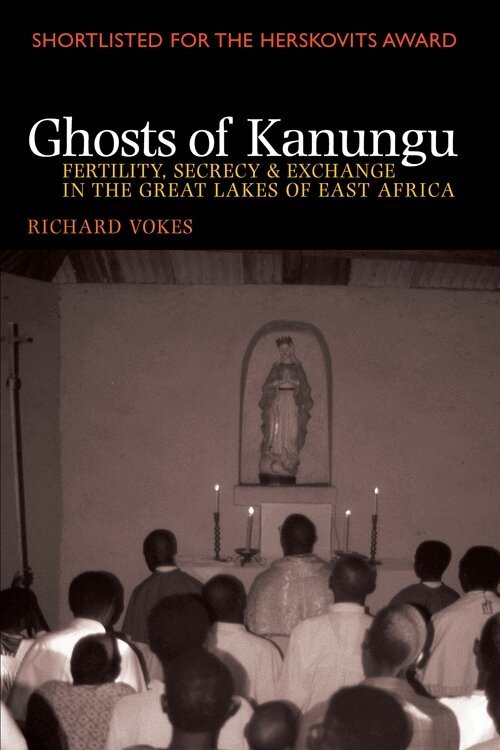
Ghosts of Kanungu
Fertility, Secrecy & Exchange in the Great Lakes of East Africa
Häftad, Engelska, 2013
317 kr
Skickas inom 7-10 vardagar
Shortlisted for the Herskovits Award, this book throws light on secrecy and violence in Uganda, Rwanda and the Great Lakes area of East Africa.On 17 March 2000 several hundred members of a charismatic Christian sect, the Movement for the Restoration of the Ten Commandments of God (MRTC), burnt to death in the group's headquarters in the Southwest Ugandan village of Kanungu. Days later the Ugandan police discovered a series of mass graves containing over 400 bodies on various other properties belonging to the sect. Was this mass suicide or mass murder?Based on eight years of historical andethnographic research, Ghosts of Kanungu provides a comprehensive and scholarly account of the MRTC and of the events leading up to the inferno. It argues that none of these events can be understood without reference to abroader social history of Southwestern Uganda during the twentieth century, in which anti-colonial movements, Catholic White Fathers missionaries, colonial relocation schemes, the breakdown of the Ugandan state, post-war reconstruction, the onset of HIV/AIDS, and the transformation of the regional Nyabingi fertility cult into a Marian church with worldwide connections, all played their part.RICHARD VOKES is Senior Lecturer in Anthropology and Development Studies at the University of Adelaide, AustraliaUganda: Fountain Publishers (PB)
791 kr
Skickas inom 10-15 vardagar
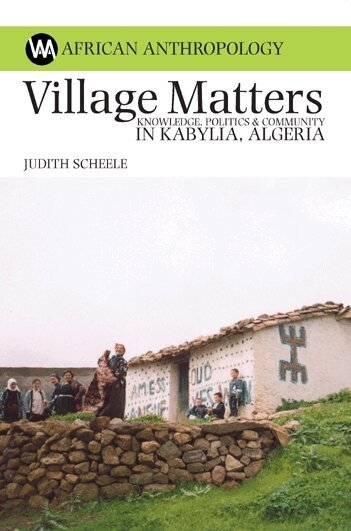
Traces Kabylia's history through French occupation, the Algerian war of independence, and the political turmoil that followed.Kabylia is a Berber-speaking, densely populated mountainous region east of Algiers, that has played an important part in Algerian pre- and post-independence politics, and continues to be troublesome to central government. But 'Kabylia' is also an ideal, shaped and shared by a variety of intellectual trends both in Algeria and in France. Kabylia was seen by sociologically minded nineteenth-century French authors as a model of primitive democracy and became central to their debates about good government, the nature of 'race', nationhood, and the social bond. These qualities have by now largely been appropriated by Kabyles themselves, and have become central to Kabyle self-images discussed on numerous websites run by Kabyle emigrants in France as much as by local parties and associations in Kabylia itself. Central to this image is the Kabyles' attachment to their home villages. But what exactly makes a village a village? And how can this emphasis on communal autonomy be articulated within a modern nation-state? These are the questions this book tries to answer through an in-depth case study of one particular village, analysing the contemporary debates that animate it, and tracing its history through the French conquest and occupation, the Algerian war of independence, and the political turmoil, including the challenge of Islamist politics, that followed independence.The 'village', as much as Kabylia as a whole, emerges as a place made by its internal contradictions, and that can only be understood with reference to the position it occupies within the various intellectual, political, economic and cultural 'world-systems' of which it is part.Judith Scheele is a Research Fellow at Magdalen College, Oxford