American Lectures on the History of Religions – serie
Visar alla böcker i serien American Lectures on the History of Religions. Handla med fri frakt och snabb leverans.
17 produkter
17 produkter
2 420 kr
Skickas inom 3-6 vardagar
Tracing Japan's religions from the Hein Period through the middle ages and into modernity, this book explores the unique establishment of Shinto, Buddhism, and Confucianism in Japan, as well as the later influence of Roman Catholicism, and the problem of Restoration--both spiritual and material--following World War II.
323 kr
Skickas inom 7-10 vardagar
Tracing Japan's religions from the Hein Period through the middle ages and into modernity, this book explores the unique establishment of Shinto, Buddhism, and Confucianism in Japan, as well as the later influence of Roman Catholicism, and the problem of Restoration--both spiritual and material--following World War II.
1 166 kr
Skickas
A history of mystical Islamic poetry, not only in Arabic and Persian, but also in the popular folk traditions of regional vernacular languages, including a chapter on Rumi and Sufi poetry
578 kr
Skickas inom 3-6 vardagar
The Sikhs, a colorful and controversial people about whom little is generally known, have been the subject of much hypothetical speculation. Their non-conformist behavior, except to their own traditions, and their fierce independence, even to demanding autonomy, have recently attracted world-wide attention. Hew McLeod, internationally known scholar of Sikh studies, provides a just and accurate description in his introduction to this religious community from northern India now numbering about sixteen million people, exploring their history, doctrine, and literature. The Sikhs begins by giving an overview of the people's history, then covers the origins of the Sikh tradition, dwelling on controversies surrounding the life and doctrine of the first Master, Guru Nanak (1469-1539). The book surveys the subsequent life of the community with emphasis on the founding of the Khalsa, the order that gives to Sikhs the insignia by which they are best known. The remaining sections concern Sikh doctrine, the problem of who should be regarded as a Sikh, and a survey of Sikh literature.Finally, the book considers the present life of the community-its dispersion around the world to Asia, Australasia, North America, Africa, and Europe, and its involvement in the current trials of the Punjab. Sikh culture is believed to have been settled and unchanging from the time of the Gurus onwards.The Sikhs, a major new work by a leading authority, reveals that this is a very misleading view. McLeod treats a variety of questions sympathetically and in so doing he establishes a new understanding for students of religion and for all those interested in current events in India.
2 420 kr
Skickas inom 3-6 vardagar
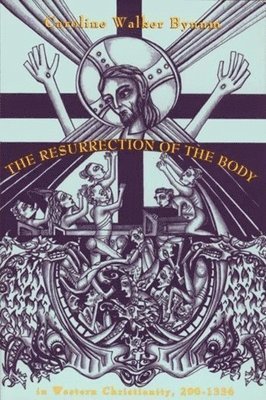
Bynum examines several periods between the 3rd and 14th centuries in which discussions of the body were central to Western eschatology, and suggests that Western attitudes toward the body that arose from these discussions still undergird our modern notions of the individual. He explores the "plethora of ideas about resurrection in patristic and medieval literature--the metaphors, tropes, and arguments in which the ideas were garbed, their context and their consequences," in order to understand human life after death.
323 kr
Skickas inom 7-10 vardagar
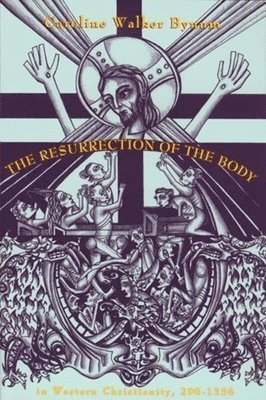
Bynum examines several periods between the 3rd and 14th centuries in which discussions of the body were central to Western eschatology, and suggests that Western attitudes toward the body that arose from these discussions still undergird our modern notions of the individual. She explores the "plethora of ideas about resurrection in patristic and medieval literature--the metaphors, tropes, and arguments in which the ideas were garbed, their context and their consequences," in order to understand human life after death.
323 kr
Skickas inom 7-10 vardagar
With the age of enlightenment in Europe and the emancipation of Western Europe's Jewish populations, Jews at last held a place within society and could integrate within the life of a modern Western nation. Nominally a blessing, emancipation yet brought with it the seeds of a major crisis in the history of Judaism. From the perspective of an age of reason, Jews reexamined their traditional religious beliefs and practices. For many, ancient traditions could no longer serve as suitable guides to action in the contemporary environment. To meet the crisis, the Jewish community was radically altered, as was the synagogue. In the sphere of religion, Dr. Blau describes the adjustments that Judaism has made in the past two centuries - adjustments that allow both change and continuity within an age-old tradition. He deals in order of their emergence with the religion's major branches (Reform, Neo-Orthodox, and Conservative) and appraises the Zionist movement. Taken all together, all of the modern varieties of Judaism reveal the influence of emancipation and of the full entry of Jews into the secular life of their communities.
1 616 kr
Skickas inom 3-6 vardagar
At this time of heightened political sensitivities, it may seem impossible to make serious comparisons among different cultures. And at a time when human difference is so relentlessly celebrated, it may even seem impossible to talk about the traditions and experiences that join us across race, religion, and nation. Wendy Doniger offers a powerful antidote to the paralysis of postcolonial intellectual life. In this spirited, enlightening book, she shows just how to make sense of, and learn from, the extraordinary diversity of cultures past and present. Tapping a wealth of traditions, from the Hebrew Bible to the Bhagavad Gita, Doniger crafts a new lens for examining other cultures, and finding in the world's myths--its sacred stories--a way to talk about experiences shared across time and space. "Of all things made with words," Doniger writes, "myths span the widest of human concerns, human paradoxes." Myths, she shows, bridge the cosmic and the familiar, the personal and the abstract, the theological and the political. They encourage us to draw various, even opposed, political meanings from a single text as it travels through different historical contexts.And she demonstrates how studying myths from cultures other than our own can be exhilarating and illuminating. Myth, Doniger shows, provides a near-perfect entree to another culture. Even if scholars such as Freud, Jung, and Joseph Campbell typically overstated the universality of major myths and suppressed the distinctive natures of other cultures, postcolonial critics are wrong to argue that nothing good can come from a systematic comparative study of human cultures. Doniger offers an engaged, expansive critical tool kit for doing just that. She suggests critical and responsible ways in which to compare stories--or texts or myths or traditions--from different cultures by revealing patterns of truth from themes that recur time and again. In this book, Doniger helps expand the arena of meaning we live in, leaping, in her words, "from myth to myth as if they were stepping stones over the gulf that seems to separate cultures." She enables us to see, at last, the "implied spider" that weaves the web of meaning that sustains all human cultures-the fabric of our shared humanity.
578 kr
Skickas inom 3-6 vardagar
At this time of heightened political sensitivities, it may seem impossible to make serious comparisons among different cultures. And at a time when human difference is so relentlessly celebrated, it may even seem impossible to talk about the traditions and experiences that join us across race, religion, and nation. Wendy Doniger offers a powerful antidote to the paralysis of postcolonial intellectual life. In this spirited, enlightening book, she shows just how to make sense of, and learn from, the extraordinary diversity of cultures past and present. Tapping a wealth of traditions, from the Hebrew Bible to the Bhagavad Gita, Doniger crafts a new lens for examining other cultures, and finding in the world's myths--its sacred stories--a way to talk about experiences shared across time and space. "Of all things made with words," Doniger writes, "myths span the widest of human concerns, human paradoxes." Myths, she shows, bridge the cosmic and the familiar, the personal and the abstract, the theological and the political. They encourage us to draw various, even opposed, political meanings from a single text as it travels through different historical contexts.And she demonstrates how studying myths from cultures other than our own can be exhilarating and illuminating. Myth, Doniger shows, provides a near-perfect entree to another culture. Even if scholars such as Freud, Jung, and Joseph Campbell typically overstated the universality of major myths and suppressed the distinctive natures of other cultures, postcolonial critics are wrong to argue that nothing good can come from a systematic comparative study of human cultures. Doniger offers an engaged, expansive critical tool kit for doing just that. She suggests critical and responsible ways in which to compare stories--or texts or myths or traditions--from different cultures by revealing patterns of truth from themes that recur time and again. In this book, Doniger helps expand the arena of meaning we live in, leaping, in her words, "from myth to myth as if they were stepping stones over the gulf that seems to separate cultures." She enables us to see, at last, the "implied spider" that weaves the web of meaning that sustains all human cultures-the fabric of our shared humanity.
New Faiths, Old Fears
Muslims and Other Asian Immigrants in American Religious Life
Inbunden, Engelska, 2002
985 kr
Skickas inom 7-10 vardagar
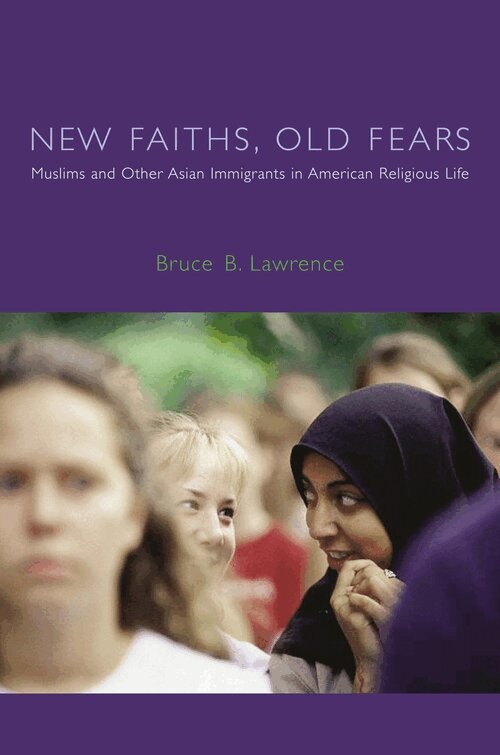
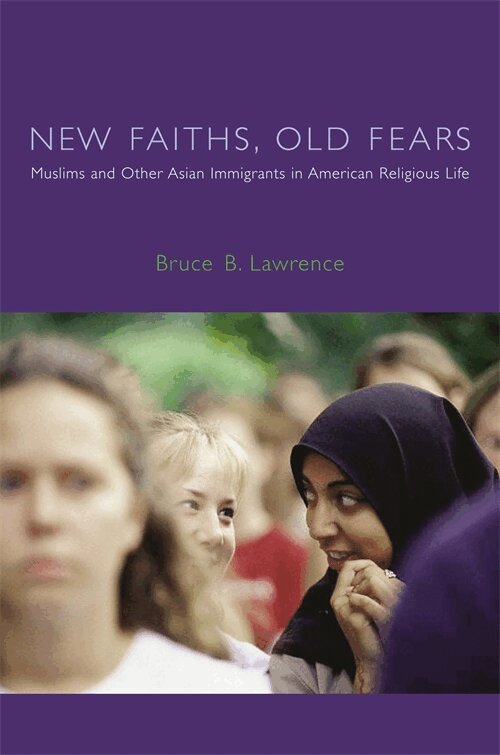
As a result of immigration from Asia in the wake of the passage of the 1965 Hart-Celler Immigration Act, the fastest-growing religions in America-faster than all Christian groups combined-are Islam, Hinduism, Buddhism, and Sikhism. In this remarkable book, a leading scholar of religion asks how these new faiths have changed or have been changed by the pluralist face of American civil society. How have these new religious minorities been affected by the deep-rooted American ambivalence toward foreign traditions? Bruce Lawrence casts a comparativist eye on the American religious scene and explores the ways in which various groups of Asian immigrants have, and sometimes have not, been integrated into the American polity. In the process, he offers several important correctives. Too often, Lawrence argues, profiles of Asian American experience focus exclusively on immigrants from East Asia, to the exclusion of South Asian and West Asian voices.New Faiths, Old Fears seeks to make all Asians equally important and to break free of traditional geographic markers, most reflecting nineteenth-century imperial values, that artificially divide the people of the "Middle East" from the rest of Asia, with whom they share certain religious and cultural ties.Iranian Americans, in particular, emerge as a vital bridge group whose experience tells us much about how Asians of many different backgrounds have found their way in their new nation. Beyond simply expanding and refining our conception of who Asian Americans are, Lawrence draws instructive comparisons between Asian Americans' experience and those of Native, African, and Hispanic Americans, exposing undercurrents of racial and class antagonisms. He concludes that we cannot fully comprehend the contours and valences of culture and religion in America without understanding how this racialized class prejudice shapes the views of the dominant class toward immigrants and other marginal groups.
New Faiths, Old Fears
Muslims and Other Asian Immigrants in American Religious Life
Häftad, Engelska, 2004
535 kr
Skickas inom 3-6 vardagar
As a result of immigration from Asia in the wake of the passage of the 1965 Hart-Celler Immigration Act, the fastest-growing religions in America-faster than all Christian groups combined-are Islam, Hinduism, Buddhism, and Sikhism. In this remarkable book, a leading scholar of religion asks how these new faiths have changed or have been changed by the pluralist face of American civil society. How have these new religious minorities been affected by the deep-rooted American ambivalence toward foreign traditions? Bruce Lawrence casts a comparativist eye on the American religious scene and explores the ways in which various groups of Asian immigrants have, and sometimes have not, been integrated into the American polity. In the process, he offers several important correctives. Too often, Lawrence argues, profiles of Asian American experience focus exclusively on immigrants from East Asia, to the exclusion of South Asian and West Asian voices.New Faiths, Old Fears seeks to make all Asians equally important and to break free of traditional geographic markers, most reflecting nineteenth-century imperial values, that artificially divide the people of the "Middle East" from the rest of Asia, with whom they share certain religious and cultural ties.Iranian Americans, in particular, emerge as a vital bridge group whose experience tells us much about how Asians of many different backgrounds have found their way in their new nation. Beyond simply expanding and refining our conception of who Asian Americans are, Lawrence draws instructive comparisons between Asian Americans' experience and those of Native, African, and Hispanic Americans, exposing undercurrents of racial and class antagonisms. He concludes that we cannot fully comprehend the contours and valences of culture and religion in America without understanding how this racialized class prejudice shapes the views of the dominant class toward immigrants and other marginal groups.
1 114 kr
Skickas inom 7-10 vardagar
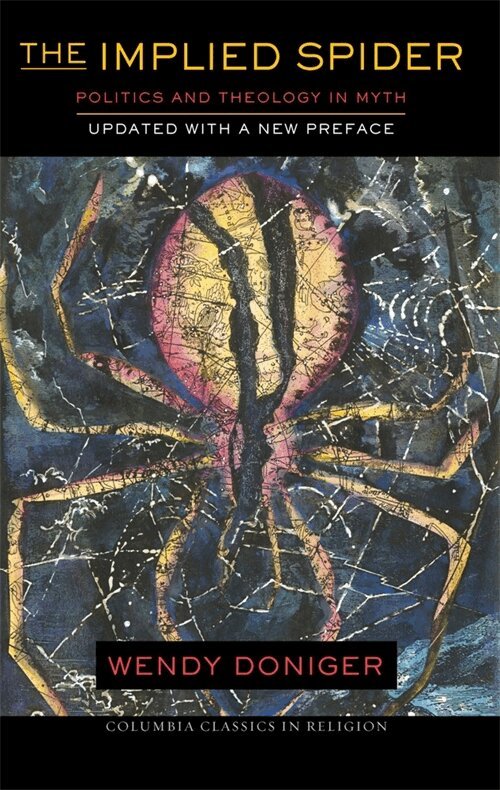
Wendy Doniger's foundational study is both modern in its engagement with a diverse range of religions and refreshingly classic in its transhistorical, cross-cultural approach. By responsibly analyzing patterns and themes across context, Doniger reinvigorates the comparative reading of religion, tapping into a wealth of narrative traditions, from the instructive tales of Judaism and Christianity to the moral lessons of the Bhagavad Gita. She extracts political meaning from a variety of texts while respecting the original ideas of each. A new preface confronts the difficulty of contextualizing the comparison of religions as well as controversies over choosing subjects and positioning arguments, and the text itself is expanded and updated throughout.
578 kr
Skickas inom 3-6 vardagar
Wendy Doniger's foundational study is both modern in its engagement with a diverse range of religions and refreshingly classic in its transhistorical, cross-cultural approach. By responsibly analyzing patterns and themes across context, Doniger reinvigorates the comparative reading of religion, tapping into a wealth of narrative traditions, from the instructive tales of Judaism and Christianity to the moral lessons of the Bhagavad Gita. She extracts political meaning from a variety of texts while respecting the original ideas of each. A new preface confronts the difficulty of contextualizing the comparison of religions as well as controversies over choosing subjects and positioning arguments, and the text itself is expanded and updated throughout.
1 543 kr
Skickas inom 7-10 vardagar
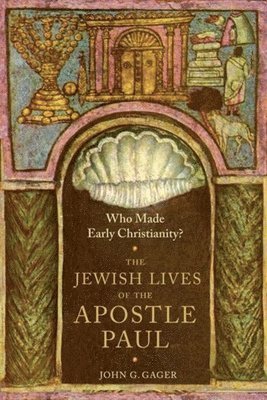
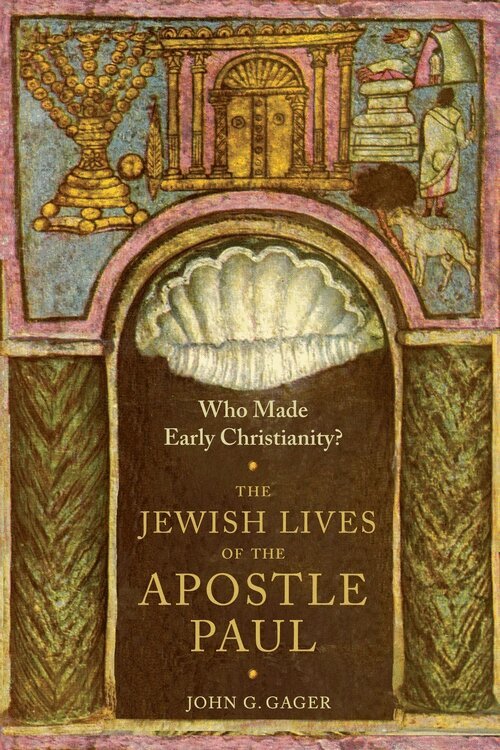
In this historical and theological study, John G. Gager undermines the myth of the Apostle Paul's rejection of Judaism, conversion to Christianity, and founding of Christian anti-Judaism. He finds that the rise of Christianity occurred well after Paul's death and attributes the distortion of the Apostle's views to early and later Christians. Though Christian clerical elites ascribed a rejection-replacement theology to Paul's legend, Gager shows that the Apostle was considered a loyal Jew by many of his Jesus-believing contemporaries and that later Jewish and Muslim thinkers held the same view. He holds that one of the earliest misinterpretations of Paul was to name him the founder of Christianity, and in recent times numerous Jewish and Christian readers of Paul have moved beyond this understanding. Gager also finds that Judaism did not fade away after Paul's death but continued to appeal to both Christians and pagans for centuries. Jewish synagogues remained important religious and social institutions throughout the Mediterranean world.Making use of all possible literary and archaeological sources, including Muslim texts, Gager helps recover the long pre-history of a Jewish Paul, obscured by recent, negative portrayals of the Apostle, and recognizes the enduring bond between Jews and Christians that has influenced all aspects of Christianity.
461 kr
Skickas inom 3-6 vardagar
In this historical and theological study, John G. Gager undermines the myth of the Apostle Paul's rejection of Judaism, conversion to Christianity, and founding of Christian anti-Judaism. He finds that the rise of Christianity occurred well after Paul's death and attributes the distortion of the Apostle's views to early and later Christians. Though Christian clerical elites ascribed a rejection-replacement theology to Paul's legend, Gager shows that the Apostle was considered a loyal Jew by many of his Jesus-believing contemporaries and that later Jewish and Muslim thinkers held the same view. He holds that one of the earliest misinterpretations of Paul was to name him the founder of Christianity, and in recent times numerous Jewish and Christian readers of Paul have moved beyond this understanding. Gager also finds that Judaism did not fade away after Paul's death but continued to appeal to both Christians and pagans for centuries. Jewish synagogues remained important religious and social institutions throughout the Mediterranean world.Making use of all possible literary and archaeological sources, including Muslim texts, Gager helps recover the long pre-history of a Jewish Paul, obscured by recent, negative portrayals of the Apostle, and recognizes the enduring bond between Jews and Christians that has influenced all aspects of Christianity.
1 272 kr
Skickas inom 7-10 vardagar
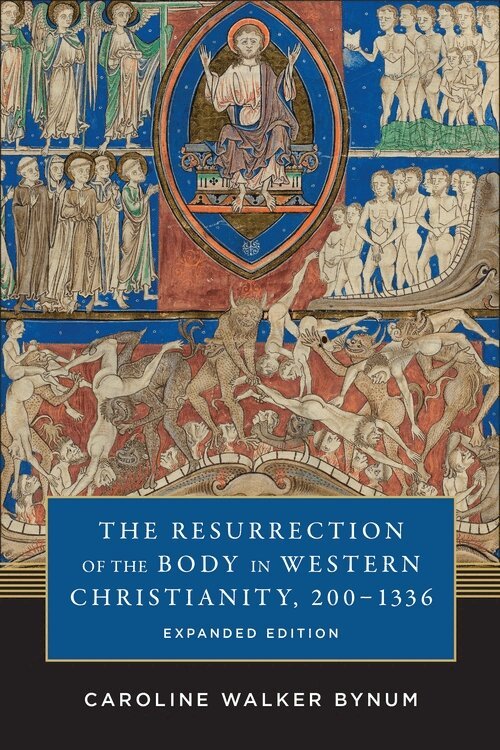
A classic of medieval studies, The Resurrection of the Body in Western Christianity, 200-1336 traces ideas of death and resurrection in early and medieval Christianity. Caroline Walker Bynum explores problems of the body and identity in devotional and theological literature, suggesting that medieval attitudes toward the body still shape modern notions of the individual. This expanded edition includes her 1995 article "Why All the Fuss About the Body? A Medievalist's Perspective," which takes a broader perspective on the book's themes. It also includes a new introduction, which discusses the context in which the book and article were written and why the Middle Ages matter for how we think about the body and life after death today.
323 kr
Skickas inom 7-10 vardagar
A classic of medieval studies, The Resurrection of the Body in Western Christianity, 200-1336 traces ideas of death and resurrection in early and medieval Christianity. Caroline Walker Bynum explores problems of the body and identity in devotional and theological literature, suggesting that medieval attitudes toward the body still shape modern notions of the individual. This expanded edition includes her 1995 article "Why All the Fuss About the Body? A Medievalist's Perspective," which takes a broader perspective on the book's themes. It also includes a new introduction, which discusses the context in which the book and article were written and why the Middle Ages matter for how we think about the body and life after death today.