American Psychiatric Association Publishing - Böcker
Visar alla böcker i serien American Psychiatric Association Publishing. Handla med fri frakt och snabb leverans.
4 produkter
4 produkter
483 kr
Tillfälligt slut
This pack is part of the "Children's Interview for Psychiatric Syndromes (ChIPS)" set. The ChIPS texts present an interview for detecting 20 childhood psychiatric disorders in children aged six to 18. The authors aim to develop an interview for diagnoising frequently-encountered behavioural problems. It should be useful in screening for disorders such as: attention deficit and hyperactivity; substance abuse; specific phobia; social phobia; acute stress; post-traumatic stress; bulimia; depression; dysthymia; hypomania; enuresis; and schizophrenia. The manual includes background about the interview's development; a training section providing specifications for preparing mental health paraprofessionals to administer it; questions written for a child's level that screen for 20 disorders; and a section devoted to scoring and analyzing results.
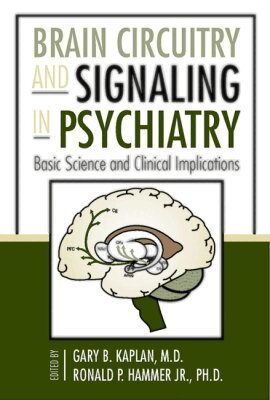
Brain Circuitry and Signaling in Psychiatry
Basic Science and Clinical Implications
Inbunden, Engelska, 2002
965 kr
Tillfälligt slut
This text chronicles the next advances in our knowledge of psychiatric neuroscience. It uses a teaching methodology that integrates the clinical aspects of psychiatric disorders with their neurobiology. It begins with by looking at functional neural circuitry and neural signalling pathways, and then presents current knowledge on the neuroatomic and neurochemical mechanisms underlying schizophrenia, addiction, anxiety,depression, bipolar disorder, and dementia/Alzheimer's disease. Each chapter focuses on a particular disorder and features the same four divisions - clinical presentation, neural circuitry, signalling pathways, and psychopharmacology.
676 kr
Tillfälligt slut
A growing body of clinical and experimental evidence shows that neurocognitive dysfunction is a fundamental - yet frequently ignored or misidentified - component of bipolar disorder. The first comprehensive book of its kind, Cognitive Dysfunction in Bipolar Disorder: A Guide for Clinicians compiles the latest data in neuropsychology, neuroimaging, neurogenetics, and functional outcomes research to enable clinicians to more effectively utilize pharmacological and psychotherapeutic techniques in their treatment of bipolar disorder.This volume outlines and demystifies current knowledge about neuropsychological functioning in bipolar disorder in a reader-friendly, easy-to-understand guide for practitioners. Its 12 chapters, written by 23 internationally-renowned expert contributors, examine such topics as attentional and executive functioning, neuroimaging and genetic correlates of cognitive functioning, pharmacological strategies, bipolar disorder in pediatric patients, and cognition across the life span.The book also comes with the added benefit of ; A review of neurocognitive domains, examples of their operation in everyday life, the neuroanatomical regions with which they are associated, and common tests used to assess their function; Summarized data from large-scale clinical trials, including the National Institute of Mental Health Antipsychotic Trials of Intervention Effectiveness (CATIE) study; Take-home points at the end of each chapter summarizing main concepts and ""clinical pearls""; Case studies and illustrative examples depicting the application of specific neurocognitive principles Using relevant applications from cognitive neuroscience, Cognitive Dysfunction in Bipolar Disorder provides clinicians with a comprehensive overview of astounding breakthroughs in the assessment and treatment of patients with bipolar disorder. It plows new ground in the mental health industry, correcting distortions and laying the foundation for future clinical research in this rapidly expanding field.
827 kr
Skickas inom 5-8 vardagar
The SCID-5-PD is the updated version of the former Structured Clinical Interview for DSM-IV Axis II Personality Disorders (SCID-II). The SCID-5-PD name reflects the elimination of the multiaxial system in DSM-5.