Ancient World from A to Z – serie
Visar alla böcker i serien Ancient World from A to Z. Handla med fri frakt och snabb leverans.
12 produkter
12 produkter
2 036 kr
Skickas inom 10-15 vardagar
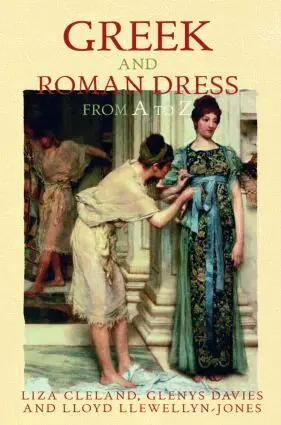
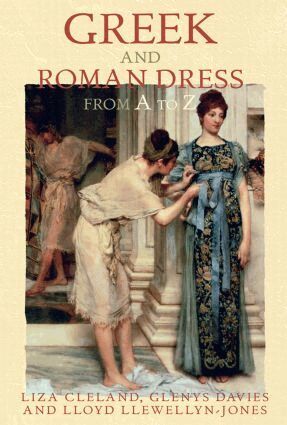
Who dressed as a woman in an attempt to commit adultery with Julius Caesar‘s wife? How did the ancient Greeks make blusher from seaweed? Just how does one wear a toga? If, as many claim, the importance of clothes lies in their detail, then this a book that no sartorially savvy Classicist should be without. Greek and Roman Dress from A to Z is an alphabetized compendium of styles and accessories that form the well-known classical image: a reference source of stitches, drapery, hairstyles, colours, fabrics and jewellery, and an analysis of the intricate system of social meanings that they comprise. The entries range in length from a few lines to a few pages and cover individual aspects of dress alongside surveys of wider topics and illuminating socio-cultural analysis, drawn from ancient art, literature and archaeology. For those who want to take their reading further, there are references to both primary sources and modern scholarship. This book is be fascinating for anyone delving into it with an interest in style and dress, and an invaluable companion for any classicist.
1 756 kr
Skickas inom 10-15 vardagar
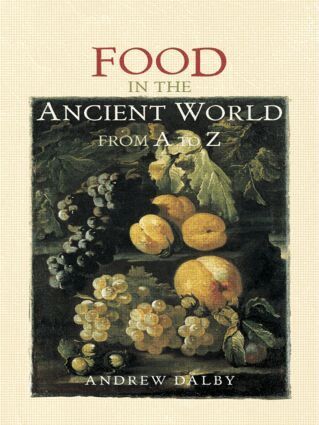
Sensual yet pre-eminently functional, food is of intrinsic interest to us all. This exciting new work by a leading authority explores food and related concepts in the Greek and Roman worlds.In entries ranging from a few lines to a couple of pages, Andrew Dalby describes individual foodstuffs (such as catfish, gazelle, peaches and parsley), utensils, ancient writers on food, and a vast range of other topics, drawn from classical literature, history and archaeology, as well as looking at the approaches of modern scholars.Approachable, reliable and fun, this A-to-Z explains and clarifies a subject that crops up in numerous classical sources, from plays to histories and beyond. It also gives references to useful primary and secondary reading. It will be an invaluable companion for students, academics and gastronomes alike.
2 036 kr
Skickas inom 10-15 vardagar
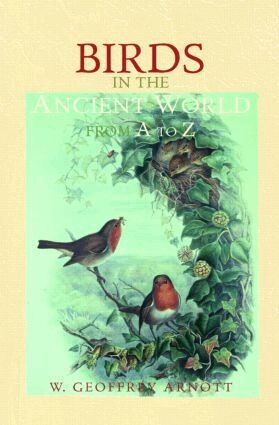
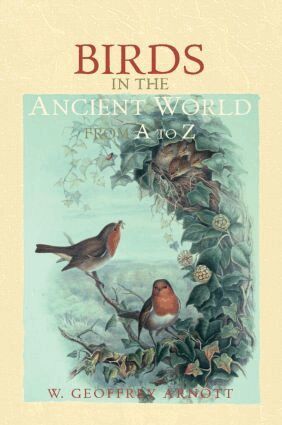
Birds in the Ancient World from A to Z gathers together the ancient information available, listing all the names that ancient Greeks gave their birds and all their descriptions and analyses. W. Geoffrey Arnott identifies as many of them as possible in the light of modern ornithological studies.The ancient Greek bird names are transliterated into English script, and all that the ancients said about birds is presented in English. This book is accordingly the first complete discussion of ancient bird names that will be accessible to readers without ancient Greek.The only large-scale examination of ancient birds for seventy years, the book has an exhaustive bibliography (partly classical scholarship and partly ornithological) to encourage further study, and provides students and ornithologists with the definitive study of ancient birds.
1 705 kr
Skickas inom 10-15 vardagar
In this fascinating and revealing A-to-Z, John G. Younger examines the sexual practices, expressions and attitudes of the Greeks and Romans, from Catullus and Caligula, to orgies and obscenity, and from abstinence and incest, to pederasty and prostitution.The book opens with an overview of current thinking on ancient sex and sexuality, and goes on to provide an extraordinarily wide coverage of a sexual culture so very different from our own, approaching the subject from the perspectives of literature, history, archaeology and art.Comprehensive, reliable and eye-opening, this A-to-Z illuminates an important aspect of the classical world. For those who want to take their reading further, there are numerous references to ancient sources and modern scholarship, as well as a separate section of works of art. This is an ideal introduction to and exploration of sex in the ancient world for readers at every level.
1 756 kr
Skickas inom 10-15 vardagar
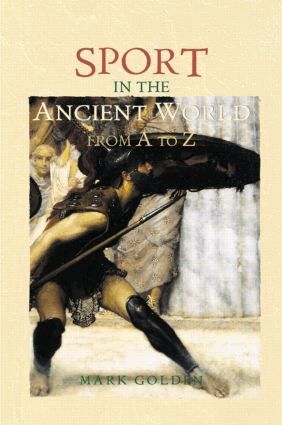
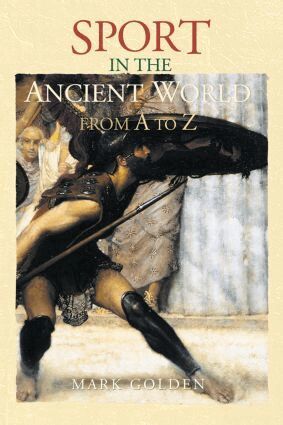
Sport in the Ancient World from A to Z covers an extraordinarily wide range of Greek and Roman sporting activities.Arranged in an easy-to-use dictionary format, this volume includes more than 700 entries discussing ancient athletes, festivals, important sites, equipment and concepts. The approach throughout is comprehensive yet succinct, with key topics, such as athletic festivals, chariot racing, prizes and the role of women receiving more detailed discussion.Each entry concludes with pointers to the most important sources of information, both ancient and modern. The places mentioned in the text are picked out on a useful map, and a timeline of significant developments and events is also included.Reliable, enjoyable, and up-to-date, this handy work of reference will suit readers from student level upwards.
1 966 kr
Skickas inom 10-15 vardagar
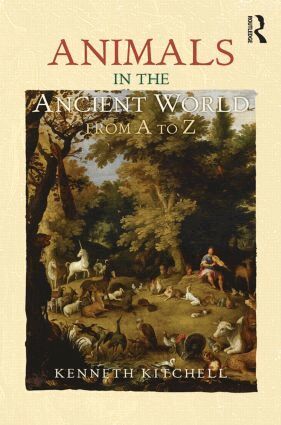
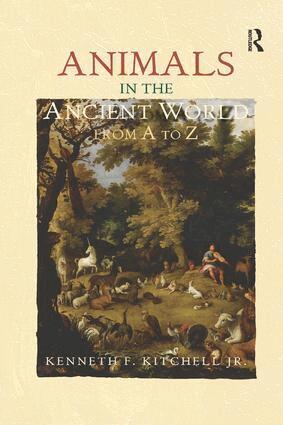
The ancient Greeks and Romans lived in a world teeming with animals. Animals were integral to ancient commerce, war, love, literature and art. Inside the city they were found as pets, pests, and parasites. They could be sacred, sacrificed, liminal, workers, or intruders from the wild. Beyond the city domesticated animals were herded and bred for profit and wild animals were hunted for pleasure and gain alike. Specialists like Aristotle, Aelian, Pliny and Seneca studied their anatomy and behavior. Geographers and travelers described new lands in terms of their animals. Animals are to be seen on every possible artistic medium, woven into cloth and inlaid into furniture. They are the subject of proverbs, oaths and dreams. Magicians, physicians and lovers turned to animals and their parts for their crafts. They paraded before kings, inhabited palaces, and entertained the poor in the arena. Quite literally, animals pervaded the ancient world from A-Z. In entries ranging from short to long, Kenneth Kitchell offers insight into this commonly overlooked world, covering representative and intriguing examples of mammals, reptiles, amphibians and invertebrates. Familiar animals such as the cow, dog, fox and donkey are treated along with more exotic animals such as the babirussa, pangolin, and dugong. The evidence adduced ranges from Minoan times to the Late Roman Empire and is taken from archaeology, ancient authors, inscriptions, papyri, coins, mosaics and all other artistic media. Whenever possible reasoned identifications are given for ancient animal names and the realities behind animal lore are brought forth. Why did the ancients think hippopotamuses practiced blood letting on themselves? How do you catch a monkey? Why were hyenas thought to be hermaphroditic? Was there really a vampire moth? Entries are accompanied by full citations to ancient authors and an extensive bibliography.Of use to Classics students and scholars, but written in a style designed to engage anyone interested in Greco-Roman antiquity, Animals in the Ancient World from A to Z reveals the extent and importance of the animal world to the ancient Greeks and Romans. It answers many questions, asks several more, and seeks to stimulate further research in this important field.
833 kr
Skickas inom 10-15 vardagar
Sport in the Ancient World from A to Z covers an extraordinarily wide range of Greek and Roman sporting activities.Arranged in an easy-to-use dictionary format, this volume includes more than 700 entries discussing ancient athletes, festivals, important sites, equipment and concepts. The approach throughout is comprehensive yet succinct, with key topics, such as athletic festivals, chariot racing, prizes and the role of women receiving more detailed discussion.Each entry concludes with pointers to the most important sources of information, both ancient and modern. The places mentioned in the text are picked out on a useful map, and a timeline of significant developments and events is also included.Reliable, enjoyable, and up-to-date, this handy work of reference will suit readers from student level upwards.
809 kr
Skickas inom 10-15 vardagar
In this fascinating and revealing A-to-Z, John G. Younger examines the sexual practices, expressions and attitudes of the Greeks and Romans, from Catullus and Caligula, to orgies and obscenity, and from abstinence and incest, to pederasty and prostitution.The book opens with an overview of current thinking on ancient sex and sexuality, and goes on to provide an extraordinarily wide coverage of a sexual culture so very different from our own, approaching the subject from the perspectives of literature, history, archaeology and art.Comprehensive, reliable and eye-opening, this A-to-Z illuminates an important aspect of the classical world. For those who want to take their reading further, there are numerous references to ancient sources and modern scholarship, as well as a separate section of works of art. This is an ideal introduction to and exploration of sex in the ancient world for readers at every level.
819 kr
Skickas inom 10-15 vardagar
Birds in the Ancient World from A to Z gathers together the ancient information available, listing all the names that ancient Greeks gave their birds and all their descriptions and analyses. W. Geoffrey Arnott identifies as many of them as possible in the light of modern ornithological studies.The ancient Greek bird names are transliterated into English script, and all that the ancients said about birds is presented in English. This book is accordingly the first complete discussion of ancient bird names that will be accessible to readers without ancient Greek.The only large-scale examination of ancient birds for seventy years, the book has an exhaustive bibliography (partly classical scholarship and partly ornithological) to encourage further study, and provides students and ornithologists with the definitive study of ancient birds.
749 kr
Skickas inom 10-15 vardagar
Who dressed as a woman in an attempt to commit adultery with Julius Caesar‘s wife? How did the ancient Greeks make blusher from seaweed? Just how does one wear a toga? If, as many claim, the importance of clothes lies in their detail, then this a book that no sartorially savvy Classicist should be without. Greek and Roman Dress from A to Z is an alphabetized compendium of styles and accessories that form the well-known classical image: a reference source of stitches, drapery, hairstyles, colours, fabrics and jewellery, and an analysis of the intricate system of social meanings that they comprise. The entries range in length from a few lines to a few pages and cover individual aspects of dress alongside surveys of wider topics and illuminating socio-cultural analysis, drawn from ancient art, literature and archaeology. For those who want to take their reading further, there are references to both primary sources and modern scholarship. This book is be fascinating for anyone delving into it with an interest in style and dress, and an invaluable companion for any classicist.
749 kr
Skickas inom 10-15 vardagar
Sensual yet pre-eminently functional, food is of intrinsic interest to us all. This exciting new work by a leading authority explores food and related concepts in the Greek and Roman worlds.In entries ranging from a few lines to a couple of pages, Andrew Dalby describes individual foodstuffs (such as catfish, gazelle, peaches and parsley), utensils, ancient writers on food, and a vast range of other topics, drawn from classical literature, history and archaeology, as well as looking at the approaches of modern scholars.Approachable, reliable and fun, this A-to-Z explains and clarifies a subject that crops up in numerous classical sources, from plays to histories and beyond. It also gives references to useful primary and secondary reading. It will be an invaluable companion for students, academics and gastronomes alike.
819 kr
Skickas inom 10-15 vardagar
The ancient Greeks and Romans lived in a world teeming with animals. Animals were integral to ancient commerce, war, love, literature and art. Inside the city they were found as pets, pests, and parasites. They could be sacred, sacrificed, liminal, workers, or intruders from the wild. Beyond the city domesticated animals were herded and bred for profit and wild animals were hunted for pleasure and gain alike. Specialists like Aristotle, Aelian, Pliny and Seneca studied their anatomy and behavior. Geographers and travelers described new lands in terms of their animals. Animals are to be seen on every possible artistic medium, woven into cloth and inlaid into furniture. They are the subject of proverbs, oaths and dreams. Magicians, physicians and lovers turned to animals and their parts for their crafts. They paraded before kings, inhabited palaces, and entertained the poor in the arena. Quite literally, animals pervaded the ancient world from A-Z. In entries ranging from short to long, Kenneth Kitchell offers insight into this commonly overlooked world, covering representative and intriguing examples of mammals, reptiles, amphibians and invertebrates. Familiar animals such as the cow, dog, fox and donkey are treated along with more exotic animals such as the babirussa, pangolin, and dugong. The evidence adduced ranges from Minoan times to the Late Roman Empire and is taken from archaeology, ancient authors, inscriptions, papyri, coins, mosaics and all other artistic media. Whenever possible reasoned identifications are given for ancient animal names and the realities behind animal lore are brought forth. Why did the ancients think hippopotamuses practiced blood letting on themselves? How do you catch a monkey? Why were hyenas thought to be hermaphroditic? Was there really a vampire moth? Entries are accompanied by full citations to ancient authors and an extensive bibliography.Of use to Classics students and scholars, but written in a style designed to engage anyone interested in Greco-Roman antiquity, Animals in the Ancient World from A to Z reveals the extent and importance of the animal world to the ancient Greeks and Romans. It answers many questions, asks several more, and seeks to stimulate further research in this important field.