Studies on Neuropsychology, Development, and Cognition - Böcker
Visar alla böcker i serien Studies on Neuropsychology, Development, and Cognition. Handla med fri frakt och snabb leverans.
5 produkter
5 produkter
786 kr
Skickas inom 10-15 vardagar
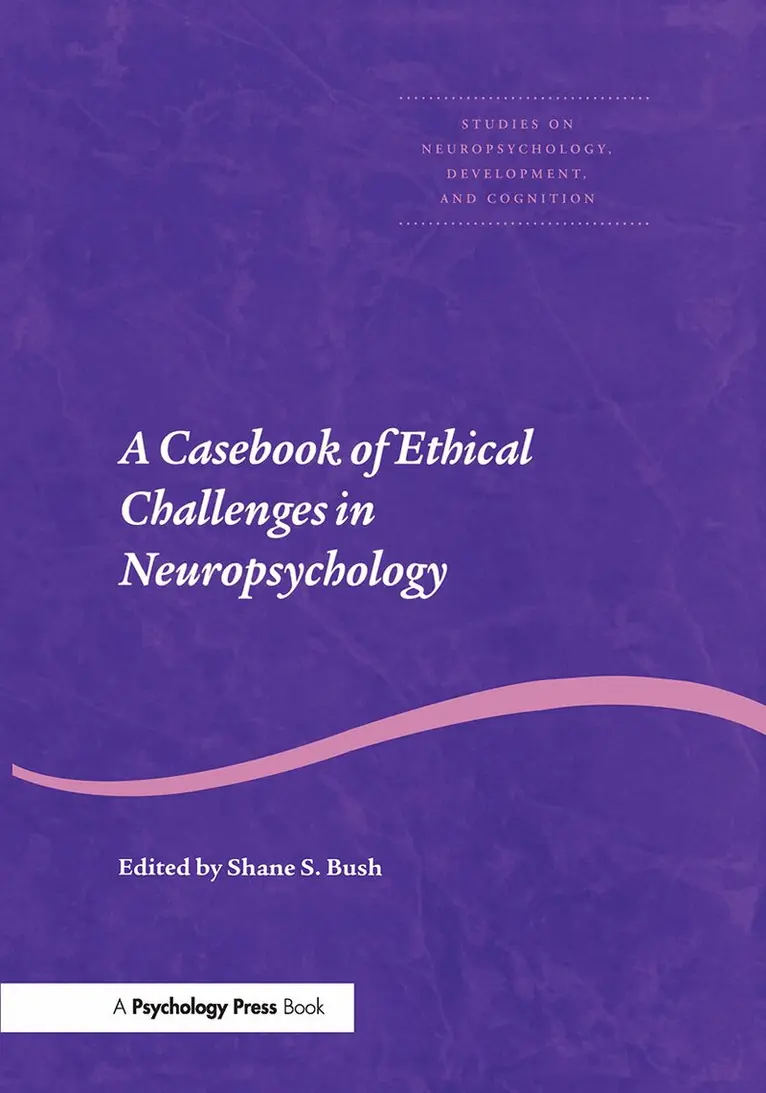
The American Psychological Association published a revision of the Ethical Principles of Psychologists and Code of Conduct in 2002.This text, a companion to the 2002 text Ethical Issues in Clinical Neuropsychology by Bush and Drexler, presents the reader with common ethical challenges in neuropsychology. This text examines the differences between the 1992 and 2002 APA Ethics Codes as they relate to neuropsychological activities.The authors present cases and discuss ethical issues related to neuropsychological practice with a variety of patient populations and in a variety of clinical settings. In addition, ethical issues in neuropsychological research and test development are examined. The text also includes chapters on emerging and particularly challenging aspects of neuropsychological practice, such as the assessment of response validity, and the use of information technology and telecommunications. Through the use of case illustrations, the authors examine ethical issues in neuropsychology and the new Ethics Code, offering a practical approach for understanding and promoting ethical neuropsychological practice.
2 666 kr
Skickas inom 10-15 vardagar
This volume will look at the history of trepanation, the identification of skulls, the tools used to make the cranial openings, and theories as to why trepanation might have been performed many thousands of years ago.
2 119 kr
Skickas inom 10-15 vardagar
Until now there has been no single volume in which a broad and comprehensive scope of ethical questions in neuropsychology is discussed. These editors have sought to fill that gap, calling upon leading thinkers in the field of neuropsychology and ethics. Ethical Issues in Clinical Neuropsychology affords the seasoned practitioner as well as the beginner a broad sampling of research and commentary on the ethical dilemmas involved in the clinical practice of Neuropsychology. Part 1 presents ethical issues that arise in the provision of neuropsychological services irrespective of setting, whereas Part 2 concentrates on the unique ethical challenges that attend practice with specific populations. Each chapter offers a rare view into the actual practice of Neuropsychology and the examples highlight an oft-quoted observation at Ethics Committee meetings that good clinical practice is good ethical practice. Carefully crafted vignettes allow the reader to apply these concepts to a myriad of situations confronting practicing clinical neuropsychologists. The discerning reader of Ethical Issues in Clinical Neuropsychology should have no difficulty translating between the 1992 and the proposed ethics code. This is a volume that will be a meaningful addition not only to the libraries of graduate students, interns, and postdoctoral fellows but also to the reference shelves of established practitioners and those preparing for board certification examinations in neuropsychology. This book will be of interest to neuropsychologists, rehabilitation psychologists, clinical psychologists and ethicists.
2 792 kr
Skickas inom 7-10 vardagar
When confronted with a neurological or psychiatric disorder in an elderly individual, a clinician or researcher is likely to ask how the processes of ageing have influenced the aetiology and presentation of the disorder, and will impact on its efficient management. There are many urban myths about ageing, and some of these apply to the brain. The reviews included in this book are an attempt to flush out some of these myths, and arm the clinician and general researcher with the empirical facts that can be mustered to substantiate claims about ageing. There are many salient questions: is cognitive change to be expected in an elderly individual? Is this change progressive, relentless and unselective, or is it focal and constrained? Would every person who lived long enough develop Alzheimer’s disease? Do our neurones die as we get old? What happens to the size of the brain and its metabolic activity? How do our hormones change with age? Can anti-oxidants slow or even stop the process of ageing? Are genes important in the ageing brain or is it all in the environment? How much of what we are is due to what we eat? The contributors to this book, each an expert in their field, have addressed some of these questions in a language simple enough for a general reader to understand.The book also deals with some of the most prominent brain disorders of old age - Alzheimer's disease, Parkinson's disease, vascular dementia, and depression. The focus is on the impact of ageing on these disorders. The discussions lay out a broad map for the clinician dealing with neuropsychiatric disorders, and the future researcher of brain ageing. In a field in which the developments are too numerous for any one individual to keep pace with, this book presents up-to-date summaries that can be a useful starting point. The field of brain ageing abounds in tabloid science. This book counters this by providing a strong empirical grounding and considered synthesis of the research.
1 284 kr
Tillfälligt slut
The American Psychological Association published a revision of the Ethical Principles of Psychologists and Code of Conduct in 2002.This text, a companion to the 2002 text Ethical Issues in Clinical Neuropsychology by Bush and Drexler, presents the reader with common ethical challenges in neuropsychology. This text examines the differences between the 1992 and 2002 APA Ethics Codes as they relate to neuropsychological activities.The authors present cases and discuss ethical issues related to neuropsychological practice with a variety of patient populations and in a variety of clinical settings. In addition, ethical issues in neuropsychological research and test development are examined. The text also includes chapters on emerging and particularly challenging aspects of neuropsychological practice, such as the assessment of response validity, and the use of information technology and telecommunications. Through the use of case illustrations, the authors examine ethical issues in neuropsychology and the new Ethics Code, offering a practical approach for understanding and promoting ethical neuropsychological practice.