Stanley Finger – författare
Visar alla böcker från författaren Stanley Finger. Handla med fri frakt och snabb leverans.
32 produkter
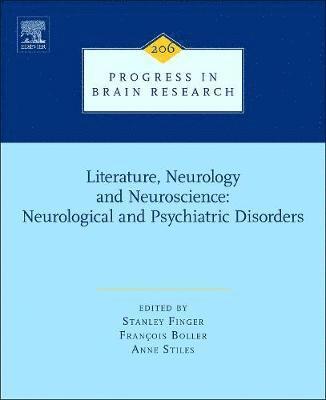
Literature, Neurology, and Neuroscience: Neurological and Psychiatric Disorders
Av Stanley Finger, Francois Boller
Inbunden, 2013
3319 kr
Lägg i varukorg
This well-established international series examines major areas of basic and clinical research within neuroscience, as well as emerging and promising subfields. This volume on the neurosciences, neurology, and literature vividly shows how science and the humanities can come together --- and have …
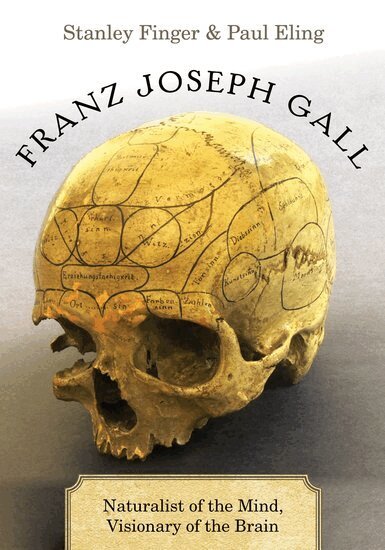
Franz Joseph Gall
Naturalist of the Mind, Visionary of the Brain
Inbunden, 2019
1735 kr
Lägg i varukorg
Franz Joseph Gall (1758-1828) was always a controversial figure, as was his doctrine, later called phrenology. Although often portrayed as a discredited buffoon, who believed he could assess a person's strengths and weaknesses by measuring cranial bumps, he was, in fact, a serious …
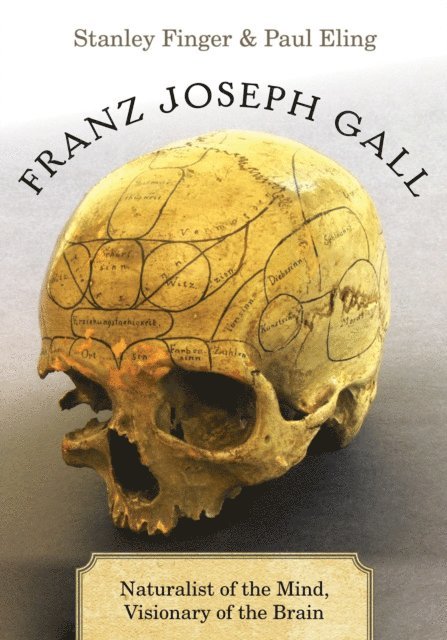
Franz Joseph Gall
Naturalist of the Mind, Visionary of the Brain
E-bok, 2019
913 kr
Lägg i varukorg
Franz Joseph Gall (1758-1828) was always a controversial figure, as was his doctrine, later called phrenology. Although often portrayed as a discredited buffoon, who believed he could assess a person''s strengths and weaknesses by measuring cranial bumps, he was, in fact, a serious …
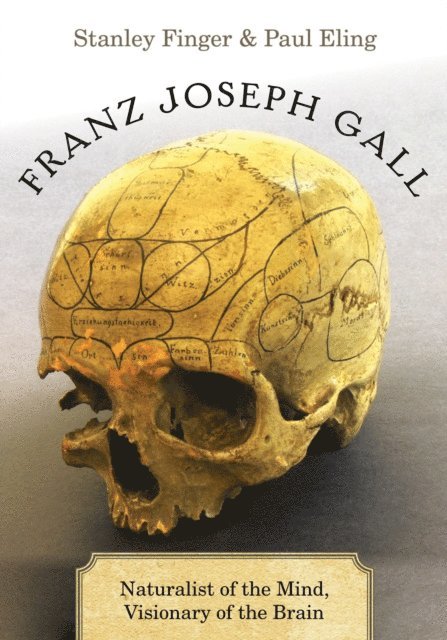
Franz Joseph Gall
Naturalist of the Mind, Visionary of the Brain
E-bok, 2019
913 kr
Lägg i varukorg
Franz Joseph Gall (1758-1828) was always a controversial figure, as was his doctrine, later called phrenology. Although often portrayed as a discredited buffoon, who believed he could assess a person''s strengths and weaknesses by measuring cranial bumps, he was, in fact, a serious …
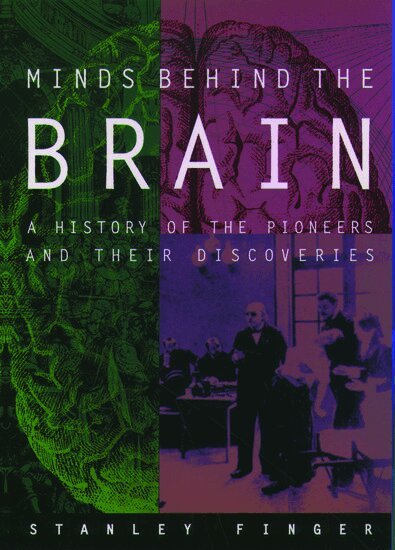
Minds Behind the Brain
A history of the pioneers and their discoveries
Häftad, 2005
905 kr
Lägg i varukorg
Attractively illustrated with over a hundred halftones and drawings, this volume presents a series of vibrant profiles that trace the evolution of our knowledge about the brain.Beginning almost 5000 years ago, with the ancient Egyptian study of "the marrow of the skull," Stanley Finger takes us on …
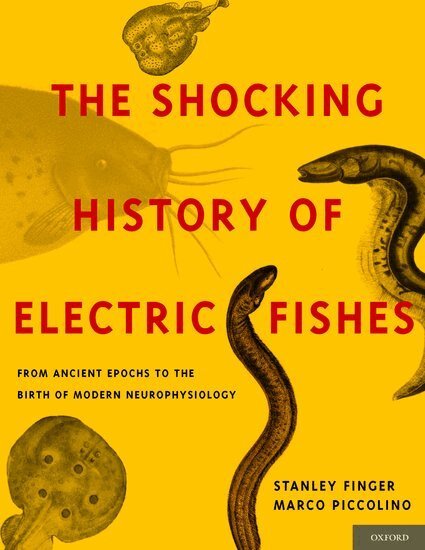
The Shocking History of Electric Fishes
From Ancient Epochs to the Birth of Modern Neurophysiology
Av Stanley Finger, Marco Piccolino
Inbunden, 2011
2847 kr
Lägg i varukorg
This book looks at how three kinds of strongly electric fishes literally became "electrical", and how they helped to change the sciences and medicine. These fishes are the flat torpedo rays common to the Mediterranean, the electric catfishes of Africa, and an "eel" from South America. The discovery …
Minds behind the Brain
A History of the Pioneers and Their Discoveries
E-bok, 2000
504 kr
Lägg i varukorg
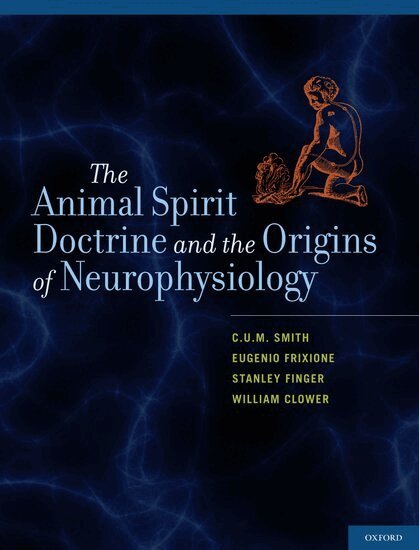
The Animal Spirit Doctrine and the Origins of Neurophysiology
Av C.U.M. Smith, Eugenio Frixione m. fl.
Inbunden, 2012
3315 kr
Lägg i varukorg
How do we become aware of things and events in the outside world, and how does the brain control the muscular system and behavior? This book examines the history of Western attempts to explain how messages might be sent from the sense organs to the brain and from the brain to the muscles. It …
Early Brain Damage V2
Neurobiology and Behavior
E-bok, 2012
739 kr
Lägg i varukorg
Early Brain Damage, Volume 2: Neurobiology and Behavior, is the second of two volumes that provide a comprehensive overview of the many facets of research on the topic of brain damage sustained early in life. The present volume focuses on controlled experimentation on laboratory animals, and …
Gall, Spurzheim, and the Phrenological Movement
Insights and Perspectives
Inbunden, 2021
2516 kr
Lägg i varukorg
During the 1790s in Vienna, German physician Franz Joseph Gall (1758-1828) came forth with a new doctrine dealing with mind, brain and behavior—one that could account for individual differences. He maintained that there are many independent faculties of mind, each associated with a separate part of …
Gall, Spurzheim, and the Phrenological Movement
Insights and Perspectives
Häftad, 2023
649 kr
Lägg i varukorg
During the 1790s in Vienna, German physician Franz Joseph Gall (1758-1828) came forth with a new doctrine dealing with mind, brain and behavior—one that could account for individual differences. He maintained that there are many independent faculties of mind, each associated with a separate part of …
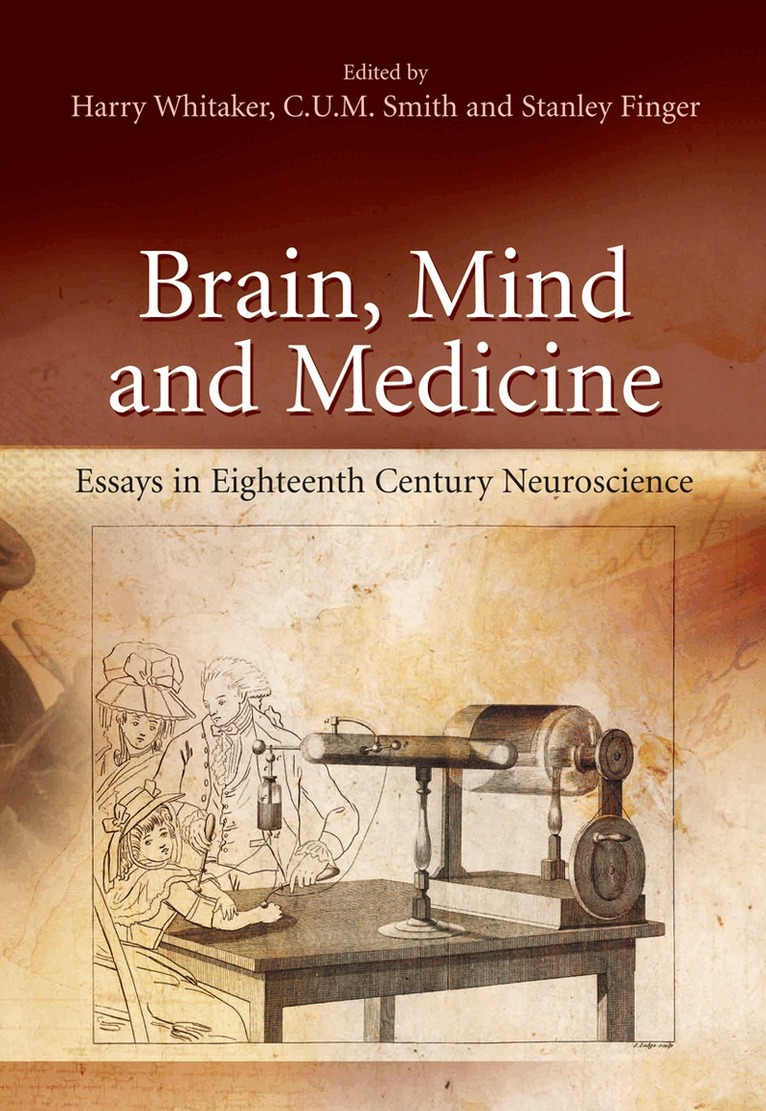
Brain, Mind and Medicine:
Essays in Eighteenth-Century Neuroscience
Av Harry Whitaker, C.U.M. Smith m. fl.
Inbunden, 2007
1686 kr
Lägg i varukorg
No books have been published on the practice of neuroscience in the eighteenth century, a time of transition and discovery in science and medicine. This volume explores neuroscience and reviews developments in anatomy, physiology, and medicine in the era some call the Age of Reason, and others the …
Brain, Mind and Medicine:
Essays in Eighteenth-Century Neuroscience
Av Stanley Finger, C.U.M. Smith m. fl.
E-bok, 2007
2174 kr
Lägg i varukorg
No books have been published on the practice of neuroscience in the eighteenth century, a time of transition and discovery in science and medicine. This volume explores neuroscience and reviews developments in anatomy, physiology, and medicine in the era some call the Age of Reason, and others the …
Literature, Neurology, and Neuroscience: Historical and Literary Connections
Av Anne Stiles, Stanley Finger
Inbunden, 2013
3347 kr
Lägg i varukorg
This well-established international series examines major areas of basic and clinical research within neuroscience, as well as emerging and promising subfields. This volume on the neurosciences, neurology, and literature vividly shows how science and the humanities can come together --- and have …
Music, Neurology, and Neuroscience: Historical Connections and Perspectives
Av Eckart Altenmüller, Stanley Finger m. fl.
Inbunden, 2015
3347 kr
Lägg i varukorg
Music, Neurology, and Neuroscience: Historical Connections and Perspectives provides a broad and comprehensive discussion of history and new discoveries regarding music and the brain, presenting a multidisciplinary overview on music processing, its effects on brain plasticity, and the healing power …
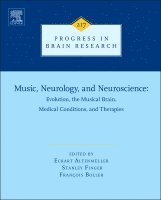
Music, Neurology, and Neuroscience: Evolution, the Musical Brain, Medical Conditions, and Therapies
Av Eckart Altenmüller, Stanley Finger m. fl.
Inbunden, 2015
3347 kr
Lägg i varukorg
Did you ever ask whether music makes people smart, why a Parkinson patient's gait is improved with marching tunes, and whether Robert Schumann was suffering from schizophrenia or Alzheimer's disease? This broad but comprehensive book deals with history and new discoveries about music and the brain. …
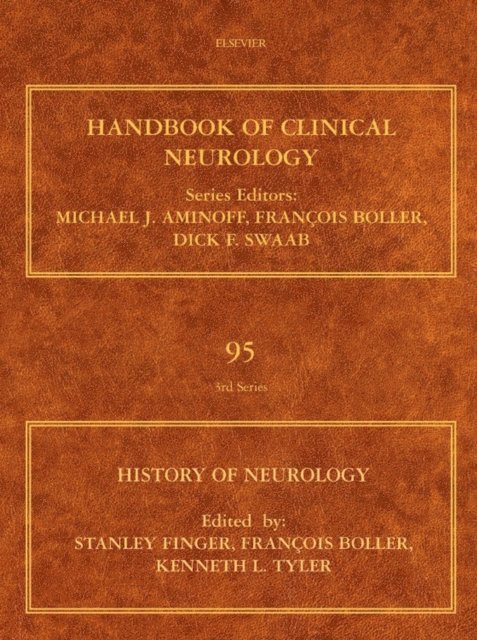
History of Neurology
Av Kenneth L. Tyler, Francois Boller m. fl.
E-bok, 2009
4343 kr
Lägg i varukorg
Handbook of Clinical Neurology: Volume 95 is the first of over 90 volumes of the handbook to be entirely devoted to the history of neurology. The book is a collection of historical materials from different neurology professionals. The book is divided into 6 sections and composed of 55 chapters …
Doctor Franklin's Medicine
E-bok, 2012
1007 kr
Lägg i varukorg
Selected by Choice magazine as an Outstanding Academic TitleAmong his many accomplishments, Benjamin Franklin was instrumental in founding the first major civilian hospital and medical school and in the American colonies. He studied the efficacy of smallpox inoculation and investigated the causes …
Doctor Franklin's Medicine
Inbunden, 2006
823 kr
Lägg i varukorg
Selected by Choice magazine as an Outstanding Academic TitleAmong his many accomplishments, Benjamin Franklin was instrumental in founding the first major civilian hospital and medical school and in the American colonies. He studied the efficacy of smallpox inoculation and investigated the causes …
Gall, Spurzheim, and the Phrenological Movement
Insights and Perspectives
E-bok, 2021
762 kr
Lägg i varukorg
During the 1790s in Vienna, German physician Franz Joseph Gall (1758-1828) came forth with a new doctrine dealing with mind, brain and behavior—one that could account for individual differences. He maintained that there are many independent faculties of mind, each associated with a separate part …
Gall, Spurzheim, and the Phrenological Movement
Insights and Perspectives
E-bok, 2021
762 kr
Lägg i varukorg
During the 1790s in Vienna, German physician Franz Joseph Gall (1758-1828) came forth with a new doctrine dealing with mind, brain and behavior—one that could account for individual differences. He maintained that there are many independent faculties of mind, each associated with a separate part …
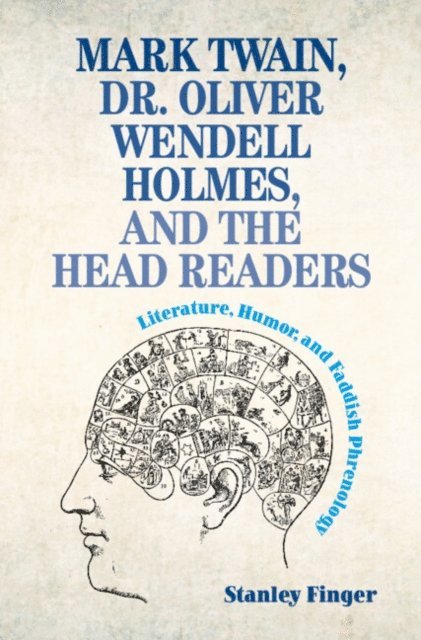
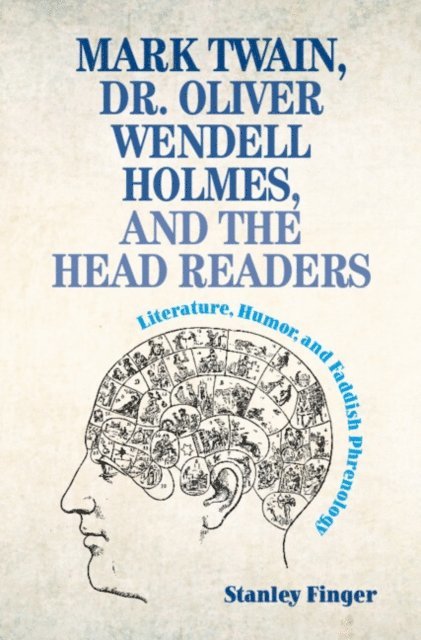
Mark Twain, Dr. Oliver Wendell Holmes, and the Head Readers
Literature, Humor, and Faddish Phrenology
E-bok, 2023
538 kr
Lägg i varukorg
Having a phrenological ''head reading'' was one of the most significant fads of the nineteenth century – a means for better knowing oneself and a guide for self-improvement. Samuel Clemens (Mark Twain) had a lifelong yet long overlooked interest in phrenology, the pseudoscience claiming to …
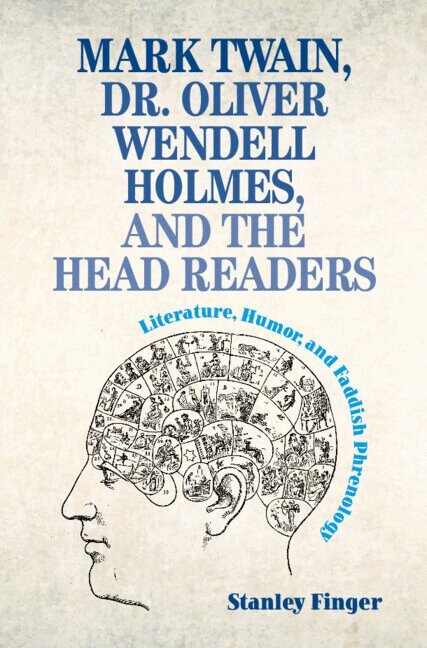
Mark Twain, Dr. Oliver Wendell Holmes, and the Head Readers
Literature, Humor, and Faddish Phrenology
Inbunden, 2023
511 kr
Lägg i varukorg
Having a phrenological 'head reading' was one of the most significant fads of the nineteenth century - a means for better knowing oneself and a guide for self-improvement. Samuel Clemens (Mark Twain) had a lifelong yet long overlooked interest in phrenology, the pseudoscience claiming to correlate …
Mark Twain, Dr. Oliver Wendell Holmes, and the Head Readers
Literature, Humor, and Faddish Phrenology
E-bok, 2023
538 kr
Lägg i varukorg
Having a phrenological ''head reading'' was one of the most significant fads of the nineteenth century – a means for better knowing oneself and a guide for self-improvement. Samuel Clemens (Mark Twain) had a lifelong yet long overlooked interest in phrenology, the pseudoscience claiming to …
Trepanation
Av Chris Smith, Stanley Finger m. fl.
E-bok, 2003
3419 kr
Lägg i varukorg
This volume will look at the history of trepanation, the identification of skulls, the tools used to make the cranial openings, and theories as to why trepanation might have been performed many thousands of years ago.
Brain, Mind and Medicine:
Essays in Eighteenth-Century Neuroscience
Av Harry Whitaker, C.U.M. Smith m. fl.
Häftad, 2010
1525 kr
Lägg i varukorg
No books have been published on the practice of neuroscience in the eighteenth century, a time of transition and discovery in science and medicine. This volume explores neuroscience and reviews developments in anatomy, physiology, and medicine in the era some call the Age of Reason, and others the …
Brain Injury and Recovery
Theoretical and Controversial Issues
Av C. Robert Almli, Stanley Finger m. fl.
Häftad, 2012
567 kr
Lägg i varukorg
The idea for the present volume grew from discussions that the four of us had among ourselves and with our colleagues at recent scientific meetings. All of us were impressed by the wealth of empirical data that was being generated by investigators interested in brain damage and recovery from both …
Brain Injury and Recovery
Theoretical and Controversial Issues
Av Donald G. Stein, T.E. LeVere m. fl.
E-bok, 2012
755 kr
Lägg i varukorg
The idea for the present volume grew from discussions that the four of us had among ourselves and with our colleagues at recent scientific meetings. All of us were impressed by the wealth of empirical data that was being generated by investigators interested in brain damage and recovery from both …
Recovery from Brain Damage
Research and Theory
E-bok, 2013
692 kr
Lägg i varukorg
It has long been recognized that damage to the mammalian central nervous system may be followed by behavioral recovery, but only re cently has close attention been directed to specific factors which may enhance or retard restitution. This is evident in the rapidly growing number of journal …
Recovery from Brain Damage
Research and Theory
Häftad, 2012
535 kr
Lägg i varukorg
It has long been recognized that damage to the mammalian central nervous system may be followed by behavioral recovery, but only re cently has close attention been directed to specific factors which may enhance or retard restitution. This is evident in the rapidly growing number of journal …