Paul Eling – författare
Visar alla böcker från författaren Paul Eling. Handla med fri frakt och snabb leverans.
9 produkter
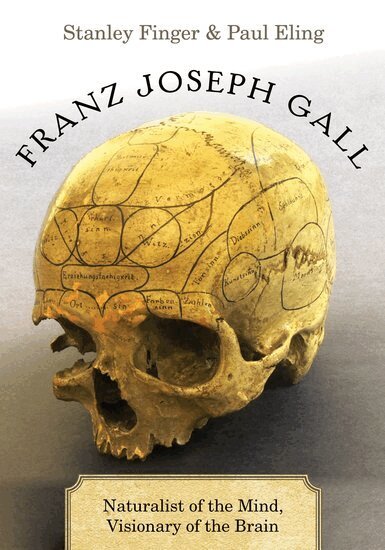
Franz Joseph Gall
Naturalist of the Mind, Visionary of the Brain
Inbunden, 2019
1735 kr
Lägg i varukorg
Franz Joseph Gall (1758-1828) was always a controversial figure, as was his doctrine, later called phrenology. Although often portrayed as a discredited buffoon, who believed he could assess a person's strengths and weaknesses by measuring cranial bumps, he was, in fact, a serious …
Franz Joseph Gall
Naturalist of the Mind, Visionary of the Brain
E-bok, 2019
913 kr
Lägg i varukorg
Franz Joseph Gall (1758-1828) was always a controversial figure, as was his doctrine, later called phrenology. Although often portrayed as a discredited buffoon, who believed he could assess a person''s strengths and weaknesses by measuring cranial bumps, he was, in fact, a serious …
Franz Joseph Gall
Naturalist of the Mind, Visionary of the Brain
E-bok, 2019
913 kr
Lägg i varukorg
Franz Joseph Gall (1758-1828) was always a controversial figure, as was his doctrine, later called phrenology. Although often portrayed as a discredited buffoon, who believed he could assess a person''s strengths and weaknesses by measuring cranial bumps, he was, in fact, a serious …
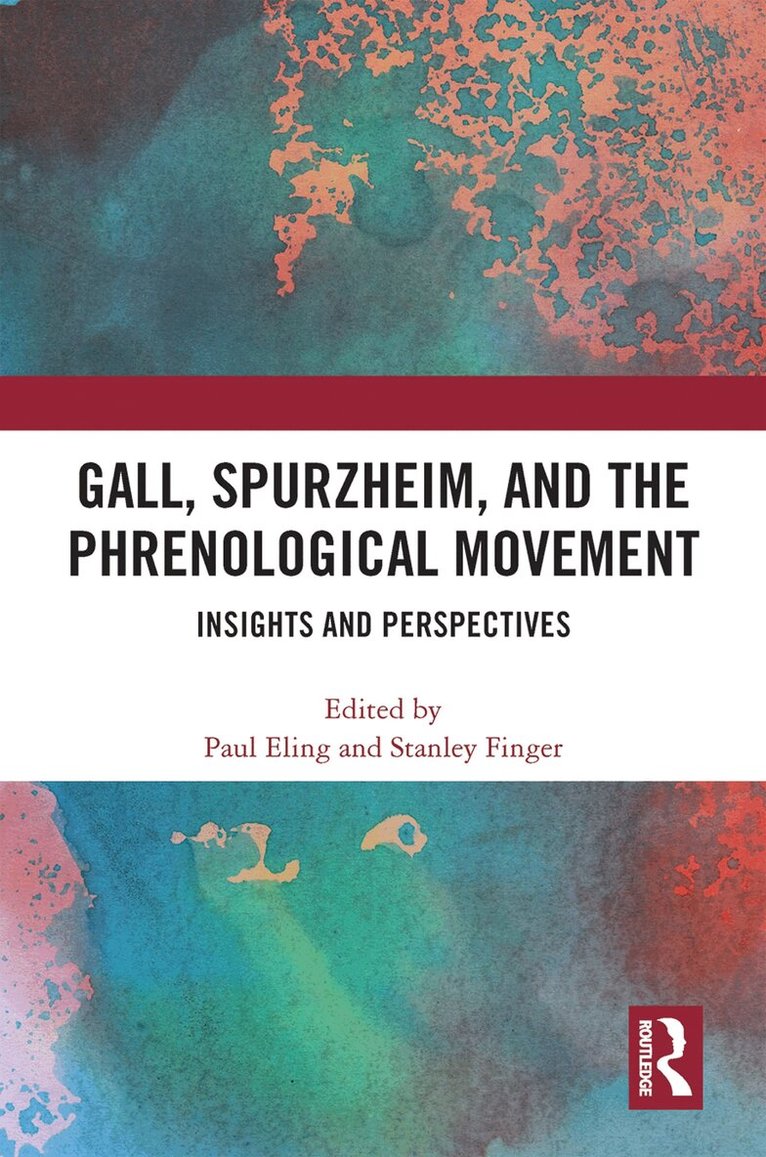
Gall, Spurzheim, and the Phrenological Movement
Insights and Perspectives
Inbunden, 2021
2516 kr
Lägg i varukorg
During the 1790s in Vienna, German physician Franz Joseph Gall (1758-1828) came forth with a new doctrine dealing with mind, brain and behavior—one that could account for individual differences. He maintained that there are many independent faculties of mind, each associated with a separate part of …
Gall, Spurzheim, and the Phrenological Movement
Insights and Perspectives
Häftad, 2023
649 kr
Lägg i varukorg
During the 1790s in Vienna, German physician Franz Joseph Gall (1758-1828) came forth with a new doctrine dealing with mind, brain and behavior—one that could account for individual differences. He maintained that there are many independent faculties of mind, each associated with a separate part of …
Gall, Spurzheim, and the Phrenological Movement
Insights and Perspectives
E-bok, 2021
762 kr
Lägg i varukorg
During the 1790s in Vienna, German physician Franz Joseph Gall (1758-1828) came forth with a new doctrine dealing with mind, brain and behavior—one that could account for individual differences. He maintained that there are many independent faculties of mind, each associated with a separate part …
Gall, Spurzheim, and the Phrenological Movement
Insights and Perspectives
E-bok, 2021
762 kr
Lägg i varukorg
During the 1790s in Vienna, German physician Franz Joseph Gall (1758-1828) came forth with a new doctrine dealing with mind, brain and behavior—one that could account for individual differences. He maintained that there are many independent faculties of mind, each associated with a separate part …
Wat elke professional over het geheugen moet weten
Av Paul Eling
E-bok, 2014
825 kr
Lägg i varukorg
Wat elke professional over het geheugen moet weten geeft een overzicht over de vele verschijnselen, ideeën en verklaringen over aspecten van het geheugen. Men kan daarbij denken aan het langetermijngeheugen voor gebeurtenissen en kennis, maar ook het werkgeheugen en het leren van vaardigheden en …