• Fri frakt över 249 kr
  • •
  • Snabba leveranser
  • •
  • Billiga böcker
Kundservice

Du är på sajten för privatpersoner.

Företag, bibliotek eller offentlig verksamhet?

Du handlar på classic.bokus.com, där alla dina funktioner finns intakta.
Till classic.bokus.com
Bokus logotyp. Gå till startsidan.
  • Erbjudanden
  • Nyheter
  • Student
  • Topplistor
  • Barn & ungdom
  • Bokus Play
  • E-böcker
  • Pocketböcker
  • Spel & pussel

10% rabatt på allt med kod: NYSTART10 →

Sidfot

Mina sidor

    Hjälp

    • Kundservice
    • Vanliga frågor och svar
    • Frakt och leverans
    • Retur vid ångerrätt
    • Reklamera vara
    • Betalning
    • Köpvillkor
    • Allmänna villkor
    • Information om webbplatsens tillgänglighet

    Om Bokus

    • Om oss
    • Pressrum
    • För studenter
    • För företag
    • För bibliotek och offentlig verksamhet
    • För leverantörer
    • Hållbarhet

    Populärt

    • Aktuella erbjudanden
    • Presentkort
    • Studentlitteratur
    • Nya böcker
    • Topplistor
    • Signerade böcker
    • Engelska böcker

    Inspiration

    • Boktips
    • BookTok
    • Populära bokserier
    • Barnbokskaraktärer
    • Populära författare
    Logotyp för Bokus
    Följ oss på Facebook (extern länk)Följ oss på Instagram (extern länk)Följ oss på YouTube (extern länk)Följ oss på TikTok (extern länk)
    bokus @ CookiesAnpassa cookiesIntegritetspolicyKöpvillkor
    Till Citymail hemsida (extern länk)Till Budbee hemsida (extern länk)Till Postnord hemsida (extern länk)Till Schenker hemsida (extern länk)Till Early Bird hemsida (extern länk)Till Walleys hemsida (extern länk)
    1. Naturvetenskap och teknik
    2. Matematik och naturvetenskap
    3. Biologi
    4. Biovetenskap

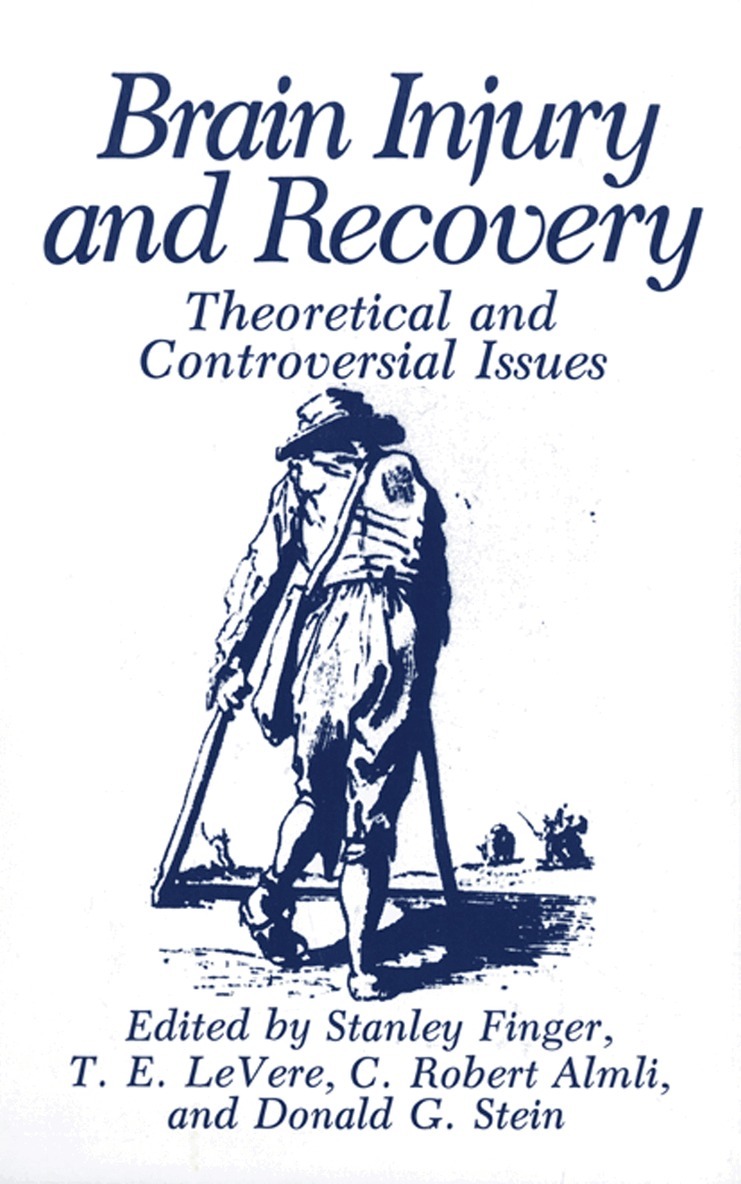
    Brain Injury and Recovery

    Theoretical and Controversial Issues

    AvC. Robert Almli,Stanley Finger

    Häftad, Engelska, 2012

    563 kr

    Beställningsvara. Skickas inom 10-15 vardagar. Fri frakt över 249 kr.

    Beskrivning

    The idea for the present volume grew from discussions that the four of us had among ourselves and with our colleagues at recent scientific meetings. All of us were impressed by the wealth of empirical data that was being generated by investigators interested in brain damage and recovery from both behavioral and biological orientations. Nevertheless, we were concerned about the relative paucity of attempts to evaluate the data provided by new technologies in more than a narrow context or to present new theories or reexamine time-honored ideas in the light of new findings. We recognized that science is guided by new technologies, by hard data, and by theories and ideas. Yet we were forced to conclude that, although investi­ gators were often anxious to publicize new methods and empirical fmdings, the same could not be said about broad hypotheses, underlying concepts, or in­ ferences and speculations that extended beyond the empirical data. Not only were many scientists not formally discussing the broad implications of their data, but, when stimulating ideas were presented, they were more likely to be heard in the halls or over a meal than in organized sessions at scientific meetings.

    Produktinformation

    • Utgivningsdatum:2012-01-30
    • Mått:152 x 229 x 23 mm
    • Vikt:568 g
    • Format:Häftad
    • Språk:Engelska
    • Antal sidor:362
    • Förlag:Springer-Verlag New York Inc.
    • ISBN:9781461282563

    Utforska kategorier

    • Biovetenskap inom Naturvetenskap och teknik
    • Neurokirurgi inom Medicin
    • Neurologi och klinisk neurofysiologi inom Medicin

    Innehållsförteckning

    • 1 Toward a Definition of Recovery of Function.- 2 Neural System Imbalances and the Consequence of Large Brain Injuries.- 3 Bases of Inductions of Recoveries and Protections from Amnesias.- 4 Neural Spare Capacity and the Concept of Diaschisis: Functional and Evolutionary Models.- 5 Kurt Goldstein and Recovery of Function.- 6 Assumptions about the Brain and Its Recovery from Damage.- 7 Mass Action and Equipotentiality Reconsidered.- 8 Margaret Kennard and Her “Principle” in Historical Perspective.- 9 Infant Brain Injury: The Benefit of Relocation and the Cost of Crowding.- 10 Arguments against Redundant Brain Structures.- 11 Another Look at Vicariation.- 12 Hughlings Jackson’s Theory of Localization and Compensation.- 13 The Parcellation Theory and Alterations in Brain Circuitry after Injury.- 14 Trophic Hypothesis of Neuronal Cell Death and Survival.- 15 Sensory Cortical Reorganization following Peripheral Nerve Injury.- 16 Is Dendritic Proliferation of Surviving Neurons a Compensatory Response to Loss of Neighbors in the Aging Brain?.- 17 Practical and Theoretical lssues in the Use of Fetal Brain Tissue Transplants to Promote Recovery from Brain Injury.- 18 Functional Electrical Stimulation and Its Application for the Rehabilitation of Neurologically Injured Individuals.- 19 Recovery of Language Disorders: Homologous Contralateral or Connected Ipsilateral Compensation?.- 20 Sensory Substitution and Recovery from “Brain Damage”.- 21 Emotion and Motivation in Recovery and Adaptation after Brain Damage.- 22 Recovery of Function: Sources of Controversy.