• Fri frakt över 249 kr
  • •
  • Snabba leveranser
  • •
  • Billiga böcker
Kundservice

Du är på sajten för privatpersoner.

Företag, bibliotek eller offentlig verksamhet?

Du handlar på classic.bokus.com, där alla dina funktioner finns intakta.
Till classic.bokus.com
Bokus logotyp. Gå till startsidan.
  • Erbjudanden
  • Nyheter
  • Student
  • Topplistor
  • Barn & ungdom
  • Bokus Play
  • E-böcker
  • Pocketböcker
  • Spel & pussel

10% studentrabatt med kod TERM26

Sidfot

Mina sidor

    Hjälp

    • Kundservice
    • Vanliga frågor och svar
    • Frakt och leverans
    • Retur vid ångerrätt
    • Reklamera vara
    • Betalning
    • Köpvillkor
    • Allmänna villkor
    • Information om webbplatsens tillgänglighet

    Om Bokus

    • Om oss
    • Pressrum
    • För studenter
    • För företag
    • För bibliotek och offentlig verksamhet
    • För leverantörer
    • Hållbarhet

    Populärt

    • Aktuella erbjudanden
    • Presentkort
    • Studentlitteratur
    • Nya böcker
    • Topplistor
    • Signerade böcker
    • Engelska böcker

    Inspiration

    • Boktips
    • BookTok
    • Populära bokserier
    • Barnbokskaraktärer
    • Populära författare
    Logotyp för Bokus
    Följ oss på Facebook (extern länk)Följ oss på Instagram (extern länk)Följ oss på YouTube (extern länk)Följ oss på TikTok (extern länk)
    bokus @ CookiesAnpassa cookiesIntegritetspolicyKöpvillkor
    Till Citymail hemsida (extern länk)Till Budbee hemsida (extern länk)Till Postnord hemsida (extern länk)Till Schenker hemsida (extern länk)Till Early Bird hemsida (extern länk)Till Walleys hemsida (extern länk)
    1. Medicin
    2. Andra medicinska specialiteter
    3. Neurologi och klinisk neurofysiologi

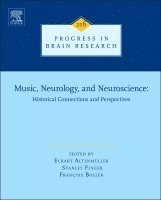
    Music, Neurology, and Neuroscience: Historical Connections and Perspectives

    AvEckart Altenmüller,Stanley Finger

    Inbunden, Engelska, 2015

    Del 216 i serien Progress in Brain Research

    3 241 kr

    Beställningsvara. Skickas inom 10-15 vardagar. Fri frakt över 249 kr.

    Beskrivning

    Music, Neurology, and Neuroscience: Historical Connections and Perspectives provides a broad and comprehensive discussion of history and new discoveries regarding music and the brain, presenting a multidisciplinary overview on music processing, its effects on brain plasticity, and the healing power of music in neurological and psychiatric disorders.

    In this context, the disorders that plagued famous musicians and how they affected both performance and composition are critically discussed, as is music as medicine and its potential health hazard.

    Additional topics, including the way music fits into early conceptions of localization of function in the brain, its cultural roots in evolution, and its important roles in societies and educational systems are also explored.


    • Examines music and the brain both historically and in the light of the latest research findings
    • The largest and most comprehensive volume on "music and neurology" ever written
    • Written by a unique group of real world experts representing a variety of fields, ranging from history of science and medicine, to neurology and musicology
    • Includes a discussion of the way music has cultural roots in evolution and its important role in societies

    Produktinformation

    • Utgivningsdatum:2015-02-11
    • Mått:191 x 235 x 25 mm
    • Vikt:950 g
    • Format:Inbunden
    • Språk:Engelska
    • Serie:Progress in Brain Research
    • Antal sidor:440
    • Förlag:Elsevier Science
    • ISBN:9780444633996

    Utforska kategorier

    • Neurologi och klinisk neurofysiologi inom Medicin

    Mer om författaren

    François Boller, M.D., Ph.D. has been co-Series Editor of the Handbook of Clinical Neurology since 2002. He.is a board-certified neurologist currently Professor of Neurology at the George Washington University Medical School (GW) in Washington, DC. He was born in Switzerland and educated in Italy where he obtained a Medical Degree at the University of Pisa. After specializing in Neurology at the University of Milan, Dr. Boller spent several years at the Boston VA and Boston University Medical School, including a fellowship under the direction of Dr. Norman Geschwind. He obtained a Ph.D. in Experimental Psychology from Case Western Reserve University in Cleveland, Ohio where he was in charge of Neuroscience teaching at the Medical School and was nominated Teacher of the Year. In 1983, Dr. Boller became Professor of Neurology and Psychiatry at the University of Pittsburgh where he founded and directed one of the first NIH funded Alzheimer Disease Research Centers in the country. In 1989, he was put in charge of a Paris-based INSERM Unit dedicated to the neuropsychology and neurobiology of cerebral aging. He returned to the United States and joined the NIH in 2005, before coming to GW in July 2014.Dr. Boller’s initial area of interest was aphasia and related disorders; he later became primarily interested in cognitive disorders and dementia with emphasis on the correlates of cognitive disorders with pathology, neurophysiology and imaging. He was one of the first to study the relation between Parkinson and Alzheimer disease, two processes that were thought to be unrelated. His current area of interest is Alzheimer’s disease and related disorders with emphasis on the early and late stages of the disease. He is also interested in the history of Neurosciences and is Past President of the International Society for the History of Neurosciences. He was the founding Editor-in-Chief of the European Journal of Neurology, the official Journal of the European Federation of Neurological Societies (now European Academy of Neurology). He is a Fellow of the American Academy of Neurology and a member of the American Neurological Association. In addition, he has chaired Committees within the International Neuropsychological Society, the International Neuropsychology Symposium, and the World Federation of Neurology (WFN). He has authored over 200 papers and books including the Handbook of Neuropsychology (Elsevier).

    Innehållsförteckning

    • Franz Joseph Gall and Music: The Faculty and the BumpMusic, Neurology and Psychology in the 19th CenturySinging by Speechless (Aphasic) Children: Victorian Medical ObservationsSome Early Cases of Aphasia and the Capacity to SingBenjamin Franklin and his Glass Armonica: From Music as Therapeutic to PathologicalHistorical Perspectives on Music as a Cause of DiseaseStroke, Music and Creative Output: Alfred Schnittke and other ComposersHector Berlioz and His Vesuvius: An Analysis of Historical Evidence from an Epileptological PerspectiveAlexander Scriabin: His Chronic Right Hand Pain and its Impact on his Piano CompositionsFrederick Delius: Controversies Regarding his Neurological Disorder and its Impact on his Compositional OutputRobert Schumann in the Psychiatric Hospital at EndenichMozart at Play: The Limitations of Attributing the Etiology of Genius to Tourette Syndrome and Mental IllnessPaul Wittgenstein's Right arm and his Phantom: The Saga of a Famous Concert Pianist and his AmputationGeorg Friedrich Händel – A Case of Large Vessel Disease with Complications in the 18th CenturyJoseph Haydn's Encephalopathy: New AspectsOrganists and Organ Music ComposersFrédéric Chopin and his Neuropsychiatric ProblemsSomnambulism in Verdi's Macbeth and Bellini's La Sonnambula: Opera, Sleepwalking, and MedicineOpera and Neuroscience