War, Technology, and History - Böcker
Visar alla böcker i serien War, Technology, and History. Handla med fri frakt och snabb leverans.

7 produkter
7 produkter
695 kr
Skickas inom 10-15 vardagar
In 1997, the International Campaign to Ban Landmines (ICBL) coordinated the Convention on the Prohibition of the Use, Stockpiling, Production, and Transfer of Anti-Personnel Mines and on their Destruction. As of mid-2005, 145 states had signed the agreement. The ICBL's efforts were in large part a response to the careless use of landmines in the previous fifty years. The history of mine use in warfare, however, goes back much further than the World Wars of the 20th century and includes both land and sea use. This first comprehensive study traces the technical, tactical, and ethical developments of mine warfare, from ancient times to the present.Beginning with mine warfare's roots in ancient Assyria and China, Youngblood takes the reader through the centuries of debate about how these hidden weapons should be used. A look at 19th-century developments explores the intertwined development of land and sea mines and the inventors behind them, including Robert Fulton, Samuel Colt, and Immanuel Nobel, father of Alfred Nobel. Subsequent chapters examine the use of mines in the American Civil War, the Russo-Japanese War, both World Wars, and the battlefields of the Cold War, and chart key battles and technical innovations, such as the development of air-delivered munitions. Finally, the author addresses the ethical concerns raised by the careless mining, namely the impact on civilians and the difficulties of de-mining, and the treaties that regulate landmine use.
695 kr
Skickas inom 10-15 vardagar
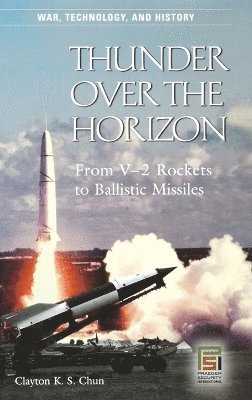
In this general history of the development of rockets and missiles, Chun traces the technology that made attack from beyond the horizon possible. A former missile launch officer, he focusess not only on the development and employment of the ballistic missile—from early German V-2 use to today—but on their subsequent impact on national strategies, doctrine, force structure, and politics. The development of ballistic missiles and nuclear warheads had a profound impact on superpower rivalries and structured international relations for decades. The advent of the ballistic missile changed the way nations believed war was to be fought in the future. Ballistic missiles (land based and submarine-launched) are now global in scope. Accordingly, the book covers Russia, China, North Korea, South Asia, and the Middle East. It details actual use in combat, as well as current countermeasures and future missile defense systems.In this general history of the development of rockets and missiles, Chun traces the technology that made attack from beyond the horizon possible. A former missile launch officer, he focuses not only on the development and employment of the ballistic missile—from early German V-2 use to today—but on their subsequent impact on national strategies, doctrine, force structure, and politics. The development of ballistic missiles and nuclear warheads had a profound impact on superpower rivalries and structured international relations for decades. The advent of the ballistic missile changed the way nations believed war was to be fought in the future. Ballistic missiles (land based and submarine-launched) are now global in scope. Accordingly, the book covers Russia, China, North Korea, South Asia, and the Middle East. It details actual use in combat, as well as current countermeasures and future missile defense systems.The ballistic missile is still a relevant weapon system. Advancements in miniaturization, spread of technology, availability of weapons of mass destruction, desire to gain strategic advantage among rivals, and other concerns have stimulated the growth of interested parties that either have or are able to build ballistic missiles. Tracing the development and issues regarding such missiles serves as a primer on these complex systems, and explains why international parties are still concerned about their proliferation.
833 kr
Skickas inom 10-15 vardagar
Using four warship-centered examples, this book shows how naval battles are won or lost—and how technological advantage is rarely as decisive in defeat or victory as is often claimed.Providing a unique assessment of naval strategy and historic outcomes across centuries of warfare, Understanding Victory: Naval Operations from Trafalgar to the Falklands presents four case studies that examine each ship-based battle narrative to expose and analyze the factors that contributed to each side's success or defeat. The work opens with an overview of the general causes of success and failure in naval operations. Each case study starts with a detailed narrative of the battle and then reviews the conflict from the key perspectives identified in the introduction. These classic examples of naval warfare underscore how the outcome of naval operations is often predetermined by the clarity and quality of the mission aim, and point out striking constants in naval warfare despite the obvious differences in military technologies over a long span of time.
Imagining Future War
The West's Technological Revolution and Visions of Wars to Come, 1880-1914
Inbunden, Engelska, 2007
833 kr
Skickas inom 10-15 vardagar
Rapid and momentous technological changes at the turn of the 20th century forced military professionals and educated civilians to envision the future of war and warfare, especially during an age where nations found themselves aggressively competing for dominance on the world stage. Antulio J. Echevarria II offers a comparative study of these predictions to assess who got it right and why. He concludes that professionals were particularly adept at predicting the warfare of the immediate future by framing their discussions in terms of solving tactical problems, but they were much less successful at thinking of the long-term. Unburdened by the necessity of strategic problem-solving, educated amateurs were allowed more flexibility to imagine the long-term future of warfare, and, at times, proved to be remarkably accurate.Echevarria organizes his study by comparing visions of future wars on land, at sea, undersea, and in air. In each instance professionals and amateurs had their own distinctive imaginings. Among the notable speculators included in this book are science fiction author H.G. Wells and military theorist Ivan Bloch. This approach to the study of warfare is one of those rare examples of a book that can appeal to and inform a wide cross-section of readers.
626 kr
Skickas inom 10-15 vardagar
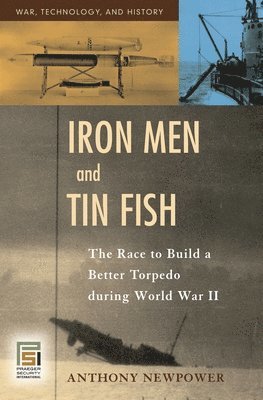
From the American entry into World War II until September 1943, U.S. submarines experienced an abnormally high number of torpedo failures. These failures resulted from three defects present in the primary torpedo of the day, the Mark XIV. These defects were a tendency to run deeper than the set depth, the frequent premature detonation of the Mark 6 magnetic influence exploder, and the failure of the contact exploder when hitting a target at the textbook ninety-degree angle. Ironically, despite using a completely independent design, the Germans experienced the same three defects. The Germans, however, fixed their defects in six months, while it took the Americans twenty-two months. Much of the delay on the American side resulted from the denial of senior leaders in the operational forces and in the Navy's Bureau of Ordnance (BuOrd) that the torpedo itself was defective. Instead, they blamed crews for poor marksmanship or lack of training. In the end, however, the submarine force itself overcame the bureaucratic inertia and correctly identified and fixed the three problems on their own, proving once again the industry of the average American soldier or sailor.From the American entry into World War II until September 1943, U.S. submarines experienced an abnormally high number of torpedo failures. These failures resulted from three defects present in the primary torpedo of the day, the Mark XIV. These defects were a tendency to run deeper than the set depth, the frequent premature detonation of the magnetic influence exploder, and the failure of the contact exploder when hitting a target at the textbook 90-degree angle. Ironically, despite using a completely independent design, the Germans experienced the same three defects. The Germans, however, fixed their defects in six months, while it took the Americans 22 months. Much of the delay on the American side resulted from the denial of senior leaders in the operational forces and in the Navy's Bureau of Ordnance (BuOrd) that the torpedo itself was defective. Instead, they blamed crews for poor marksmanship or lack of training. In the end, however, the submarine force itself overcame the bureaucratic inertia and correctly identified and fixed the three problems on their own, proving once again the industry of the average American soldier or sailor.Contrary to the interpretations of most submarine historians, this book concludes that BuOrd did not sit idly by while torpedoes failed on patrol after patrol. BuOrd acknowledged problems from early in the war, but their processes and their tunnel vision prevented them from realizing that the weapon sent to the fleet was grossly defective. One of World War II's forgotten heroes, Admiral Lockwood drove the process for finding and fixing the three major defects. This is first book that deals exclusively with the torpedo problem, building its case out of original research from the archives of the Bureau of Ordnance, the Chief of Naval Operations, Vice Admiral Lockwood's personal correspondence, and records from the British Admiralty at the National Archives of the United Kingdom. These sources are complemented by correspondence and interviews with men who actually participated in the events.
833 kr
Skickas inom 10-15 vardagar
This book offers a unique perspective for understanding how and why the Second World War in Europe ended as it did—and why Germany, in attacking the Soviet Union, came far closer to winning the war than is often perceived.Why Germany Nearly Won: A New History of the Second World War in Europe challenges this conventional wisdom in highlighting how the re-establishment of the traditional German art of war—updated to accommodate new weapons systems—paved the way for Germany to forge a considerable military edge over its much larger potential rivals by playing to its qualitative strengths as a continental power. Ironically, these methodologies also created and exacerbated internal contradictions that undermined the same war machine and left it vulnerable to enemies with the capacity to adapt and build on potent military traditions of their own.The book begins by examining topics such as the methods by which the German economy and military prepared for war, the German military establishment's formidable strengths, and its weaknesses. The book then takes an entirely new perspective on explaining the Second World War in Europe. It demonstrates how Germany, through its invasion of the Soviet Union, came within a whisker of cementing a European-based empire that would have allowed the Third Reich to challenge the Anglo-American alliance for global hegemony—an outcome that by commonly cited measures of military potential Germany never should have had even a remote chance of accomplishing. The book's last section explores the final year of the war and addresses how Germany was able to hang on against the world's most powerful nations working in concert to engineer its defeat.
833 kr
Skickas inom 10-15 vardagar
This extended study of one of the critical campaigns of World War I sheds light on vital strategic consequences for both sides.Published during the centennial of the events it considers, this book provides a comprehensive examination of one of the most interesting and influential campaigns of World War I, a campaign that was the apex of mobile warfare at the time. By the late summer of 1915, the Russian threat to Austria-Hungary had been eliminated by the Central Powers. That allowed Erich von Falkenhayn, head of the German supreme command, to turn his attention to his next strategic target—the conquest of Serbia—which was imperative to opening a land route to the Ottoman Empire. Until that task was accomplished, matters on the all-important Western Front would have to wait. This first major study of the invasion of Serbia covers events primarily from the viewpoint of the Central Powers, which played the most pivotal role in the campaign. The book considers the impact of factors as diverse as diplomacy, command, coalition warfare, mountain warfare, military technology, and the harsh environment in which the campaign was conducted. Readers will come away with an understanding of and appreciation for the importance of the Serbian campaign as it affected the outcome of the war and the ultimate destruction of the Austro-Hungarian Empire.