Richard L. DiNardo – författare
651 kr
Skickas inom 10-15 vardagar
702 kr
Läs direkt efter köp
1 082 kr
Skickas inom 10-15 vardagar
784 kr
Skickas inom 5-8 vardagar
572 kr
Läs direkt efter köp
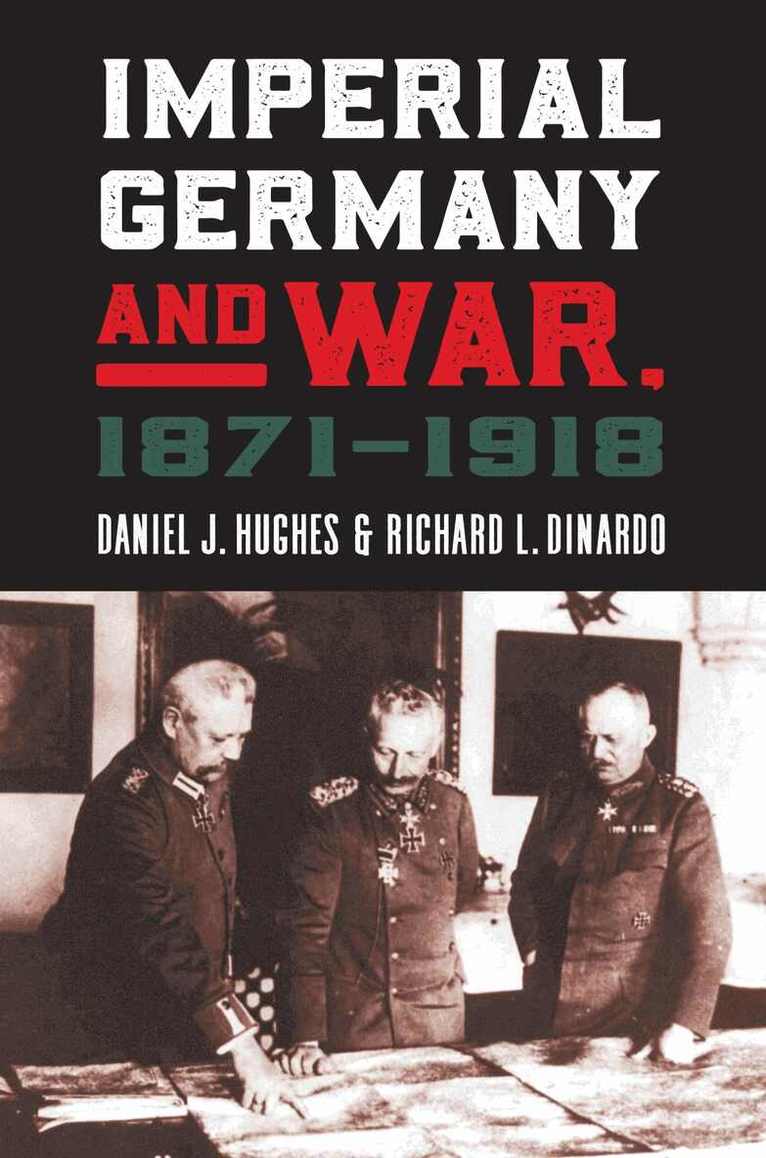
An in-depth, finely detailed portrait of the German Army from its greatest victory in 1871 to its final collapse in 1918, this volume offers the most comprehensive account ever given of one of the critical pillars of the German Empire—and a chief architect of the military and political realities of late nineteenth-century Europe.
Written by two of the world’s leading authorities on the subject, Imperial Germany and War, 1871–1918 examines the most essential components of the imperial German military system, with an emphasis on such foundational areas as theory, doctrine, institutional structures, training, and the officer corps. In the period between 1871 and 1918, rapid technological development demanded considerable adaptation and change in military doctrine and planning. Consequently, the authors focus on theory and practice leading up to World War I and upon the variety of adaptations that became necessary as the war progressed—with unique insights into military theorists from Clausewitz to Moltke the Elder, Moltke the Younger, Schlichting, and Schlieffen. Ranging over the entire history of the German Empire, Imperial Germany and War, 1871–1918 presents a picture of unprecedented scope and depth of one of the most widely studied, criticized, and imitated organizations in the modern world. The book will prove indispensable to an understanding of the Imperial German Army.
710 kr
Läs direkt efter köp
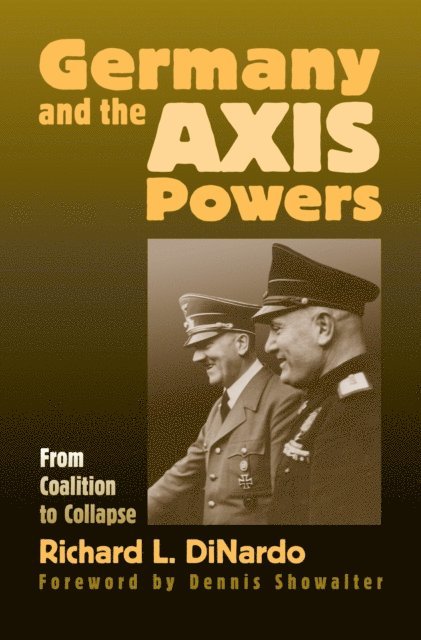
It seemed that whenever Mussolini acted on his own, it was bad news for Hitler. Indeed, the Fuhrer’s relations with his Axis partners were fraught with an almost total lack of coordination. Compared to the Allies, the coalition was hardly an alliance at all. Focusing on Germany’s military relations with Italy, Romania, Hungary, and Finland, Richard DiNardo unearths a wealth of information that reveals how the Axis coalition largely undermined Hitler’s objectives from the Eastern Front to the Balkans, Mediterranean, and North Africa.
DiNardo argues that the Axis military alliance was doomed from the beginning by a lack of common war aims, the absence of a unified command structure, and each nation’s fundamental mistrust of the others. Germany was disinclined to make the kinds of compromises that successful wartime partnerships demanded and, because Hitler insisted on separate pacts with each nation, Italy and Finland often found themselves conducting counterproductive parallel wars on their own.
DiNardo’s detailed assessments of ground, naval, and air operations reveal precisely why the Axis allies were so dysfunctional as a collective force, sometimes for seemingly mundane but vital reasons-a shortage of interpreters, for example. His analysis covers coalition warfare at every level, demonstrating that some military services were better at working with their allies than others, while also pointing to rare successes, such as Rommel’s effective coordination with Italian forces in North Africa. In the end, while some individual Axis units fought with distinction—if not on a par with the vaunted Wehrmacht—and helped Germany achieve some of its military aims, the coalition’s overall military performance was riddled with disappointments.
Breaking new ground, DiNardo’s work enlarges our understanding of Germany’s defeat while at the same time offering a timely reminder of the challenges presented by coalition warfare.
867 kr
Skickas inom 10-15 vardagar
935 kr
Läs direkt efter köp
722 kr
Skickas inom 10-15 vardagar
752 kr
Läs direkt efter köp
702 kr
Läs direkt efter köp
935 kr
Läs direkt efter köp
779 kr
Läs direkt efter köp