• Fri frakt över 249 kr
  • •
  • Snabba leveranser
  • •
  • Billiga böcker
Kundservice

Du är på sajten för privatpersoner.

Företag, bibliotek eller offentlig verksamhet?

Du handlar på classic.bokus.com, där alla dina funktioner finns intakta.
Till classic.bokus.com
Bokus logotyp. Gå till startsidan.
  • Erbjudanden
  • Nyheter
  • Student
  • Topplistor
  • Barn & ungdom
  • Bokus Play
  • E-böcker
  • Pocketböcker
  • Spel & pussel

10% rabatt på allt med kod: NYSTART10 →

Sidfot

Mina sidor

    Hjälp

    • Kundservice
    • Vanliga frågor och svar
    • Frakt och leverans
    • Retur vid ångerrätt
    • Reklamera vara
    • Betalning
    • Köpvillkor
    • Allmänna villkor
    • Information om webbplatsens tillgänglighet

    Om Bokus

    • Om oss
    • Pressrum
    • För studenter
    • För företag
    • För bibliotek och offentlig verksamhet
    • För leverantörer
    • Hållbarhet

    Populärt

    • Aktuella erbjudanden
    • Presentkort
    • Studentlitteratur
    • Nya böcker
    • Topplistor
    • Signerade böcker
    • Engelska böcker

    Inspiration

    • Boktips
    • BookTok
    • Populära bokserier
    • Barnbokskaraktärer
    • Populära författare
    Logotyp för Bokus
    Följ oss på Facebook (extern länk)Följ oss på Instagram (extern länk)Följ oss på YouTube (extern länk)Följ oss på TikTok (extern länk)
    bokus @ CookiesAnpassa cookiesIntegritetspolicyKöpvillkor
    Till Citymail hemsida (extern länk)Till Budbee hemsida (extern länk)Till Postnord hemsida (extern länk)Till Schenker hemsida (extern länk)Till Early Bird hemsida (extern länk)Till Walleys hemsida (extern länk)
    1. Historia och arkeologi
    2. Historia
    3. Europas historia

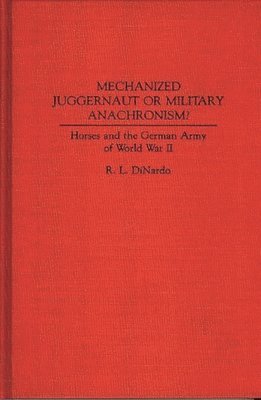
    Mechanized Juggernaut or Military Anachronism?

    Horses and the German Army of World War II

    AvRichard L. DiNardo

    Inbunden, Engelska, 1991

    1 080 kr

    Beställningsvara. Skickas inom 10-15 vardagar. Fri frakt över 249 kr.

    Beskrivning

    One of the great misconceptions of the Second World War is the notion that the German Army was the epitome of mechanical efficiency--combining lightning speed with awesome military power. R. L. DiNardo argues that, although the elite panzer divisions were indeed formidable units, about 75 percent of the German Army were infantry divisions who relied primarily on the horse for transport. So, DiNardo asks, how modern was the Wehrmacht during World War II? Could it have achieved a higher level of modernity than it actually did? This book takes an unusual approach to the study of the much mythologized German Army.In dealing with horses specifically, DiNardo shows how the German Army was in many ways a throwback to the nineteenth century. How extensive was this antiquated dependence on horses, and was this a conscious decision on the part of the leaders of the German war machine? Did it have an effect on the army's organization and battle strength? What problems did the Germans encounter due to their use of horses? This study answers these questions from a unique perspective and will be invaluable to military historians, courses in military studies, and the collections in public and academic libraries.

    Produktinformation

    • Utgivningsdatum:1991-09-25
    • Mått:161 x 240 x 14 mm
    • Vikt:414 g
    • Format:Inbunden
    • Språk:Engelska
    • Antal sidor:160
    • Förlag:Bloomsbury Publishing Plc
    • ISBN:9780313278105

    Utforska kategorier

    • Europas historia inom Historia och arkeologi
    • Vapen och utrustning inom Samhälle och politik
    • Markkrigföring inom Samhälle och politik

    Mer om författaren

    R. L. DiNARDO is Assistant Professor of History at St. Peter's College. He is the author of numerous articles on military history in scholarly journals, including Strategy and Tactics, Journal of Contemporary History, and Military Affairs.

    Innehållsförteckning

    • Introduction Wishes and Reality: The German Army, 1933-1939 Blitzkrieg? Barbarossa From Near Victory to Certain Defeat: The German Army in Russia, 1942-1943 Germany and the Occupied Territories Jine the Cavalry Disaster and Defeat Perpetuation of a Myth Conclusion Bibliography Index