Geoffrey Till – författare
803 kr
Skickas inom 10-15 vardagar
861 kr
Skickas inom 10-15 vardagar
935 kr
Läs direkt efter köp
417 kr
Skickas inom 10-15 vardagar
615 kr
Skickas inom 10-15 vardagar
2 495 kr
Skickas inom 10-15 vardagar
1 482 kr
Skickas inom 10-15 vardagar
541 kr
Skickas inom 10-15 vardagar
2 322 kr
Skickas inom 10-15 vardagar
253 kr
Skickas inom 10-15 vardagar
716 kr
Skickas inom 10-15 vardagar
2 325 kr
Skickas inom 10-15 vardagar
2 756 kr
Skickas inom 10-15 vardagar
774 kr
Skickas inom 10-15 vardagar
706 kr
Läs direkt efter köp
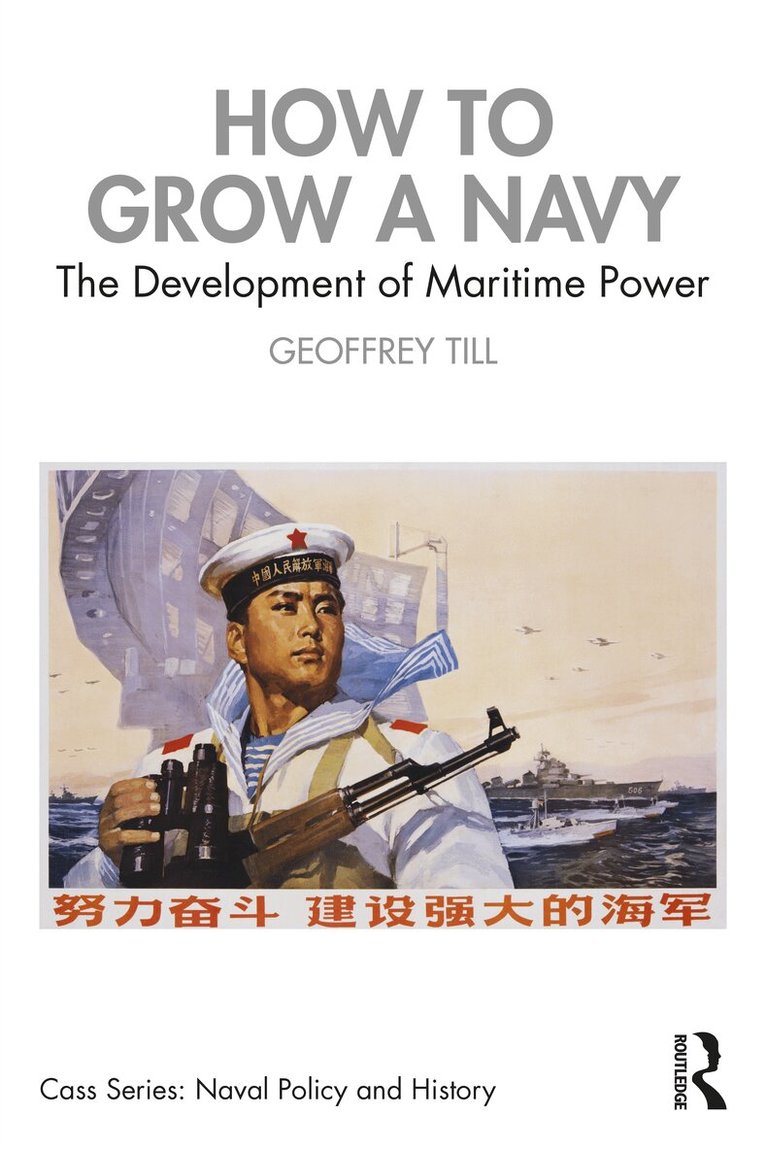
This book examines the large but neglected topic of the development of maritime power from both an historical and a contemporary point of view.
Navies have never been more important than they are now, in a century becoming, as widely expected, increasingly and profoundly maritime. The growing competition between China and Russia with the United States and its allies and partners around the world is essentially sea-based. The sea is also central to the world''s globalised trading system and to its environmental health. Most current crises are either sea-based or have a critical maritime element to them. What happens at sea will help shape our future. Against that background, this book uses both history and contemporary events to analyse how maritime power and naval strength has been, and is being, developed. In a reader-friendly way, it seeks to show what has worked and what has not, and to uncover the recurring patterns in maritime and naval development which explain past, present and future success - and failure. It reflects on the historical experience of all navies, but in particular it poses the question of whether China is following the same pattern of naval development illustrated by Britain at the start of the 18th century, which led to two centuries of naval dominance.
This book will be of much interest to students of maritime power, naval studies, and strategic studies, as well as to naval professionals around the world.
706 kr
Läs direkt efter köp
This book examines the large but neglected topic of the development of maritime power from both an historical and a contemporary point of view.
Navies have never been more important than they are now, in a century becoming, as widely expected, increasingly and profoundly maritime. The growing competition between China and Russia with the United States and its allies and partners around the world is essentially sea-based. The sea is also central to the world''s globalised trading system and to its environmental health. Most current crises are either sea-based or have a critical maritime element to them. What happens at sea will help shape our future. Against that background, this book uses both history and contemporary events to analyse how maritime power and naval strength has been, and is being, developed. In a reader-friendly way, it seeks to show what has worked and what has not, and to uncover the recurring patterns in maritime and naval development which explain past, present and future success - and failure. It reflects on the historical experience of all navies, but in particular it poses the question of whether China is following the same pattern of naval development illustrated by Britain at the start of the 18th century, which led to two centuries of naval dominance.
This book will be of much interest to students of maritime power, naval studies, and strategic studies, as well as to naval professionals around the world.
774 kr
Läs direkt efter köp
This book offers a new edition of Henry Maydman’s work Naval Speculations with a detailed commentary by two leading experts on its importance to the naval issues of the 21st century.
Written at a revolutionary and troubling time, Maydman’s 1691 book offers an analysis of the state of the Royal Navy at the time, together with a set of recommendations for its improvement. It not only tells us a good deal about the Royal Navy of the time but also provides a general theory of why navies decline and what can be done to rejuvenate them. Recovering Naval Power shows that the issues he identifies have applied to every navy in every period. We are now seeing the dramatic rejuvenation of the Chinese Navy and the reactions to it of the US and other navies, together with a new rise in naval tensions in the Euro-Atlantic. Despite the obvious political, economic and technological differences between Maydman’s day and ours, this work shows that his recommendations could hardly be more relevant in today’s circumstances. Alongside the modified text of Naval Speculations, this book includes a preface and two chapters addressing, first, the Royal Navy of Maydman''s time and his role in it and, second, the relevance of what Maydman said for the navies of the 21st century. The book concludes with some overall comments about Maydman and the recovery of naval power and recommendations for further reading.
This book will be of much interest to students of naval history, maritime power, strategic studies, and International Relations in general.
774 kr
Läs direkt efter köp
This book offers a new edition of Henry Maydman’s work Naval Speculations with a detailed commentary by two leading experts on its importance to the naval issues of the 21st century.
Written at a revolutionary and troubling time, Maydman’s 1691 book offers an analysis of the state of the Royal Navy at the time, together with a set of recommendations for its improvement. It not only tells us a good deal about the Royal Navy of the time but also provides a general theory of why navies decline and what can be done to rejuvenate them. Recovering Naval Power shows that the issues he identifies have applied to every navy in every period. We are now seeing the dramatic rejuvenation of the Chinese Navy and the reactions to it of the US and other navies, together with a new rise in naval tensions in the Euro-Atlantic. Despite the obvious political, economic and technological differences between Maydman’s day and ours, this work shows that his recommendations could hardly be more relevant in today’s circumstances. Alongside the modified text of Naval Speculations, this book includes a preface and two chapters addressing, first, the Royal Navy of Maydman''s time and his role in it and, second, the relevance of what Maydman said for the navies of the 21st century. The book concludes with some overall comments about Maydman and the recovery of naval power and recommendations for further reading.
This book will be of much interest to students of naval history, maritime power, strategic studies, and International Relations in general.
357 kr
Skickas inom 5-8 vardagar
186 kr
Skickas inom 5-8 vardagar
2 495 kr
Skickas inom 10-15 vardagar
702 kr
Skickas inom 10-15 vardagar
2 495 kr
Skickas inom 10-15 vardagar
952 kr
Läs direkt efter köp
952 kr
Läs direkt efter köp
639 kr
Läs direkt efter köp
This edited volume examines the impact of globalisation on the economies, security policies and military-industrial complexes of the Asia-Pacific region.
The work is structured into three main parts. The first explores globalization and its general effects on the policy-making of the nation-state; the second section looks at how globalisation affects a country’s threat perception and defence posture within the specific context of the Asia-Pacific region; while the third explores how it impacts on a state’s allocation of resources to defence, and how economic globalization affects the defence industry, with specific reference to the procurement policies and practices of different states across the Asia-Pacific.
639 kr
Läs direkt efter köp
This edited volume examines the impact of globalisation on the economies, security policies and military-industrial complexes of the Asia-Pacific region.
The work is structured into three main parts. The first explores globalization and its general effects on the policy-making of the nation-state; the second section looks at how globalisation affects a country’s threat perception and defence posture within the specific context of the Asia-Pacific region; while the third explores how it impacts on a state’s allocation of resources to defence, and how economic globalization affects the defence industry, with specific reference to the procurement policies and practices of different states across the Asia-Pacific.
918 kr
Läs direkt efter köp
This new book brings together Britain’s leading naval historians and analysts to present a comprehensive investigation of British naval thinking and what has made it so distinctive over the last three centuries, from the sailing ship era to the current day.
This new volume describes in depth the beginnings of formalized thought about the conduct of naval operations in the 18th Century, its transformation through the impact of industrialization in the 19th Century and its application in the two World Wars of the twentieth. This book concludes with a review of modern British naval thinking and the appearance of naval doctrine against the uncertainties of the loss of empire, the Cold War, nuclear weapons and the huge changes facing us as we move in to the new millennium. How perceptive and distinctive was British naval thinking? Where did British ideas come from? Did they determine or merely follow British experience? Do they explain British naval success ? The contributors to this volume tackle these key questions in a book that will be of considerable interest to the maritime community around the English-speaking world.
This book will be of great interest to all students and professionals with an interest in the history of the Royal Navy, contemporary British maritime operations and strategic studies.
This is a commemorative volume of the life and work of the distinguished Professor Bryan Ranft.
918 kr
Läs direkt efter köp
This new book brings together Britain’s leading naval historians and analysts to present a comprehensive investigation of British naval thinking and what has made it so distinctive over the last three centuries, from the sailing ship era to the current day.
This new volume describes in depth the beginnings of formalized thought about the conduct of naval operations in the 18th Century, its transformation through the impact of industrialization in the 19th Century and its application in the two World Wars of the twentieth. This book concludes with a review of modern British naval thinking and the appearance of naval doctrine against the uncertainties of the loss of empire, the Cold War, nuclear weapons and the huge changes facing us as we move in to the new millennium. How perceptive and distinctive was British naval thinking? Where did British ideas come from? Did they determine or merely follow British experience? Do they explain British naval success ? The contributors to this volume tackle these key questions in a book that will be of considerable interest to the maritime community around the English-speaking world.
This book will be of great interest to all students and professionals with an interest in the history of the Royal Navy, contemporary British maritime operations and strategic studies.
This is a commemorative volume of the life and work of the distinguished Professor Bryan Ranft.
774 kr
Läs direkt efter köp
This edited volume analyses the naval arms race in South-East Asia, and reviews the content, purposes and consequences of the naval policies and development of the main countries of the region.
The rise of naval capability in the countries of the Asia-Pacific Region is increasingly recognised as a major indicator of the ‘rise of Asia’ and its increasing importance in the world’s political, economic and strategic future. Most coverage focusses solely on the navies of the ''big four'' – the US, China, India and Japan; however, the region’s other navies, though much smaller, are significant too. Given the current focus on the South China Sea and the Obama administration’s pivot to Asia, naval development in South-East Asia is of particular relevance.
This book first identifies the issues involved in defence acquisition in this area. It then goes on to establish some templates of naval modernisation as a means of assessing the policies of individual countries in the region, by looking at the naval policies of the big four. Finally, the general issue of naval modernisation in South-East Asia is illustrated through a more detailed examination of some of the major issues common to all countries of the area. These include the defence-industrial perspective, specific examinations of submarine and surface ship acquisition processes, and a review of the balance to be struck between naval and coastguard forces in the area.
This book will be of much interest to students of naval power, maritime security, South-East Asian politics, strategic studies, and IR in general.