New Southeast Asia: Politics, Meaning, and Memory – serie
Visar alla böcker i serien New Southeast Asia: Politics, Meaning, and Memory. Handla med fri frakt och snabb leverans.
12 produkter
12 produkter
888 kr
Skickas inom 10-15 vardagar
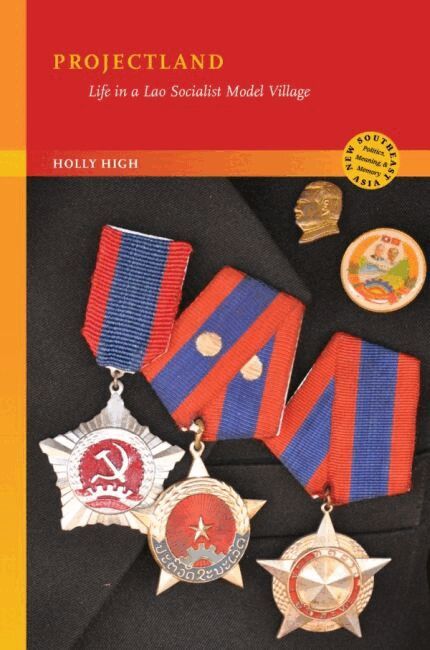
In Projectland, anthropologist Holly High combines an engaging first-person narrative of her fieldwork with a political ethnography of Laos, more than forty years after the establishment of the Lao PDR and more than seven decades since socialist ideologues first "liberated" parts of upland country. In a remote village of Kandon, High finds that although socialism has declined significantly as an economic model, it is ascendant and thriving in the culture of politics and the politics of culture.Kandon is remarkable by any account. The villagers are ethnic Kantu (Katu), an ethnicity associated by early ethnographers above all with human sacrifice. They had repelled French control, and as the war went on, the revolutionary forces of Sekong were headquartered in Kandon territories. In 1996, Kandon village moved and resettled in a plateau area. "New Kandon" has become Sekong Province’s first certified "Culture Village," the nation's very first "Open Defecation Free and Model Health Village," and the president of Laos personally granted the village a Labor Flag and Medal. High provides a unique and timely assessment of the Lao Party-state's resettlement politics, and she recounts with skillful nuance the stories that are often cast into shadows by the usual focus on New Kandon as a success. Her book follows the lives of a small group of villagers who returned to the old village in the mountains, effectively defying policy but, in their words, obeying the presence that animates the land there. Revealing her sensibility with tremendous composure, High tells the experiences of women who, bound by steep bride-prices to often violent marriages, have tasted little of the socialist project of equality, unity, and independence. These women spoke to the author of "necessities" as a limit to their own lives. In a context where the state has defined the legitimate forms of success and agency, "necessity" emerged as a means of framing one's life as nonconforming but also nonagentive.
292 kr
Skickas inom 7-10 vardagar
In Projectland, anthropologist Holly High combines an engaging first-person narrative of her fieldwork with a political ethnography of Laos, more than forty years after the establishment of the Lao PDR and more than seven decades since socialist ideologues first ""liberated"" parts of upland country. In a remote village of Kandon, High finds that although socialism has declined significantly as an economic model, it is ascendant and thriving in the culture of politics and the politics of culture.Kandon is remarkable by any account. The villagers are ethnic Kantu (Katu), an ethnicity associated by early ethnographers above all with human sacrifice. They had repelled French control, and as the war went on, the revolutionary forces of Sekong were headquartered in Kandon territories. In 1996, Kandon village moved and resettled in a plateau area. ""New Kandon"" has become Sekong Province’s first certified ""Culture Village,"" the nation’s very first ""Open Defecation Free and Model Health Village,"" and the president of Laos personally granted the village a Labor Flag and Medal. High provides a unique and timely assessment of the Lao Party-state’s resettlement politics, and she recounts with skillful nuance the stories that are often cast into shadows by the usual focus on New Kandon as a success. Her book follows the lives of a small group of villagers who returned to the old village in the mountains, effectively defying policy but, in their words, obeying the presence that animates the land there. Revealing her sensibility with tremendous composure, High tells the experiences of women who, bound by steep bride-prices to often violent marriages, have tasted little of the socialist project of equality, unity, and independence. These women spoke to the author of ""necessities"" as a limit to their own lives. In a context where the state has defined the legitimate forms of success and agency, ""necessity"" emerged as a means of framing one’s life as nonconforming but also nonagentive.
Memories of Unbelonging
Ethnic Chinese Identity Politics in Post-Suharto Indonesia
Inbunden, Engelska, 2023
754 kr
Skickas inom 7-10 vardagar
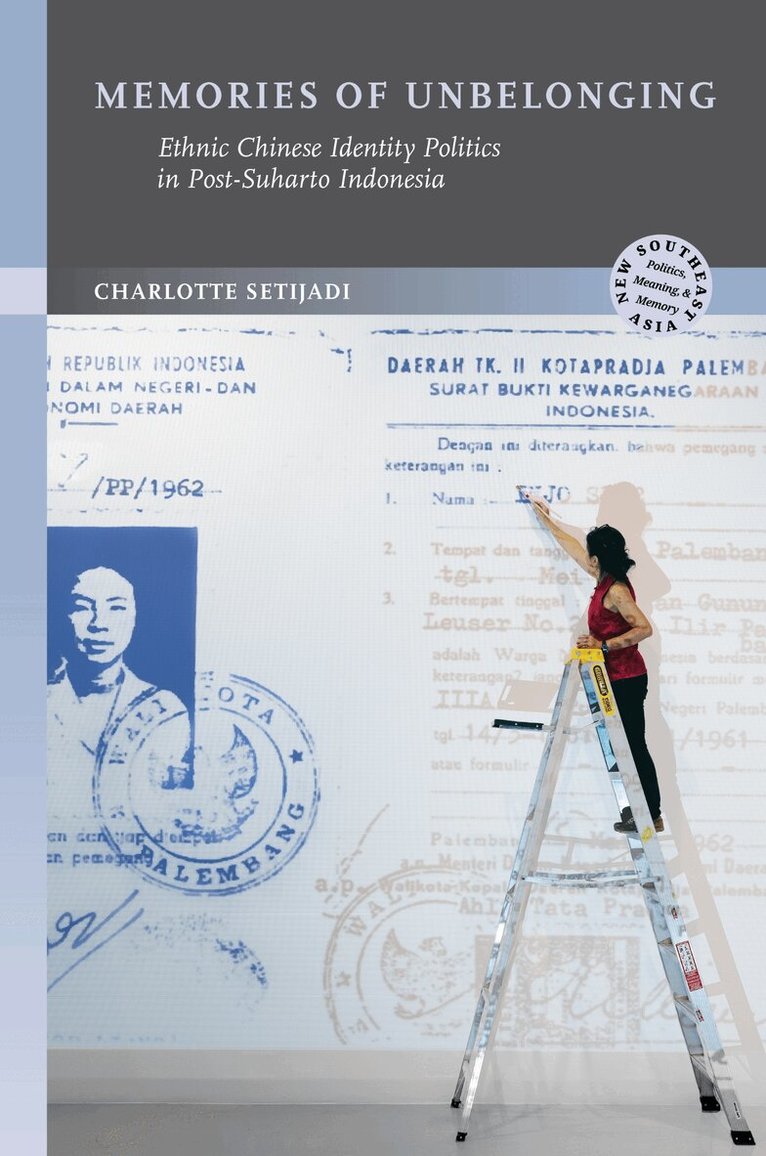
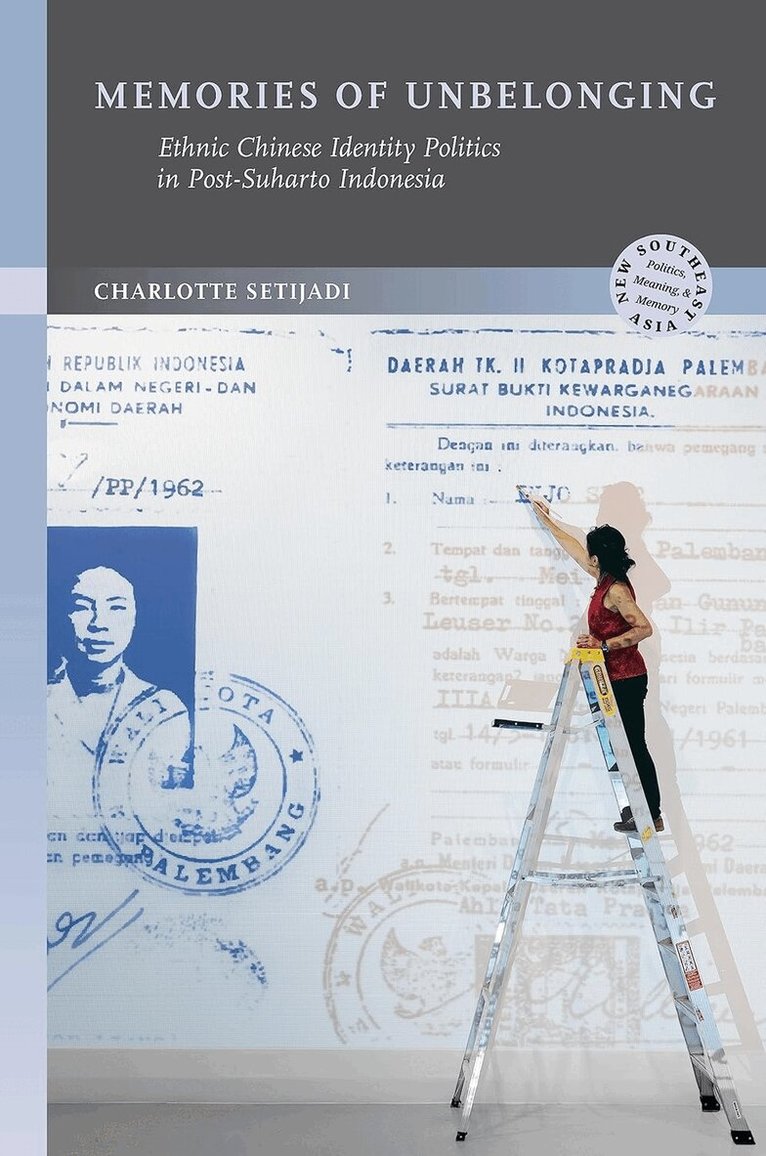
The ethnic Chinese have had a long and problematic history in Indonesia, commonly stereotyped as a market-dominant minority with dubious political loyalty toward Indonesia. For over three decades under Suharto’s New Order regime, a cultural assimilation policy banned Chinese languages, cultural expression, schools, media, and organizations. This policy was only abolished in 1998 following the riots and anti-Chinese attacks that preceded the fall of the New Order. In the post-Suharto era, Chinese Indonesians were finally free to assert their Chineseness again. But how does an ethnic group recover from the trauma of assimilation and regain a lost cultural identity?Memories of Unbelonging is an ethnographic study of how collective memories of state-sponsored ethnic discrimination have shaped Chinese identity politics in Indonesia. Combining case studies, in-depth primary data, and incisive analysis of Indonesia’s contemporary political landscape, anthropologist Charlotte Setijadi argues that trauma narratives are at the core of modern Chinese identity politics. Examining spaces and domains such as residential enclaves, educational institutions, the creative arts, and politics, this book paints a vivid picture of how different generations of Chinese Indonesians make sense of their historical trauma, ethnic identity, and belonging in a post-assimilation environment. Far from being passive victims of history, the ethnic Chinese are actively challenging old stereotypes and boundaries of acceptable Chineseness in the country.This emphasis on group and individual agency marks a strong departure from structural analyses of Chinese Indonesians that mostly highlight their disempowerment as an oppressed minority. Furthermore, placing the analysis within the broader context of China’s rise in the twenty-first century demonstrates how the combination of persisting local anti-Chinese sentiments and renewed pride over China’s growing global dominance have prompted many Chinese Indonesians to re-evaluate their sense of ethnic and national belonging. By focusing on the nexus between collective memory, local identity politics, and the rise of China as an external factor, Memories of Unbelonging offers new perspectives of understanding about Chinese Indonesians, post-Suharto Indonesian society, and the relationship between China and ethnic Chinese communities in Southeast Asia.
732 kr
Skickas inom 7-10 vardagar
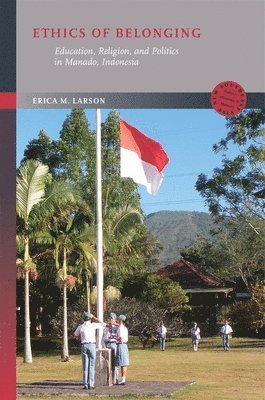
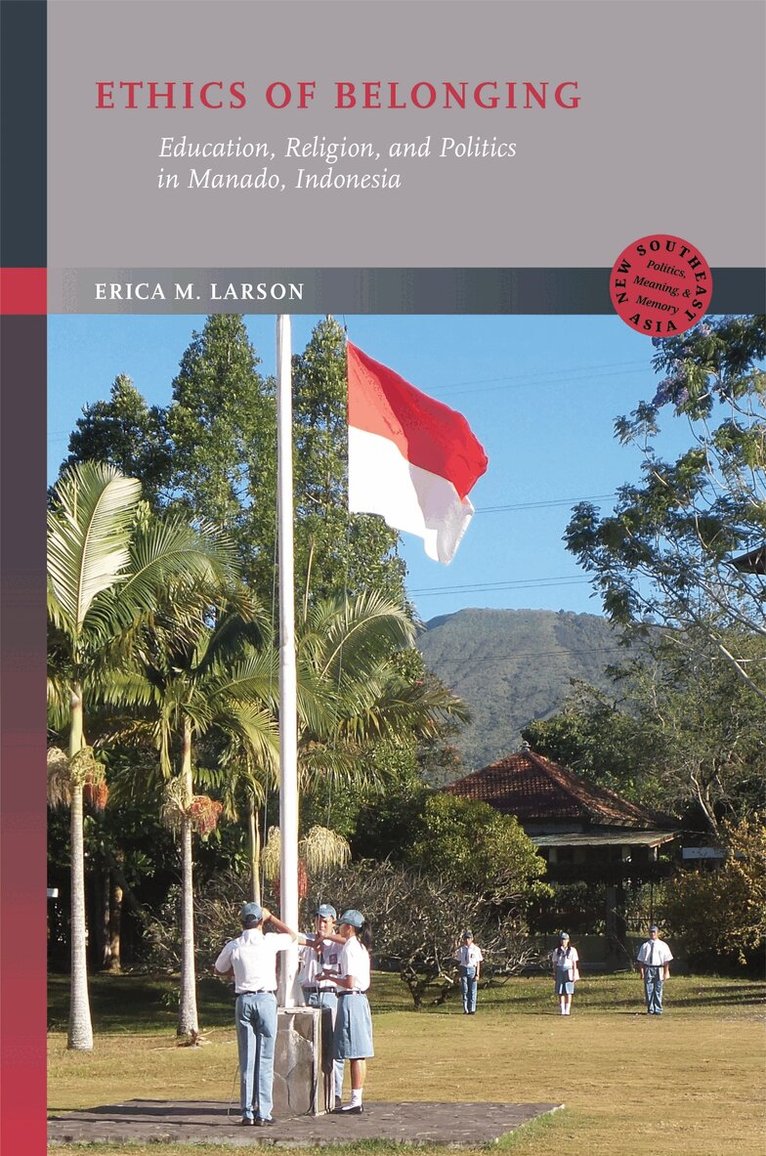
The city of Manado and province of North Sulawesi have built a public identity based on religious harmony, claiming to successfully model tolerance and inter-religious relations for the rest of Indonesia. Yet, in discourses and practices relevant to everyday interactions in schools and political debates in the public sphere, two primary contested frames for belonging emerge in tension with one another. On the one hand, "aspirational coexistence" recognizes a common goal of working toward religious harmony and inclusive belonging. On the other hand, "majoritarian coexistence," in which the legitimacy of religious minorities is understood as guaranteed exclusively by the goodwill of the Protestant majority, also emerges in discourses and practices of coexistence. These two agonistic frames of coexistence stem from both a real pride at having staved off ethno-religious violence that plagued surrounding regions at the turn of the twenty-first century, as well as a concern about whether the area will maintain a Christian majority in the future. Based on ethnographic research in Manado, North Sulawesi, a Protestant-majority region of Indonesia, Ethics of Belonging investigates the dynamics of ethical deliberation about religious coexistence. In this analysis, schools are understood as central sites for exchange about the ethics and politics of belonging in the nation. The author draws on in-depth fieldwork at three secondary schools (a public high school, private Catholic boarding school, and public madrasah), an inter-religious "exchange" program among university students, and societal debates about religion and belonging. Each of the schools promotes a distinct method to addressing diversity and a particular understanding of the relationship between religious and civic values. Larson’s research demonstrates how ethical frameworks for approaching religious difference are channeled and negotiated through educational institutions, linking up with their broader political context and debates in the community. This resource argues for a consideration of ethical reflection as a fundamentally pedagogical process, with important ramifications beyond the immediate environment. The focus on educational institutions provides a critical connection between interpersonal and public ethical deliberation, elucidating the entanglements of ethics and politics and their manifestation across different societal scales.
Buddhist-Inflected Sovereignties Across the Indian Ocean
The Pali Arena, 1200-1550
Inbunden, Engelska, 2024
732 kr
Skickas inom 7-10 vardagar
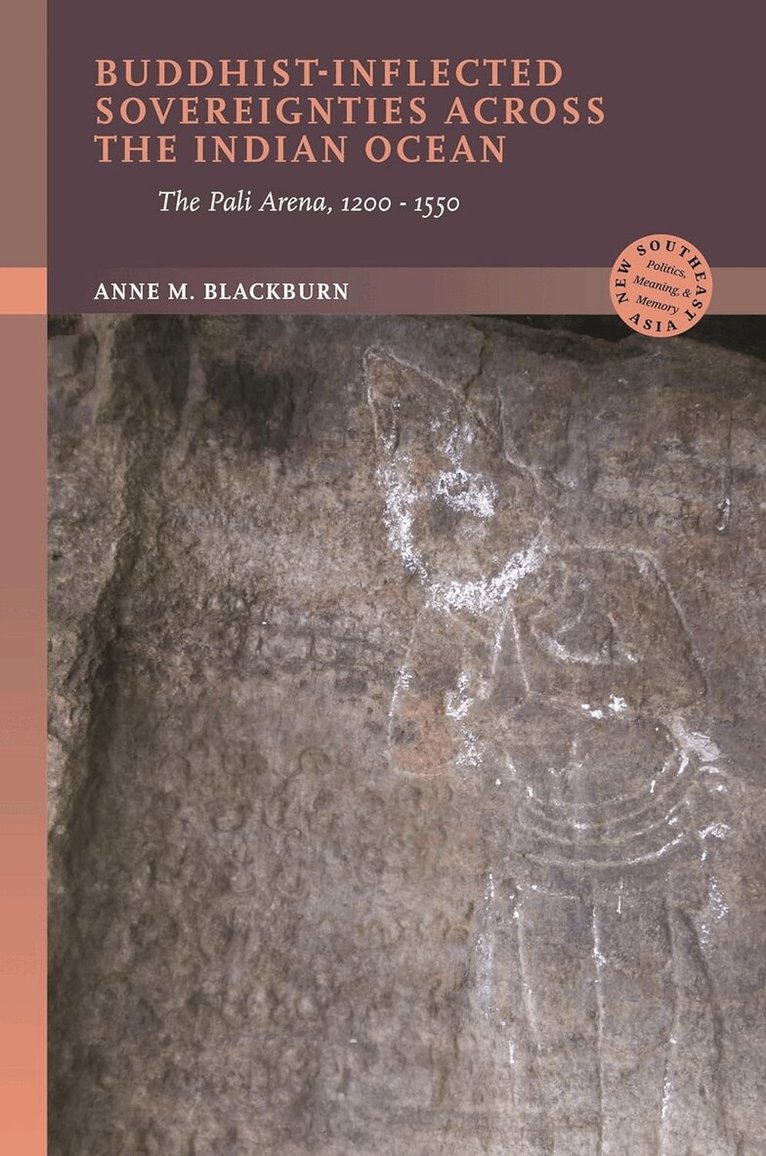
Buddhist-Inflected Sovereignties across the Indian Ocean draws attention to the varied, historically contingent, and sometimes competing, arguments for and about sovereignty that operated in the Pali arena during the first half of the second millennium AD. It was a time of expanding interaction within the Indian Ocean just prior to Portuguese colonial presence in Southern Asia. Developing a linked series of case studies and examining territories now subsumed within the nation-states of Sri Lanka, Burma/Myanmar, and Thailand, Blackburn examines sovereign arguments expressed textually, as well as in the built environment, by persons with an interest in the teachings and institutions associated with Gotama Buddha. These cases show that no single model of Buddhist-inflected sovereignty dominated the Pali arena during this time, and that there was no stable vision of "Buddhist kingship." Rather, over time, there was an accrual of possible models and pathways for argumentation about how sovereigns could and should relate to buddha-sāsana. Taking inspiration from diverse sources transmitted through multiple forms and media, arguments for and about sovereignty in the Pali arena were contested and rapidly changing. As the Indian Ocean increasingly shaped the flow of people, objects, and ideas, more peoples and territories participated in the Pali arena, attracted by its intellectual and aesthetic resources.Drawing on extensive scholarship and a wide range of multilingual source materials from premodern Sri Lanka, Burma, Thailand, and Cambodia, Anne M. Blackburn develops innovative conclusions about the relationships between textuality, sovereignty, maritime connectivity, and material culture in each of these areas. The book contributes simultaneously to several fields of study: the intellectual history of Southern Asia, literary and historical scholarship on Buddhism, and historical studies of the Indian Ocean. By offering accessible yet in-depth analysis, Buddhist-Inflected Sovereignties across the Indian Ocean connects research fields and introduces new interpretive possibilities for the study of sovereignty, politics, premodern textual cultures, and Buddhism.
Buddhist-Inflected Sovereignties Across the Indian Ocean
The Pali Arena, 1200-1550
Häftad, Engelska, 2025
284 kr
Skickas inom 7-10 vardagar
Buddhist-Inflected Sovereignties across the Indian Ocean draws attention to the varied, historically contingent, and sometimes competing, arguments for and about sovereignty that operated in the Pali arena during the first half of the second millennium AD. It was a time of expanding interaction within the Indian Ocean just prior to Portuguese colonial presence in Southern Asia. Developing a linked series of case studies and examining territories now subsumed within the nation-states of Sri Lanka, Burma/Myanmar, and Thailand, Blackburn examines sovereign arguments expressed textually, as well as in the built environment, by persons with an interest in the teachings and institutions associated with Gotama Buddha. These cases show that no single model of Buddhist-inflected sovereignty dominated the Pali arena during this time, and that there was no stable vision of "Buddhist kingship." Rather, over time, there was an accrual of possible models and pathways for argumentation about how sovereigns could and should relate to buddha-sāsana. Taking inspiration from diverse sources transmitted through multiple forms and media, arguments for and about sovereignty in the Pali arena were contested and rapidly changing. As the Indian Ocean increasingly shaped the flow of people, objects, and ideas, more peoples and territories participated in the Pali arena, attracted by its intellectual and aesthetic resources.Drawing on extensive scholarship and a wide range of multilingual source materials from premodern Sri Lanka, Burma, Thailand, and Cambodia, Anne M. Blackburn develops innovative conclusions about the relationships between textuality, sovereignty, maritime connectivity, and material culture in each of these areas. The book contributes simultaneously to several fields of study: the intellectual history of Southern Asia, literary and historical scholarship on Buddhism, and historical studies of the Indian Ocean. By offering accessible yet in-depth analysis, Buddhist-Inflected Sovereignties across the Indian Ocean connects research fields and introduces new interpretive possibilities for the study of sovereignty, politics, premodern textual cultures, and Buddhism.
Epistemology of the Past
Texts, History, and Intellectuals of Cambodia, 1855-1970
Inbunden, Engelska, 2024
754 kr
Skickas inom 7-10 vardagar
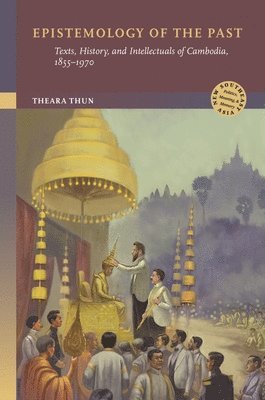
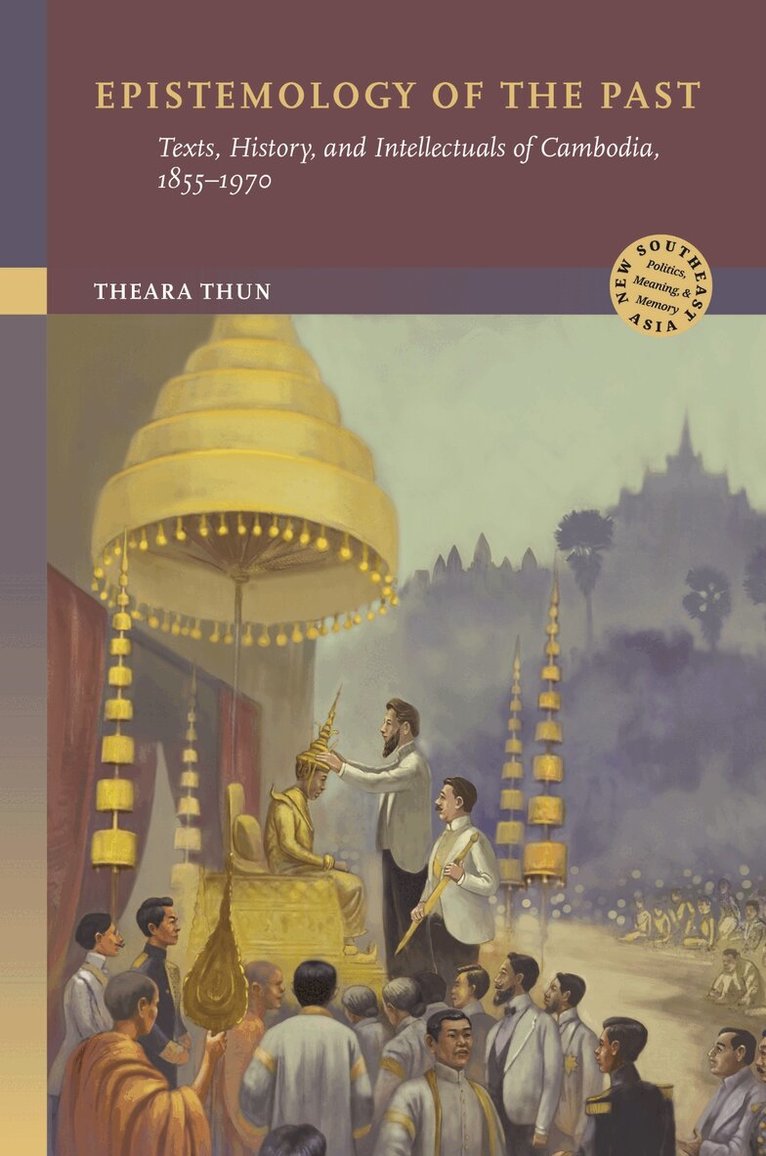
The encounter of indigenous history-making tradition with Western historical practice has been long neglected in Southeast Asian scholarship. Theara Thun offers one of the first critical and systematic studies of the interface between these two distinctive modes of historical presentation and their impacts on society. By examining historical discourses on Cambodia through the precolonial, colonial, and post-independence years, he presents a compelling account of indigenous scholars, with varying perspectives, who advocated competing versions of history. Thun argues that new discourses about national history emerged by drawing on, reconfiguring, combining, or, in many cases, rejecting older discourses of precolonial historical scholarship.Epistemology of the Past examines how certain types and forms of historical knowledge are created, understood, and used within a given context and how that knowledge has evolved over time. The book brings together and critically explores a large collection of original manuscripts and printed texts—notably, Khmer chronicle manuscripts and colonial-era works of French scholar-officials. Thun’s analysis discloses multilayers of intellectual traditions and diverse views of Cambodian and, more broadly, Southeast Asian scholars engaging with European colonial scholarship. In addition to contributing to the multidisciplinary field of Cambodian and Southeast Asian studies, Epistemology of the Past will be essential reading for those interested in intellectual history, transculturation, historiography, intertextual studies, narrative studies, literature, colonialism, and nationalism.
284 kr
Skickas inom 7-10 vardagar
The city of Manado and province of North Sulawesi have built a public identity based on religious harmony, claiming to successfully model tolerance and inter-religious relations for the rest of Indonesia. Yet, in discourses and practices relevant to everyday interactions in schools and political debates in the public sphere, two primary contested frames for belonging emerge in tension with one another. On the one hand, "aspirational coexistence" recognizes a common goal of working toward religious harmony and inclusive belonging. On the other hand, "majoritarian coexistence," in which the legitimacy of religious minorities is understood as guaranteed exclusively by the goodwill of the Protestant majority, also emerges in discourses and practices of coexistence. These two agonistic frames of coexistence stem from both a real pride at having staved off ethno-religious violence that plagued surrounding regions at the turn of the twenty-first century, as well as a concern about whether the area will maintain a Christian majority in the future. Based on ethnographic research in Manado, North Sulawesi, a Protestant-majority region of Indonesia, Ethics of Belonging investigates the dynamics of ethical deliberation about religious coexistence. In this analysis, schools are understood as central sites for exchange about the ethics and politics of belonging in the nation. The author draws on in-depth fieldwork at three secondary schools (a public high school, private Catholic boarding school, and public madrasah), an inter-religious "exchange" program among university students, and societal debates about religion and belonging. Each of the schools promotes a distinct method to addressing diversity and a particular understanding of the relationship between religious and civic values. Larson’s research demonstrates how ethical frameworks for approaching religious difference are channeled and negotiated through educational institutions, linking up with their broader political context and debates in the community. This resource argues for a consideration of ethical reflection as a fundamentally pedagogical process, with important ramifications beyond the immediate environment. The focus on educational institutions provides a critical connection between interpersonal and public ethical deliberation, elucidating the entanglements of ethics and politics and their manifestation across different societal scales.
Memories of Unbelonging
Ethnic Chinese Identity Politics in Post-Suharto Indonesia
Häftad, Engelska, 2024
292 kr
Skickas inom 7-10 vardagar
The ethnic Chinese have had a long and problematic history in Indonesia, commonly stereotyped as a market-dominant minority with dubious political loyalty toward Indonesia. For over three decades under Suharto’s New Order regime, a cultural assimilation policy banned Chinese languages, cultural expression, schools, media, and organizations. This policy was only abolished in 1998 following the riots and anti-Chinese attacks that preceded the fall of the New Order. In the post-Suharto era, Chinese Indonesians were finally free to assert their Chineseness again. But how does an ethnic group recover from the trauma of assimilation and regain a lost cultural identity?Memories of Unbelonging is an ethnographic study of how collective memories of state-sponsored ethnic discrimination have shaped Chinese identity politics in Indonesia. Combining case studies, in-depth primary data, and incisive analysis of Indonesia’s contemporary political landscape, anthropologist Charlotte Setijadi argues that trauma narratives are at the core of modern Chinese identity politics. Examining spaces and domains such as residential enclaves, educational institutions, the creative arts, and politics, this book paints a vivid picture of how different generations of Chinese Indonesians make sense of their historical trauma, ethnic identity, and belonging in a post-assimilation environment. Far from being passive victims of history, the ethnic Chinese are actively challenging old stereotypes and boundaries of acceptable Chineseness in the country.This emphasis on group and individual agency marks a strong departure from structural analyses of Chinese Indonesians that mostly highlight their disempowerment as an oppressed minority. Furthermore, placing the analysis within the broader context of China’s rise in the twenty-first century demonstrates how the combination of persisting local anti-Chinese sentiments and renewed pride over China’s growing global dominance have prompted many Chinese Indonesians to re-evaluate their sense of ethnic and national belonging. By focusing on the nexus between collective memory, local identity politics, and the rise of China as an external factor, Memories of Unbelonging offers new perspectives of understanding about Chinese Indonesians, post-Suharto Indonesian society, and the relationship between China and ethnic Chinese communities in Southeast Asia.
819 kr
Skickas inom 3-6 vardagar
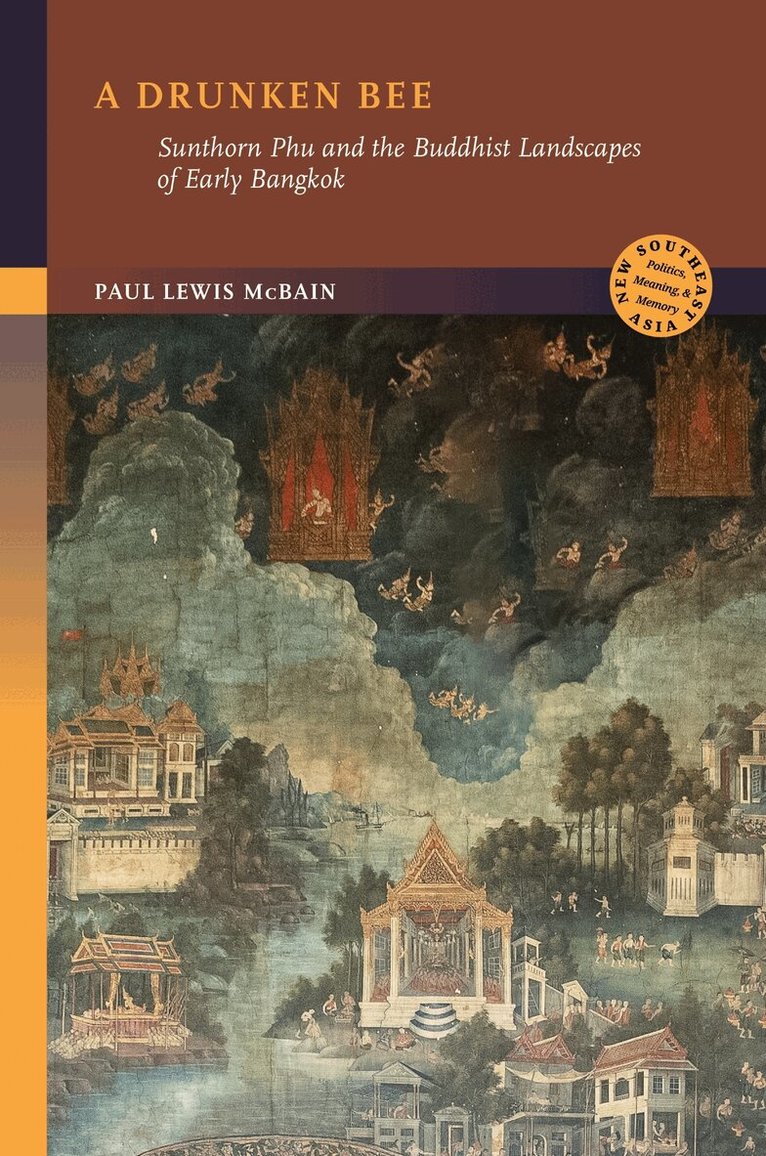
Sunthorn Phu (1786–1855) is an unlikely figure through which to understand nineteenth-century Buddhism in Siam. Despite being described as a "drunken writer" by the court astrologer after his death, he is now the national poet of Thailand. Yet the majority of Sunthorn Phu’s literary accomplishments, including many of the nirat journeying poems translated in this volume, are scarcely available in English. In A Drunken Bee, Paul Lewis McBain argues that the irreverent, rebellious, and parodic voice of Sunthorn Phu is an invaluable resource for understanding the Buddhism of early Bangkok. A wealth of information about the conflicts and contradictions of the religious thought of this period can be found in the ways in which the poet describes his local landscape. Following Sunthorn Phu on his journeys, readers encounter cities of celebration and rivers of sadness; kingly processions, railways, and unruly pilgrims on their way to the Saraburi Buddha Footprint; forests of spirit-guardians; and life-prolonging alchemical materials as well as the semimythical oceans of Buddhist cosmology used to make sense of the new, more varied world opening up to Siam in the nineteenth century.In this volume McBain employs theories not only from literary studies but also from the interdisciplinary study of landscapes, applying an innovative approach to understanding how journeying poems may be used as critical sources for uncovering past ways of thinking with and within place. What emerges is one of the most colorful windows into the emergent modernity of Siam in the nineteenth century. The author convincingly showcases how the kingdom was already developing its own nascent individuality, irony and skepticism, all broached by redefining Buddhist concepts. The book offers students and scholars of literature and religion new approaches to the study of journeying poems and how literary texts may be employed in landscape studies, as well as how religious affect may be tied with place.
691 kr
Kommande
Epistemology of the Past
Texts, History, and Intellectuals of Cambodia, 1855–1970
Häftad, Engelska, 2026
462 kr
Kommande
The encounter of indigenous history-making tradition with Western historical practice has been long neglected in Southeast Asian scholarship. Theara Thun offers one of the first critical and systematic studies of the interface between these two distinctive modes of historical presentation and their impacts on society. By examining historical discourses on Cambodia through the precolonial, colonial, and post-independence years, he presents a compelling account of indigenous scholars, with varying perspectives, who advocated competing versions of history. Thun argues that new discourses about national history emerged by drawing on, reconfiguring, combining, or, in many cases, rejecting older discourses of precolonial historical scholarship. Epistemology of the Past examines how certain types and forms of historical knowledge are created, understood, and used within a given context and how that knowledge has evolved over time. The book brings together and critically explores a large collection of original manuscripts and printed texts—notably, Khmer chronicle manuscripts and colonial-era works of French scholar-officials. Thun’s analysis discloses multilayers of intellectual traditions and diverse views of Cambodian and, more broadly, Southeast Asian scholars engaging with European colonial scholarship. In addition to contributing to the multidisciplinary field of Cambodian and Southeast Asian studies, Epistemology of the Past will be essential reading for those interested in intellectual history, transculturation, historiography, intertextual studies, narrative studies, literature, colonialism, and nationalism.