• Fri frakt över 249 kr
  • •
  • Snabba leveranser
  • •
  • Billiga böcker
Kundservice

Du är på sajten för privatpersoner.

Företag, bibliotek eller offentlig verksamhet?

Du handlar på classic.bokus.com, där alla dina funktioner finns intakta.
Till classic.bokus.com
Bokus logotyp. Gå till startsidan.
  • Erbjudanden
  • Nyheter
  • Student
  • Topplistor
  • Barn & ungdom
  • Bokus Play
  • E-böcker
  • Pocketböcker
  • Spel & pussel

10% rabatt på allt med kod NYSTART10 →

Sidfot

Mina sidor

    Hjälp

    • Kundservice
    • Vanliga frågor och svar
    • Frakt och leverans
    • Retur vid ångerrätt
    • Reklamera vara
    • Betalning
    • Köpvillkor
    • Allmänna villkor
    • Information om webbplatsens tillgänglighet

    Om Bokus

    • Om oss
    • Pressrum
    • För studenter
    • För företag
    • För bibliotek och offentlig verksamhet
    • För leverantörer
    • Hållbarhet

    Populärt

    • Aktuella erbjudanden
    • Presentkort
    • Studentlitteratur
    • Nya böcker
    • Topplistor
    • Signerade böcker
    • Engelska böcker

    Inspiration

    • Boktips
    • BookTok
    • Populära bokserier
    • Barnbokskaraktärer
    • Populära författare
    Logotyp för Bokus
    Följ oss på Facebook (extern länk)Följ oss på Instagram (extern länk)Följ oss på YouTube (extern länk)Följ oss på TikTok (extern länk)
    bokus @ CookiesAnpassa cookiesIntegritetspolicyKöpvillkor
    Till Citymail hemsida (extern länk)Till Budbee hemsida (extern länk)Till Postnord hemsida (extern länk)Till Schenker hemsida (extern länk)Till Early Bird hemsida (extern länk)Till Walleys hemsida (extern länk)
    1. Samhälle och politik
    2. Sociologi och antropologi
    3. Antropologi

    Projectland

    Life in a Lao Socialist Model Village

    AvHolly High

    Häftad, Engelska, 2021

    Del i serien New Southeast Asia: Politics, Meaning, and Memory

    303 kr

    Beställningsvara. Skickas inom 5-8 vardagar. Fri frakt över 249 kr.

    Fler format och utgåvor

    Inbunden

    923 kr

    Beskrivning

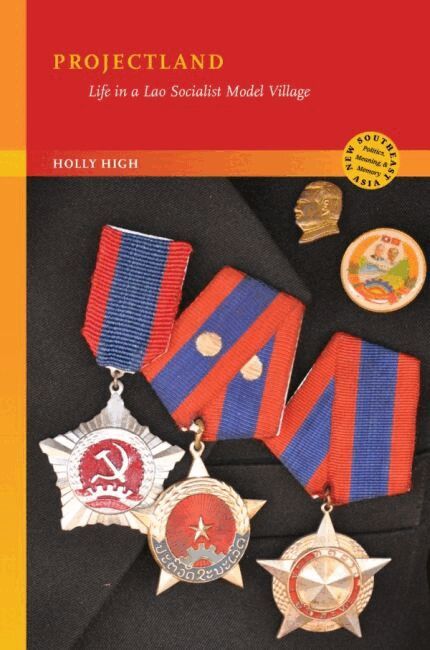
    In Projectland, anthropologist Holly High combines an engaging first-person narrative of her fieldwork with a political ethnography of Laos, more than forty years after the establishment of the Lao PDR and more than seven decades since socialist ideologues first ""liberated"" parts of upland country. In a remote village of Kandon, High finds that although socialism has declined significantly as an economic model, it is ascendant and thriving in the culture of politics and the politics of culture.Kandon is remarkable by any account. The villagers are ethnic Kantu (Katu), an ethnicity associated by early ethnographers above all with human sacrifice. They had repelled French control, and as the war went on, the revolutionary forces of Sekong were headquartered in Kandon territories. In 1996, Kandon village moved and resettled in a plateau area. ""New Kandon"" has become Sekong Province’s first certified ""Culture Village,"" the nation’s very first ""Open Defecation Free and Model Health Village,"" and the president of Laos personally granted the village a Labor Flag and Medal. High provides a unique and timely assessment of the Lao Party-state’s resettlement politics, and she recounts with skillful nuance the stories that are often cast into shadows by the usual focus on New Kandon as a success. Her book follows the lives of a small group of villagers who returned to the old village in the mountains, effectively defying policy but, in their words, obeying the presence that animates the land there. Revealing her sensibility with tremendous composure, High tells the experiences of women who, bound by steep bride-prices to often violent marriages, have tasted little of the socialist project of equality, unity, and independence. These women spoke to the author of ""necessities"" as a limit to their own lives. In a context where the state has defined the legitimate forms of success and agency, ""necessity"" emerged as a means of framing one’s life as nonconforming but also nonagentive.

    Produktinformation

    • Utgivningsdatum:2021-12-31
    • Mått:149 x 226 x 20 mm
    • Vikt:415 g
    • Format:Häftad
    • Språk:Engelska
    • Serie:New Southeast Asia: Politics, Meaning, and Memory
    • Antal sidor:262
    • Förlag:University of Hawai'i Press
    • ISBN:9780824888688

    Utforska kategorier

    • Antropologi inom Samhälle och politik
    • Asiens historia inom Historia och arkeologi
    • Marxism och kommunism inom Samhälle och politik

    Mer om författaren

    Holly High is associate professor of anthropology at the University of Sydney.

    Recensioner i media

    This rich ethnographic study tells the story of how a Lao highland village community has successfully relocated to establish a new lowland village that is a ‘model’ in the eyes of the socialist state, but one that also expresses their own cultural values. The book breaks new methodological grounds in that it is not only a study of a village, but also a study from a village on important matters of general interest. Ten years in the making, the author’s vivid prose portrays the very human story of how people negotiate the conflicting demands of a socialist state, the market, kin, and the desires of different individuals to create a world that is meaningful to them. This book, a model of how ethnographic analysis should be done, will be of interest to scholars and students from all disciplines interested in understanding life in rural Southeast Asia today. In Projectland High destroys some simplistic assumptions concerning ethnic minorities and their relation to the (socialist) state. It takes individual subjectivities and desires seriously, and highlights the social fragmentation below the surface of village ""unity."" The author provides a lucid analysis of the functioning of the Lao socialist party state at the margins, discussing the dialectic of transformation and resilience. High’s analysis goes beyond many village studies that mainly focus on livelihood and economic transformation. Unlike most studies that rely on socioeconomic data, Projectland touches the individual subjectivities of the villagers and the affective dimensions of the socialist state. More than forty years after the communist revolution, the author examines the ideological, biopolitical, and affective outcomes of the socialist ""project"" in the Lao PDR."" - Oliver Tappe, University of Cologne