Erica M. Larson - Böcker
Visar alla böcker från författaren Erica M. Larson. Handla med fri frakt och snabb leverans.
3 produkter
3 produkter
732 kr
Skickas inom 7-10 vardagar
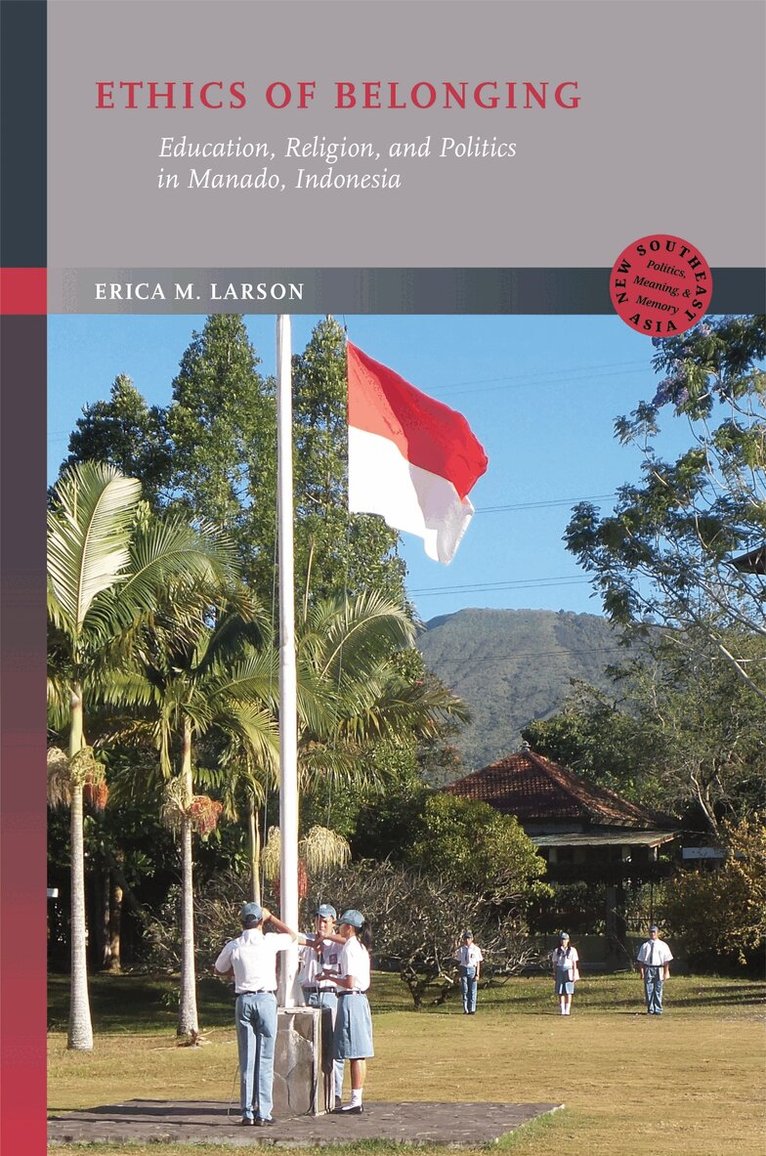
The city of Manado and province of North Sulawesi have built a public identity based on religious harmony, claiming to successfully model tolerance and inter-religious relations for the rest of Indonesia. Yet, in discourses and practices relevant to everyday interactions in schools and political debates in the public sphere, two primary contested frames for belonging emerge in tension with one another. On the one hand, "aspirational coexistence" recognizes a common goal of working toward religious harmony and inclusive belonging. On the other hand, "majoritarian coexistence," in which the legitimacy of religious minorities is understood as guaranteed exclusively by the goodwill of the Protestant majority, also emerges in discourses and practices of coexistence. These two agonistic frames of coexistence stem from both a real pride at having staved off ethno-religious violence that plagued surrounding regions at the turn of the twenty-first century, as well as a concern about whether the area will maintain a Christian majority in the future. Based on ethnographic research in Manado, North Sulawesi, a Protestant-majority region of Indonesia, Ethics of Belonging investigates the dynamics of ethical deliberation about religious coexistence. In this analysis, schools are understood as central sites for exchange about the ethics and politics of belonging in the nation. The author draws on in-depth fieldwork at three secondary schools (a public high school, private Catholic boarding school, and public madrasah), an inter-religious "exchange" program among university students, and societal debates about religion and belonging. Each of the schools promotes a distinct method to addressing diversity and a particular understanding of the relationship between religious and civic values. Larson’s research demonstrates how ethical frameworks for approaching religious difference are channeled and negotiated through educational institutions, linking up with their broader political context and debates in the community. This resource argues for a consideration of ethical reflection as a fundamentally pedagogical process, with important ramifications beyond the immediate environment. The focus on educational institutions provides a critical connection between interpersonal and public ethical deliberation, elucidating the entanglements of ethics and politics and their manifestation across different societal scales.
793 kr
Skickas inom 11-20 vardagar
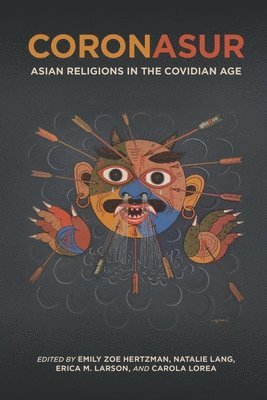
By the summer of 2020, when the coronavirus had fully entered our everyday vocabulary and our lives, religious communities and places of worship around the world were already undergoing profound changes. In Asian and Asian diaspora communities, diverse cultural tropes, beliefs, and artifacts were mobilized to make sense of Covid, including a repertoire of gods and demons like Coronasur, the virus depicted with the horns and fangs of a traditional Hindu demon. Various kinds of knowledge were invoked: theologies, indigenous medicines, and biomedical narratives, as well as ethical values and nationalist sentiments. CoronAsur: Asian Religions in the Covidian Age follows the documentation and analysis of the abrupt societal shifts triggered by the pandemic to understand current and future pandemic times, while revealing further avenues for research on religion that have opened up in the Covidian age. Developed in tandem with the research blog CoronAsur: Religion and COVID-19, this volume is a "phygital" publication, a work grounded in empirical roots as well as digitally born communication. It comprises thirty-eight essays that examine Asian religious communities—Muslim, Buddhist, Hindu, Daoist, and Christian as well as popular/folk and new religious movements, or NRMs—in terms of the changes brought on by and the ritual responses to the Covid pandemic.Studying religious narratives, practices, and changes in the Covidian age adds to our understanding of not only the specific groups in which they are situated, but also the coronavirus itself, its disputed etiologies and culturally contextualized exegeses. CoronAsur offers a comprehensive and timely discussion of Covidian transformations in religious communities’ engagements with media, spaces, and moral and political economies, documenting how religious practices and discourses have co-produced the meanings of the pandemic.
284 kr
Skickas inom 7-10 vardagar
The city of Manado and province of North Sulawesi have built a public identity based on religious harmony, claiming to successfully model tolerance and inter-religious relations for the rest of Indonesia. Yet, in discourses and practices relevant to everyday interactions in schools and political debates in the public sphere, two primary contested frames for belonging emerge in tension with one another. On the one hand, "aspirational coexistence" recognizes a common goal of working toward religious harmony and inclusive belonging. On the other hand, "majoritarian coexistence," in which the legitimacy of religious minorities is understood as guaranteed exclusively by the goodwill of the Protestant majority, also emerges in discourses and practices of coexistence. These two agonistic frames of coexistence stem from both a real pride at having staved off ethno-religious violence that plagued surrounding regions at the turn of the twenty-first century, as well as a concern about whether the area will maintain a Christian majority in the future. Based on ethnographic research in Manado, North Sulawesi, a Protestant-majority region of Indonesia, Ethics of Belonging investigates the dynamics of ethical deliberation about religious coexistence. In this analysis, schools are understood as central sites for exchange about the ethics and politics of belonging in the nation. The author draws on in-depth fieldwork at three secondary schools (a public high school, private Catholic boarding school, and public madrasah), an inter-religious "exchange" program among university students, and societal debates about religion and belonging. Each of the schools promotes a distinct method to addressing diversity and a particular understanding of the relationship between religious and civic values. Larson’s research demonstrates how ethical frameworks for approaching religious difference are channeled and negotiated through educational institutions, linking up with their broader political context and debates in the community. This resource argues for a consideration of ethical reflection as a fundamentally pedagogical process, with important ramifications beyond the immediate environment. The focus on educational institutions provides a critical connection between interpersonal and public ethical deliberation, elucidating the entanglements of ethics and politics and their manifestation across different societal scales.