From the Joan B. Kroc Institute for International Peace Studies / Kroc Institute Series on Religion, Conflict, and Peacebuilding – serie
Visar alla böcker i serien From the Joan B. Kroc Institute for International Peace Studies / Kroc Institute Series on Religion, Conflict, and Peacebuilding. Handla med fri frakt och snabb leverans.
9 produkter
9 produkter
809 kr
Skickas inom 10-15 vardagar
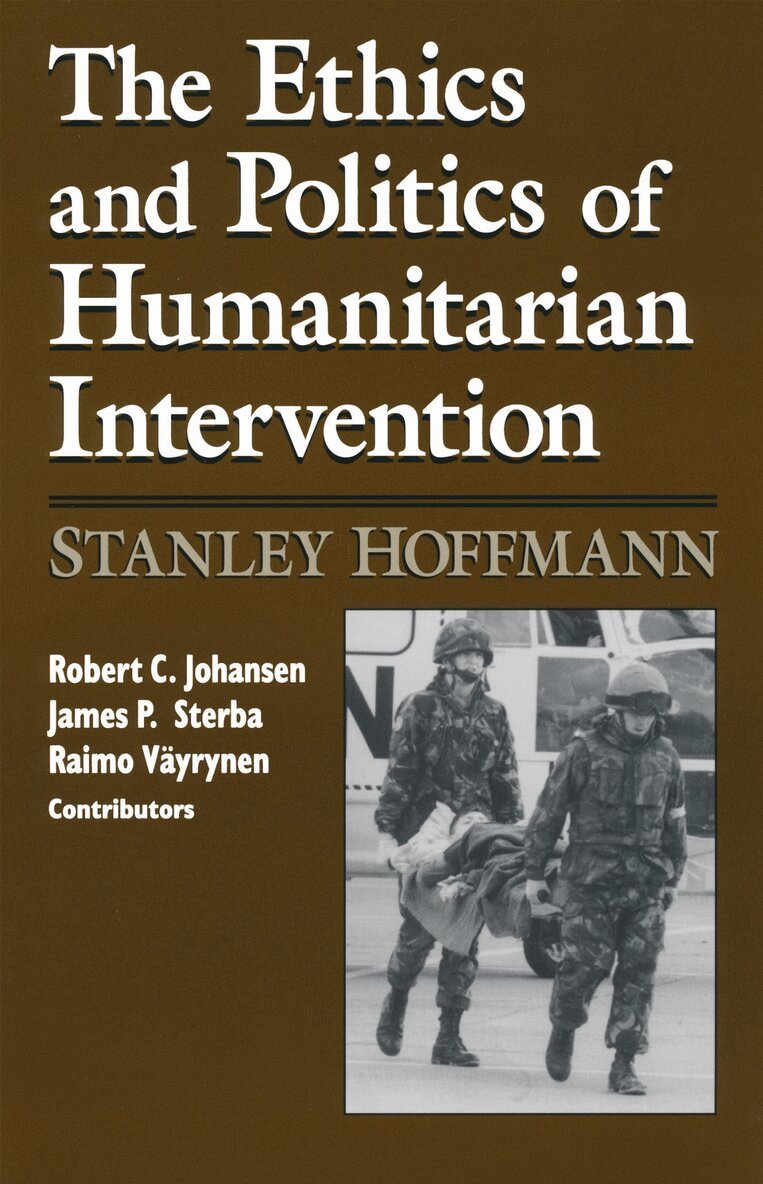
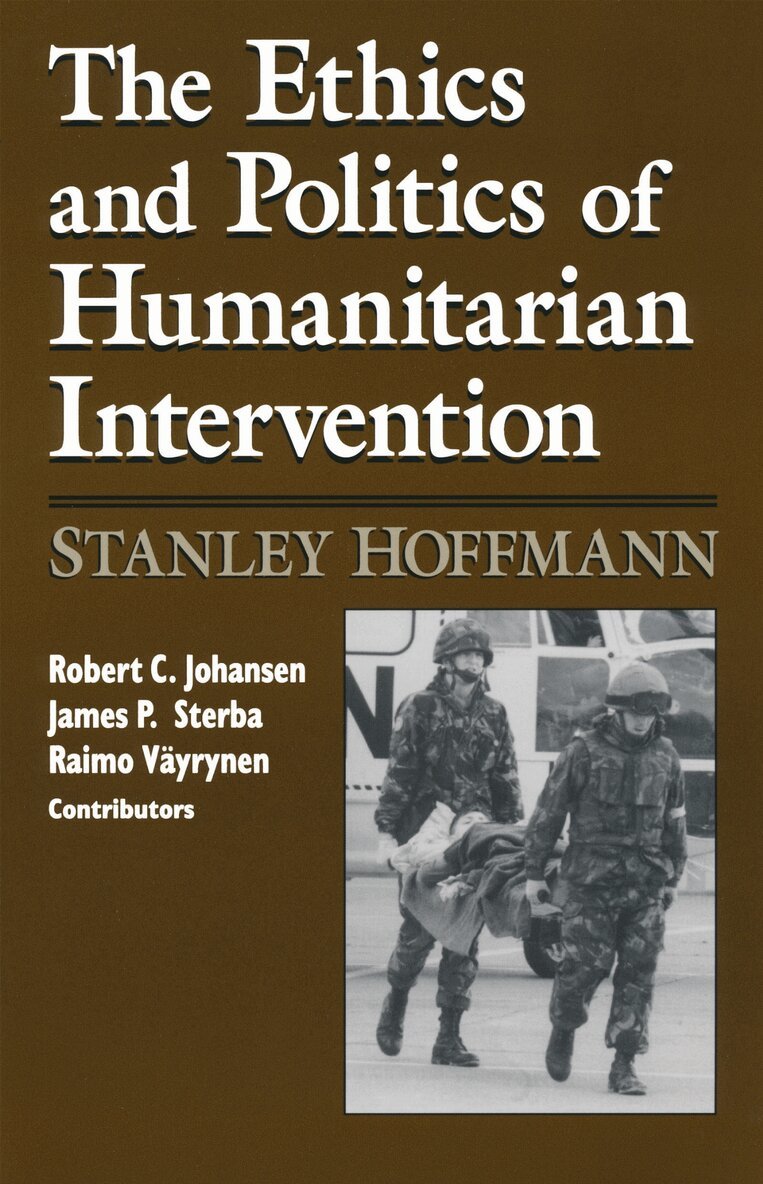
In 1995, the Kroc Institute, University of Notre Dame, hosted the first of the Theodore M. Hesburgh Lectures on Ethics and Public Policy. At this inaugural gathering renowned author and scholar Stanely Hoffmann delivered two lectures on the problems of humanitarian intervention in international relations. This timely volume presents Hoffmann's lectures to a wider audience, together with responses made at the conference by Robert C. Johansen an James Sterba, and an introductory essay contributed by Raimo Varynen, director of the Kroc Institute.In his first and premiere lecture, Hoffman attacks from a theoretical perspective the political, legal, and moral problems of outside intervention in the affairs of a state. He analyzes the traditional principle, i.e., economic and environmental interdependence, human rights concerns, nuclear proliferation, and the growing international consciousness of the widespread dangers of domestic chaos. As a matter of practical ethics in the "real world," Hoffman proposes norms and guidelines for controlled, impartial, collective intervention and the enforcement which must accompany it.In his second illustrative lecture, Hoffman delivers a stinging indictment of international community in the case of the tragic disintegration of Yugoslavia, which he uses as a case study to illustrate the failure of collective intervention. In the responding essays, Johansen presents guidelines for humanitarian intervention short of sending in troops, and Sterba argues that Hoffmann's basic norms can be derived from Kant's moral philosophy.Because Hoffmann's principles--and indictments--can be readily applied to other tragic events and cases of international turmoil, The Ethics and Politics of Humanitarian Intervention will be a valuable tool in the hands of students and scholars of international relations.
207 kr
Skickas inom 10-15 vardagar
In 1995, the Kroc Institute, University of Notre Dame, hosted the first of the Theodore M. Hesburgh Lectures on Ethics and Public Policy. At this inaugural gathering renowned author and scholar Stanely Hoffmann delivered two lectures on the problems of humanitarian intervention in international relations. This timely volume presents Hoffmann's lectures to a wider audience, together with responses made at the conference by Robert C. Johansen an James Sterba, and an introductory essay contributed by Raimo Varynen, director of the Kroc Institute.In his first and premiere lecture, Hoffman attacks from a theoretical perspective the political, legal, and moral problems of outside intervention in the affairs of a state. He analyzes the traditional principle, i.e., economic and environmental interdependence, human rights concerns, nuclear proliferation, and the growing international consciousness of the widespread dangers of domestic chaos. As a matter of practical ethics in the "real world," Hoffman proposes norms and guidelines for controlled, impartial, collective intervention and the enforcement which must accompany it.In his second illustrative lecture, Hoffman delivers a stinging indictment of international community in the case of the tragic disintegration of Yugoslavia, which he uses as a case study to illustrate the failure of collective intervention. In the responding essays, Johansen presents guidelines for humanitarian intervention short of sending in troops, and Sterba argues that Hoffmann's basic norms can be derived from Kant's moral philosophy.Because Hoffmann's principles--and indictments--can be readily applied to other tragic events and cases of international turmoil, The Ethics and Politics of Humanitarian Intervention will be a valuable tool in the hands of students and scholars of international relations.
214 kr
Skickas inom 10-15 vardagar
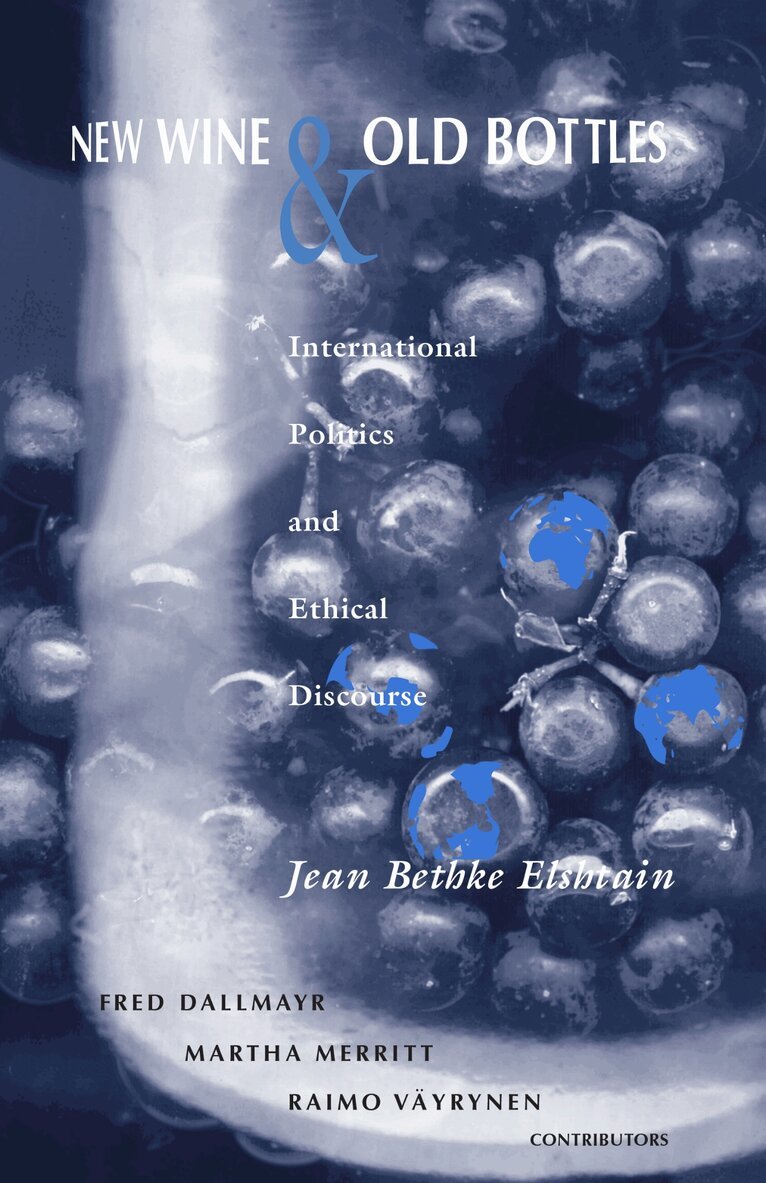
Jean Bethke Elshtain, the 1996 Hesburgh Lecturer on Ethics and Public Policy, challenges a powerful strand in western political thinking that separates the political and ethical realms. This is manifest above all in the claim that although the rule of justice might pertain between citizens, force is the ultimate arbiter between states and would-be states. But this claim fails to capture the many complex ways that political bodies deal with one another through norms and rules and not simply by force. Elshtain captures this alternative dimension by examining two dominant currents in international politics: sovereignty and nationalism. She shows the ways in which the historic understanding of sovereignty was deeply dependent on theological concepts, and demonstrates that much of contemporary life is marked by the mapping of concepts of sovereignty onto our understanding, not just of states but of persons.Over the years, many experts predicted confidently that the power of nationalism would abate as "rationalism" and "internationalism" spread. Elshtain explains why this prediction was flawed and accounts for the emergence of today's "new nationalism," the political passion of our time. She asks, Knowing the terrible cost of nationalistic excess, is there a defensible version of national identity and loyalty? With the late Sir Isaiah Berlin, Elshtain argues "yes." In her provocative epilogue, Elshtain asks whether there is room for forgiveness in international politics, and concludes on the speculative and hopeful note that ways might be found to break repetitive cycles of vengeance.Together with Elshtain's lectures, this volume offers responses by Fred Dallmayr and Martha Merritt and a foreword by Raimo Väyrynen, John M. Regan, Jr. Director of the Kroc Institute.
314 kr
Skickas inom 10-15 vardagar
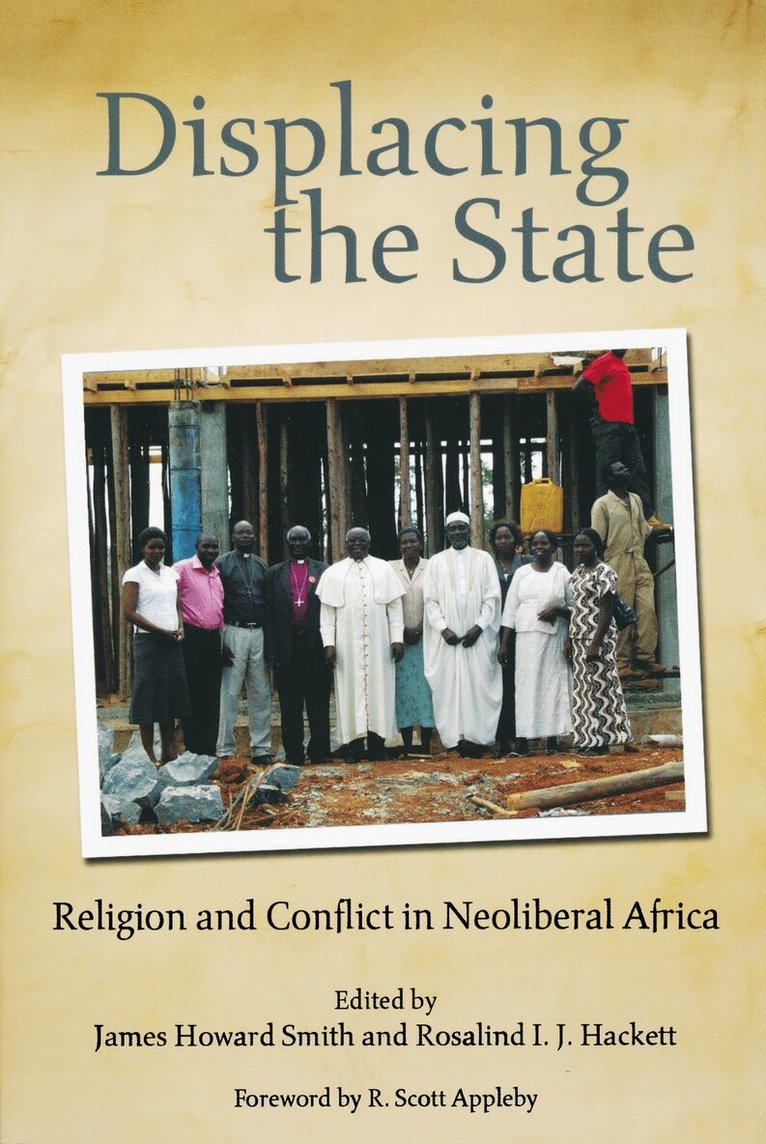
In colonial Africa, Christianity has often supported, sustained, and legitimated a violent process of governance. More recently, however, following decades of violence and oppression, churches and religious organizations have mobilized African publics against corrupt and abusive regimes and facilitated new forms of reconciliation and cooperation. It is the purpose of Displacing the State: Religion and Conflict in Neoliberal Africa to illustrate the nature of religion's ambivalent power in Africa while suggesting new directions in the study of religion, conflict, and peace studies, with a specific focus on sub-Saharan Africa. As the editors make clear, most of the literature on conflict and peacebuilding in Africa has been concerned with dramatic conflicts such as genocide and war. In these studies, "conflict"usually means a violent clash between parties with opposing interests, while "peace" implies reconciliation and cooperation between these parties, usually with a view to achieving a social order predicated on the idea of the sovereign national state whose hegemony is viewed as normative. The contributors argue that this perspective is inadequate for understanding the nature, depth, and persistence of conflict in Africa. In contrast, the chapters in this volume adopt an ethnographic approach, often focusing on mundane manifestations of both conflict and peace, and in so doing draw attention to the ambiguities and ambivalences of conflict and peace in everyday life. The volume therefore focuses our attention on the extent to which everyday conflict contributes to subsequently larger and more highly visible clashes. Displacing the State makes two important contributions to the study of religion, conflict, and peacebuilding. First, it shows how peace is conceptualized and negotiated in daily life, often in ways that are counterintuitive and anything but peaceful. Second, the volume uses African case studies to confront assumptions about the nature of the relationships among religion, conflict, and peace.
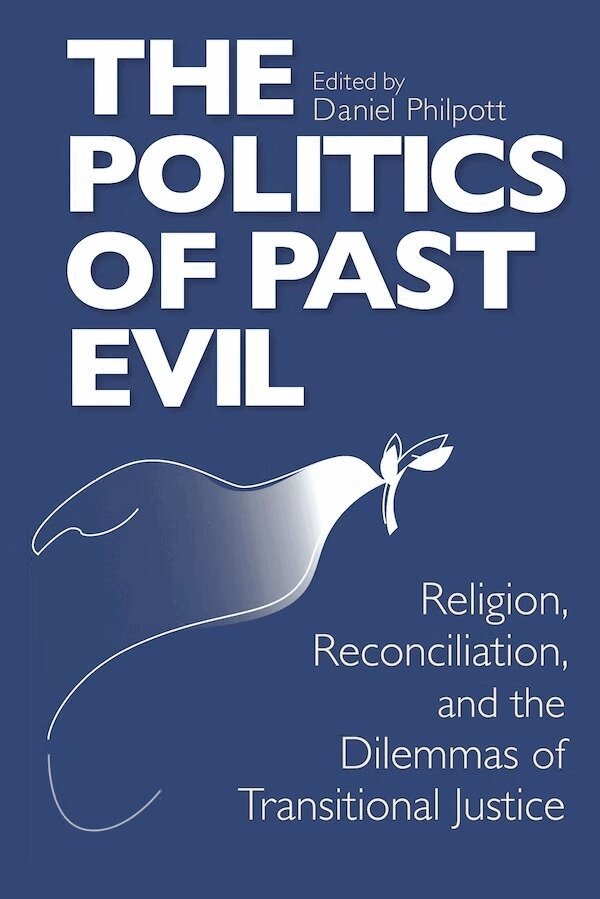
Politics of Past Evil, the
Religion, Reconciliation, and the Dilemmas of Transitional Justice
Inbunden, Engelska, 2006
1 077 kr
Skickas inom 10-15 vardagar
Over the past two or three decades, all over the world, a formidable number of societies have sought to confront past evil—the injustices of communism, military dictatorship, apartheid, or civil war. Emergent is the concept of reconciliation, whose meaning philosophers and social scientists now debate in the context of political transitions in countries as diverse as South Africa, East Timor, Guatemala, and the Czech Republic. Most of these debates, though, share a secularism that is at variance with the beliefs of many of the participants in these transitions.What unfolds in this volume, in contrast, is a conversation about reconciliation whose common denominator is theology. Theologians, philosophers, and political scientists explore the meaning of reconciliation for the politics of transition. Alan Torrance, David Burrell, C.S.C., Nicholas Wolterstorff, and Daniel Philpott draw on theology for their theoretical perspectives; A. James McAdams, Mark Amstutz, and Ronald Wells chart the path of reconciliation in Germany, Argentina, South Africa, and Northern Ireland. Scott Appleby offers a concluding essay. Their insights will interest a wide variety of readers, both scholars and generalists, both with and without theological commitments.
Politics of Past Evil, the
Religion, Reconciliation, and the Dilemmas of Transitional Justice
Häftad, Engelska, 2006
314 kr
Skickas inom 10-15 vardagar
Over the past two or three decades, all over the world, a formidable number of societies have sought to confront past evil—the injustices of communism, military dictatorship, apartheid, or civil war. Emergent is the concept of reconciliation, whose meaning philosophers and social scientists now debate in the context of political transitions in countries as diverse as South Africa, East Timor, Guatemala, and the Czech Republic. Most of these debates, though, share a secularism that is at variance with the beliefs of many of the participants in these transitions.What unfolds in this volume, in contrast, is a conversation about reconciliation whose common denominator is theology. Theologians, philosophers, and political scientists explore the meaning of reconciliation for the politics of transition. Alan Torrance, David Burrell, C.S.C., Nicholas Wolterstorff, and Daniel Philpott draw on theology for their theoretical perspectives; A. James McAdams, Mark Amstutz, and Ronald Wells chart the path of reconciliation in Germany, Argentina, South Africa, and Northern Ireland. Scott Appleby offers a concluding essay. Their insights will interest a wide variety of readers, both scholars and generalists, both with and without theological commitments.
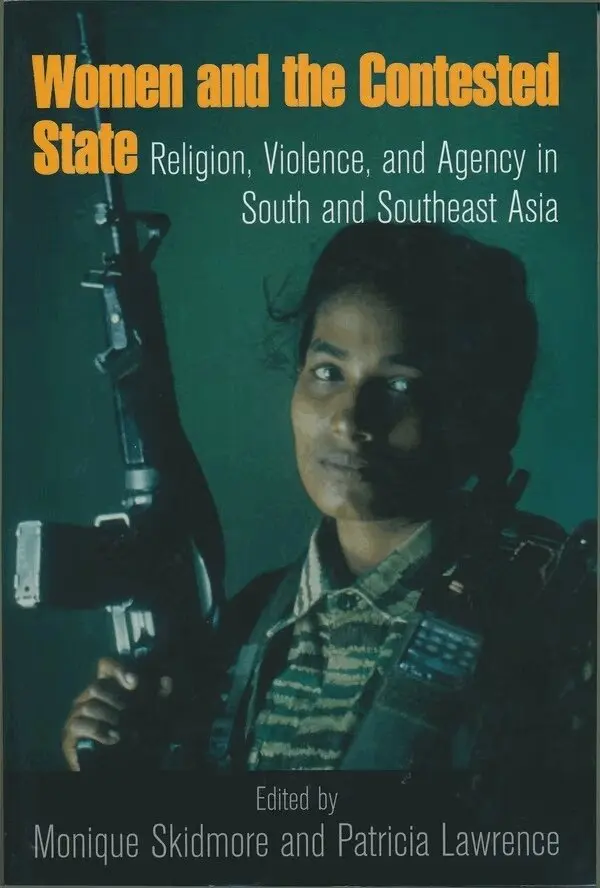
Women and the Contested State
Religion, Violence, and Agency in South and Southeast Asia
Inbunden, Engelska, 2007
1 077 kr
Skickas inom 10-15 vardagar
Throughout South and Southeast Asia, groups battle over definitions of identity—in direction and character—for their state, a struggle complicated by the legacy of colonialism. The contributors to this volume explore the intricate, dynamic relationships that pertain between women's agency and the state-making institutions and armed forces of Kashmir, India, Sri Lanka, Bangladesh, and Burma (Myanmar). They also address the complex roles of Islam, Hinduism, and Theravada Buddhism in these postcolonial dynamics.In particular, the contributors examine religion as a way of understanding how women's agency is constituted, created, and constrained during times of conflict with the state and other armed actors, such as guerilla groups and paramilitaries. These essays at the intersection of gender, religion, and peace studies will be of interest to a wide range of scholars and students who study conflict and hope for peace in South and Southeast Asia.Contributors: Monique Skidmore, Peter van der Veer, Veena Das, Betty Joseph, Yasmin Saikia, Patricia Lawrence, Alexandra Argenti-Pillen, Mangalika de Silva, Ingrid Jordt, and Bénédicte Brac de la Perrière.
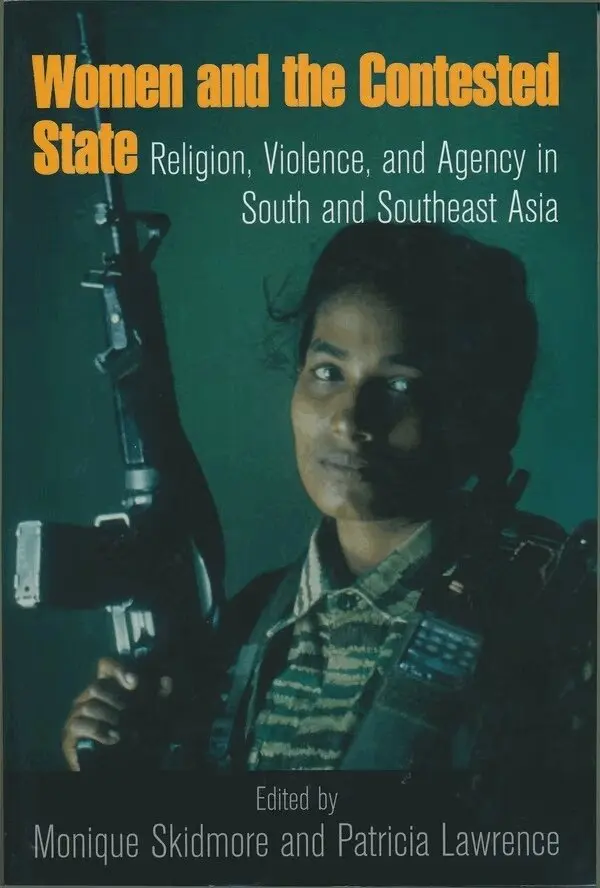
Women and the Contested State
Religion, Violence, and Agency in South and Southeast Asia
Häftad, Engelska, 2007
314 kr
Skickas inom 10-15 vardagar
Throughout South and Southeast Asia, groups battle over definitions of identity—in direction and character—for their state, a struggle complicated by the legacy of colonialism. The contributors to this volume explore the intricate, dynamic relationships that pertain between women's agency and the state-making institutions and armed forces of Kashmir, India, Sri Lanka, Bangladesh, and Burma (Myanmar). They also address the complex roles of Islam, Hinduism, and Theravada Buddhism in these postcolonial dynamics.In particular, the contributors examine religion as a way of understanding how women's agency is constituted, created, and constrained during times of conflict with the state and other armed actors, such as guerilla groups and paramilitaries. These essays at the intersection of gender, religion, and peace studies will be of interest to a wide range of scholars and students who study conflict and hope for peace in South and Southeast Asia.Contributors: Monique Skidmore, Peter van der Veer, Veena Das, Betty Joseph, Yasmin Saikia, Patricia Lawrence, Alexandra Argenti-Pillen, Mangalika de Silva, Ingrid Jordt, and Bénédicte Brac de la Perrière.
833 kr
Skickas inom 10-15 vardagar
Jean Bethke Elshtain, the 1996 Hesburgh Lecturer on Ethics and Public Policy, challenges a powerful strand in western political thinking that separates the political and ethical realms. This is manifest above all in the claim that although the rule of justice might pertain between citizens, force is the ultimate arbiter between states and would-be states. But this claim fails to capture the many complex ways that political bodies deal with one another through norms and rules and not simply by force. Elshtain captures this alternative dimension by examining two dominant currents in international politics: sovereignty and nationalism. She shows the ways in which the historic understanding of sovereignty was deeply dependent on theological concepts, and demonstrates that much of contemporary life is marked by the mapping of concepts of sovereignty onto our understanding, not just of states but of persons.Over the years, many experts predicted confidently that the power of nationalism would abate as "rationalism" and "internationalism" spread. Elshtain explains why this prediction was flawed and accounts for the emergence of today's "new nationalism," the political passion of our time. She asks, Knowing the terrible cost of nationalistic excess, is there a defensible version of national identity and loyalty? With the late Sir Isaiah Berlin, Elshtain argues "yes." In her provocative epilogue, Elshtain asks whether there is room for forgiveness in international politics, and concludes on the speculative and hopeful note that ways might be found to break repetitive cycles of vengeance.Together with Elshtain's lectures, this volume offers responses by Fred Dallmayr and Martha Merritt and a foreword by Raimo Väyrynen, John M. Regan, Jr. Director of the Kroc Institute.