Ethics, National Security, and the Rule of Law – serie
Visar alla böcker i serien Ethics, National Security, and the Rule of Law. Handla med fri frakt och snabb leverans.
15 produkter
15 produkter
1 938 kr
Skickas inom 7-10 vardagar
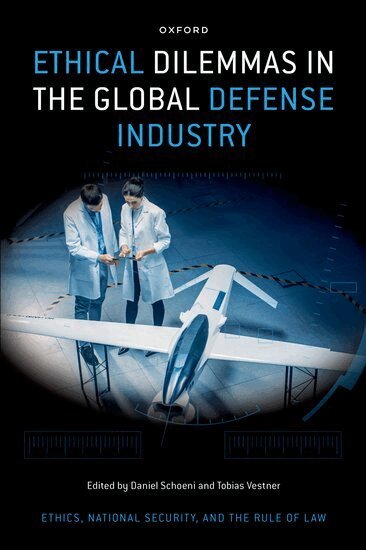
The defense industry develops, produces, and sells weapons that cause great harm. It operates at the intersection of the public and private sectors, with increased reliance on technology companies. Although such firms exist primarily to serve their host states, they routinely interact with foreign legal systems and diverse cultures. This context creates unique ethical challenges. That being the case, is the defense industry ethically defensible? How should it be regulated? How should it respond to worrisome technological developments such as autonomous weapons systems? How should business be conducted in countries where bribery is the norm? To what extent can this industry's intrinsic ethical problems be overcome? This book addresses such questions, bringing together the diverse perspectives of scholars and practitioners from academia, government service, the military, and the private sector. It aims to inform a discussion about the moral and legal challenges facing the global defense industry and to introduce solutions that are innovative, effective, and practical.
1 152 kr
Skickas inom 5-8 vardagar
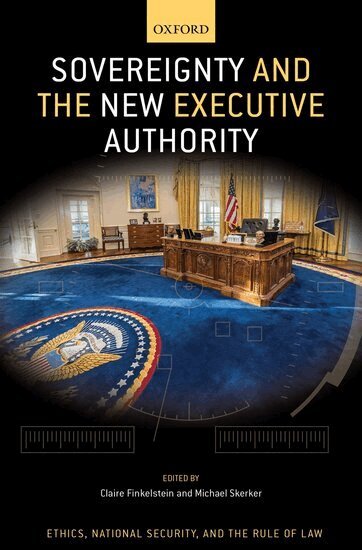
The idea of sovereignty and the debates that surroundit are not merely of historical, academic, or legal interest: they are also potent, vibrant issues and as current and relevant as today's front page news in the United States and in other Western democracies. In thepost- 9/11United States, the growth of the national security state has resulted in a growingstruggle to maintain the legal and ethical boundaries surrounding executive authority, boundaries that help to define and protect democratic governance. Thesepost-9/11 developments and their effect on the scope of presidential power present hard questions and arefueling today'sintensedebates among political leaders, citizens,constitutional scholars,historians, and philosophers. This volume will contribute to the public conversation on the nature of executive authority and its relation to the broader topic of sovereignty in several ways. First, readers will learn that the current vital questions surrounding the nature of executive authority and presidential power have their intellectual roots in historical and philosophical writings about the nature of sovereignty. Second, sovereignty has historically been a complicated topic; this volume helps identify the terms of the debate. Third, and most critically, citizens' understanding of the concept of sovereignty is essential to grasping the available options for confronting current challenges to the rule of law in democratic societies. The volume's 15 essays, drawn from among the disciplines of law, political, science, philosophy, and international relations,covers an expansive series of topics, from historical theories and international affairs, to governmental transparency and legitimacy. The volume also focuses on thechanges in the concept of sovereignty post-9/11 in the United States and their impact on democracy and the rule of law, particularly in the area of national security practice.
1 701 kr
Skickas inom 5-8 vardagar
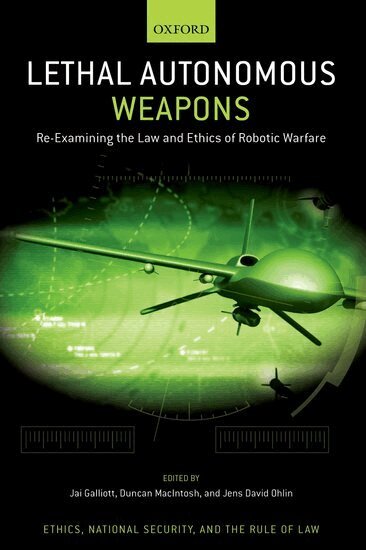
The question of whether new rules or regulations are required to govern, restrict, or even prohibit the use of autonomous weapon systems has been the subject of debate for the better part of a decade. Despite the claims of advocacy groups, the way ahead remains unclear since the international community has yet to agree on a specific definition of Lethal Autonomous Weapon Systems and the great powers have largely refused to support an effective ban. In this vacuum, the public has been presented with a heavily one-sided view of Killer Robots.This volume presents a more nuanced approach to autonomous weapon systems that recognizes the need to progress beyond a discourse framed by the Terminator and HAL 9000. Re-shaping the discussion around this emerging military innovation requires a new line of thought and a willingness to challenge the orthodoxy.Lethal Autonomous Weapons focuses on exploring the moral and legal issues associated with the design, development and deployment of lethal autonomous weapons. In this volume, we bring together some of the most prominent academics and academic-practitioners in the lethal autonomous weapons space and seek to return some balance to the debate. As part of this effort, we recognize that society needs to invest in hard conversations that tackle the ethics, morality, and law of these new digital technologies and understand the human role in their creation and operation.
1 296 kr
Skickas inom 5-8 vardagar
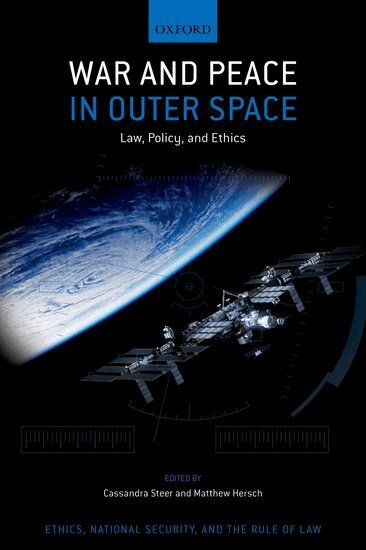
This book delves into legal and ethical concerns over the increased weaponization of outer space and the potential for space-based conflict in the very near future. Unique to this collection is the emphasis on questions of ethical conduct and legal standards applicable to military uses of outer space. No other existing publication takes this perspective, nor includes such a range of interdisciplinary expertise. The essays included in this volume explore the moral and legal issues of space security in four sections. Part I provides a general legal framework for the law of war and peace in space. Part II tackles ethical issues. Part III looks at specific threats to space security. Part IV proposes possible legal and diplomatic solutions. With an expert author team from North American and Europe, the volume brings together academics, military lawyers, military space operators, aerospace industry representatives, diplomats, and national security and policy experts. The experience of this team provides a collection unmatched in any academic publication broaching even some of these issues and will be required reading for anyone interested in war and peace in outer space.
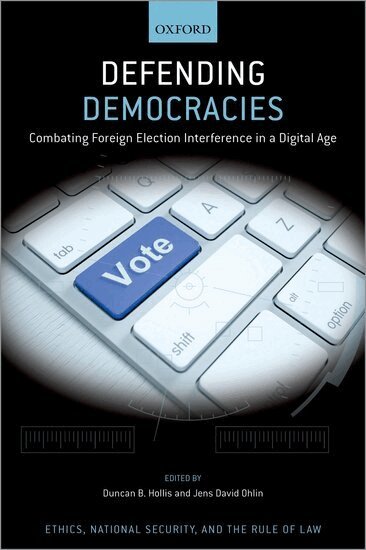
Defending Democracies
Combating Foreign Election Interference in a Digital Age
Inbunden, Engelska, 2021
1 565 kr
Skickas inom 5-8 vardagar
Election interference is one of the most widely discussed international phenomena of the last five years. Russian covert interference in the 2016 U.S. Presidential Election elevated the topic into a national priority, but that experience was far from an isolated one. Evidence of election interference by foreign states or their proxies has become a regular feature of national elections and is likely to get worse in the near future. Information and communication technologies afford those who would interfere with new tools that can operate in ways previously unimaginable: Twitter bots, Facebook advertisements, closed social media platforms, algorithms that prioritize extreme views, disinformation, misinformation, and malware that steals secret campaign communications.Defending Democracies examines the problem through an interdisciplinary lens and focuses on: (i) defining the problem of foreign election interference, (ii) exploring the solutions that international law might bring to bear, and (iii) considering alternative regulatory frameworks for understanding and addressing the problem. The result is a deeply urgent examination of an old problem on social media steroids, one that implicates the most central institution of liberal democracy: elections.The volume seeks to bring domestic and international perspectives on elections and election law into conversation with other disciplinary frameworks, escaping the typical biases of lawyers who prefer international legal solutions for issues of international relations. Taken together, the chapters in this volume represent a more faithful representation of the broad array of solutions that might be deployed, including international and domestic, legal and extra-legal, ambitious and cautious.
1 229 kr
Skickas inom 5-8 vardagar
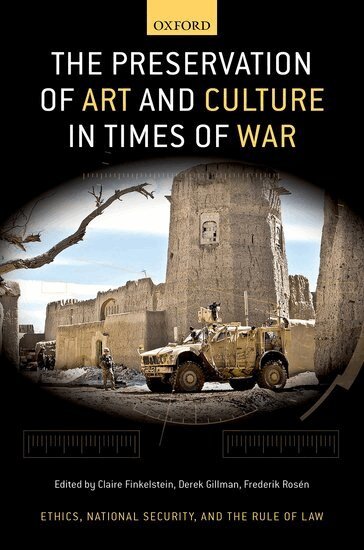
Conflict over cultural heritage has increasingly become a standard part of war. Today, systematic exploitation, manipulation, attacks, and destruction of cultural heritage by state and non-state actors form part of most violent conflicts across the world. Such acts are often intentional and based on well-planned strategies for inflicting harm on groups of people and communities. With this increasing awareness of the role cultural heritage plays in war, scholars and practitioners have progressed from seeing conflict-related destruction of cultural heritage as a cultural tragedy to understanding it as a vital national security issue. There is also a shift from the desire to protect cultural property for its own sake to viewing its protection as connected to broader agendas of peace and security. Concerns about cultural heritage have thus migrated beyond the cultural sphere to worries about the protection of civilians, the financing of terrorism, societal resilience, post-conflict reconciliation, hybrid warfare, and the geopolitics of territorial conflicts. This volume seeks to deepen public understanding of the evolving nexus between cultural heritage and security in the twenty-first century. Drawing on a variety of disciplines and perspectives, the chapters in this volume examine a complex set of relationships between the deliberate destruction and misuse of cultural heritage in times of conflict, on the one hand, and basic societal values, legal principles, and national security, on the other.
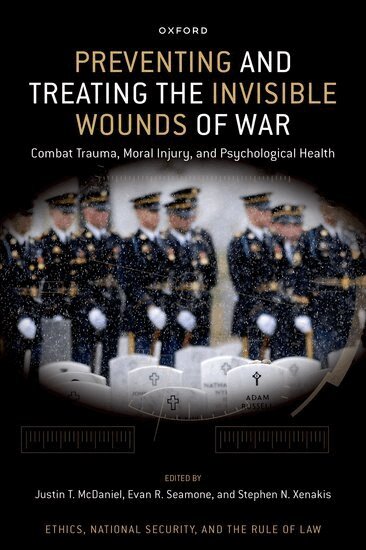
Preventing and Treating the Invisible Wounds of War
Combat Trauma, Moral Injury, and Psychological Health
Inbunden, Engelska, 2024
976 kr
Skickas inom 5-8 vardagar
This volume provides several perspectives that help practitioners, advocates, and policymakers understand the impact of historical and recent wars on U.S. Military veterans. The chapters address newly recognized conditions, such as moral injury, military sexual trauma, and remote combat trauma as precursors to more serious diagnosable mental health disorders with the goal of addressing how these conditions can be identified and mitigated in future combat operations. The chapters also provide new insights on calculating the costs of wars in terms of dollars spent on treating mental health conditions, the intergenerational impact of combat trauma on families and future generations, and involvement in the criminal justice system of those who do not receive treatment due to discharge characterizations from military misconduct.
2 006 kr
Skickas inom 5-8 vardagar
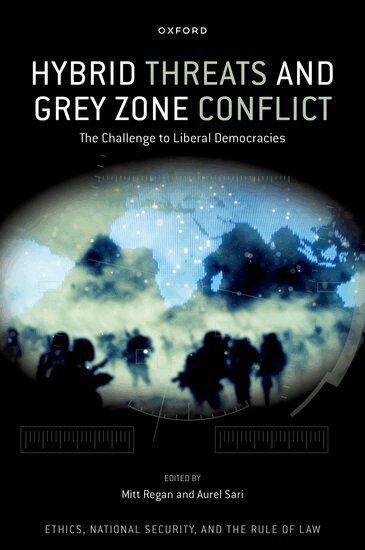
In the current geopolitical environment, liberal democracies vie for influence and prosperity with autocratic governments, such as those of China and Russia. While the great powers do not shy away from using aggressive force, much of their rivalry today takes place below the threshold of armed conflict, in a conceptual and practical 'grey zone' between war and peace. Autocratic states operate in this grey zone to target the vulnerabilities of liberal democracies, creating hybrid threats that rely on instruments ranging from economic, diplomatic, legal, and informational pressure all the way to military coercion. Law plays a critical role in this context. In the ethically and legally ambiguous grey zone, international law serves as a normative, yet malleable, framework within which geopolitical rivals compete. State and non-State actors invoke the law as the source of authority, while simultaneously hoping to shape the international legal order in their own strategic interests. Hybrid Threats and Grey Zone Conflict offers the first in-depth assessment of the legal and ethical aspects of hybrid threats and grey zone conflict. It explores the responses available to democratic nations for countering hybrid and grey zone threats whilst adhering to liberal democratic values and the rule of law. Bringing together diverse scholarly and practitioner perspectives, the volume introduces readers to the conceptual and practical difficulties arising in this area, the rich debates the topic has generated, and the challenges that countering hybrid threats and grey zone conflict poses for liberal democracies. This volume is essential reading for anyone interested in learning more about contemporary forms of strategic competition below the threshold of open hostilities.
892 kr
Skickas inom 5-8 vardagar
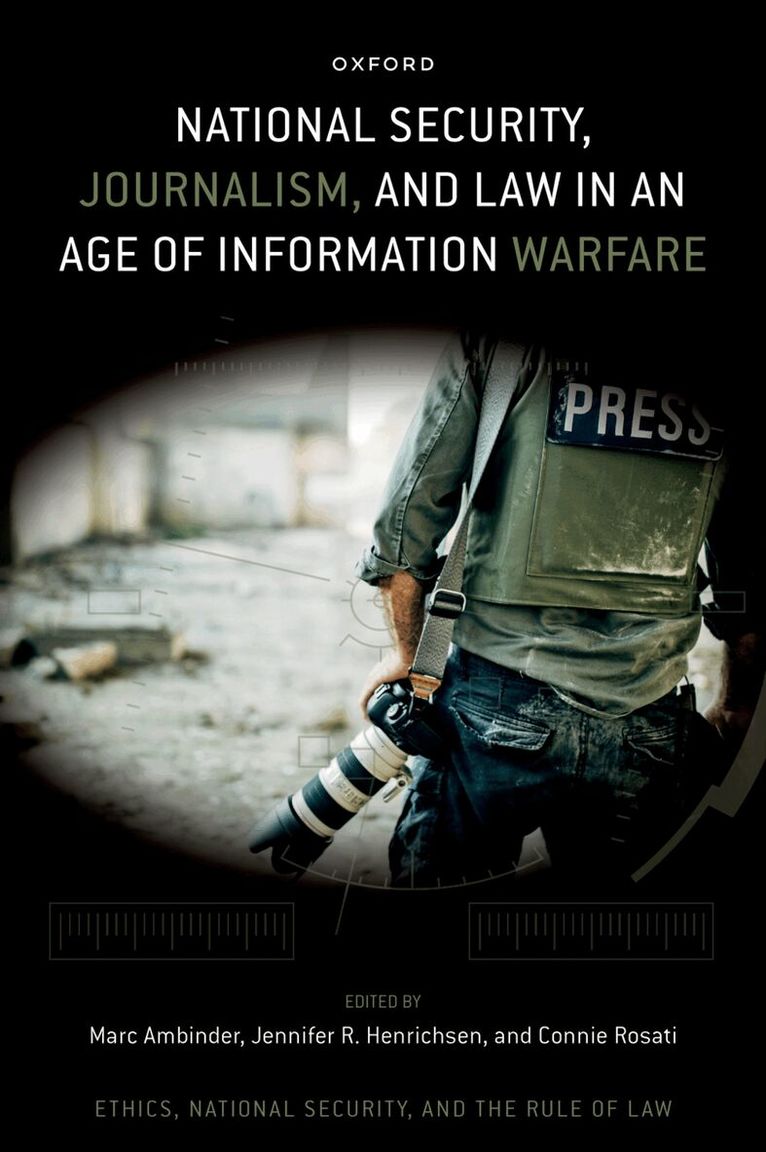
National security reporting has long involved tension between governmental efforts to protect against threats to our collective well-being and journalism's efforts to inform the public and hold state actors to account. Attempts to balance the needs and duties of government and journalism are increasingly challenged by pervasive misinformation and disinformation, the rise of alternative “news” sources, distrust of traditional media and government, and both legal challenges to and external threats against journalists.National Security, Journalism, and Law in an Age of Information Warfare describes the professional and ethical challenges faced by journalists covering national security, lawyers litigating national security issues, and government institutions entrusted with protected secrets in a context of information disorder. This book helps one to understand how secret keepers, journalists, and sources are navigating unprecedented challenges in an age when trust in institutions is low and the spread of disinformation through social media undermines efforts to inform and protect the public. The volume explores the rise of deception and disinformation, new clashes over executive power and national security, and changing norms of privacy and transparency in the age of social media.This collection of indispensable essays provides an array of perspectives on difficult problems and provides illuminating answers that can help government and journalism develop better policies and practices.
1 857 kr
Skickas inom 5-8 vardagar
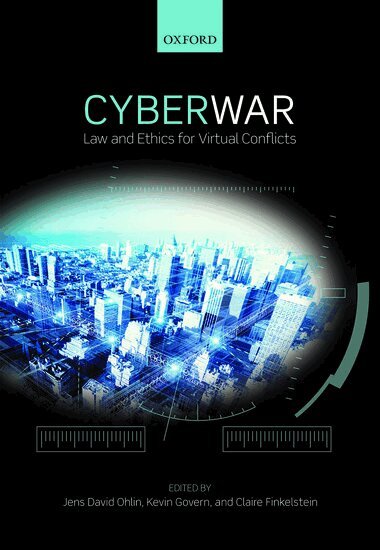
Cyber weapons and cyber warfare have become one of the most dangerous innovations of recent years, and a significant threat to national security. Cyber weapons can imperil economic, political, and military systems by a single act, or by multifaceted orders of effect, with wide-ranging potential consequences. Unlike past forms of warfare circumscribed by centuries of just war tradition and Law of Armed Conflict prohibitions, cyber warfare occupies a particularly ambiguous status in the conventions of the laws of war. Furthermore, cyber attacks put immense pressure on conventional notions of sovereignty, and the moral and legal doctrines that were developed to regulate them. This book, written by an unrivalled set of experts, assists in proactively addressing the ethical and legal issues that surround cyber warfare by considering, first, whether the Laws of Armed Conflict apply to cyberspace just as they do to traditional warfare, and second, the ethical position of cyber warfare against the background of our generally recognized moral traditions in armed conflict.The book explores these moral and legal issues in three categories. First, it addresses foundational questions regarding cyber attacks. What are they and what does it mean to talk about a cyber war? The book presents alternative views concerning whether the laws of war should apply, or whether transnational criminal law or some other peacetime framework is more appropriate, or if there is a tipping point that enables the laws of war to be used. Secondly, it examines the key principles of jus in bello to determine how they might be applied to cyber-conflicts, in particular those of proportionality and necessity. It also investigates the distinction between civilian and combatant in this context, and studies the level of causation necessary to elicit a response, looking at the notion of a 'proximate cause'. Finally, it analyses the specific operational realities implicated by particular regulatory regimes. This book is unmissable reading for anyone interested in the impact of cyber warfare on international law and the laws of war.
716 kr
Skickas inom 7-10 vardagar
Cyber weapons and cyber warfare have become one of the most dangerous innovations of recent years, and a significant threat to national security. Cyber weapons can imperil economic, political, and military systems by a single act, or by multifaceted orders of effect, with wide-ranging potential consequences. Unlike past forms of warfare circumscribed by centuries of just war tradition and Law of Armed Conflict prohibitions, cyber warfare occupies a particularly ambiguous status in the conventions of the laws of war. Furthermore, cyber attacks put immense pressure on conventional notions of sovereignty, and the moral and legal doctrines that were developed to regulate them. This book, written by an unrivalled set of experts, assists in proactively addressing the ethical and legal issues that surround cyber warfare by considering, first, whether the Laws of Armed Conflict apply to cyberspace just as they do to traditional warfare, and second, the ethical position of cyber warfare against the background of our generally recognized moral traditions in armed conflict.The book explores these moral and legal issues in three categories. First, it addresses foundational questions regarding cyber attacks. What are they and what does it mean to talk about a cyber war? The book presents alternative views concerning whether the laws of war should apply, or whether transnational criminal law or some other peacetime framework is more appropriate, or if there is a tipping point that enables the laws of war to be used. Secondly, it examines the key principles of jus in bello to determine how they might be applied to cyber-conflicts, in particular those of proportionality and necessity. It also investigates the distinction between civilian and combatant in this context, and studies the level of causation necessary to elicit a response, looking at the notion of a 'proximate cause'. Finally, it analyses the specific operational realities implicated by particular regulatory regimes. This book is unmissable reading for anyone interested in the impact of cyber warfare on international law and the laws of war.
2 502 kr
Skickas inom 3-6 vardagar
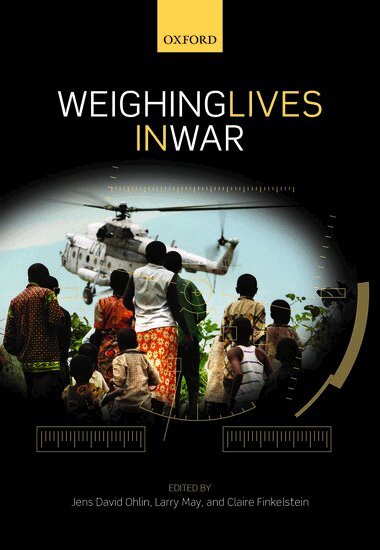
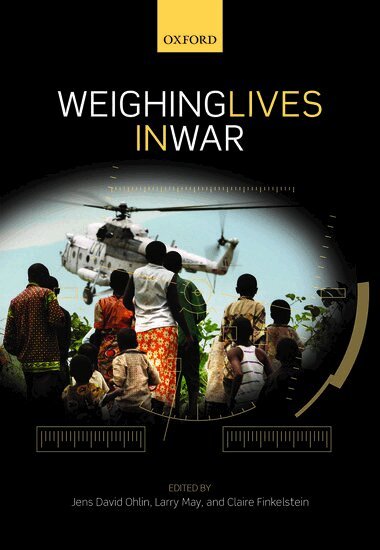
The chief means to limit and calculate the costs of war are the philosophical and legal concepts of proportionality and necessity. Both categories are meant to restrain the most horrific potential of war. The volume explores the moral and legal issues in the modern law of war in three major categories. In so doing, the contributions will look for new and innovative approaches to understanding the process of weighing lives implicit in all theories of jus in bello: who counts in war, understanding proportionality, and weighing lives in asymmetric conflicts. These questions arise on multiple levels and require interdisciplinary consideration of both philosophical and legal themes.
560 kr
Skickas inom 7-10 vardagar
The chief means to limit and calculate the costs of war are the philosophical and legal concepts of proportionality and necessity. Both categories are meant to restrain the most horrific potential of war. The volume explores the moral and legal issues in the modern law of war in three major categories. In so doing, the contributions will look for new and innovative approaches to understanding the process of weighing lives implicit in all theories of jus in bello: who counts in war, understanding proportionality, and weighing lives in asymmetric conflicts. These questions arise on multiple levels and require interdisciplinary consideration of both philosophical and legal themes.
1 803 kr
Skickas inom 7-10 vardagar
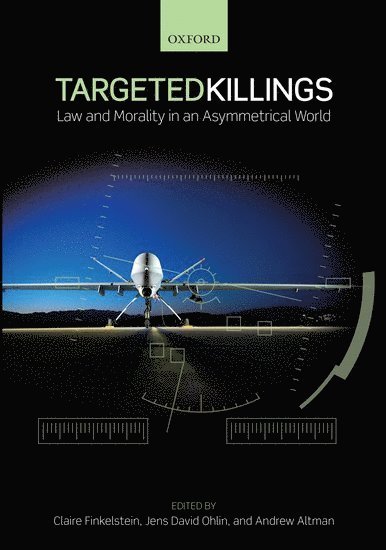
The war on terror is remaking conventional warfare. The protracted battle against a non-state organization, the demise of the confinement of hostilities to an identifiable battlefield, the extensive involvement of civilian combatants, and the development of new and more precise military technologies have all conspired to require a rethinking of the law and morality of war. Just war theory, as traditionally articulated, seems ill-suited to justify many of the practices of the war on terror. The raid against Osama Bin Laden's Pakistani compound was the highest profile example of this strategy, but the issues raised by this technique cast a far broader net: every week the U.S. military and CIA launch remotely piloted drones to track suspected terrorists in hopes of launching a missile strike against them. In addition to the public condemnation that these attacks have generated in some countries, the legal and moral basis for the use of this technique is problematic. Is the U.S. government correct that nations attacked by terrorists have the right to respond in self-defense by targeting specific terrorists for summary killing? Is there a limit to who can legitimately be placed on the list? There is also widespread disagreement about whether suspected terrorists should be considered combatants subject to the risk of lawful killing under the laws of war or civilians protected by international humanitarian law. Complicating the moral and legal calculus is the fact that innocent bystanders are often killed or injured in these attacks. This book addresses these issues. Featuring chapters by an unrivalled set of experts, it discusses all aspects of targeted killing, making it unmissable reading for anyone interested in the implications of this practice.
1 066 kr
Skickas inom 7-10 vardagar
The war on terror is remaking conventional warfare. The protracted battle against a non-state organization, the demise of the confinement of hostilities to an identifiable battlefield, the extensive involvement of civilian combatants, and the development of new and more precise military technologies have all conspired to require a rethinking of the law and morality of war. Just war theory, as traditionally articulated, seems ill-suited to justify many of the practices of the war on terror. The raid against Osama Bin Laden's Pakistani compound was the highest profile example of this strategy, but the issues raised by this technique cast a far broader net: every week the U.S. military and CIA launch remotely piloted drones to track suspected terrorists in hopes of launching a missile strike against them. In addition to the public condemnation that these attacks have generated in some countries, the legal and moral basis for the use of this technique is problematic. Is the U.S. government correct that nations attacked by terrorists have the right to respond in self-defense by targeting specific terrorists for summary killing? Is there a limit to who can legitimately be placed on the list? There is also widespread disagreement about whether suspected terrorists should be considered combatants subject to the risk of lawful killing under the laws of war or civilians protected by international humanitarian law. Complicating the moral and legal calculus is the fact that innocent bystanders are often killed or injured in these attacks. This book addresses these issues. Featuring chapters by an unrivalled set of experts, it discusses all aspects of targeted killing, making it unmissable reading for anyone interested in the implications of this practice.