Approaches to the Evolution of Language - Böcker
Visar alla böcker i serien Approaches to the Evolution of Language. Handla med fri frakt och snabb leverans.
10 produkter
10 produkter
1 311 kr
Skickas inom 7-10 vardagar
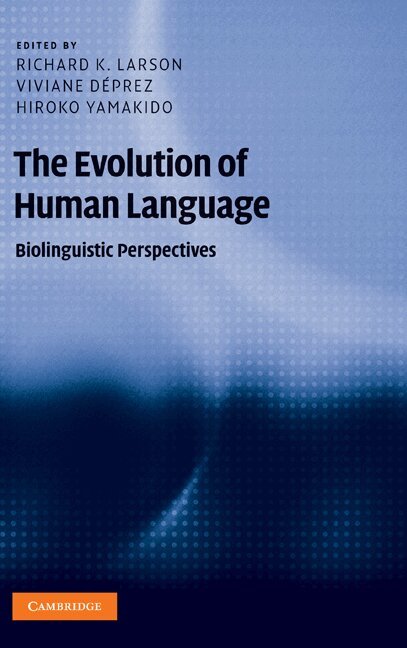
The way language as a human faculty has evolved is a question that preoccupies researchers from a wide spread of disciplines. In this book, a team of writers has been brought together to examine the evolution of language from a variety of such standpoints, including language's genetic basis, the anthropological context of its appearance, its formal structure, its relation to systems of cognition and thought, as well as its possible evolutionary antecedents. The book includes Hauser, Chomsky, and Fitch's seminal and provocative essay on the subject, 'The Faculty of Language,' and charts the progress of research in this active and highly controversial field since its publication in 2002. This timely volume will be welcomed by researchers and students in a number of disciplines, including linguistics, evolutionary biology, psychology, and cognitive science.
668 kr
Skickas inom 7-10 vardagar
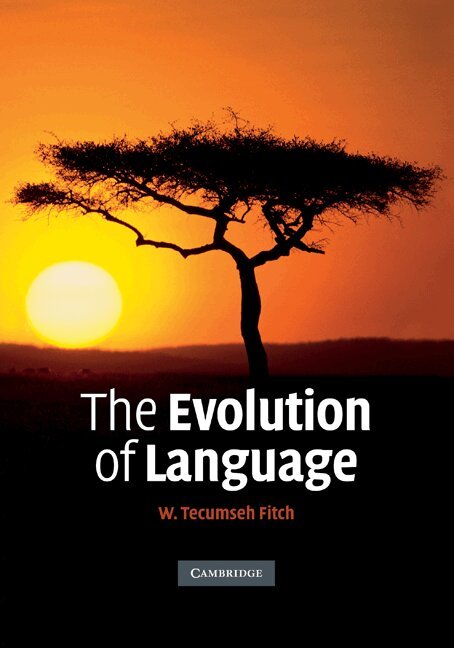
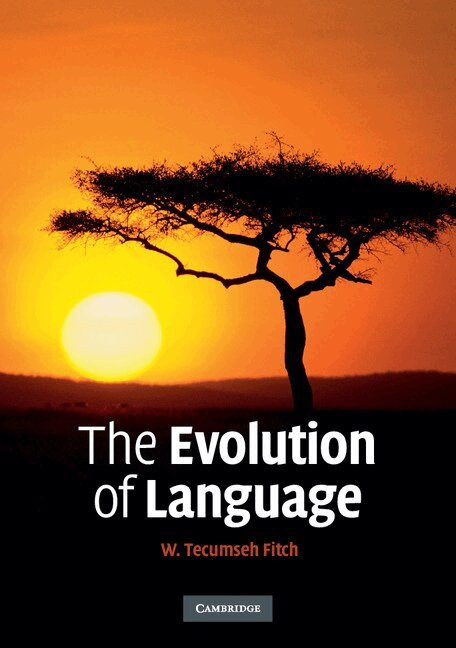
Language, more than anything else, is what makes us human. It appears that no communication system of equivalent power exists elsewhere in the animal kingdom. Any normal human child will learn a language based on rather sparse data in the surrounding world, while even the brightest chimpanzee, exposed to the same environment, will not. Why not? How, and why, did language evolve in our species and not in others? Since Darwin's theory of evolution, questions about the origin of language have generated a rapidly-growing scientific literature, stretched across a number of disciplines, much of it directed at specialist audiences. The diversity of perspectives - from linguistics, anthropology, speech science, genetics, neuroscience and evolutionary biology - can be bewildering. Tecumseh Fitch cuts through this vast literature, bringing together its most important insights to explore one of the biggest unsolved puzzles of human history.
511 kr
Skickas inom 7-10 vardagar
The way language as a human faculty has evolved is a question that preoccupies researchers from a wide spread of disciplines. In this book, a team of writers has been brought together to examine the evolution of language from a variety of such standpoints, including language's genetic basis, the anthropological context of its appearance, its formal structure, its relation to systems of cognition and thought, as well as its possible evolutionary antecedents. The book includes Hauser, Chomsky, and Fitch's seminal and provocative essay on the subject, 'The Faculty of Language,' and charts the progress of research in this active and highly controversial field since its publication in 2002. This timely volume will be welcomed by researchers and students in a number of disciplines, including linguistics, evolutionary biology, psychology, and cognitive science.
1 472 kr
Skickas inom 7-10 vardagar
Language, more than anything else, is what makes us human. It appears that no communication system of equivalent power exists elsewhere in the animal kingdom. Any normal human child will learn a language based on rather sparse data in the surrounding world, while even the brightest chimpanzee, exposed to the same environment, will not. Why not? How, and why, did language evolve in our species and not in others? Since Darwin's theory of evolution, questions about the origin of language have generated a rapidly-growing scientific literature, stretched across a number of disciplines, much of it directed at specialist audiences. The diversity of perspectives - from linguistics, anthropology, speech science, genetics, neuroscience and evolutionary biology - can be bewildering. Tecumseh Fitch cuts through this vast literature, bringing together its most important insights to explore one of the biggest unsolved puzzles of human history.
1 417 kr
Skickas inom 7-10 vardagar
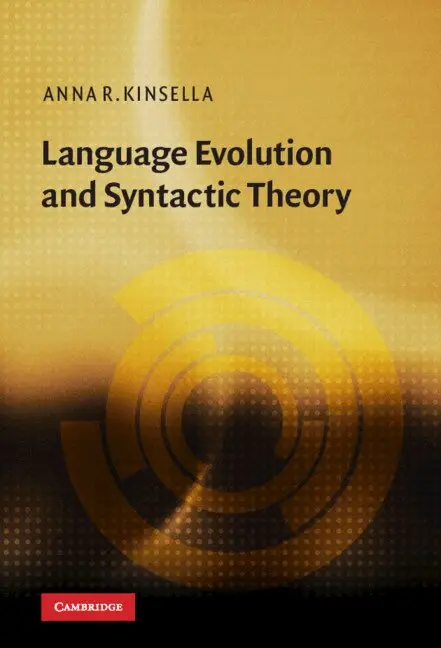
Evolution has not typically been recognised by linguists as a constraining factor when developing linguistic theories. This book demonstrates that our theories of language must reflect the fact that language has evolved. It critiques a currently dominant framework in the field of linguistics - the Minimalist Program - by showing how it fails to take evolution into account. It approaches the question of the evolution of human language in a novel way by applying findings from the field of evolutionary biology to language. Key properties associated with typically evolving systems are identified in language, and the shortcomings of the Minimalist Program in its outright rejection of these features are exposed. The book will be of interest to individual researchers and advanced students in linguistics, psychology, biology, anthropology and cognitive science.
1 024 kr
Skickas inom 7-10 vardagar
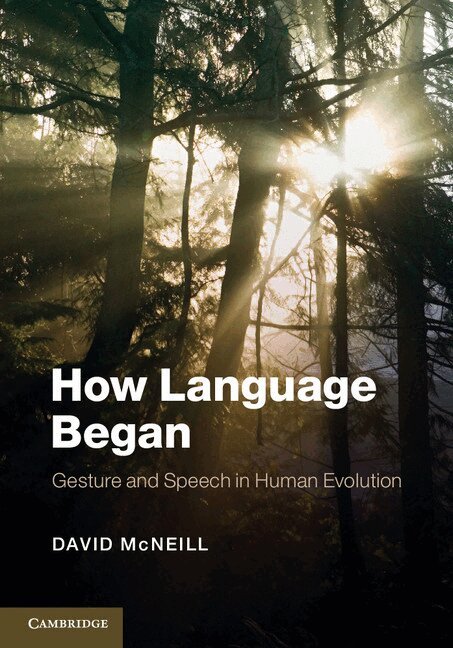
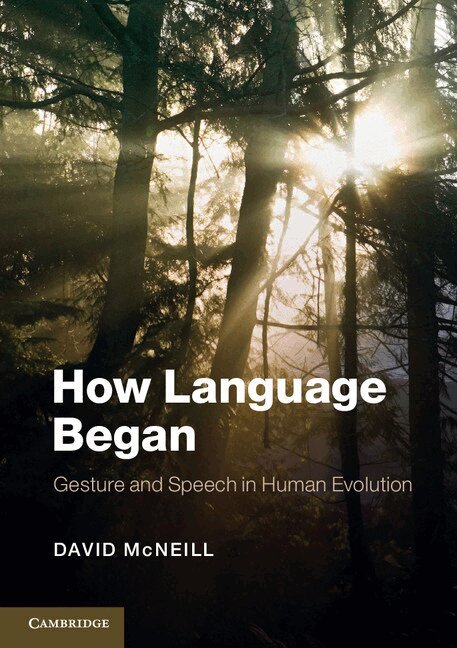
Human language is not the same as human speech. We use gestures and signs to communicate alongside, or instead of, speaking. Yet gestures and speech are processed in the same areas of the human brain, and the study of how both have evolved is central to research on the origins of human communication. Written by one of the pioneers of the field, this is the first book to explain how speech and gesture evolved together into a system that all humans possess. Nearly all theorizing about the origins of language either ignores gesture, views it as an add-on or supposes that language began in gesture and was later replaced by speech. David McNeill challenges the popular 'gesture-first' theory that language first emerged in a gesture-only form and proposes a groundbreaking theory of the evolution of language which explains how speech and gesture became unified.
1 311 kr
Skickas inom 7-10 vardagar
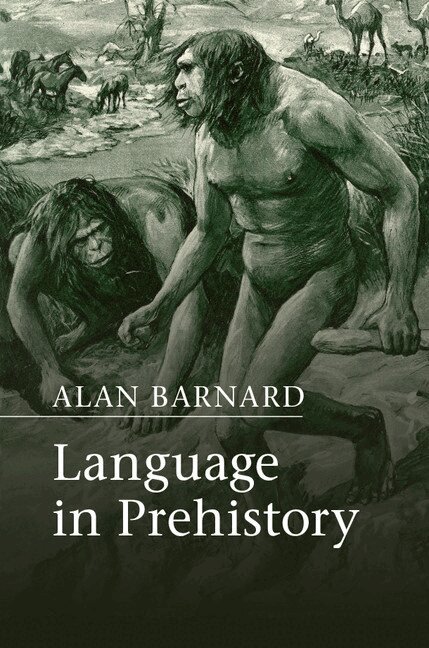
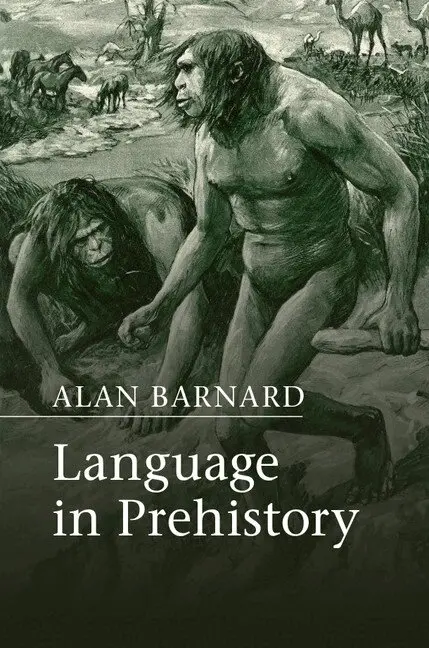
For ninety per cent of our history, humans have lived as 'hunters and gatherers', and for most of this time, as talking individuals. No direct evidence for the origin and evolution of language exists; we do not even know if early humans had language, either spoken or signed. Taking an anthropological perspective, Alan Barnard acknowledges this difficulty and argues that we can nevertheless infer a great deal about our linguistic past from what is around us in the present. Hunter-gatherers still inhabit much of the world, and in sufficient number to enable us to study the ways in which they speak, the many languages they use, and what they use them for. Barnard investigates the lives of hunter-gatherers by understanding them in their own terms, to create a book which will be welcomed by all those interested in the evolution of language.
1 295 kr
Skickas inom 7-10 vardagar
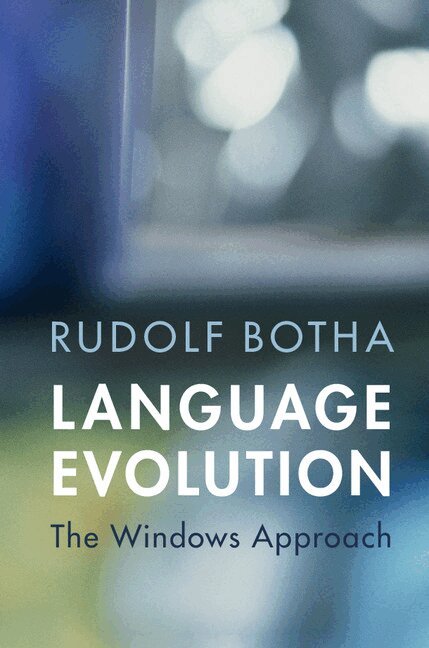
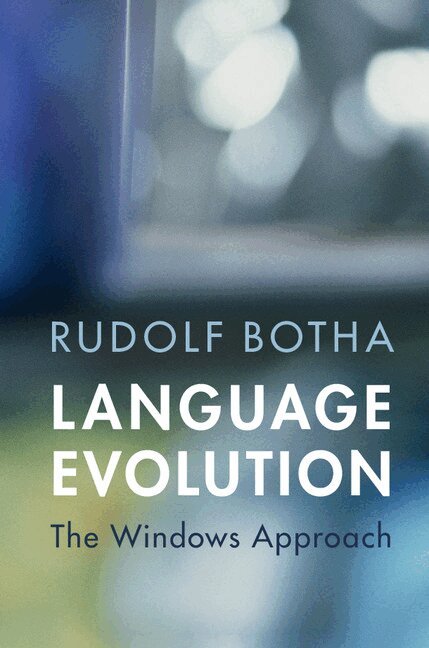
How can we unravel the evolution of language, given that there is no direct evidence about it? Rudolf Botha addresses this intriguing question in his fascinating new book. Inferences can be drawn about language evolution from a range of other phenomena, serving as windows into this prehistoric process. These include shell-beads, fossil skulls and ancestral brains, modern pidgin and creole languages, homesign systems and emergent sign languages, modern motherese, language use of modern hunter-gatherers, first language acquisition, similarities between language and music, and comparative animal behaviour. The first systematic analysis of the Windows Approach, it will be of interest to students and researchers in many disciplines, including anthropology, archaeology, linguistics, palaeontology and primatology, as well as anyone interested in how language evolved.
271 kr
Skickas inom 7-10 vardagar
For ninety per cent of our history, humans have lived as 'hunters and gatherers', and for most of this time, as talking individuals. No direct evidence for the origin and evolution of language exists; we do not even know if early humans had language, either spoken or signed. Taking an anthropological perspective, Alan Barnard acknowledges this difficulty and argues that we can nevertheless infer a great deal about our linguistic past from what is around us in the present. Hunter-gatherers still inhabit much of the world, and in sufficient number to enable us to study the ways in which they speak, the many languages they use, and what they use them for. Barnard investigates the lives of hunter-gatherers by understanding them in their own terms, to create a book which will be welcomed by all those interested in the evolution of language.
370 kr
Skickas inom 7-10 vardagar
How can we unravel the evolution of language, given that there is no direct evidence about it? Rudolf Botha addresses this intriguing question in his fascinating new book. Inferences can be drawn about language evolution from a range of other phenomena, serving as windows into this prehistoric process. These include shell-beads, fossil skulls and ancestral brains, modern pidgin and creole languages, homesign systems and emergent sign languages, modern motherese, language use of modern hunter-gatherers, first language acquisition, similarities between language and music, and comparative animal behaviour. The first systematic analysis of the Windows Approach, it will be of interest to students and researchers in many disciplines, including anthropology, archaeology, linguistics, palaeontology and primatology, as well as anyone interested in how language evolved.