Archaeolingua Central European Archaeological Heritage Series – serie
Visar alla böcker i serien Archaeolingua Central European Archaeological Heritage Series. Handla med fri frakt och snabb leverans.
4 produkter
4 produkter
Del 8 - Archaeolingua Central European Archaeological Heritage Series
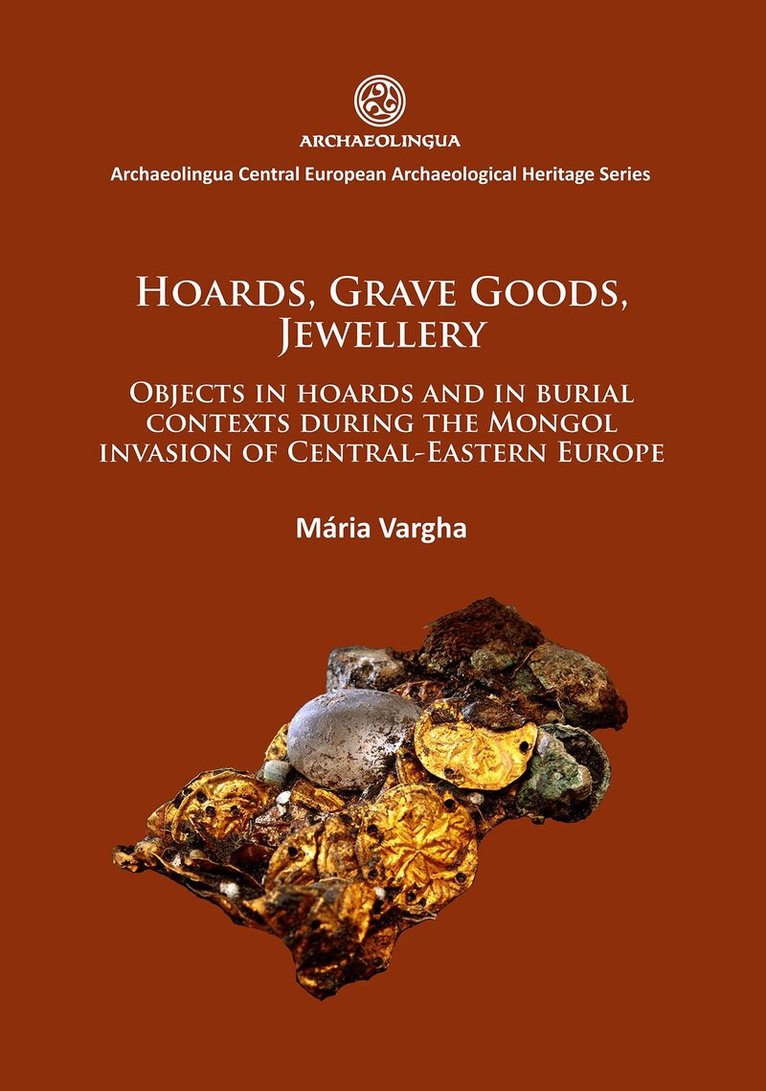
Hoards, grave goods, jewellery
Objects in hoards and in burial contexts during the Mongol invasion of Central-Eastern Europe
Häftad, Engelska, 2015
486 kr
Skickas inom 11-20 vardagar
This monograph examines one specific hoard horizon, which is connected to the Mongol invasion of Hungary (1241-42). With this catastrophic event, the historical context is both well-known and much discussed by contemporaries and modern scholars. This opportunity to examine material connected to a sole event, but across a broad spectrum of geographical space and social class, is unique for hoard horizons in Hungary, and, for that matter, in Europe. Though this study focuses on hoards connected to the Mongol invasion, it is also relevant beyond this specific context. The work addresses issues concerning hoard finds and material culture, and examines how finds are related when found in different contexts (a hoard, grave, or settlement feature), thus the questions raised and conclusions reached are important for other medieval hoard finds. By comparing hoards related to a single historical event to a contemporaneous site – containing a village, a church, and a cemetery – assessments can be made regarding how hoards reflect social issues such as stratification, wealth, status, and fashion.
Del 9 - Archaeolingua Central European Archaeological Heritage Series
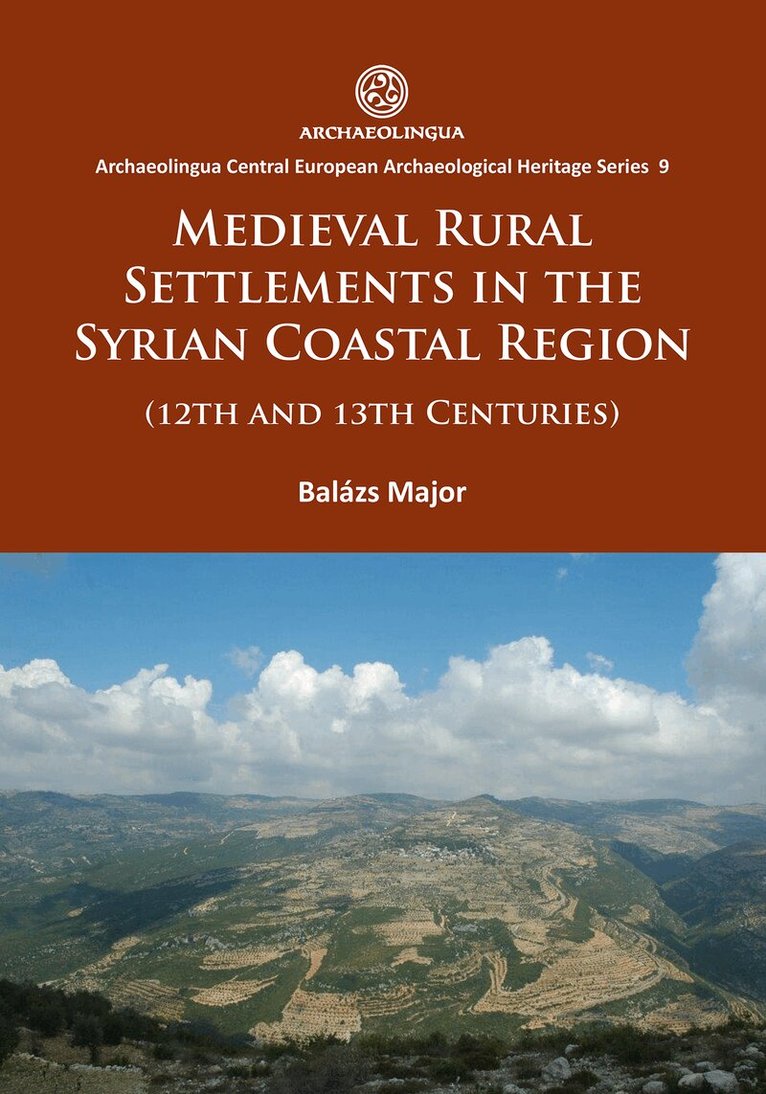
Medieval Rural Settlements in the Syrian Coastal Region (12th and 13th Centuries)
Häftad, Engelska, 2016
785 kr
Skickas
This book is the result of more than a dozen years of research in the field of the hitherto unstudied medieval settlement pattern of the Syrian coastal region in the 12th and 13th centuries. The conclusions presented in this work were reached with the combined use of several source types including medieval documents, travellers’ accounts, former research, map evidence, toponymy, archive and satellite photographs, oral sources and extensive archaeological field surveys accompanied by documentation between the years 2000 and 2015. After enumerating the historical events that influenced the settlement pattern of the coast, its centres, including the towns and castles (with special regard to the smaller fortifications of the countryside that seem to have been a Frankish introduction to the area) are analysed. Following the detailed examination of the written sources and the architectural material preserved at these lesser sites, a closer look at the villages and their environment aims to draw a general picture on the density of settlements and their basic characteristics. The book also discusses communication lines and provides an assessment of the medieval population that inhabited the region in the 12th and 13th centuries. The text is accompanied by a collection of maps, plan drawings, tables and illustrations on a selected number of sites visited during the field surveys.
Del 10 - Archaeolingua Central European Archaeological Heritage Series
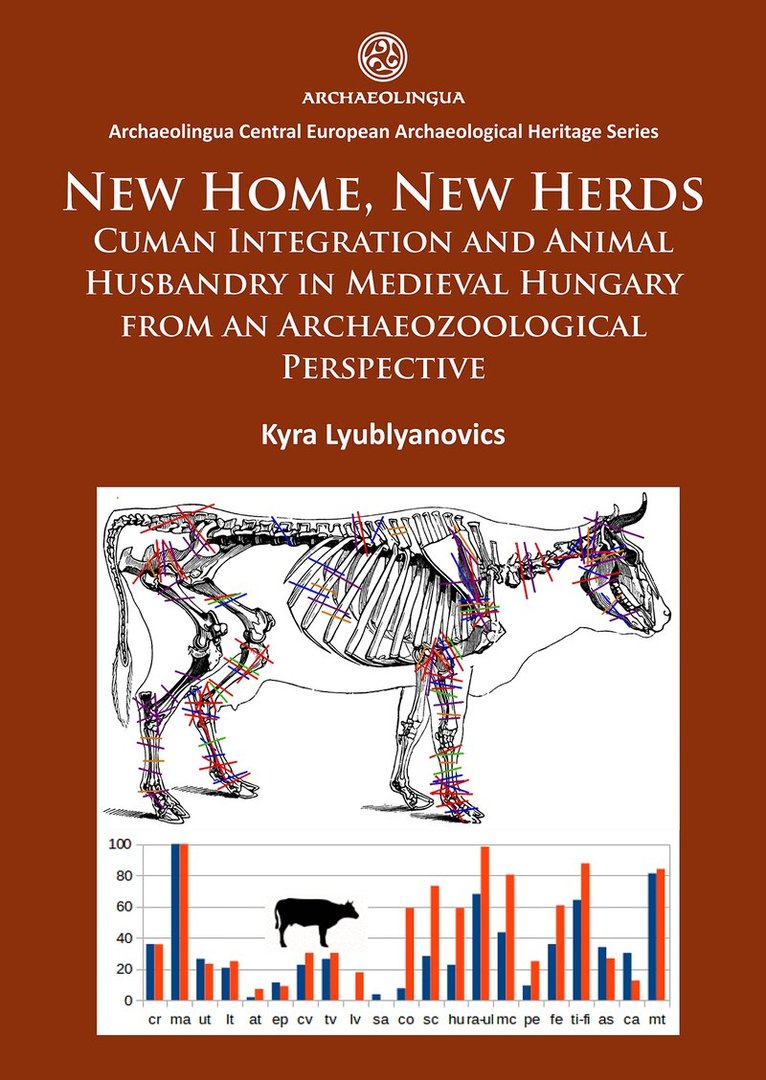
New Home, New Herds: Cuman Integration and Animal Husbandry in Medieval Hungary from an Archaeozoological Perspective
Häftad, Engelska, 2017
830 kr
Skickas
The Cumans, a people that inhabited the steppe zone in the medieval period and actively shaped the fate of the region from the Black Sea to the Carpathian Basin, have been primarily known to history as nomadic, mounted warriors. Some of them arrived in the Hungarian Kingdom in the midthirteenth century as a group of refugees fleeing the invading Mongol army and asked for asylum. In the course of three centuries they settled down in the kingdom, converted to Christianity, and were integrated into medieval Hungarian society. This study collects all available information, historical, ethnographic and archaeological alike, on the animal husbandry aspect of the complex development of the Cuman population in medieval Hungary. Although this medieval minority has been in the focus of scholarly interest in the past decades, no attempt has been made so far to study their herds using interdisciplinary methods. The research of faunal assemblages through archaeozoological methods has the potential to reveal direct, and by other means, unavailable information on animal keeping practices, although this source of evidence often escapes scholarly attention in Central and Eastern Europe. This book combines a primary scientific dataset with historical information and interprets them within the framework of settlement history in order to investigate the manifold integration process of a medieval community.
Del 12 - Archaeolingua Central European Archaeological Heritage Series
Twelfth-Century Mosan Reliquary of Pétermonostora
Häftad, Engelska, 2025
531 kr
Skickas
In 2013, during the excavation of the archaeological site of Pétermonostora (Hungary), two exceptionally large enamel plaques were discovered. The reliquary they belonged to was made by a Mosan artist, possibly in the Meuse Valley, a major intellectual and artistic centre of the period. The artwork's remains constitute one of the greatest discoveries in medieval Hungarian archaeology. Even though the site was completely destroyed by the Mongols in 1241, its remains, and especially artefacts like the reliquary, create a unique image of a large, thriving settlement, home to a Latin Christian masterpiece. Given the destruction of sources and artworks in the region, Pétermonostora offers a rare opportunity to examine artistic, cultural, and historical aspects of high medieval East-Central Europe.Dr. Sophie Balace (Curator of metalworks at the Royal Museums of Art and History, Brussels): “The discovery of the Pétermonostora plaques is as extraordinary as it is unexpected. Although Mosan goldwork remains are still relatively numerous, their discovery in an archaeological context is rare. The archaeological discovery of important goldsmith ornamental fragments on the site of Pétermonostora constitutes a major contribution to Mosan heritage. This attribution, which seems to be irrefutable, brings sensational new information to the study of medieval art.”