Archaeological Histories - Böcker
Visar alla böcker i serien Archaeological Histories. Handla med fri frakt och snabb leverans.
23 produkter
23 produkter
589 kr
Skickas inom 5-8 vardagar
Tarquinia was one of the principal cities of ancient Etruria, the most powerful nation in pre-Roman Italy, and has been at the forefront of Etruscan studies since the early days of antiquarian scholarship. The lack of Etruscan literature and problems with the interpretation of ancient sources have given archaeology a very significant role to play in understanding this elusive civilisation. Robert Leighton charts the history of the site and its interpretation, from its use in early propaganda under the Medici and other Tuscan rulers, to nineteenth-century interest in the discovery of the painted tombs, for which the site is famous, and twentieth-century concentration on the extensive prehistoric burial grounds which provide evidence for the 'proto-Etruscan' Villanovan culture. He considers the significance of Etruscan art in the Archaic period, a topic of hot debate, setting it in the context of economic organisation, long-distance trade and the important role of Tarquinia's port of Gravisca. Recent explorations of the city walls and public and religious buildings of Hellenistic and later date are also discussed.
279 kr
Skickas
Over its venerable history, Hadrian’s Wall has had an undeniable influence in shaping the British landscape, both literally and figuratively. Once thought to be a soft border, recent research has implicated it in the collapse of a farming civilisation centuries in the making, and in fuelling an insurgency characterised by violent upheaval. Examining the everyday impact of the Wall over the three centuries it was in operation, Matthew Symonds sheds new light on its underexplored human story by discussing how the evidence speaks of a hard border scything through a previously open landscape and bringing dramatic change in its wake. The Roman soldiers posted to Hadrian’s Wall were overwhelmingly recruits from the empire’s occupied territories, and for them the frontier could be a place of fear and magic where supernatural protection was invoked during spells of guard duty. Since antiquity, the Wall has been exploited by powers craving the legitimacy that came with being accepted as the heirs of Rome: it helped forge notions of English and Scottish nationhood, and even provided a model of selfless cultural collaboration when the British Empire needed reassurance. It has also inspired creatives for centuries, appearing in a more or less recognisable guise in works ranging from Rudyard Kipling’s Puck of Pook’s Hill to George R. R. Martin’s A Game of Thrones. Combining an archaeological analysis of the monument itself and an examination of its rich legacy and contemporary relevance, this volume presents a reliable, modern perspective on the Wall.
1 108 kr
Skickas inom 10-15 vardagar
Over its venerable history, Hadrian’s Wall has had an undeniable influence in shaping the British landscape, both literally and figuratively. Once thought to be a soft border, recent research has implicated it in the collapse of a farming civilisation centuries in the making, and in fuelling an insurgency characterised by violent upheaval. Examining the everyday impact of the Wall over the three centuries it was in operation, Matthew Symonds sheds new light on its underexplored human story by discussing how the evidence speaks of a hard border scything through a previously open landscape and bringing dramatic change in its wake. The Roman soldiers posted to Hadrian’s Wall were overwhelmingly recruits from the empire’s occupied territories, and for them the frontier could be a place of fear and magic where supernatural protection was invoked during spells of guard duty. Since antiquity, the Wall has been exploited by powers craving the legitimacy that came with being accepted as the heirs of Rome: it helped forge notions of English and Scottish nationhood, and even provided a model of selfless cultural collaboration when the British Empire needed reassurance. It has also inspired creatives for centuries, appearing in a more or less recognisable guise in works ranging from Rudyard Kipling’s Puck of Pook’s Hill to George R. R. Martin’s A Game of Thrones. Combining an archaeological analysis of the monument itself and an examination of its rich legacy and contemporary relevance, this volume presents a reliable, modern perspective on the Wall.
257 kr
Skickas
This second edition of Alison E. Cooley's accessible introduction to Pompeii takes into account the major new theories and discoveries that have emerged since the first edition was published 20 years ago. Italy's third most popular tourist destination, Pompeii attracts millions of visitors each year, and images of the town are familiar all around the world. However, even today our picture of the site is being impacted by new archaeological discoveries. This book focuses particularly on the date of the eruption, the natural environment of Pompeii, the recovery of skeletal remains and plaster casts, and Pompeii in the popular imagination. In addition, three new chapters look at the popularization of Pompeii, archaeological reconstruction of the Roman town, and how we know what we know about the people who lived there. The technological advances of the 20th and 21st centuries have transformed our understanding of the urban environment of Pompeii, raising new questions even as they dig ever deeper into the surviving material evidence. This volume offers a succinct and insightful exploration of the impact of these scientific and archaeological innovations, as well as that of contemporary politics, upon interpretations of Pompeii over the last 250 years, including the ways in which advances in volcanology have transformed our picture of its last moments.
970 kr
Skickas inom 10-15 vardagar
This second edition of Alison E. Cooley's accessible introduction to Pompeii takes into account the major new theories and discoveries that have emerged since the first edition was published 20 years ago. Italy's third most popular tourist destination, Pompeii attracts millions of visitors each year, and images of the town are familiar all around the world. However, even today our picture of the site is being impacted by new archaeological discoveries. This book focuses particularly on the date of the eruption, the natural environment of Pompeii, the recovery of skeletal remains and plaster casts, and Pompeii in the popular imagination. In addition, three new chapters look at the popularization of Pompeii, archaeological reconstruction of the Roman town, and how we know what we know about the people who lived there. The technological advances of the 20th and 21st centuries have transformed our understanding of the urban environment of Pompeii, raising new questions even as they dig ever deeper into the surviving material evidence. This volume offers a succinct and insightful exploration of the impact of these scientific and archaeological innovations, as well as that of contemporary politics, upon interpretations of Pompeii over the last 250 years, including the ways in which advances in volcanology have transformed our picture of its last moments.
306 kr
Skickas inom 7-10 vardagar
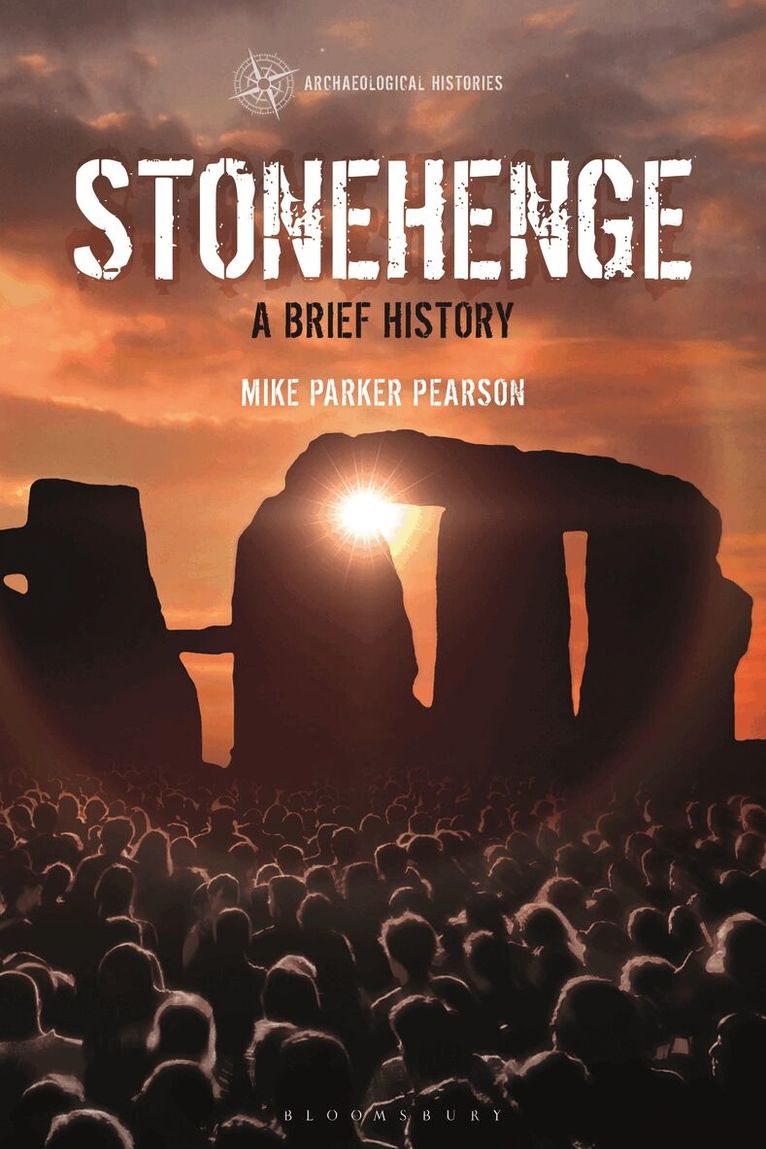
Stonehenge is one of the world’s most famous monuments. Who built it, how and why are questions that have endured for at least 900 years, but modern methods of investigation are now able to offer up a completely new understanding of this iconic stone circle.Stonehenge’s history straddles the transition from the Stone Age to the Bronze Age, though its story began long before it was built. Serving initially as a burial ground, it evolved over time into a sacred place for gathering, feasting and building, and was remodelled several times as different peoples arrived in the area along with new technologies and customs. In more recent centuries it has found itself the centre of excavations, political protests and even conspiracy theories, embedding itself in the consciousness of the modern world.In this book Mike Parker Pearson draws on two decades of research, the results of recent excavations and cutting-edge scientific analyses to uncover many of the secrets that this prehistoric stone circle has kept for 5,000 years. In doing so, he paints the most comprehensive picture yet of the history of Stonehenge, from its origins up to the 21st century, and reveals how in some ways trying to explain its power of attraction in the present is harder than explaining its purpose in the ancient past.
970 kr
Skickas inom 10-15 vardagar
Stonehenge is one of the world’s most famous monuments. Who built it, how and why are questions that have endured for at least 900 years, but modern methods of investigation are now able to offer up a completely new understanding of this iconic stone circle.Stonehenge’s history straddles the transition from the Stone Age to the Bronze Age, though its story began long before it was built. Serving initially as a burial ground, it evolved over time into a sacred place for gathering, feasting and building, and was remodelled several times as different peoples arrived in the area along with new technologies and customs. In more recent centuries it has found itself the centre of excavations, political protests and even conspiracy theories, embedding itself in the consciousness of the modern world.In this book Mike Parker Pearson draws on two decades of research, the results of recent excavations and cutting-edge scientific analyses to uncover many of the secrets that this prehistoric stone circle has kept for 5,000 years. In doing so, he paints the most comprehensive picture yet of the history of Stonehenge, from its origins up to the 21st century, and reveals how in some ways trying to explain its power of attraction in the present is harder than explaining its purpose in the ancient past.
279 kr
Skickas inom 7-10 vardagar
Winchester's rich heritage is brought to life in this uniquely accessible overview of the city's long and intricate physical and cultural history. Examining a wealth of archaeological evidence alongside surviving documentary sources, Susanne Haselgrove and Katherine Barclay paint a compelling picture of its waxing and waning fortunes, from prehistoric origins to early-medieval royal and ecclesiastical powerhouse, and subsequent decline to rebirth in 21st-century popular culture.Although today Winchester is perhaps best-known globally as one of the key battlegrounds of the video-game Assassin’s Creed Valhalla, its history and resonance in the contemporary world is far more complex. At its zenith the city held a prominent position on the national and international stage as a hub of learning and art, and this has endured into the modern age with the establishing of King Alfred as an icon of Britain's imperial past and the birth of environmentalism at the 'Battle of Twyford Down'.A key part of this story is provided by the results of the ground-breaking and methodologically innovative excavations of the 1960s to 1970s, which played a critical role in the development of urban archaeology as we now know it. Across 19 sites, 3,000 volunteers brought to light the great halls of the kings and bishops, the magnificent Anglo-Saxon minsters and the homes and workshops of ordinary people. Post-excavation analyses revealed the crops and animals grown and imported into the area, how burial customs changed over time and the health of the local populations, while later excavations changed our view of medieval lepers, possibly unearthed King Alfred’s body and revealed where two million First World War soldiers lived.
901 kr
Skickas inom 10-15 vardagar
Winchester's rich heritage is brought to life in this uniquely accessible overview of the city's long and intricate physical and cultural history. Examining a wealth of archaeological evidence alongside surviving documentary sources, Susanne Haselgrove and Katherine Barclay paint a compelling picture of its waxing and waning fortunes, from prehistoric origins to early-medieval royal and ecclesiastical powerhouse, and subsequent decline to rebirth in 21st-century popular culture.Although today Winchester is perhaps best-known globally as one of the key battlegrounds of the video-game Assassin’s Creed Valhalla, its history and resonance in the contemporary world is far more complex. At its zenith the city held a prominent position on the national and international stage as a hub of learning and art, and this has endured into the modern age with the establishing of King Alfred as an icon of Britain's imperial past and the birth of environmentalism at the 'Battle of Twyford Down'.A key part of this story is provided by the results of the ground-breaking and methodologically innovative excavations of the 1960s to 1970s, which played a critical role in the development of urban archaeology as we now know it. Across 19 sites, 3,000 volunteers brought to light the great halls of the kings and bishops, the magnificent Anglo-Saxon minsters and the homes and workshops of ordinary people. Post-excavation analyses revealed the crops and animals grown and imported into the area, how burial customs changed over time and the health of the local populations, while later excavations changed our view of medieval lepers, possibly unearthed King Alfred’s body and revealed where two million First World War soldiers lived.
915 kr
Kommande
Aquileia is the largest archaeological site in Northern Italy, which once stood at the geo-political crossroad of cultural exchanges between Italy, the central-eastern Mediterranean and continental Europe. This book explores its beginnings as a Latin frontier colony which, over time, became a flourishing commercial centre of a cosmopolitan nature. By the end of the Imperial Age, it once again became the gateway to Italy, reaffirming its strategic and military role at the time of the barbarian invasions and the spread of Christianity.The archaeological discoveries and results of scientific research made over the last thirtyyears offer the reader an accessible and engaging history of the site that has existed from the 8th century BCE to the present day. The concluding chapters are dedicated to the rediscovery of the ancient city, its political use during Fascism and the modern investments that transformed Aquileia into one of the major archaeological tourism centres in Italy.
286 kr
Kommande
Aquileia is the largest archaeological site in Northern Italy, which once stood at the geo-political crossroad of cultural exchanges between Italy, the central-eastern Mediterranean and continental Europe. This book explores its beginnings as a Latin frontier colony which, over time, became a flourishing commercial centre of a cosmopolitan nature. By the end of the Imperial Age, it once again became the gateway to Italy, reaffirming its strategic and military role at the time of the barbarian invasions and the spread of Christianity.The archaeological discoveries and results of scientific research made over the last thirtyyears offer the reader an accessible and engaging history of the site that has existed from the 8th century BCE to the present day. The concluding chapters are dedicated to the rediscovery of the ancient city, its political use during Fascism and the modern investments that transformed Aquileia into one of the major archaeological tourism centres in Italy.
306 kr
Skickas inom 7-10 vardagar
Focusing on the archaeology and history of Butrint in southern Albania, this book begins by looking at its foundation in the Bronze Age period through to the contemporary era, where it is now a popular tourist destination. Richard Hodges, who has excavated at the site for over thirty years and is a trustee of the Butrint Management Foundation, looks at the Mediterranean seaport and its changing landscape over the course of five thousand years.Organized chronologically, Hodges presents the latest archaeological data and surveys on specific individual sites ranging from the ancient Greek sanctuary and the Roman colony to the early Medieval Byzantine kastron and the arrival of the Venetians in 1386. He concludes with the arrival of the Italian Archaeological Mission in 1928, whereupon Butrint’s long and glorious history was discovered, cementing its mark as the premier archaeological site in Albania. Designed for students and general readers, this book offers an accessible and lively account of Butrint’s fascinating cultural history.
901 kr
Skickas inom 10-15 vardagar
Focusing on the archaeology and history of Butrint in southern Albania, this book begins by looking at its foundation in the Bronze Age period through to the contemporary era, where it is now a popular tourist destination. Richard Hodges, who has excavated at the site for over thirty years and is a trustee of the Butrint Management Foundation, looks at the Mediterranean seaport and its changing landscape over the course of five thousand years.Organized chronologically, Hodges presents the latest archaeological data and surveys on specific individual sites ranging from the ancient Greek sanctuary and the Roman colony to the early Medieval Byzantine kastron and the arrival of the Venetians in 1386. He concludes with the arrival of the Italian Archaeological Mission in 1928, whereupon Butrint’s long and glorious history was discovered, cementing its mark as the premier archaeological site in Albania. Designed for students and general readers, this book offers an accessible and lively account of Butrint’s fascinating cultural history.
1 245 kr
Skickas inom 10-15 vardagar
Dura-Europos is one of Syria’s most important archaeological sites. Situated on the edge of the Euphrates river, it was the subject of extensive excavations in the 1920s and 30s by teams from Yale University and the Académie des Inscriptions et Belles-Lettres.Controlled variously by Seleucid, Parthian, and Roman powers, the site was one of impressive religious and linguistic diversity: it was home to at least nineteen sanctuaries, amongst them a Synagogue and a Christian building, and many languages, including Greek, Latin, Persian, Palmyrene, and Hebrew which were excavated on inscriptions, parchments, and graffiti.Based on the author’s work excavating at the site with the Mission Franco-Syrienne d’Europos-Doura and extensive archival research, this book provides an overview of the site and its history, and traces the story of its investigation from archaeological discovery to contemporary destruction.
279 kr
Skickas
This book traces the formation of the archaeological site of Carthage and how it re-emerged in the minds of European antiquarians and travellers in the early modern world. For almost 1,600 years the ancient city sat on the north coast of Africa, dominating the central Mediterranean until its fall in 698 CE. One of the oldest cities in the Mediterranean, it was founded in legend by the Tyrian queen Dido and destroyed after epic wars with Rome. It was soon reborn as a Roman city, and late in antiquity evolved into a centre for Christian worship. In the 17th and 18th centuries, when European explorers first arrived, searching for the site of Carthage, they were amazed that almost nothing of its former glory remained and lamented its loss. The gradual and sometimes controversial exploration of Carthage has, over the last two centuries, brought the story of this renowned ancient city back into the public imagination. From the first discovery of Punic artifacts to the plunder of the site for the enrichment of European museums, the book follows the many personalities whose interests and diligence led to the establishment of scientific archaeological excavations and the re-emergence of Carthage from the ruins.
365 kr
Skickas inom 3-6 vardagar
The ancient Mesoptamian city of Ur was a Sumerian city state which flourished as a centre of trade and civilisation between 2800–2000 BCE. However, in the recent past it suffered from the disastrous Gulf war and from neglect. It still remains a potent symbol for people of all faiths and will have an important role to play in the future.This account of Ur's past looks at both the ancient city and its evolution over centuries, and its archaeological interpretation in more recent times. From the 19th century explorers and their identification of the site of Mukayyar as the Biblical city of Ur, the study proceeds to look in detail at the archaeologist Leonard Woolley and his key discoveries during the 1920s and 30s. Using the findings as a framework and utilising the latest evidence from environmental, historical and archaeological studies, the volume explores the site's past in chronological order from the Ubaid period in the 5th millennium to the death of Alexander. It looks in detail at the architectural remains: the sacred buildings, royal graves and also the private housing which provides a unique record of life 4000 years ago. The volume also describes the part played by Ur in the Gulf war and discusses the problems raised for archaeologists in the war's aftermath.
970 kr
Skickas inom 10-15 vardagar
Knossos is one of the most important sites in the ancient Mediterranean. It remained amongst the largest settlements on the island of Crete from the Neolithic until the late Roman times, but aside from its size it held a place of particular significance in the mythological imagination of Greece and Rome as the seat of King Minos, the location of the Labyrinth and the home of the Minotaur.Sir Arthur Evans’ discovery of ‘the Palace of Minos’ has indelibly associated Knossos in the modern mind with the ‘lost’ civilisation of Bronze Age Crete. The allure of this ‘lost civilisation’, together with the considerable achievements of ‘Minoan’ artists and craftspeople, remain a major attraction both to scholars and to others outside the academic world as a bastion of a romantic approach to the past.In this volume, James Whitley provides an up-to-date guide to the site and its function from the Neolithic until the present day. This study includes a re-appraisal of Bronze Age palatial society, as well as an exploration of the history of Knossos in the archaeological imagination. In doing so he takes a critical look at the guiding assumptions of Evans and others, reconstructing how and why the received view of this ancient settlement has evolved from the Iron Age up to the modern era.
970 kr
Skickas inom 10-15 vardagar
This book traces the formation of the archaeological site of Carthage and how it re-emerged in the minds of European antiquarians and travellers in the early modern world. For almost 1,600 years the ancient city sat on the north coast of Africa, dominating the central Mediterranean until its fall in 698 CE. One of the oldest cities in the Mediterranean, it was founded in legend by the Tyrian queen Dido and destroyed after epic wars with Rome. It was soon reborn as a Roman city, and late in antiquity evolved into a centre for Christian worship. In the 17th and 18th centuries, when European explorers first arrived, searching for the site of Carthage, they were amazed that almost nothing of its former glory remained and lamented its loss. The gradual and sometimes controversial exploration of Carthage has, over the last two centuries, brought the story of this renowned ancient city back into the public imagination. From the first discovery of Punic artifacts to the plunder of the site for the enrichment of European museums, the book follows the many personalities whose interests and diligence led to the establishment of scientific archaeological excavations and the re-emergence of Carthage from the ruins.
331 kr
Skickas
PROSE Award for Excellence in Archeology and Ancient History Finalist 2019From the palaces of Homeric epic to the ancestral seat of Roman emperors, Troy in antiquity was a place couched in myth. But for nearly four millennia, Troy was also a living city, inhabited by real people. Troy today is therefore a site of major archaeological and historical significance. In the modern world, however, Troy has become as much a symbol as a site. From movies to computer viruses, from condom branding to reggae records, Troy is a word to conjure with. This book explores the significance of Troy in three areas: the mythic, the archaeological, and the cultural, and highlights the continuing importance of the site today. Including a survey of the archaeological remains of Troy as they are currently understood, the volume presents an all-inclusive overview of the site's history, from the Troy of Homer to Classical Antiquity and beyond. The modern day cultural significance of the Trojan War is also discussed, including re-tellings of the stories or representations of the site and myth, and the more abstract use of Troy as a symbol – as a brand for consumer goods, and as a metaphor for contemporary conflicts.
365 kr
Skickas inom 10-15 vardagar
Dura-Europos is one of Syria’s most important archaeological sites. Situated on the edge of the Euphrates river, it was the subject of extensive excavations in the 1920s and 30s by teams from Yale University and the Académie des Inscriptions et Belles-Lettres.Controlled variously by Seleucid, Parthian, and Roman powers, the site was one of impressive religious and linguistic diversity: it was home to at least nineteen sanctuaries, amongst them a Synagogue and a Christian building, and many languages, including Greek, Latin, Persian, Palmyrene, and Hebrew which were excavated on inscriptions, parchments, and graffiti.Based on the author’s work excavating at the site with the Mission Franco-Syrienne d’Europos-Doura and extensive archival research, this book provides an overview of the site and its history, and traces the story of its investigation from archaeological discovery to contemporary destruction.
1 245 kr
Skickas inom 10-15 vardagar
PROSE Award for Excellence in Archeology and Ancient History Finalist 2019From the palaces of Homeric epic to the ancestral seat of Roman emperors, Troy in antiquity was a place couched in myth. But for nearly four millennia, Troy was also a living city, inhabited by real people. Troy today is therefore a site of major archaeological and historical significance. In the modern world, however, Troy has become as much a symbol as a site. From movies to computer viruses, from condom branding to reggae records, Troy is a word to conjure with. This book explores the significance of Troy in three areas: the mythic, the archaeological, and the cultural, and highlights the continuing importance of the site today. Including a survey of the archaeological remains of Troy as they are currently understood, the volume presents an all-inclusive overview of the site's history, from the Troy of Homer to Classical Antiquity and beyond. The modern day cultural significance of the Trojan War is also discussed, including re-tellings of the stories or representations of the site and myth, and the more abstract use of Troy as a symbol – as a brand for consumer goods, and as a metaphor for contemporary conflicts.
305 kr
Skickas
Knossos is one of the most important sites in the ancient Mediterranean. It remained amongst the largest settlements on the island of Crete from the Neolithic until the late Roman times, but aside from its size it held a place of particular significance in the mythological imagination of Greece and Rome as the seat of King Minos, the location of the Labyrinth and the home of the Minotaur.Sir Arthur Evans’ discovery of ‘the Palace of Minos’ has indelibly associated Knossos in the modern mind with the ‘lost’ civilisation of Bronze Age Crete. The allure of this ‘lost civilisation’, together with the considerable achievements of ‘Minoan’ artists and craftspeople, remain a major attraction both to scholars and to others outside the academic world as a bastion of a romantic approach to the past.In this volume, James Whitley provides an up-to-date guide to the site and its function from the Neolithic until the present day. This study includes a re-appraisal of Bronze Age palatial society, as well as an exploration of the history of Knossos in the archaeological imagination. In doing so he takes a critical look at the guiding assumptions of Evans and others, reconstructing how and why the received view of this ancient settlement has evolved from the Iron Age up to the modern era.
1 619 kr
Skickas inom 10-15 vardagar
The ancient Mesoptamian city of Ur was a Sumerian city state which flourished as a centre of trade and civilisation between 2800–2000 BCE. However, in the recent past it suffered from the disastrous Gulf war and from neglect. It still remains a potent symbol for people of all faiths and will have an important role to play in the future.This account of Ur's past looks at both the ancient city and its evolution over centuries, and its archaeological interpretation in more recent times. From the 19th century explorers and their identification of the site of Mukayyar as the Biblical city of Ur, the study proceeds to look in detail at the archaeologist Leonard Woolley and his key discoveries during the 1920s and 30s. Using the findings as a framework and utilising the latest evidence from environmental, historical and archaeological studies, the volume explores the site's past in chronological order from the Ubaid period in the 5th millennium to the death of Alexander. It looks in detail at the architectural remains: the sacred buildings, royal graves and also the private housing which provides a unique record of life 4000 years ago. The volume also describes the part played by Ur in the Gulf war and discusses the problems raised for archaeologists in the war's aftermath.