Ashgate Studies in Human Factors for Flight Operations – Serie
Visar alla böcker i serien Ashgate Studies in Human Factors for Flight Operations. Handla med fri frakt och snabb leverans.
11 produkter
11 produkter
727 kr
Skickas inom 10-15 vardagar
Why would highly skilled, well-trained pilots make errors that lead to accidents when they had safely completed many thousands of previous flights? The majority of all aviation accidents are attributed primarily to human error, but this is often misinterpreted as evidence of lack of skill, vigilance, or conscientiousness of the pilots. The Limits of Expertise is a fresh look at the causes of pilot error and aviation accidents, arguing that accidents can be understood only in the context of how the overall aviation system operates. The authors analyzed in great depth the 19 major U.S. airline accidents from 1991-2000 in which the National Transportation Safety Board (NTSB) found crew error to be a causal factor. Each accident is reviewed in a separate chapter that examines events and crew actions and explores the cognitive processes in play at each step. The approach is guided by extensive evidence from cognitive psychology that human skill and error are opposite sides of the same coin. The book examines the ways in which competing task demands, ambiguity and organizational pressures interact with cognitive processes to make all experts vulnerable to characteristic forms of error. The final chapter identifies themes cutting across the accidents, discusses the role of chance, criticizes simplistic concepts of causality of accidents, and suggests ways to reduce vulnerability to these catastrophes. The authors' complementary experience allowed a unique approach to the study: accident investigation with the NTSB, cognitive psychology research both in the lab and in the field, enormous first-hand experience of piloting, and application of aviation psychology in both civil and military operations. This combination allowed the authors to examine and explain the domain-specific aspects of aviation operations and to extend advances in basic research in cognition to complex issues of human performance in the real world. Although The Limits of Expertise is directed to aviation operations, the implications are clear for understanding the decision processes, skilled performance and errors of professionals in many domains, including medicine.
2 181 kr
Skickas inom 10-15 vardagar
Despite growing concern with the effects of concurrent task demands on human performance, and research demonstrating that these demands are associated with vulnerability to error, so far there has been only limited research into the nature and range of concurrent task demands in real-world settings. This book presents a set of NASA studies that characterize the nature of concurrent task demands confronting airline flight crews in routine operations, as opposed to emergency situations. The authors analyze these demands in light of what is known about cognitive processes, particularly those of attention and memory, with the focus upon inadvertent omissions of intended actions by skilled pilots. The studies reported within the book employed several distinct but complementary methods: ethnographic observations, analysis of incident reports submitted by pilots, and cognitive task analysis. They showed that concurrent task management comprises a set of issues distinct from (though related to) mental workload, an area that has been studied extensively by human factors researchers for more than 30 years. This book will be of direct relevance to aviation psychologists and to those involved in aviation training and operations. It will also interest individuals in any domain that involves concurrent task demands, for example the work of emergency room medical teams. Furthermore, the countermeasures presented in the final chapter to reduce vulnerability to errors associated with concurrent task demands can readily be adapted to work in diverse domains.
2 385 kr
Skickas inom 10-15 vardagar
Vision is the dominant sense used by pilots and visual misperception has been identified as the primary contributing factor in numerous aviation mishaps, resulting in hundreds of fatalities and major resource loss. Despite physiological limitations for sensing and perceiving their aviation environment, pilots can often make the required visual judgments with a high degree of accuracy and precision. At the same time, however, visual illusions and misjudgments have been cited as the probable cause of numerous aviation accidents, and in spite of technological and instructional efforts to remedy some of the problems associated with visual perception in aviation, mishaps of this type continue to occur. Clearly, understanding the role of visual perception in aviation is key to improving pilot performance and reducing aviation mishaps. This book is the first dedicated to the role of visual perception in aviation, and it provides a comprehensive, single-source document encompassing all aspects of aviation visual perception. Thus, this book includes the foundations of visual and vestibular sensation and perception; how visual perceptual abilities are assessed in pilots; the pilot's perspective of visual flying; a summary of human factors research on the visual guidance of flying; examples of specific visual and vestibular illusions and misperceptions; mishap analyses from military, commercial and general aviation; and, finally, how this knowledge is being used to better understand visual perception in aviation's next generation. Aviation Visual Perception: Research, Misperception and Mishaps is intended to be used for instruction in academia, as a resource for human factors researchers, design engineers, and for instruction and training in the pilot community.
2 249 kr
Skickas inom 10-15 vardagar
Whereas traditional classroom instruction requires pilots to be pulled 'off the line', a training facility to be maintained and instructors to be compensated, e-learning is extremely cost-effective and therefore an attractive alternative. However, e-learning only saves money if the training is effective. Eager to reap financial benefits, e-learning courses have a history of varying dramatically in quality. The poorest courses are those that directly convert classroom-based presentations to an online format, not recognizing that computer-based instruction is an entirely different medium. Addressing this issue directly, e-Learning in Aviation explores the characteristics of computer-based course design and multimedia that are associated with improved learning. It then provides guidance regarding how to use research-based instructional design principles to plan, design, develop, and implement an e-Learning course within an aviation organization and continually evaluate whether or not the course is accomplishing instructional goals. A blended learning strategy, which incorporates both face-to-face and computer-based instruction, is suggested as the most appropriate choice for the majority of aviation companies. The goal of this approach is to utilize e-Learning as a tool to reduce time at the training centre and thereby increase pilot productivity and potentially improve the quality of training. Although the examples within this book focus on pilot training, the suggestions and guidelines are applicable to all employee groups within the industry.
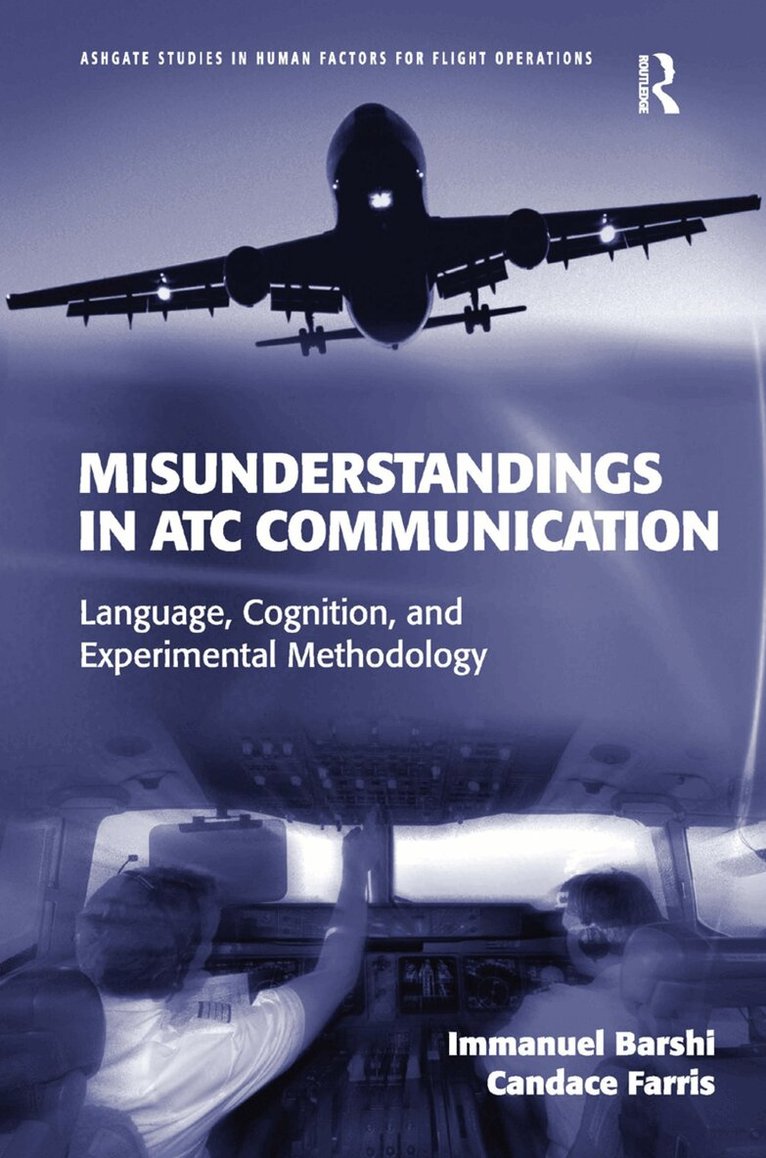
Misunderstandings in ATC Communication
Language, Cognition, and Experimental Methodology
Inbunden, Engelska, 2013
2 199 kr
Effective radio communication between ATC and pilots has long been recognized as an important element of aviation safety. In recognition of the role miscommunications play in aviation incidents and accidents, the International Civil Aviation Organization (ICAO) recently introduced language proficiency requirements for all flight personnel in all ICAO member states. Using an effective and economical experimental paradigm, the research described here teases apart the complex combination of factors (e.g. speech rate, controller message length, English language proficiency, cognitive workload) believed to contribute to miscommunications between controllers and pilots. Misunderstandings in ATC Communication offers an in-depth report of a seminal study in aviation communication, which until now has only been available in the form of an unpublished dissertation. In addition, it offers a recent extension of that work, the authors’ reflections on the research process, and a thorough review of the aviation communication literature. Graduate students and researchers who wish to address real-world problems will appreciate the simple elegance of the experimental paradigm that has been used to address a wide range of theoretical and applied interdisciplinary research questions. The book will appeal to scholars in the fields of human factors, linguistics, cognitive psychology, applied linguistics and second-language education and assessment. It is also of direct relevance to government and industry decision-makers and operators as they strive to implement the ICAO requirements, and to improve aviation safety.
727 kr
Skickas inom 10-15 vardagar
Despite growing concern with the effects of concurrent task demands on human performance, and research demonstrating that these demands are associated with vulnerability to error, so far there has been only limited research into the nature and range of concurrent task demands in real-world settings. This book presents a set of NASA studies that characterize the nature of concurrent task demands confronting airline flight crews in routine operations, as opposed to emergency situations. The authors analyze these demands in light of what is known about cognitive processes, particularly those of attention and memory, with the focus upon inadvertent omissions of intended actions by skilled pilots. The studies reported within the book employed several distinct but complementary methods: ethnographic observations, analysis of incident reports submitted by pilots, and cognitive task analysis. They showed that concurrent task management comprises a set of issues distinct from (though related to) mental workload, an area that has been studied extensively by human factors researchers for more than 30 years. This book will be of direct relevance to aviation psychologists and to those involved in aviation training and operations. It will also interest individuals in any domain that involves concurrent task demands, for example the work of emergency room medical teams. Furthermore, the countermeasures presented in the final chapter to reduce vulnerability to errors associated with concurrent task demands can readily be adapted to work in diverse domains.
768 kr
Skickas inom 10-15 vardagar
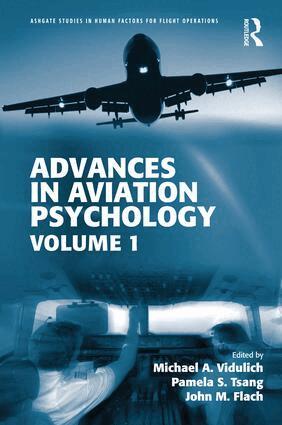
Aviation remains one of the most active and challenging domains for human factors and applied psychology. Since 1981, the biennial International Symposium on Aviation Psychology (ISAP) has been convened for the purposes of (a) presenting the latest research on human performance problems and opportunities within aviation systems, (b) envisioning design solutions that best utilize human capabilities for creating safe and efficient aviation systems, and (c) bringing together scientists, research sponsors, and operators in an effort to bridge the gap between research and application. Though rooted in the presentations of the 17th ISAP, held in 2013 in Dayton, Ohio, Advances in Aviation Psychology is not simply a collection of selected proceeding papers. Based upon the potential impact on emerging trends, current debates or enduring issues present in their work, select authors were invited to expand on their work following the benefit of interactions at the symposium. The invited authors include the featured keynote and plenary speakers who are all leading scientists and prominent researchers that were selected to participate at the symposium. These contributions are supplemented by additional contributors whose work best reflects significant developments in aviation psychology. Consequently the volume includes visions for the next generation of air management and air traffic control, the integration of unmanned (i.e. remotely piloted vehicles) into operational air spaces, and the use of advanced information technologies (e.g. synthetic task environments) for research and training. This book is the first in a series of volumes to be published in conjunction with each subsequent ISAP. The aim of each volume is not only to report the latest findings in aviation psychology but also to suggest new directions for advancing the field.
2 317 kr
Skickas inom 10-15 vardagar
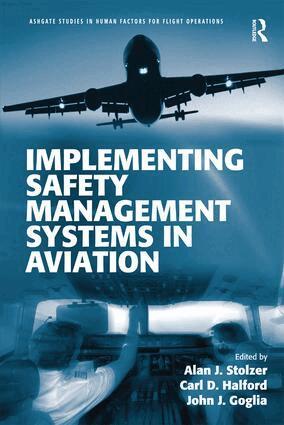
The International Civil Aviation Organization has mandated that all of its member states implement Safety Management Systems (SMS) in their aviation industries. Responding to that call, many countries are now in various stages of SMS development, implementation, and rulemaking. In their first book, Safety Management Systems in Aviation, Stolzer, Halford, and Goglia provided a strong theoretical framework for SMS, along with a brief discourse on SMS implementation. This follow-up book provides a very brief overview of SMS and offers significant guidance and best practices on implementing SMS programs. Very specific guidance is provided by industry experts from government, industry, academia, and consulting, who share their invaluable insights from first-hand experience of all aspects of effective SMS programs. The contributing authors come from all facets of aviation, including regulation and oversight, airline, general aviation, military, airport, maintenance, and industrial safety. Chapters address important topics such as how to develop a system description and perform task analyses, perspectives on data sharing, strategies for gaining management support, establishing a safety culture, approaches to auditing, integrating emergency planning and SMS, and more. Also included is a fictional narrative/story that can be used as a case study on SMS implementation. Implementing Safety Management Systems in Aviation is written for safety professionals and students alike.
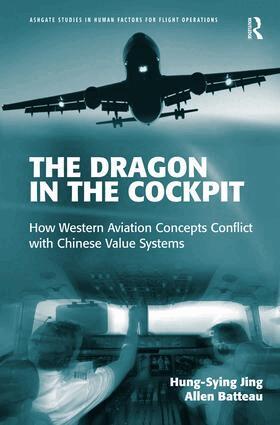
Dragon in the Cockpit
How Western Aviation Concepts Conflict with Chinese Value Systems
Inbunden, Engelska, 2015
2 317 kr
Skickas inom 10-15 vardagar
The purpose of The Dragon in the Cockpit is to enhance the mutual understanding between Western aviation human-factors practitioners and the Chinese aviation community by describing some of the fundamental Chinese cultural characteristics pertinent to the field of flight safety. China’s demand for air transportation is widely expected to increase further, and the Chinese aviation community are now also designing their own commercial aircraft, the COMAC C-919. Consequently, the interactions in the air between the West and China are anticipated to become far more extensive and dynamic. However, due to the multi-faceted nature of Chinese culture, it is sometimes difficult for Westerners to understand Chinese thought and ways, sometimes to the detriment of aviation safety. This book provides crucial insights into Chinese culture and how it manifests itself during flight operations, as well as highlighting ways in which Western technology and Chinese culture clash within the cockpit. Science and technology studies (STS) have demonstrated that sophisticated technologies embed cultural assumptions, usually in subtle ways. These cultural assumptions 'bite back' when the technology is used in an unfamiliar cultural context. By creating the insider’s perspective on the cultural/technological assumptions of the world’s fastest growing industrial economy, this book seeks to minimize the accidents and damage resulting from technological/cultural misunderstandings and misperceptions.
727 kr
Skickas inom 10-15 vardagar
The International Civil Aviation Organization has mandated that all of its member states implement Safety Management Systems (SMS) in their aviation industries. Responding to that call, many countries are now in various stages of SMS development, implementation, and rulemaking. In their first book, Safety Management Systems in Aviation, Stolzer, Halford, and Goglia provided a strong theoretical framework for SMS, along with a brief discourse on SMS implementation. This follow-up book provides a very brief overview of SMS and offers significant guidance and best practices on implementing SMS programs. Very specific guidance is provided by industry experts from government, industry, academia, and consulting, who share their invaluable insights from first-hand experience of all aspects of effective SMS programs. The contributing authors come from all facets of aviation, including regulation and oversight, airline, general aviation, military, airport, maintenance, and industrial safety. Chapters address important topics such as how to develop a system description and perform task analyses, perspectives on data sharing, strategies for gaining management support, establishing a safety culture, approaches to auditing, integrating emergency planning and SMS, and more. Also included is a fictional narrative/story that can be used as a case study on SMS implementation. Implementing Safety Management Systems in Aviation is written for safety professionals and students alike.
1 705 kr
Skickas inom 10-15 vardagar
Aviation remains one of the most active and challenging domains for human factors and applied psychology. Since 1981, the biennial International Symposium on Aviation Psychology (ISAP) has been convened for the purposes of (a) presenting the latest research on human performance problems and opportunities within aviation systems, (b) envisioning design solutions that best utilize human capabilities for creating safe and efficient aviation systems, and (c) bringing together scientists, research sponsors, and operators in an effort to bridge the gap between research and application. Though rooted in the presentations of the 17th ISAP, held in 2013 in Dayton, Ohio, Advances in Aviation Psychology is not simply a collection of selected proceeding papers. Based upon the potential impact on emerging trends, current debates or enduring issues present in their work, select authors were invited to expand on their work following the benefit of interactions at the symposium. The invited authors include the featured keynote and plenary speakers who are all leading scientists and prominent researchers that were selected to participate at the symposium. These contributions are supplemented by additional contributors whose work best reflects significant developments in aviation psychology. Consequently the volume includes visions for the next generation of air management and air traffic control, the integration of unmanned (i.e. remotely piloted vehicles) into operational air spaces, and the use of advanced information technologies (e.g. synthetic task environments) for research and training. This book is the first in a series of volumes to be published in conjunction with each subsequent ISAP. The aim of each volume is not only to report the latest findings in aviation psychology but also to suggest new directions for advancing the field.