Battleground Books: WWII - Böcker
Visar alla böcker i serien Battleground Books: WWII. Handla med fri frakt och snabb leverans.
2 produkter
2 produkter
157 kr
Skickas
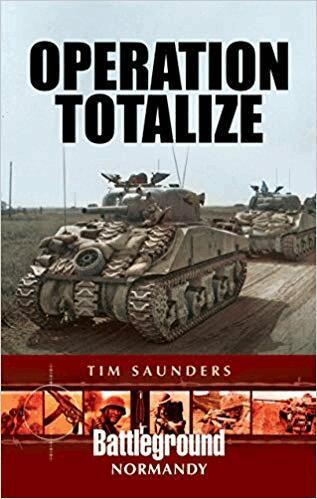
By early August 1944 the Germans fighting in Normandy had been worn down by the battles around Caen, while to the west, the American breakout was finally gaining momentum. Now was the time to launch II Canadian Corps south towards Falaise. With much of the German armour having been stripped away for the Mortain Counter-Attack, hopes ran high that the Corps, reinforced with British tanks, the 51st Highland and the Polish Armoured Divisions, would repeat the success of their predecessors in the Battle of Amiens.An innovative change of tactics to a night armoured assault and the conversion of seventy-two self-propelled guns to armoured personnel carriers for the accompanying infantry was very successful, but up against their implacable foes, 12th Hitlerjugend SS Panzer Division, the pause for bombing allowed Kurt Panzer' Meyer to deploy his division. Consequently, when the 4th Canadian and Polish Armoured Divisions were launched into their first battle they made frustratingly little progress. As the Canadians advanced over the following days, the battle degenerated into a costly fight for ground as the Hitlerjugend struggled to contain the inexperienced Poles and Canadians.Operation Totalize is renowned for the death of SS panzer Ace Michael Wittmann at the hands of Trooper Joe Ekins and the destruction of Worthington Force, the result of a navigational error.
163 kr
Skickas
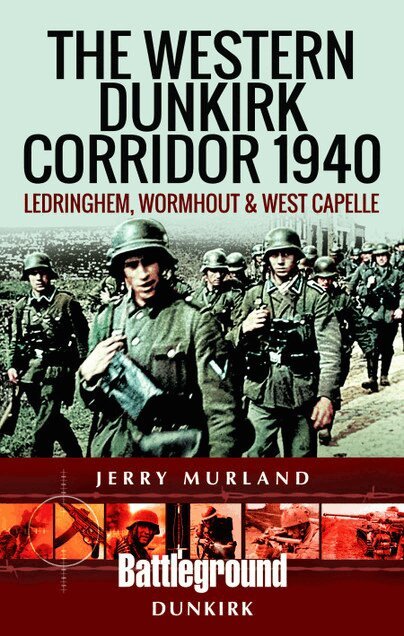
The story of 144 Brigade's defence of Wormhoudt and Bambecque must rank in importance alongside the defence of Cassel and Hazebrouck by 145 Brigade; however, what is often forgotten in the uncertainty that surrounded Wormhoudt and Bambeque is the heroic defence of West Cappel and Vwyfeg (les Cinq Chemins today) by the Welsh Guards and the 1/Fife and Forfar Yeomanry (1/F&F Yeomanry). Brigadier Norman's composite brigade was the final piece in the jigsaw of defence on the western flank of the Dunkerque Corridor and, after the last stand of the 2/Royal Warwicks and the 8/Worcesters, Norman's Brigade, held the line south of Bergues, containing the attacking German units at great cost, until the perimeter at Dunkerque had been established. He and the remnants of his brigade left Yvfweg just as the Germans were entering it from the south. The full story of the evacuation of the BEF from Dunkerque can be read in Battleground Europe: The Dunkerque Perimeter and Evacuation 1940.The defence of Wormhoudt in 1940 has long been associated with the massacre of British servicemen after they had surrendered and been taken prisoner. The events in the barn at La Plaine au Bois will always be considered one of the most appalling acts of the Second World War, carried out by elements of the Liebstandarte Regiment, in what looked very much like revenge; a massacre that was almost second nature to this group of fanatical followers of Adolf Hitler. Up against the regular troops of the 2/Warwicks and their supporting units, the Liebstandarte found no easy victory at Wormhoudt in an encounter that saw their regimental commander, Gruppenfuhrer Otto Sepp' Dietrich, having to take shelter in a roadside ditch away from the fury of the Cheshire machine gunners. Then again, what is often overshadowed by the events in the barn is the series of other murders of civilians and British soldiers that took place as the Liebstandarte overwhelmed the fragile defence of the Warwicks. Captain Tony' Crook, the Warwicks' Medical Officer, draws attention to just one of these incidents as he was marched into captivity past the bodies of A Company men, who he felt sure had been murdered in cold blood. Another incident involving the Worcesters at Bambecque is related by Lieutenant Roger Cleverley of C Company, who writes in his diary that all the wounded were shot by a commander of the Liebstandarte. Apart from hearsay and diary entries, there is little other evidence to support the deaths of these men but, in the opinion of the author, there is no doubt whatever that many British soldiers met a premature end after they had surrendered in the fields and on the pavements of Wormhoudt and Bambecque.