Cambridge Greek and Latin Classics - Imperial Library - Böcker
Visar alla böcker i serien Cambridge Greek and Latin Classics - Imperial Library. Handla med fri frakt och snabb leverans.
4 produkter
4 produkter
456 kr
Skickas inom 7-10 vardagar
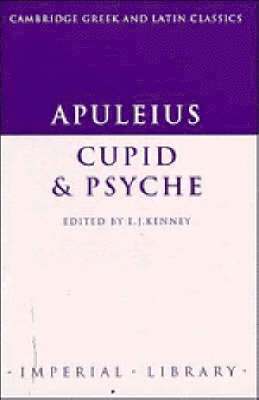
Apuleius' story of Cupid and Psyche, the relationship of the human Soul with divine Love, is one of the great allegories of world literature. It forms an integral part of and profoundly illuminates the message of his novel Metamorphoses or The Golden Ass, which relates the adventures of a young man and his spiritual fall and redemption. To enrich and deepen his basic plot, the origins of which are obscure, Apuleius has combined poetic sources, Platonic philosophy and popular iconography in an unprecedented tour de force of literary creation. This edition sensitively elucidates the subtle art with which this transformation has been accomplished, and comprehensively illustrates both Apuleius' inventive handling of his various models and sources and the exuberant and idiosyncratic Latinity with forms the vehicle for it. It places in a fresh light the results of recent work on the ancient Novel and on Apuleius himself, and offers a stimulating, occasionally provocative, reading of his much-discussed text. The Latin is accompanied by a facing English translation, making the edition more accessible to students of comparative literature as well as to classicists.
545 kr
Skickas inom 7-10 vardagar
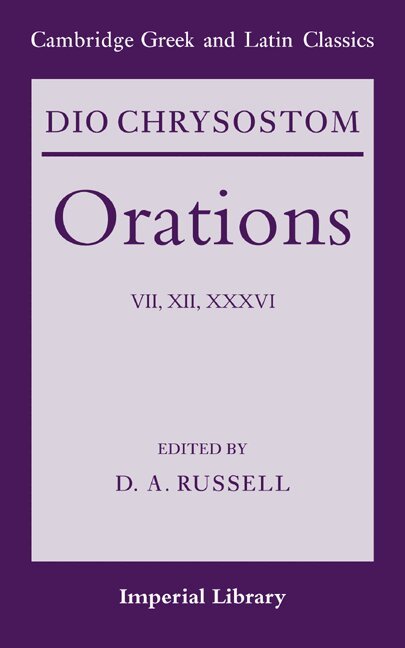
Dio of Prusa, known as Dio Chrysostom, was the foremost orator in the classical world in the first century AD. This new edition, with introduction and commentary, presents three of his speeches, all of which are masterpieces of the genre and are particularly important for the intellectual history of the period. In 'Euboicus' (7), Dio relates his shipwreck in Euboea and hospitable reception by an isolated group of hunters in the mountains, and uses this as the basis of an eloquent discourse on the simple life and the evils of urban societies. In 'Olympicus' (12), he addresses the assembled crowd at Olympia on theological themes suggested by the vast statue of Zeus by Phidias, one of the wonders of the ancient world. In 'Borystheniticus' (36), he recounts a lecture he gives to the people of Olbia, a remote Greek city in southern Russia, on the subject of the true 'city' and the 'heavenly city' which is the cosmos, whose periodical destruction and rebirth he describes in a colourful orientalizing myth. This is the first commentary in English on these speeches, and while it discusses textual and linguistic problems necessary for the understanding of Dio's text, its main thrust is to make Dio more accessible to students through an appreciation of the literary qualities of his orations and the context in which they were delivered.
575 kr
Skickas inom 7-10 vardagar
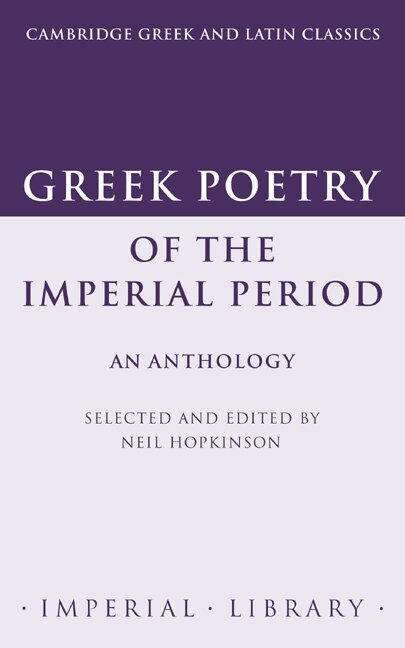
This book contains a selection of pagan Greek poetic texts ranging in date from the first to the sixth century AD. It makes easily accessible for the first time work by poets such as Quintus Smyrnaeus, Nonnus, Musaeus and Babrius hitherto neglected in Classical syllabuses. Genres represented include epic, epyllion, didactic, epigram, lyric and the verse fable. There is a brief general introduction, and in addition each section of detailed commentary is prefaced by a discussion of literary aspects of the poems and of their wider contexts. The book is intended primarily for undergraduate and graduate students of Greek, but will be of interest also to Classical scholars.
383 kr
Skickas inom 7-10 vardagar
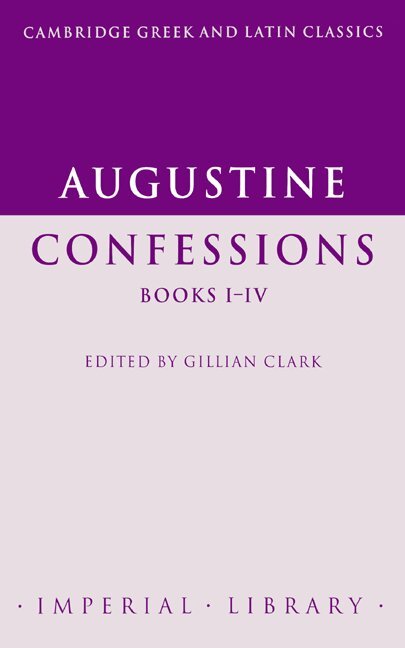
Augustine's Confessions is one of the most influential and most innovative works of Latin literature. Written in the author's early forties in the last years of the fourth century AD, they reflect on his life and on the activity of remembering and interpreting a life. Books I-IV are concerned with infancy and learning to talk, school days, sexual desire and adolescent rebellion, intense friendships and intellectual exploration. Augustine evolves and analyses his past with all the resources of the reading which shaped his mind: Virgil and Cicero, Neoplatonism and the Bible. This edition, which aims to be usable by students who are new to Augustine, alerts readers to the verbal echoes and allusions of Augustine's brilliant and varied Latin, and explains his theological and philosophical questioning of what God is and what it is to be human.