E. J. Kenney - Böcker
Visar alla böcker från författaren E. J. Kenney. Handla med fri frakt och snabb leverans.
14 produkter
14 produkter
373 kr
Skickas inom 5-8 vardagar
Since it first appeared in 1961 this has been the standard critical edition of Ovid's love poems. For this new edition the text has been throughly revised to take account of published scholarship and the further thoughts of the editor. Conjectures have been admitted to both text and apparatus criticus more freely than in the first edition. Punctuation has been improved, spelling has been normalized, and the long poems have been paragraphed. The apparatus criticus now incorporates the reading of the important Berlin manuscript Hamilton 471 and such of the readings formerly reported in the Appendix of minor variants (now omitted) as are of critical significance; it has also been streamlined by the omission of explanatory material more conveniently accessible in commentaries.
114 kr
Skickas inom 5-8 vardagar
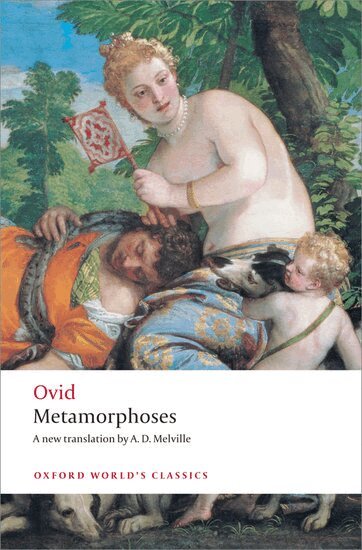
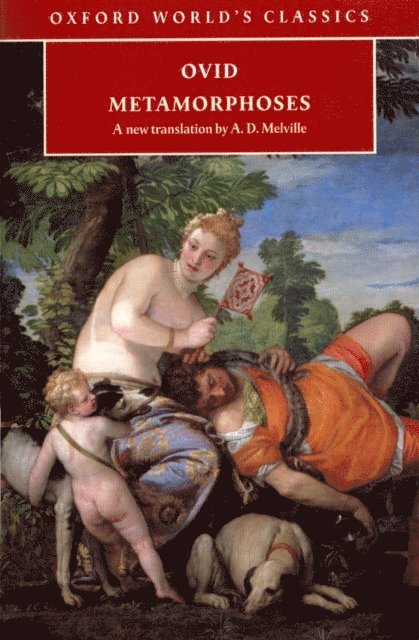
The theme of the Metamorphoses is change and transformation, as illustrated in Graeco-Roman myth and legend. On this ostensibly unifying thread Ovid strings together a vast and kaleidoscopic sequence of brilliant narratives, in which the often paradoxical and always arbitrary fates of his human and divine characters reflect the never-ending flux and reflux of the universe itself. ABOUT THE SERIES: For over 100 years Oxford World's Classics has made available the widest range of literature from around the globe. Each affordable volume reflects Oxford's commitment to scholarship, providing the most accurate text plus a wealth of other valuable features, including expert introductions by leading authorities, helpful notes to clarify the text, up-to-date bibliographies for further study, and much more.
396 kr
Skickas inom 7-10 vardagar
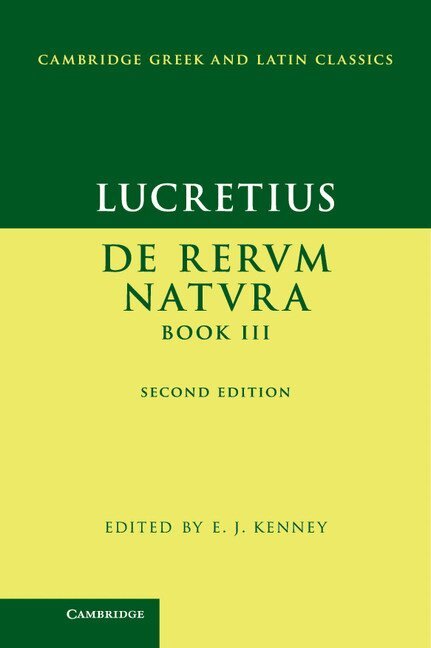
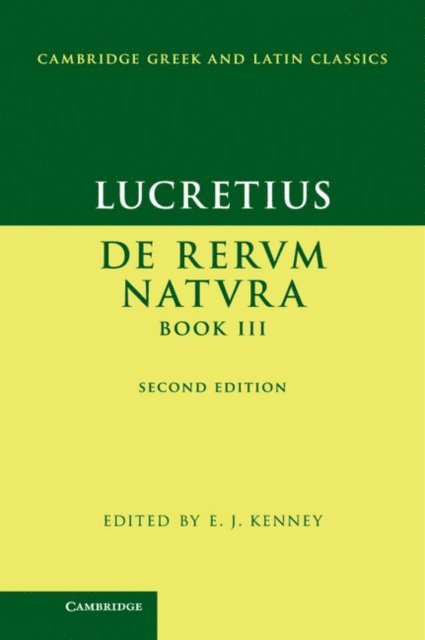
The third book of Lucretius' great poem on the workings of the universe is devoted entirely to expounding the implications of Epicurus' dictum that death does not matter, 'is nothing to us'. The soul is not immortal: it no more exists after the dissolution of the body than it had done before its birth. Only if this fact is accepted can men rid themselves of irrational fears and achieve the state of ataraxia, freedom from mental disturbance, on which the Epicurean definition of pleasure was based. To present this case Lucretius deploys the full range of poetic and rhetorical registers, soberly prohibitive, artfully decorative or passionately emotive as best suits his argument, reinforcing it with vivid and compelling imagery. This new edition has been completely revised, with a considerably enlarged Commentary and a new supplementary introduction taking account of the great amount of new scholarship of the last forty years.
The Cambridge History of Classical Literature: Volume 2, Latin Literature, Part 5, The Later Principate
Häftad, Engelska, 1983
554 kr
Skickas inom 7-10 vardagar
In the two centuries covered by this volume, from about AD 250 to 450, the Roman Empire suffered a period of chaos followed by drastic administrative and military reorganization. Simultaneously Christianity emerged as a new religious force, to be first recognized by Constantine and then eventually to become the official religion of the Roman state. The old pagan culture continued to provide the basis for education and the staple literary diet of the leisured classes; but it now had perforce to coexist and indeed to compete with a new, specifically Christian-oriented literature. These and associated developments are reflected in the Latin books of the period. Of the traditional forms and genres, some atrophied, some were transformed and invigorated; and yet others, such as autobiography in something like the modern sense, emerged in response to the pressures of the times. Professor Browning's masterly and comprehensive survey is mostly concerned with pagan literature, but takes into account Christian texts written in classical forms and directed at classically educated readers. The volume ends with a chapter on Apuleius by Professor Walsh, followed by a brief Epilogue from the same hand, sketching the part played by classical studies in the formation of the Latin literature of the Middle Ages.
The Cambridge History of Classical Literature: Volume 2, Latin Literature, Part 4, The Early Principate
Häftad, Engelska, 1983
741 kr
Skickas inom 7-10 vardagar
'Perfection is finality; finality is death'. The poets and prose writers of the first and early second centuries AD were not deterred by the towering stature of their Augustan predecessors from attempting new and often brilliant variations on the now traditional themes and genres. The so-called 'Silver' Age of Latin literature has tended to be characterized in terms of dismissive or question- begging stereotypes - 'decadent', 'rhetorical', 'baroque', 'mannerist' - as a substitute for close critical argument. From the sympathetic but searching appraisals in this volume the best writers of the age - Lucan, Seneca, Statius, Juvenal, Tacitus - emerge as men having something important to say and not merely technicians preoccupied with the most extravagant or paradoxical way of saying it. Complementary to these central figures as giving the age its special character and atmosphere are the minor poets, the satirists, the scholars and rhetoricians, the lesser historians, epistolographers and technical writers, whose varied activity provides the background to the main developments. The whole offers a detailed portrait of the literary interests of an age that was of necessity becoming increasingly more conscious of the past and of the problems of coping with its cultural heritage.
The Cambridge History of Classical Literature: Volume 2, Latin Literature, Part 3, The Age of Augustus
Häftad, Engelska, 1983
772 kr
Skickas inom 7-10 vardagar
The sixty years between 43 BC, when Cicero was assassinated, and AD 17, when Ovid died in exile and disgrace, saw an unexampled explosion of literary creativity in Rome. Fresh ground was broken in almost every existing genre, and a new kind of specifically Roman poetry, the personal love-elegy, was born, flourished, and succumbed to its own success. Latin literature now became, in the familiar modern sense of the word, classical: a balanced fusion of what was best and most stimulating in earlier Greek and Roman writing, charged with new and original life by the individual genius of, most particularly, Virgil, Horace and Ovid. Augustan literature, conventionally viewed as the expression in writing of the age itself - political and social stability reflected in artistic equilibrium - turns out on a close and critical reading to have been subject to the same stresses and strains as the society in and for which it was produced. In appraising the monumental literary achievements of the age the underlying tensions and contradictions are not ignored. The critical discussions in this volume do full justice to the complexity and subtlety of the literature itself.
The Cambridge History of Classical Literature: Volume 2, Latin Literature, Part 2, The Late Republic
Häftad, Engelska, 1983
600 kr
Skickas inom 7-10 vardagar
This volume covers a relatively short span of time, rather less than the first three-quarters of the first century BC; but it was an age of profoundly important developments, with enduring consequences for the subsequent history of Latin literature. Original and innovative in widely differing ways as was the work of Lucretius, Sallust and Caesar in particular, the scene is dominated, historically, by two figures: Cicero and Catullus. Cicero was a politician and a man of affairs as well as a man of latters, whose vast literary output reflects a range of intellectual interests unparalleled among surviving Roman writers; creator of a prose style the Quintilian regarded as synonymous with eloquence itself; and better known to us, from his letters, as a human being, than any other figure from classical antiquity. Catullus was a poet, single-mindedly devoted to fostering the tradition of learned Alexandrian poetry at Rome; the author of one slender volume of verse that has attracted more critical attention in proportion to its size than any other ancient poetry-book; and the lover of Lesbia. In these chapters it is shown how these, and other, Roman writers of genius continued the process of transforming their traditional Greek models into new and vigorous Latin forms, with lasting effects for oratory, historiography, and the higher genres of poetry.
The Cambridge History of Classical Literature: Volume 2, Latin Literature, Part 1, The Early Republic
Häftad, Engelska, 1983
554 kr
Skickas inom 7-10 vardagar
In the third century BC Rome embarked on the expansion which was ultimately to leave her mistress of the Mediterranean world. As part of that expansion a national literature arose, springing from the union of native linguistic energy with Greek literary forms. Shortly after the middle of the century the first Latin play took the stage; by 100 BC most of the important genres invented by the Greeks - epic, tragedy, comedy, historiography, oratory - were solidly established in their adoptive Roman forms, and a new genre, satire, had been born. The chapters in this volume describe and analyse the process of creative adaptation which shaped the beginnings of Latin literature and laid the foundations for its future development as one of the great literatures of the world. Essential background is provided by introductory chapters on readers and critics in the Roman world. In these are described the form of the books themselves and the conditions under which they were produced, circulated and read. The whole volume offers an indispensable introduction to the understanding of the nature and quality of Latin literature.
456 kr
Skickas inom 7-10 vardagar
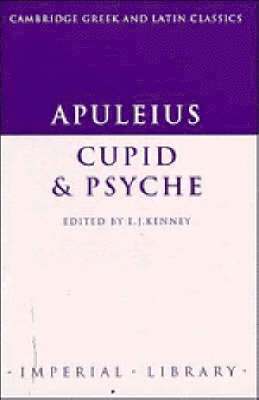
Apuleius' story of Cupid and Psyche, the relationship of the human Soul with divine Love, is one of the great allegories of world literature. It forms an integral part of and profoundly illuminates the message of his novel Metamorphoses or The Golden Ass, which relates the adventures of a young man and his spiritual fall and redemption. To enrich and deepen his basic plot, the origins of which are obscure, Apuleius has combined poetic sources, Platonic philosophy and popular iconography in an unprecedented tour de force of literary creation. This edition sensitively elucidates the subtle art with which this transformation has been accomplished, and comprehensively illustrates both Apuleius' inventive handling of his various models and sources and the exuberant and idiosyncratic Latinity with forms the vehicle for it. It places in a fresh light the results of recent work on the ancient Novel and on Apuleius himself, and offers a stimulating, occasionally provocative, reading of his much-discussed text. The Latin is accompanied by a facing English translation, making the edition more accessible to students of comparative literature as well as to classicists.
441 kr
Skickas inom 7-10 vardagar
This is Ovid's wittily imagined version of the letters exchanged by three famous pairs of lovers. Heroides XVI-XXI constitute an artfully constructed triptych: Hero and Leander's tragedy of high romance and fleeting happiness framed by two ironic comedies, that of Paris and Helen distinctly black, that of Acontius and Cydippe ending the book on a note of tantalising ambiguity. This is the first edition of these poems with commentary in any language since 1898. It provides a substantially improved text, together with all the guidance needed by students for the understanding of Ovid's Latin and the appreciation of his poetic art. The Introduction offers the first adequate discussion ever published of the poet's treatment of his literary sources and models, and deals succinctly but decisively with the question of authorship.
1 878 kr
Skickas inom 7-10 vardagar
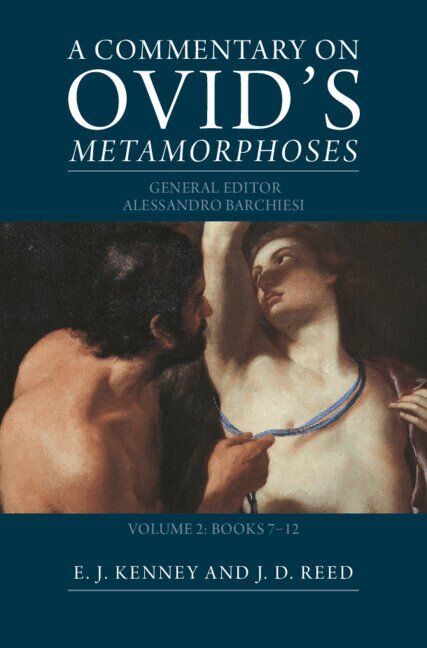
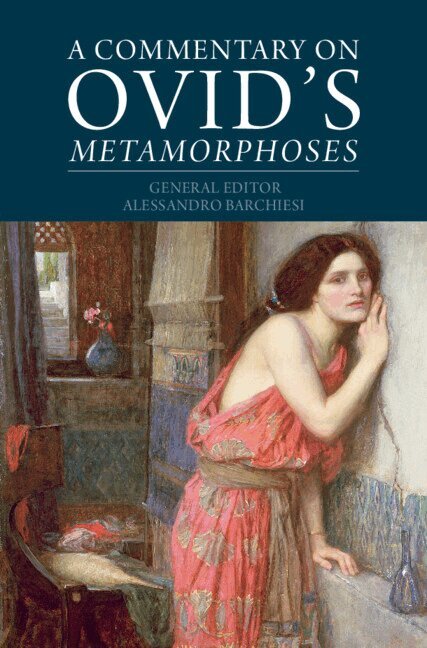
Comprising fifteen books and over two hundred and fifty myths, Ovid's Metamorphoses is one of the longest extant Latin poems from the ancient world and one of the most influential works in Western culture. It is an epic on desire and transgression that became a gateway to the entire world of pagan mythology and visual imagination. This, the first complete commentary in English, covers all aspects of the text - from textual interpretation to poetics, imagination, and ideology - and will be useful as a teaching aid and an orientation for those who are interested in the text and its reception. Historically, the poem's audience includes readers interested in opera and ballet, psychology and sexuality, myth and painting, feminism and posthumanism, vegetarianism and metempsychosis (to name just a few outside the area of Classical Studies).
732 kr
Skickas inom 7-10 vardagar
Comprising fifteen books and over two hundred and fifty myths, Ovid's Metamorphoses is one of the longest extant Latin poems from the ancient world and one of the most influential works in Western culture. It is an epic on desire and transgression that became a gateway to the entire world of pagan mythology and visual imagination. This, the first complete commentary in English, covers all aspects of the text - from textual interpretation to poetics, imagination, and ideology - and will be useful as a teaching aid and an orientation for those who are interested in the text and its reception. Historically, the poem's audience includes readers interested in opera and ballet, psychology and sexuality, myth and painting, feminism and posthumanism, vegetarianism and metempsychosis (to name just a few outside the area of Classical Studies).
5 862 kr
Tillfälligt slut
Comprising fifteen books and over two hundred and fifty myths, Ovid's Metamorphoses is one of the longest extant Latin poems from the ancient world and one of the most influential works in Western culture. It is an epic on desire and transgression that became a gateway to the entire world of pagan mythology and visual imagination. This, the first complete commentary in English, covers all aspects of the text - from textual interpretation to poetics, imagination, and ideology - and will be useful as a teaching aid and an orientation for those who are interested in the text and its reception. Historically, the poem's audience includes readers interested in opera and ballet, psychology and sexuality, myth and painting, feminism and posthumanism, vegetarianism and metempsychosis (to name just a few outside the area of Classical Studies).
858 kr
Skickas inom 7-10 vardagar
The third book of Lucretius' great poem on the workings of the universe is devoted entirely to expounding the implications of Epicurus' dictum that death does not matter, 'is nothing to us'. The soul is not immortal: it no more exists after the dissolution of the body than it had done before its birth. Only if this fact is accepted can men rid themselves of irrational fears and achieve the state of ataraxia, freedom from mental disturbance, on which the Epicurean definition of pleasure was based. To present this case Lucretius deploys the full range of poetic and rhetorical registers, soberly prohibitive, artfully decorative or passionately emotive as best suits his argument, reinforcing it with vivid and compelling imagery. This new edition has been completely revised, with a considerably enlarged Commentary and a new supplementary introduction taking account of the great amount of new scholarship of the last forty years.