Cambridge Monographs in African Archaeology – serie
Visar alla böcker i serien Cambridge Monographs in African Archaeology. Handla med fri frakt och snabb leverans.
8 produkter
8 produkter
Del 91 - Cambridge Monographs in African Archaeology
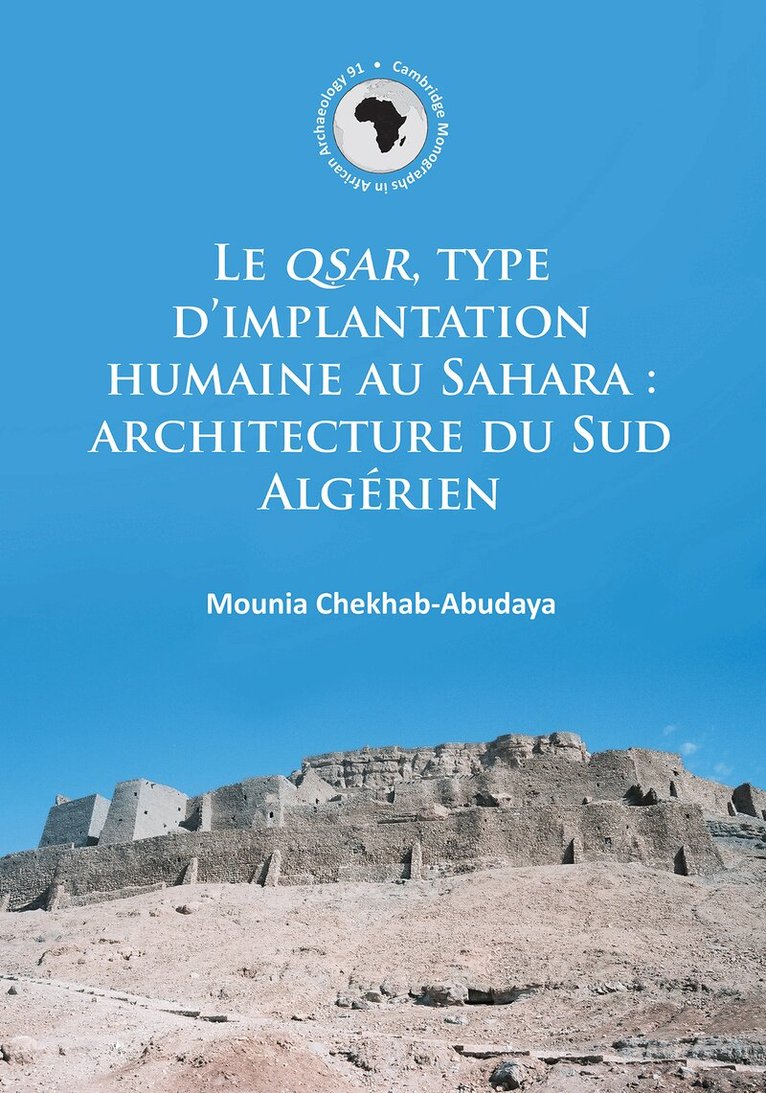
QSAR, type d’implantation humaine au Sahara: architecture du Sud Algérien
Häftad, Franska, 2016
755 kr
Skickas
The qṣar corresponds to a type of human settlement widely distributed in the Sahara desert, including many examples located today in southern Morocco, southern Algeria, southern Tunisia, Libya, Mauritania and Mali. This architectural model is characterised by its use over a wide-ranging time span – probably since the early first millennium BC according to ancient structures recorded by the archaeologist Mattingly in the Libyan Fazzān. This volume, through the systematic analysis and comparison of some qṣūr of southeastern Algeria (Rīġ, Mzāb, Miya and al-Manī‘a), reveals common architectural features that can be used to identify a common type of qṣar in this region. The analysis of the construction material shows the primary use of limestone with a local mortar (timchent) and date palm trunks (phoenix dactylifera) for the structural elements (ceilings, doors, arcs, domes). Adobe bricks (ṭūb) are used in the housing and the defence systems punctuated by towers and pierced doors. Despite a discontinuity within the historical narrative, the establishment of populations in this area of the Sahara appears to be much earlier than the medieval period and the qṣar is certainly not a creation ex nihilo of the modern era. Because of their numerous modifications and extensions over several centuries, the qṣūr problematise the dating of such settlements. However, the comparison of its main components encourages the development of a typology to identify some common characteristics that would help position the qṣar among the urban planning of the dār al-islām.
Del 92 - Cambridge Monographs in African Archaeology
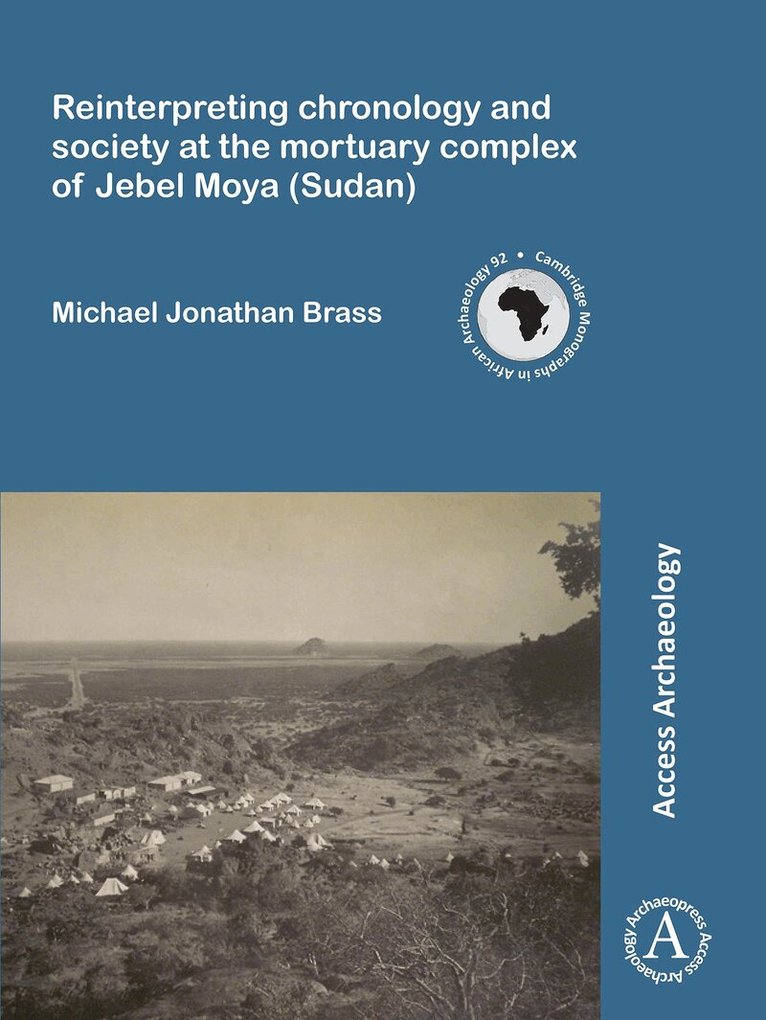
Reinterpreting chronology and society at the mortuary complex of Jebel Moya (Sudan)
Häftad, Engelska, 2016
606 kr
Skickas
Jebel Moya (south-central Sudan) is the largest known pastoral cemetery in sub- Saharan Africa with more than 3100 excavated human burials. This research revises our understanding of Jebel Moya and its context. After reviewing previous applications of social complexity theory to mortuary data, new questions are posed for the applicability of such theory to pastoral cemeteries. Reliable radiometric dating of Jebel Moya for the first time by luminescence dates is tied in to an attribute-based approach to discern three distinctive pottery assemblages. Three distinct phases of occupation are recognised: the first two (early fifth millennium BC, and the mid-second to early first millennium BC) from pottery sherds, and the third (first century BC - sixth century AD) with habitation and the vast majority of the mortuary remains. Analytically, new statistical and spatial analyses such as cross-pair correlation function and multi-dimensional scaling provide information on zones of interaction across the mortuary assemblages. Finally, an analysis of mortuary locales contemporary with phase three (Meroitic and post-Meroitic periods) from the central Sudan and Upper and Lower Nubia are examined to show how changing social, economic and power relations were conceptualised, and to highlight Jebel Moya’s potential to serve as a chronological and cultural reference point for future studies in south-central and southern Sudan.
Del 93 - Cambridge Monographs in African Archaeology
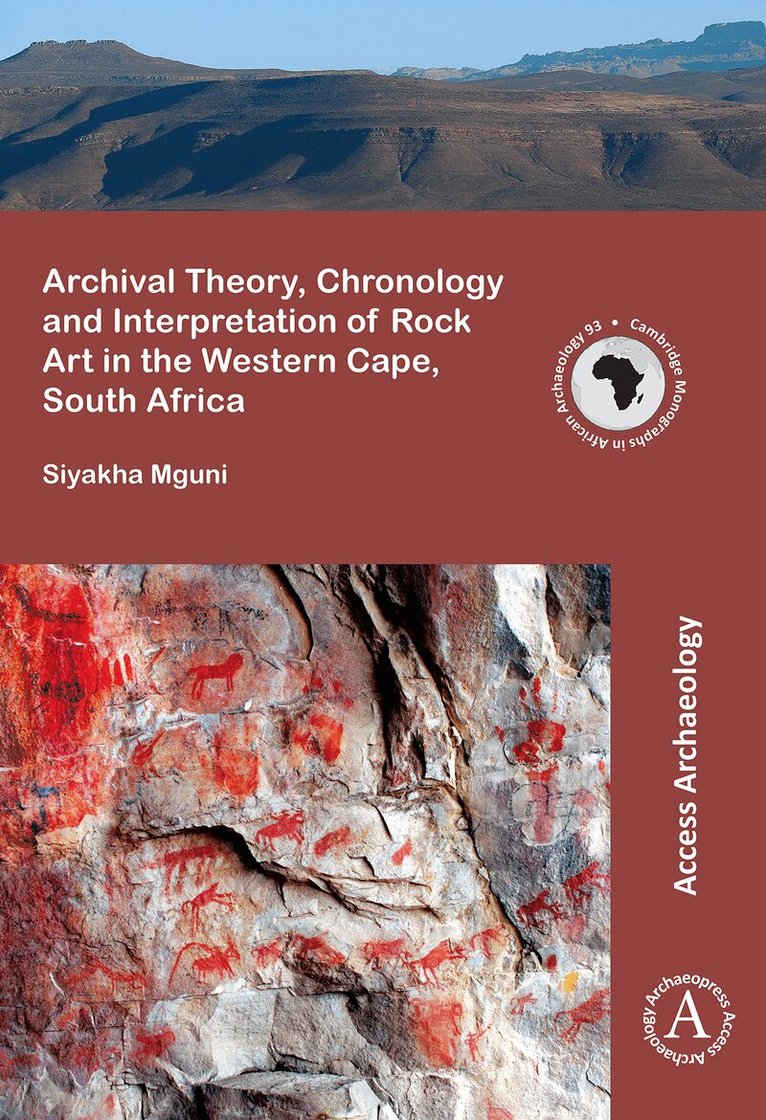
Archival Theory, Chronology and Interpretation of Rock Art in the Western Cape, South Africa
Häftad, Engelska, 2016
606 kr
Skickas
Since absolute dating of rock art is limited, relative chronologies remain useful in contextualising interpretations of ancient images. This book advocates the archival capacity of rock art and uses archival perspectives to analyse the chronology of paintings in order to formulate a framework for their historicised interpretations. The Western Cape painting sequence is customarily accepted to include the hunter-gatherer phase from c. 10,000 BP, pastoralism from c. 2,000 BP and finally the historical-cum-colonial period several centuries ago. Painting traditions with distinct depiction manners and content are conventionally linked to these broad periods. This study evaluates this schema in order to refine the diverse hunter-gatherer, herder and colonial era painting contexts and histories. Using superimpositions as one analytical tool, the notion of datum aided the referencing and correlation of layered imagery into a relative sequence. Although broad differences separate painting traditions, and these variations are generally indistinguishable within a single tradition, it is clear that the long-spanning hunter-gatherer segment of painting in this region reflects a hitherto unrecognised sub-tradition. Some painted themes such as elephants, fat-tailed sheep, handprints and possibly finger dots occur within various levels of the sequence, which this study views as shared graphic fragments occurring between and across traditions and sub-traditions. Through the archival concept of respect des fonds such observable complexities were clarified as coherent graphic narratives that run through the entire chronological sequence of the Western Cape rock paintings. Probing archaeological, ethnographic and historical sources revealed that while these themes remained fundamentally consistent throughout the stratigraphic sequence as preferred subject matter, their meanings might have transformed subliminally from earlier to later periods, possibly reflecting layered shifts in the socio-economic, cultural and political circumstances of the region. Fundamentally, the framework of image histories shown by the choice and sustenance of specific themes is understood to mean that their significance and specific graphic contexts throughout the chronological sequence are pivoted and mirrored through the long established hunter-gatherer rock paintings which predate periods of contact with other cultures. The resulting sequence and interpretation of these painted themes is a descriptive and organisational template reflecting the original organic character in the creation of the paintings and ordered cultural continuities in the use of animal/human symbolism. This book’s agenda in part involves reviewing the Western Cape’s changing social and historical landscape to show variation in painting over time and to project possible interpretative transformations. Painting sequences and cultural (dis)continuities are thus intricately entwined and can be disentangled through a recursive analytical relationship between archaeology, ethnography and history. This amalgamated analytical approach produces historicised narratives and contextual meanings for the rock paintings.
Del 95 - Cambridge Monographs in African Archaeology
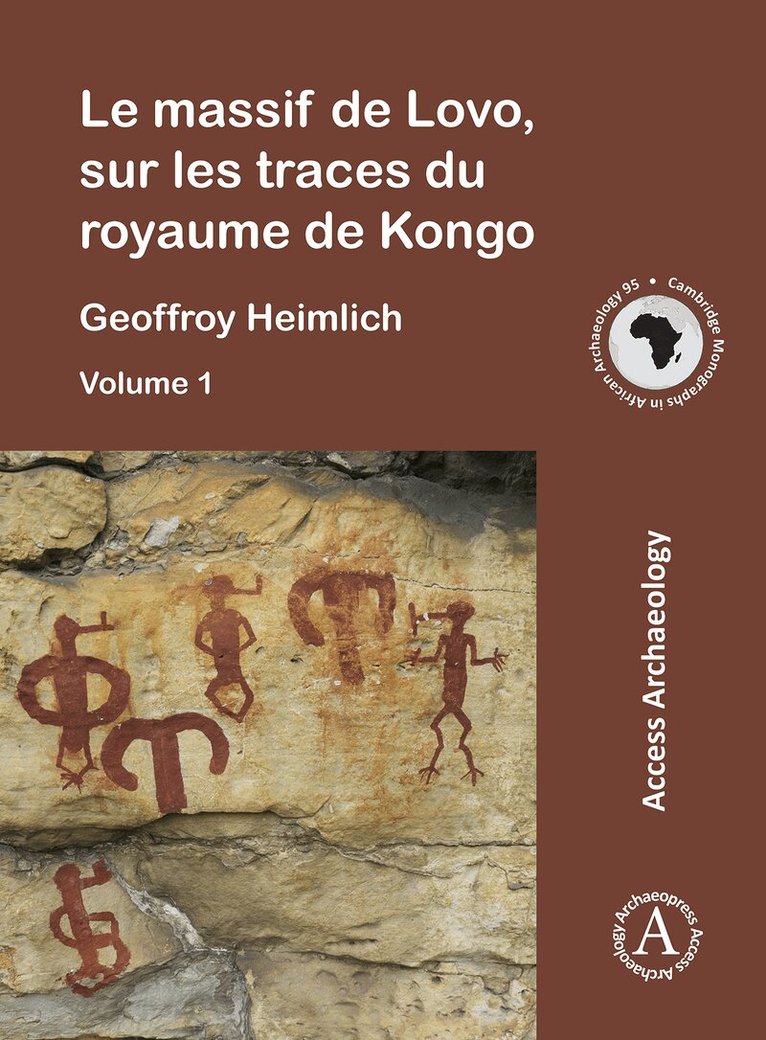
Le massif de Lovo, sur les traces du royaume de Kongo
Häftad, Franska, 2017
635 kr
Skickas
Unlike the Sahara or Southern Africa, the rock art of Central Africa is still largely unknown today. Despite being reported as early as the 16th century by Diego del Santissimo Sacramento, the rock art of the Kongo Central, an area encompassing parts of modern day Angola, Cabinda, the Republic of the Congo, Democratic Republic of the Congo, and Gabon, has never been widely researched and its age remains uncertain. Populated by the Ndibu, one of the Kongo subgroups, the Lovo massif is in the north of the ancient kingdom of Kongo. Even though this kingdom has, since 1500 AD, been one of the best documented in Africa, from historical sources as well as ethnographic and anthropological sources for the more recent periods, it remains largely unrecognized archaeologically. With 102 sites inventoried (including 16 ornate caves), it contains the largest concentration of rock art sites in the region, representing more than 5000 rock art images. Crossing ethnological, historical, archaeological and mythological points of view, this book illustrates that rock art played an important part in Kongo culture. Like historical sources or oral traditions, it can provide historians with important documentation and contribute significantly to the reconstruction of Africa's past. French description: A la difference des arts rupestres du Sahara ou d'Afrique australe, ceux d'Afrique centrale restent encore aujourd'hui largement meconnus. Bien que signale des le XVIe par Diego del Santissimo Sacramento, l'art rupestre du Kongo Central n'a jamais fait l'objet d'une recherche de grande ampleur et son age reste toujours incertain. Peuple par les Ndibu, un des sous-groupes kongo, le massif de Lovo se trouve dans le nord de l'ancien royaume de Kongo. Meme si ce royaume est, a partir de 1500, l'un des mieux documentes de toute l'Afrique tant par les sources historiques que par les sources ethnographiques et anthropologiques pour les periodes plus recentes, il reste largement meconnu sur le plan archeologique. Avec 102 sites inventories (dont 16 grottes ornees), il contient la plus importante concentration de sites rupestres de toute la region, ce qui represente plus de 5000 images rupestres. En croisant les points de vue ethnologique, historique, archeologique et mythologique, j'ai pu montrer que l'art rupestre a bel et bien une part importante dans la culture kongo. Au meme titre que les sources historiques ou les traditions orales, il peut apporter aux historiens une documentation de premier plan et contribuer a reconstruire le passe de l'Afrique.
Del 97 - Cambridge Monographs in African Archaeology
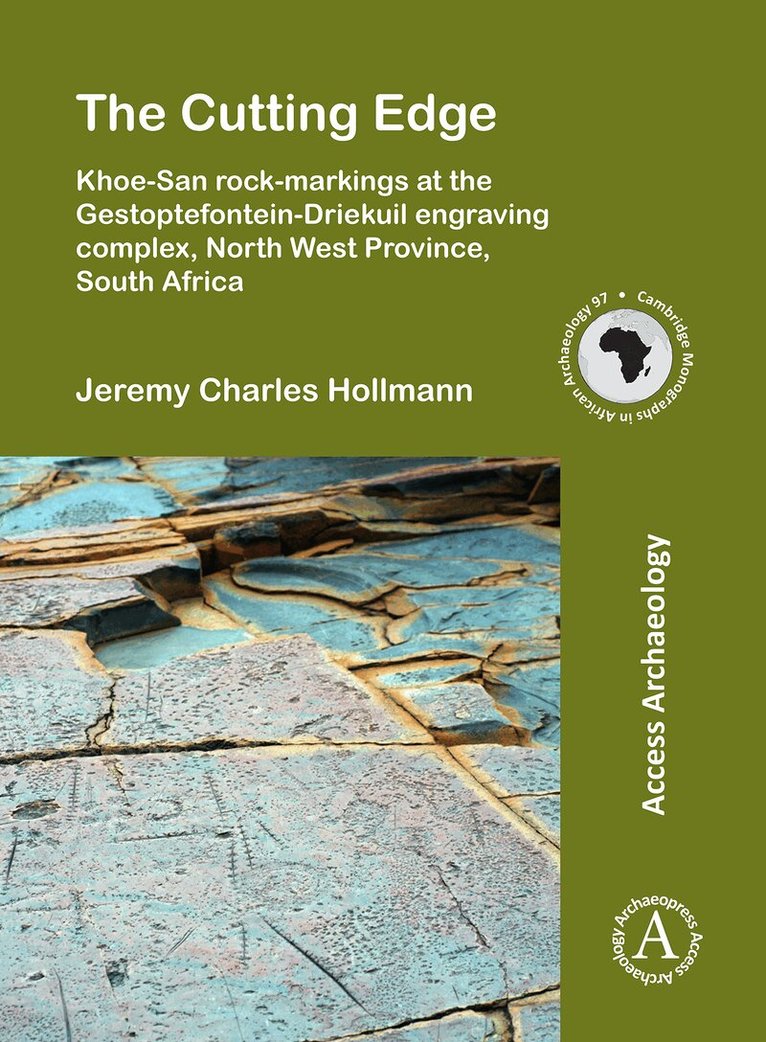
Cutting Edge: Khoe-San rock-markings at the Gestoptefontein-Driekuil engraving complex, North West Province, South Africa
Häftad, Engelska, 2017
905 kr
Skickas
This book addresses the rock engravings on the wonderstone hills just outside Ottosdal, North West province, South Africa. Wonderstone is remarkable rock that is smooth, shiny and very easy to mark. The wonderstone occurs only on two adjacent farms, Gestoptefontein and Driekuil, and thus the rock art on the wonderstone outcrops is referred to as the Gestoptefontein- Driekuil complex (GDC). This rock art is now the only remaining trace of what must once have been a much larger complex of engravings. Sadly, much of the rock art has been destroyed in the course of mining activities, with very few records. The largest remaining outcrop is still threatened by potential mining activities. The study attempts to bring this disastrous and unacceptable situation to the attention of the public and the heritage authorities, who have so far failed to respond to applications to grant the sites protection. It therefore has two main aims: to locate and record as much of the rock art as possible and to understand the significance of the outcrops in the lives of the people who made them. Based on the rock art itself, as well as what little historical evidence is available, it is argued that the rock art was made by Khoe-San people during the performance of important ceremonies and other activities. The rock art has two main components: engravings of referential motifs and a gestural, or performative, element. The referential motifs depict a range of things: anthropomorphs and zoomorphs, decorative designs, items of clothing, as well as ornaments and decorations. The gestural markings were made by rubbing, cutting and hammering the soft wonderstone, probably in the course of a range of activities that people carried out on the outcrops.
Del 98 - Cambridge Monographs in African Archaeology
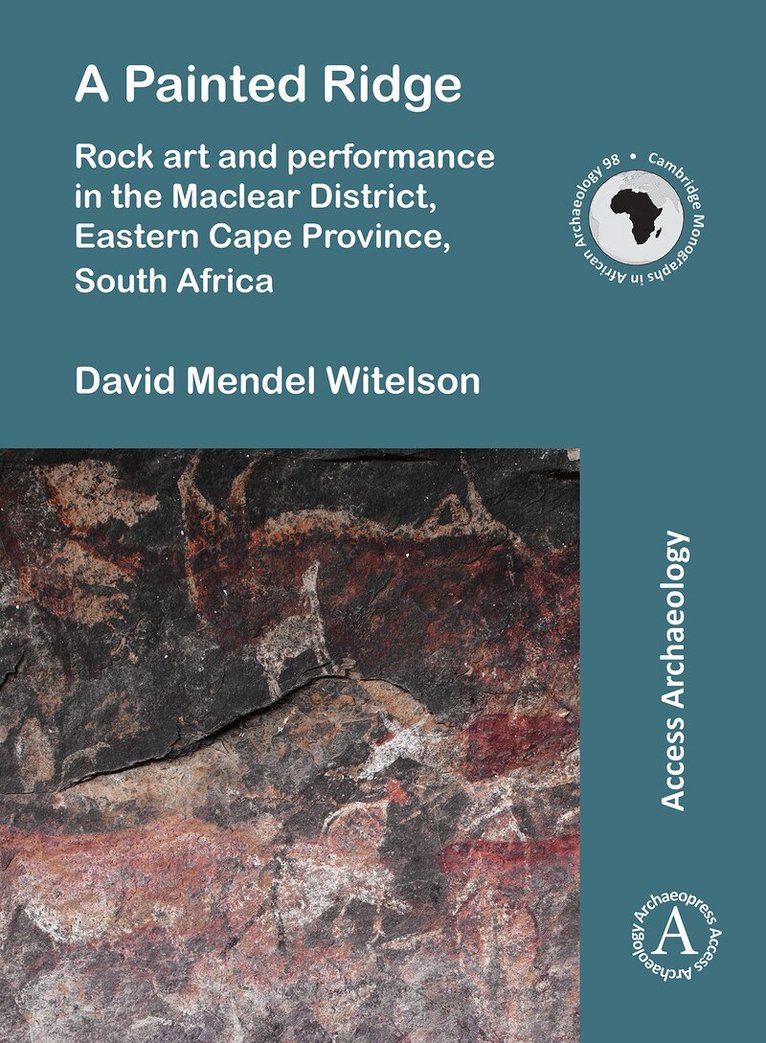
Painted Ridge: Rock art and performance in the Maclear District, Eastern Cape Province, South Africa
Häftad, Engelska, 2019
531 kr
Skickas
A Painted Ridge is a book about the San (Bushmen) practice of rock painting. In it, David Witelson explores a suite of spatially close San rock painting sites in the Maclear District of South Africa’s Eastern Cape Province. As a suite, the sites are remarkable because, despite their proximity to each other, they share patterns of similarity and simultaneous difference. They are a microcosm that reflects, in a broad sense, a trend found at other painted sites in South Africa. Rather than attempting to explain these patterns chiefly in terms of chronological breaks or cultural discontinuities, this book seeks to understand patterns of similarity and difference primarily in terms of the performative nature of San image-making. In doing so, the bygone and almost unrecorded practice of San rock art is considered relative to ethnographically well-documented and observed forms of San expressive culture. The approach in the book draws on concepts and terminology from the discipline of performance studies to characterise the San practice of image-making as well as to coordinate otherwise disparate ideas about that practice. It is a study that aims to explicate the nuances of what David Lewis-Williams called the ‘production and consumption’ of San rock art.
Del 99 - Cambridge Monographs in African Archaeology
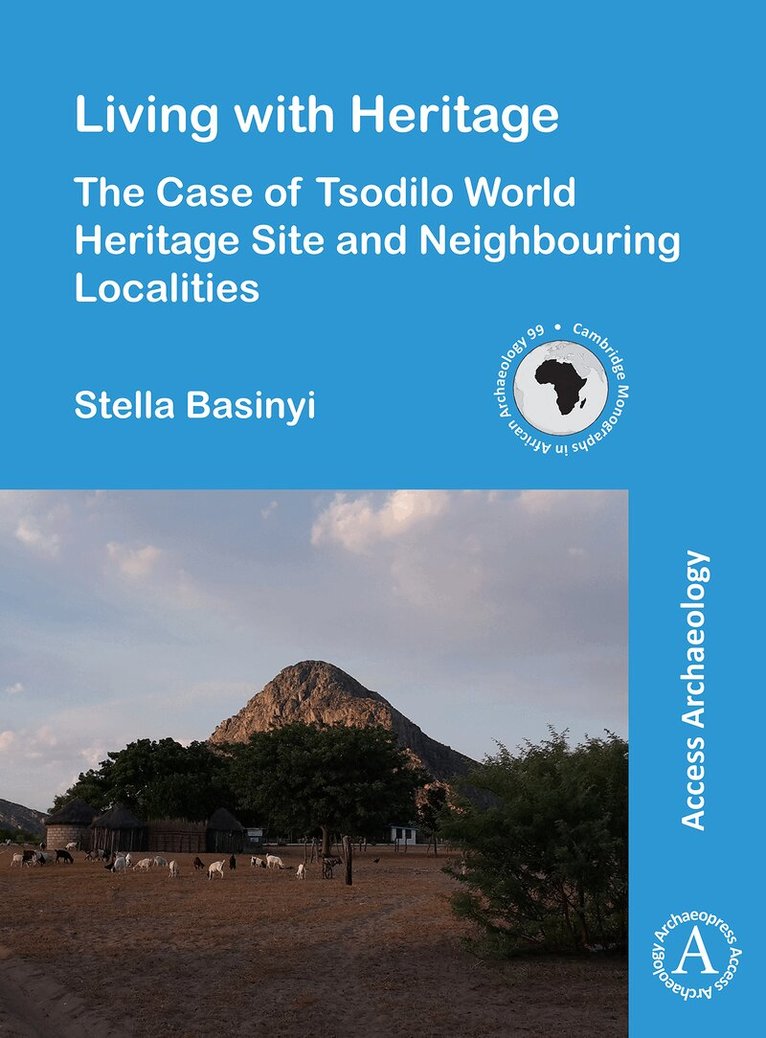
Living with Heritage: The Case of Tsodilo World Heritage Site and Neighbouring Localities
Häftad, Engelska, 2019
465 kr
Skickas
Cultural Heritage Management in most parts of Africa has been concerned and focused on conservation and preservation of cultural and natural heritage and the development of sites for tourism and economic benefit. In this venture, the tangible heritage such as monuments and landscapes become the focus and of primary significance. Therefore, most efforts have failed to grasp the significance and relevance of cultural heritage to the local communities and the existing traditional and cultural attachment to heritage sites beyond the economic gain. Of late, operational guidelines of the WH Conventions have targeted the engagement of communities in the management of their local heritage and shaping visitor experiences. The major challenge is the implementation of these agreements and restoration of cultural pride in local communities. The communities’ interest in heritage areas has been overshadowed by the perceived idea of economic gain and the global agenda for preservation of monuments for future generation as the foremost primary benefit in heritage over cultural rights and entitlement to heritage sites, present day cultural valuation and traditional use.In 2008 several heritage sites in Botswana were opened for tourism in addition to the Tsodilo World Heritage Site. Furthermore, in June 2014 the Okavango Delta covering a vast range of land occupied by cultural communities was also inscribed on the World Heritage List, becoming the second World Heritage Site in the country. However, insufficient research and analysis has been undertaken to understand how local communities and local cultures respond to these ventures. The study is case study based, presenting an overview of community transformation and responses to universalized heritage value and collective global view that characterize heritage status of cultural materials and the interactions of local cultures and traditions with the concepts of heritage and culture in heritage sites as globalised platforms. In this regard, it is evident through this study that the interlocutors are aware of their community boundaries and value in response to a national and global process of ‘valuation’ of the heritage site that is not theirs.
Del 100 - Cambridge Monographs in African Archaeology
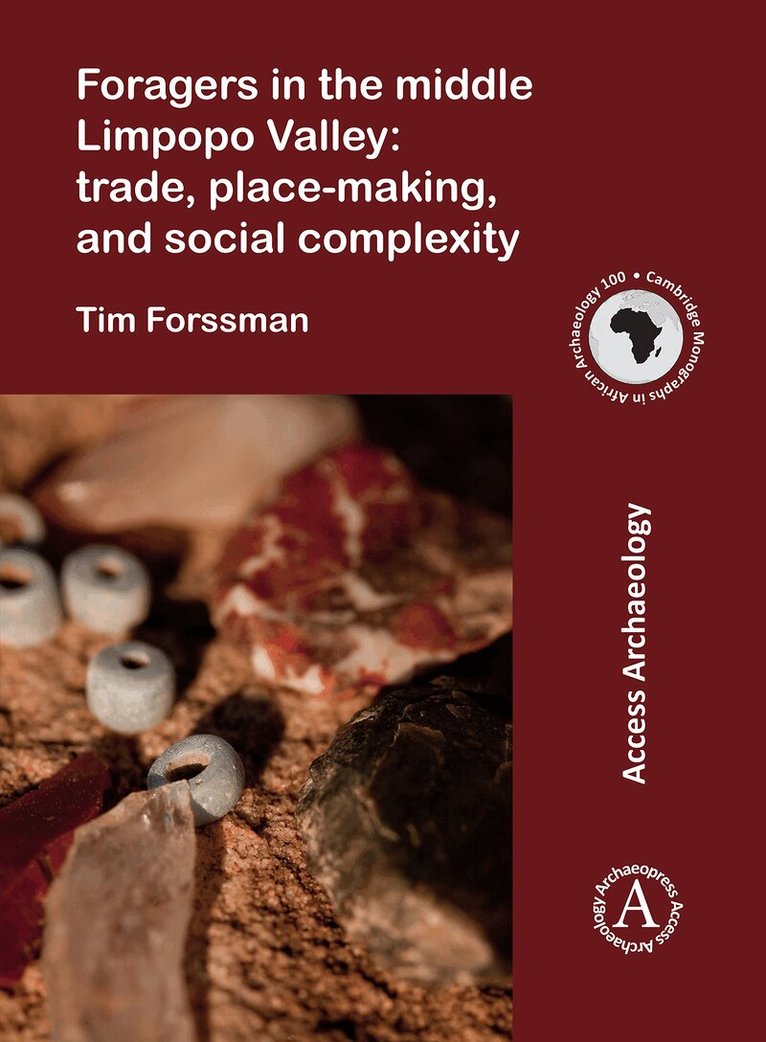
Foragers in the middle Limpopo Valley: Trade, Place-making, and Social Complexity
Häftad, Engelska, 2020
531 kr
Skickas
Between the last centuries BC and the early second millennium AD, central southern Africa witnessed massive social change. Several landscapes hosted a variety of socio-political developments that led to the establishment of state-level society at Mapungubwe, c. 1220 AD in the middle Limpopo Valley. These different landscapes were connected through various forms of circuitry, including social, political, economic and topographic networks. While most often these systems and developments are discussed in the context of farmer societies, local forager communities also saw associated shifts. They were present from before the arrival of farmers and not only witnessed but also participated in local systems leading to the appearance of complex society. Despite numerous studies in the valley, this has not been explored; generally, forager involvement in socio-political developments has been ignored and only farmer sequences have been considered. However, from the early first millennium AD, foragers themselves transformed their own society. Changes have been noted in settlement patterns, craft production, trade relations, social interactions, wealth accumulation, and status. Moreover, these changes occurred unevenly across the landscape; at different forager sites, different responses to shifting social networks have been recorded. When viewed together, the spectrum of change suggests that valley foragers developed social complexity.