Cambridge Papers in Sociology – serie
Visar alla böcker i serien Cambridge Papers in Sociology. Handla med fri frakt och snabb leverans.
5 produkter
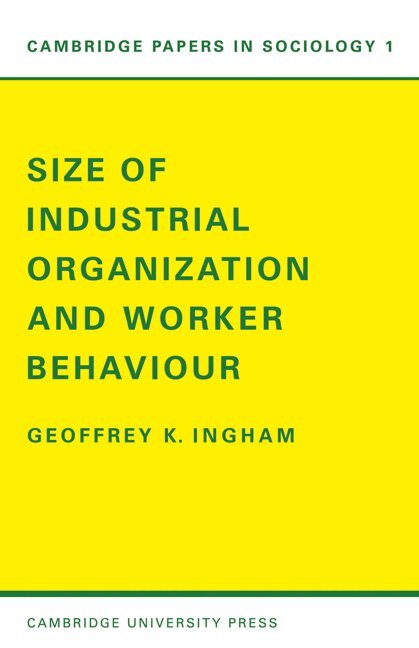
Size of Industrial Organisation and Worker Behaviour
Häftad, 1970
553 kr
Lägg i varukorg
This book, originally published in 1970, dealt with differences in the structure of large - and small - scale industrial organizations and the consequences of these differences for worker behaviour. Special attention is directed to the finding that large, bureaucratically organized industrial …
Workers' Attitudes and Technology
Av Dorothy Wedderburn, Rosemary Crompton
Häftad, 1972
557 kr
Lägg i varukorg
First published in 1922, this volume aimed to contribute to our understanding of the complexities which shape attitudes and behaviour at work. Based on material obtained from a survey of workers employed by a single firm - who operate production systems as widely as different as continuous-flow …
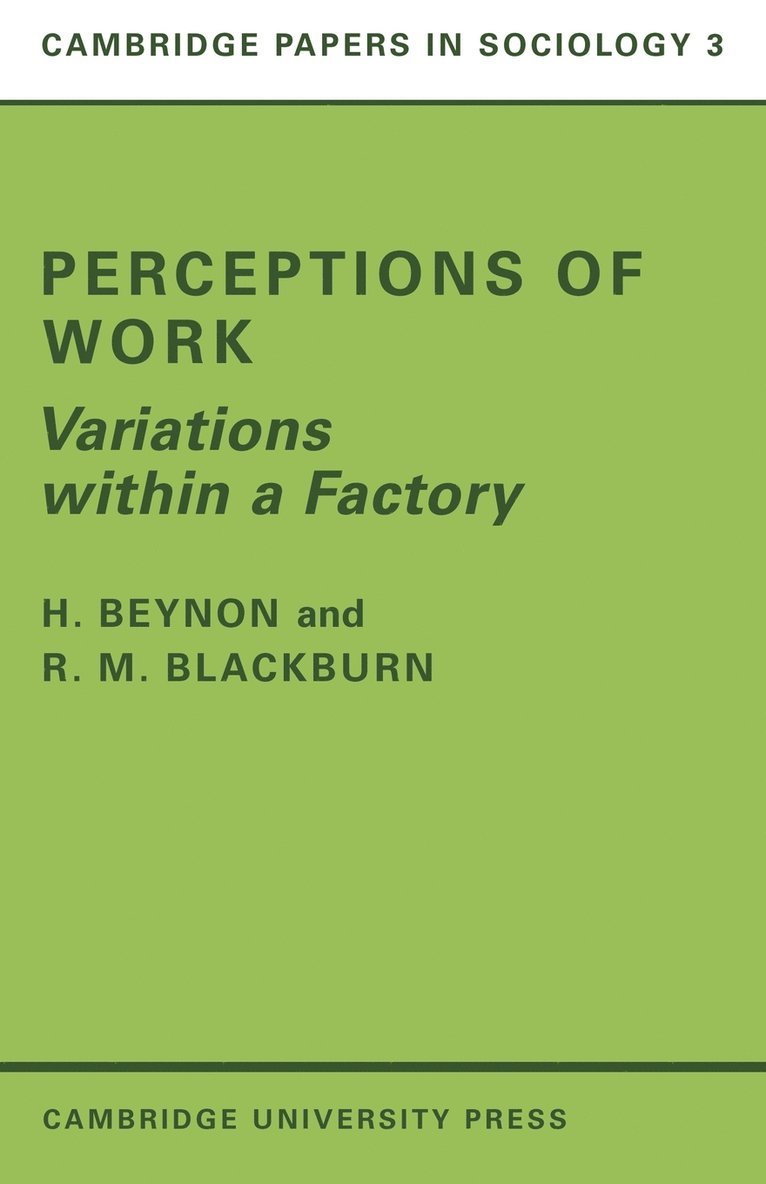
Perceptions of Work
Variations within a Factory
Häftad, 1972
511 kr
Lägg i varukorg
This is a 1972 study of the ways in which workers, both men and women with a whole range of ages and family circumstances, relate and adapt to their work situation. It is set in a single factory so that the aspects of the situation relating to the employer, such as the firm's profitability, size …
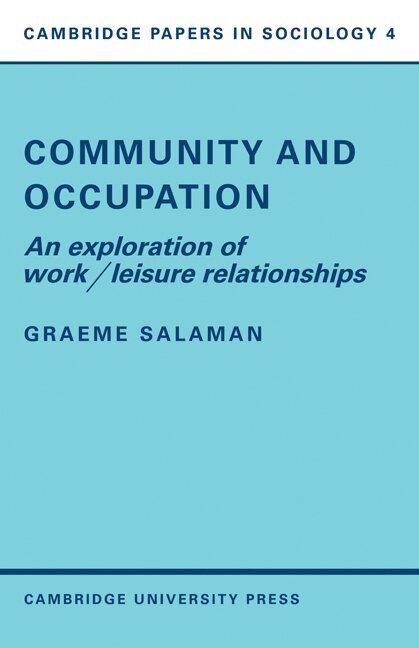
Community and Occupation
An Exploration of Work/Leisure Relationships
Häftad, 1974
525 kr
Lägg i varukorg
This book is concerned with the relationship between a man's work and his leisure time, in its broadest sense. At the opposite extreme to the 'instrumental' attitude, where the worker keeps his work and leisure time completely separate, is the close involvement in work and the correspondingly close …
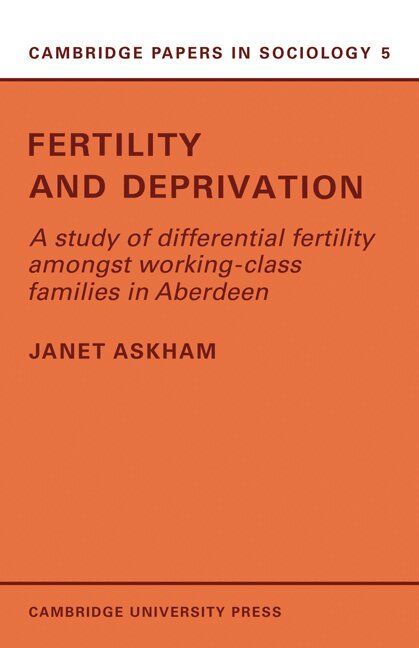
Fertility and Deprivation
A Study of Differential Fertility Amongst Working-Class Families in Aberdeen
Av Janet Askham
Häftad, 2010
569 kr
Lägg i varukorg
Originally published in 1975, this was the first empirical study to investigate the nature of the links between family size and the social and economic condition of those in lower social classes. The largest families are often found among those who seem to be least able to afford many children. Why …