Chicago History of American Religion CHAR – serie
Visar alla böcker i serien Chicago History of American Religion CHAR. Handla med fri frakt och snabb leverans.
8 produkter
8 produkter
276 kr
Skickas inom 7-10 vardagar
This ground-breaking study reveals an unorganized and previously unacknowledged religion at the heart of American culture. Nature, Albanese argues, has provided a compelling religious center throughout American history.
331 kr
Skickas inom 7-10 vardagar
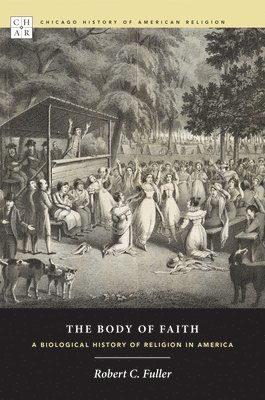
The postmodern view that human experience is constructed by language and culture has informed historical narratives for decades. Yet newly emerging information about the biological body now makes it possible to supplement traditional scholarly models with insights about the bodily sources of human thought and experience. "The Body of Faith" is the first account of American religious history to highlight the biological body. Robert C. Fuller brings a crucial new perspective to the study of American religion, showing that knowledge about the biological body deeply enriches how we explain dramatic episodes in American religious life. Fuller shows that the body's genetically evolved systems - pain responses, sexual passion, and emotions like shame and fear - have persistently shaped the ways that Americans forge relationships with nature, society, and God. The first new work to appear in the "Chicago History of American Religion" series in decades, "The Body of Faith" offers a truly interdisciplinary framework for explaining the richness, diversity, and endless creativity of American religious life.
276 kr
Skickas inom 7-10 vardagar
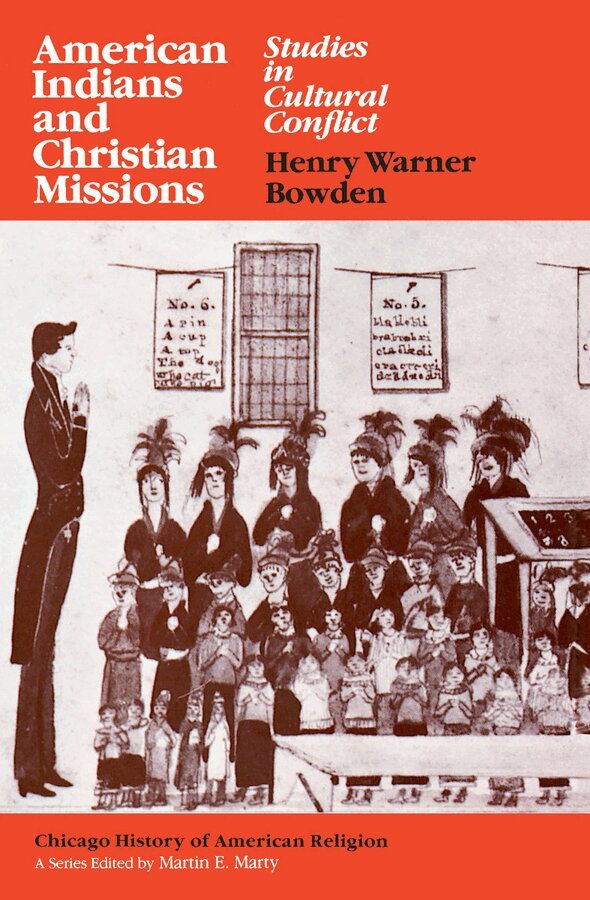
In this absorbing history, Henry Warner Bowden chronicles the encounters between native Americans and the evangelizing whites from the period of exploration and colonization to the present. He writes with a balanced perspective that pleads no special case for native separatism or Christian uniqueness. Ultimately, he broadens our understanding of both intercultural exchanges and the continuing strength of American Indian spirituality, expressed today in Christian forms as well as in revitalized folkways."Bowden makes a radical departure from the traditional approach. Drawing on the theories and findings of anthropologists, archaeologists, and historians, he presents Indian-missionary relations as a series of cultural encounters, the outcomes of which were determined by the content of native beliefs, the structure of native religious institutions, and external factors such as epidemic diseases and military conflicts, as well as by the missionaries' own resources and abilities. The result is a provocative, insightful historical essay that liberates a complex subject from the narrow perimeters of past discussions and accords it an appropriate richness and complexity. . . . For anyone with an interest in Indian-missionary relations, from the most casual to the most specialized, this book is the place to begin."—Neal Salisbury, Theology Today"If one wishes to read a concise, thought-provoking ethnohistory of Indian missions, 1540-1980, this is it. Henry Warner Bowden's history, perhaps for the first time, places the sweep of Christian evangelism fully in the context of vigorous, believable, native religions."—Robert H. Keller, Jr., American Historical Review
213 kr
Skickas inom 7-10 vardagar
"Dissent in American Religion", originally published in 1973, was the first book to present religious dissent in the United States as a pervasive but hidden and often-ignored stream in American life. The first volume in the "Chicago History of American Religion" series, it reviewed the history of our nation's longest dissenting tradition - a tradition older and richer in the realm of religion than in any other facet of national life. Indeed, Edwin Scott Gaustad argued that religious dissent was essential to the character of the American religious experience and stood in profound disagreement with society's orthodox values and beliefs. This new edition, which reinaugurates the "Chicago History of American Religion" series under the new editorship of John Corrigan, features new commentary by Gaustad and Corrigan on the past thirty years of American religious history and the importance of understanding dissent in American religion today.
790 kr
Skickas inom 7-10 vardagar
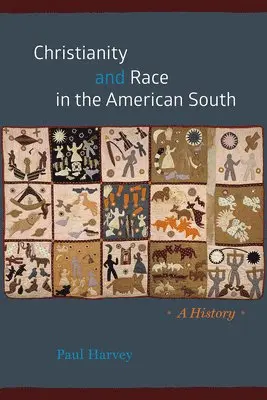
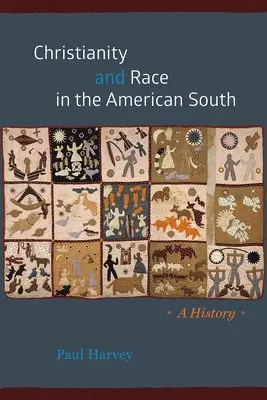
The history of race and religion in the American South is infused with tragedy, survival, and water from St. Augustine on the shores of Florida's Atlantic Coast to the swampy mire of Jamestown to the floodwaters that nearly destroyed New Orleans. Determination, resistance, survival, even transcendence, shape the story of race and southern Christianities. In Christianity and Race in the American South, Paul Harvey gives us a narrative history of the South as it integrates into the story of religious history, fundamentally transforming our understanding of the importance of American Christianity and religious identity. Harvey chronicles the diversity and complexity in the intertwined histories of race and religion in the South, dating back to the first days of European settlement. He presents a history rife with strange alliances, unlikely parallels, and far too many tragedies, along the way illustrating that ideas about the role of churches in the South were critically shaped by conflicts over slavery and race that defined southern life more broadly.Race, violence, religion, and southern identity remain a volatile brew, and this book is the persuasive historical examination that is essential to making sense of it.
300 kr
Skickas inom 7-10 vardagar
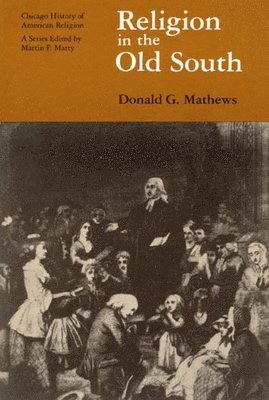
"A major study of American cultural history, a book distinguished both for its careful research and for its innovative interpretations. . . . Professor Mathews's book is an explanation of what religion meant in the everyday lives of southern whites and blacks. It is indispensable reading not just for those who want to know more about the Old South but for anyone who wants to understand the South today."—David Herbert Donald, Harvard University "A major achievement—a magnificently provocative contribution to the understanding of the history of religion in America."—William G. McLoughlin, Book Reviews"A meticulous and well-documented study . . . In the changing connotations of the word 'liberty' lie most of the dilemmas of Southern (and American) history, dilemmas Dr. Mathews analyses with considerable penetration."—Times Literary Supplement "The most compact and yet comprehensive view of the Old South in its religious dimension that is presently available. This is a pioneering work by one who is widely read in the sources and is creative enough to synthesize and introduce fresh themes. . . . He makes a unique contribution to southern historiography which will act as a corrective upon earlier works. . . . Boldly stated, every library that consults Choice should purchase this volume."—Choice"Mathews presents us with the findest and grandest history of old southern religion that one could imagine finding in so short a book on so large a topic. . . . Here stands in its own right a masterpiece of regional historiography of religion in America."—William A. Clebsch, Reviews in American History
268 kr
Skickas inom 7-10 vardagar
260 kr
Skickas inom 7-10 vardagar
The history of race and religion in the American South is infused with tragedy, survival, and water—from St. Augustine on the shores of Florida’s Atlantic Coast to the swampy mire of Jamestown to the floodwaters that nearly destroyed New Orleans. Determination, resistance, survival, even transcendence, shape the story of race and southern Christianities. In Christianity and Race in the American South, Paul Harvey gives us a narrative history of the South as it integrates into the story of religious history, fundamentally transforming our understanding of the importance of American Christianity and religious identity.Harvey chronicles the diversity and complexity in the intertwined histories of race and religion in the South, dating back to the first days of European settlement. He presents a history rife with strange alliances, unlikely parallels, and far too many tragedies, along the way illustrating that ideas about the role of churches in the South were critically shaped by conflicts over slavery and race that defined southern life more broadly. Race, violence, religion, and southern identity remain a volatile brew, and this book is the persuasive historical examination that is essential to making sense of it.