Chicago Visions and Revisions - Böcker
Visar alla böcker i serien Chicago Visions and Revisions. Handla med fri frakt och snabb leverans.
18 produkter
18 produkter
369 kr
Skickas inom 7-10 vardagar
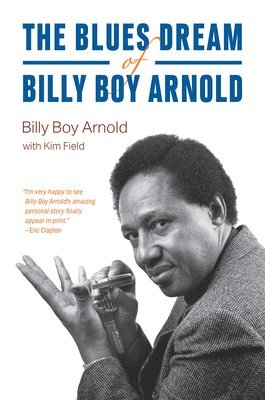
Simply put, Billy Boy Arnold is one of the last men standing from the Chicago blues scene’s raucous heyday. What’s more, unlike most artists in this electrifying melting pot, who were Southern transplants, Arnold—a harmonica master who shared stages with Bo Diddley, Muddy Waters, and Howlin’ Wolf, plus a singer and hitmaker in his own right who first recorded the standards “I Wish You Would” and “I Ain’t Got You”—was born right here and has lived nowhere else. This makes his perspective on Chicago blues, its players, and its locales all the rarer and all the more valuable. Arnold has witnessed musical generations come and go, from the decline of prewar country blues to the birth of the electric blues and the worldwide spread of rock and roll. Working here in collaboration with writer and fellow musician Kim Field, he gets it all down. The Blues Dream of Billy Boy Arnold is a remarkably clear-eyed testament to more than eighty years of musical love and creation, from Arnold’s adolescent quest to locate the legendary Sonny Boy Williamson, the story of how he named Bo Diddley Bo Diddley, and the ups and downs of his seven-decade recording career. Arnold’s tale—candidly told with humor, insight, and grit—is one that no fan of modern American music can afford to miss.
585 kr
Skickas inom 3-6 vardagar
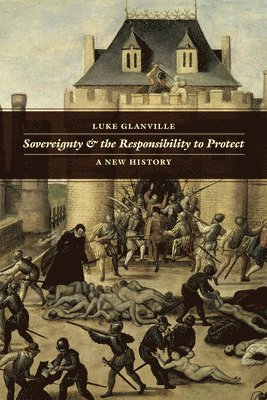
In 2011, the United Nations Security Council adopted Resolution 1973, authorizing its member states to take measures to protect Libyan civilians from Muammar Gadhafi's forces. In invoking the "responsibility to protect," the resolution draws on the principle that sovereign states are responsible and accountable to the international community for the protection of their populations and specifies that the international community can act to protect populations when national authorities fail to do so. The idea that sovereignty includes the responsibility to protect is often seen as a departure from the classic definition, but it actually has deep historical roots. In Sovereignty and the Responsibility to Protect, Luke Glanville argues that this responsibility extends back to the sixteenth and seventeenth centuries, and that states have since been accountable to God, the people, and the international community.Over time, the right to national self-governance came to take priority over the protection of individual liberties, but the noninterventionist understanding of sovereignty was only firmly established in the twentieth century, and it remained for only a few decades before it was challenged by renewed claims that sovereigns are responsible for protection. Glanville traces the relationship between sovereignty and responsibility from the early modern period to the present day, and offers a new history with profound implications for the present.
158 kr
Skickas inom 7-10 vardagar
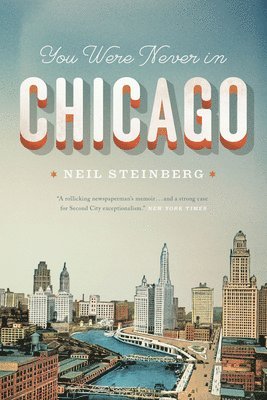
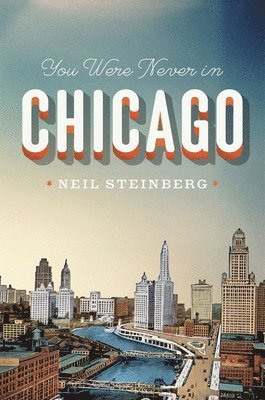
In 1952 the New Yorker published a three-part essay by A. J. Liebling in which he dubbed Chicago the "Second City." From garbage collection to the skyline, nothing escaped Liebling's withering gaze. Among the outraged responses from Chicago residents was one that Liebling described as the apotheosis of such criticism: a postcard that read, simply, "You were never in Chicago." Neil Steinberg has lived in and around Chicago for more than three decades-ever since he left his hometown of Berea, Ohio, to attend Northwestern - yet he remains fascinated by the dynamics captured in Liebling's anecdote. In You Were Never in Chicago, Steinberg weaves the story of his own coming-of-age as a young outsider who made his way into the inner circles and upper levels of Chicago journalism with a nuanced portrait of the city that would surprise even lifelong residents. Throughout, Steinberg never loses the curiosity and close observation of an outsider, while thoughtfully considering how this perspective has shaped the city, and what it really means to belong.Intimate and layered, You Were Never in Chicago will be a welcome addition to the bookshelves of all Chicagoans - be they born in the city or forever transplanted.
266 kr
Skickas inom 7-10 vardagar
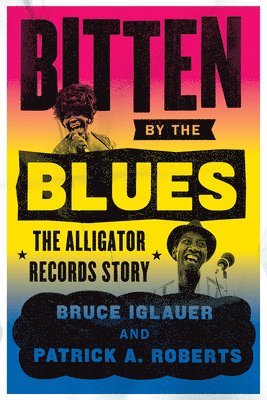
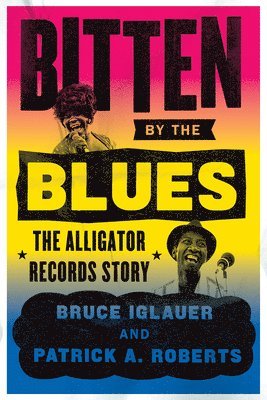
It started with the searing sound of a slide careening up the neck of an electric guitar. In 1970, twenty-three-year-old Bruce Iglauer walked into Florence's Lounge, in the heart of Chicago's South Side, and was overwhelmed by the joyous, raw Chicago blues of Hound Dog Taylor and the HouseRockers. A year later, Iglauer produced Hound Dog's debut album in eight hours and pressed a thousand copies, the most he could afford. From that one album grew Alligator Records, the largest independent blues record label in the world.Bitten by the Blues is Iglauer's memoir of a life immersed in the blues-and the business of the blues. No one person was present at the creation of more great contemporary blues music than Iglauer: he produced albums by Koko Taylor, Albert Collins, Professor Longhair, Johnny Winter, Lonnie Mack, Son Seals, Roy Buchanan, Shemekia Copeland, and many other major figures. In this book, Iglauer takes us behind the scenes, offering unforgettable stories of those charismatic musicians and classic sessions, delivering an intimate and unvarnished look at what it's like to work with the greats of the blues. It's a vivid portrait of some of the extraordinary musicians and larger-than-life personalities who brought America's music to life in the clubs of Chicago's South and West Sides. Bitten by the Blues is also an expansive history of half a century of blues in Chicago and around the world, tracing the blues recording business through massive transitions, as a genre of music originally created by and for black southerners adapted to an influx of white fans and musicians and found a worldwide audience.Most of the smoky bars and packed clubs that fostered the Chicago blues scene have long since disappeared. But their soul lives on, and so does their sound. As real and audacious as the music that shaped it, Bitten by the Blues is a raucous journey through the world of Genuine Houserockin' Music
258 kr
Skickas inom 7-10 vardagar
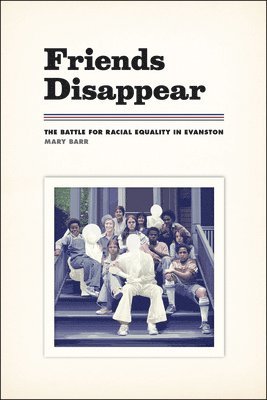
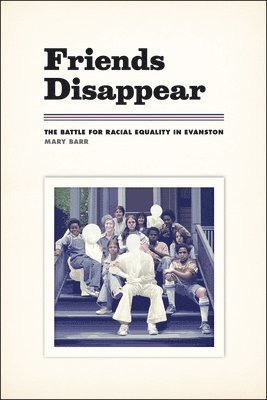
Mary Barr thinks a lot about the old photograph hanging on her refrigerator door. In it, she and a dozen or so of her friends from the Chicago suburb of Evanston sit on a porch. It's 1974, the summer after they graduated from Nichols Middle School, and what strikes her immediately-aside from the Soul Train-era clothes - is the diversity of the group: boys and girls, black and white, in the variety of poses you'd expect from a bunch of friends on the verge of high school. But the photo also speaks to the history of Evanston, to integration, and to the ways that those in the picture experienced and remembered growing up in a place that many at that time considered to be a racial utopia. In Friends Disappear Barr goes back to her old neighborhood and pieces together a history of Evanston with a particular emphasis on its neighborhoods, its schools, and its work life. She finds that there is a detrimental myth of integration surrounding Evanston despite bountiful evidence of actual segregation, both in the archives and from the life stories of her subjects. Curiously, the city's own desegregation plan is partly to blame.The initiative called for the redistribution of students from an all-black elementary school to institutions situated in white neighborhoods. That, however, required busing, and between the tensions it generated and obvious markers of class difference, the racial divide, far from being closed, was widened. Friends Disappear highlights how racial divides limited the life chances of blacks while providing opportunities for whites, and offers an insider's perspective on the social practices that doled out benefits and penalties based on race-despite attempts to integrate.
177 kr
Skickas inom 7-10 vardagar
Our traditional image of Chicago-as a gritty metropolis carved into ethnically defined enclaves where the game of machine politics overshadows its ends-is such a powerful shaper of the city's identity that many of its closest observers fail to notice that a new Chicago has emerged over the past two decades. Larry Bennett here tackles some of our more commonly held ideas about the Windy City-inherited from such icons as Theodore Dreiser, Carl Sandburg, Daniel Burnham, Robert Park, Sara Paretsky, and Mike Royko-with the goal of better understanding Chicago as it is now: the third city. Bennett calls contemporary Chicago the third city to distinguish it from its two predecessors: the first city, a sprawling industrial center whose historical arc ran from the Civil War to the Great Depression; and the second city, the Rustbelt exemplar of the period from around 1950 to 1990. The third city features a dramatically revitalized urban core, a shifting population mix that includes new immigrant streams, and a growing number of middle-class professionals working in new economy sectors.It is also a city utterly transformed by the top-to-bottom reconstruction of public housing developments and the ambitious provision of public works like Millennium Park. It is, according to Bennett, a work in progress spearheaded by Richard M. Daley, a self-consciously innovative mayor whose strategy of neighborhood revitalization and urban renewal is a prototype of city governance for the twenty-first century. The Third City ultimately contends that to understand Chicago under Daley's charge is to understand what metropolitan life across North America may well look like in the coming decades.
World Is Always Coming to an End
Pulling Together and Apart in a Chicago Neighborhood
Inbunden, Engelska, 2019
243 kr
Skickas inom 7-10 vardagar
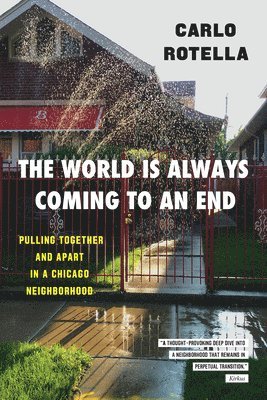
An urban neighborhood remakes itself every day—and unmakes itself, too. Houses and stores and streets define it in one way. But it’s also people—the people who make it their home, some eagerly, others grudgingly. A neighborhood can thrive or it can decline, and neighbors move in and move out. Sometimes they stay but withdraw behind fences and burglar alarms. If a neighborhood becomes no longer a place of sociability and street life, but of privacy indoors and fearful distrust outdoors, is it still a neighborhood? In the late 1960s and 1970s Carlo Rotella grew up in Chicago’s South Shore neighborhood—a place of neat bungalow blocks and desolate commercial strips, and sharp, sometimes painful social contrasts. In the decades since, the hollowing out of the middle class has left residents confronting—or avoiding—each other across an expanding gap that makes it ever harder for them to recognize each other as neighbors. Rotella tells the stories that reveal how that happened—stories of deindustrialization and street life; stories of gorgeous apartments with vistas onto Lake Michigan and of Section 8 housing vouchers held by the poor. At every turn, South Shore is a study in contrasts, shaped and reshaped over the past half-century by individual stories and larger waves of change that make it an exemplar of many American urban neighborhoods. Talking with current and former residents and looking carefully at the interactions of race and class, persistence and change, Rotella explores the tension between residents’ deep investment of feeling and resources in the physical landscape of South Shore and their hesitation to make a similar commitment to the community of neighbors living there. Blending journalism, memoir, and archival research, The World Is Always Coming to an End uses the story of one American neighborhood to challenge our assumptions about what neighborhoods are, and to think anew about what they might be if we can bridge gaps and commit anew to the people who share them with us. Tomorrow is another ending.
183 kr
Skickas inom 7-10 vardagar
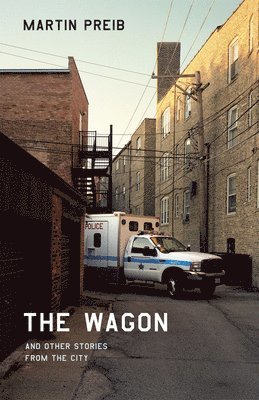
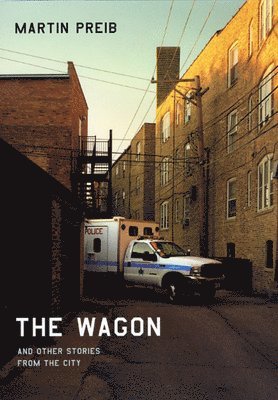
Martin Preib is an officer in the Chicago Police Department - a beat cop whose first assignment as a rookie policeman was working on the wagon that picks up the dead. Inspired by Preib's daily life on the job, "The Wagon and Other Stories from the City" chronicles the outer and inner lives of both a Chicago cop and the city itself. This book follows Preib as he transports body bags, forges an unlikely connection with his female partner, trains a younger officer, and finds himself among people long forgotten - or rendered invisible - by the rest of society. Preib recounts how he navigates the tenuous labyrinths of race and class in the urban metropolis, such as a domestic disturbance call involving a gang member and his abused girlfriend or a run-in with a group of drunk yuppies. As he encounters the real and imagined geographies of Chicago, the city reveals itself to be not just a backdrop but a central force in his narrative of life and death. Preib's accounts, all told in his breathtaking prose, come alive in ways that readers will long remember.
199 kr
Skickas inom 7-10 vardagar
It started with the searing sound of a slide careening up the neck of an electric guitar. In 1970, twenty-three-year-old Bruce Iglauer walked into Florence's Lounge, in the heart of Chicago's South Side, and was overwhelmed by the joyous, raw Chicago blues of Hound Dog Taylor and the HouseRockers. A year later, Iglauer produced Hound Dog's debut album in eight hours and pressed a thousand copies, the most he could afford. From that one album grew Alligator Records, the largest independent blues record label in the world.Bitten by the Blues is Iglauer's memoir of a life immersed in the blues--and the business of the blues. No one person was present at the creation of more great contemporary blues music than Iglauer: he produced albums by Koko Taylor, Albert Collins, Professor Longhair, Johnny Winter, Lonnie Mack, Son Seals, Roy Buchanan, Shemekia Copeland, and many other major figures. In this book, Iglauer takes us behind the scenes, offering unforgettable stories of those charismatic musicians and classic sessions, delivering an intimate and unvarnished look at what it's like to work with the greats of the blues. It's a vivid portrait of some of the extraordinary musicians and larger-than-life personalities who brought America's music to life in the clubs of Chicago's South and West Sides. Bitten by the Blues is also an expansive history of half a century of blues in Chicago and around the world, tracing the blues recording business through massive transitions, as a genre of music originally created by and for black southerners adapted to an influx of white fans and musicians and found a worldwide audience.Most of the smoky bars and packed clubs that fostered the Chicago blues scene have long since disappeared. But their soul lives on, and so does their sound. As real and audacious as the music that shaped it, Bitten by the Blues is a raucous journey through the world of Genuine Houserockin' Music.
250 kr
Skickas inom 7-10 vardagar
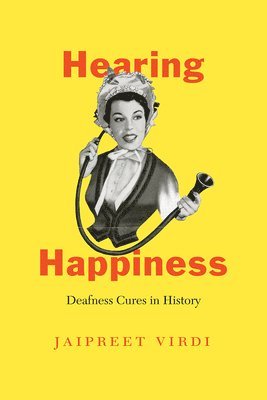
At the age of four, Jaipreet Virdi's world went silent. A severe case of meningitis left her alive but deaf, suddenly treated differently by everyone. Her deafness downplayed by society and doctors, she struggled to "pass" as hearing for most of her life. Countless cures, treatments, and technologies led to dead ends. Never quite deaf enough for the Deaf community or quite hearing enough for the "normal" majority, Virdi was stuck in aural limbo for years. It wasn't until her thirties, exasperated by problems with new digital hearing aids, that she began to actively assert her deafness and reexamine society's--and her own--perception of life as a deaf person in America. Through lyrical history and personal memoir, Hearing Happiness raises pivotal questions about deafness in American society and the endless quest for a cure. Taking us from the 1860s up to the present, Virdi combs archives and museums in order to understand the long history of curious cures: hearing trumpets, violet-ray apparatuses, pneumomassages, electrotherapy machines, airplane diving, bloodletting, skull hammering, and many more. Hundreds of procedures and products have promised grand miracles but always failed to deliver--a legacy that is still present in contemporary biomedicine.Weaving Virdi's own experiences together with her exploration into the fascinating history of deafness cures, Hearing Happiness is a powerful story that America needs to hear.
180 kr
Skickas inom 7-10 vardagar
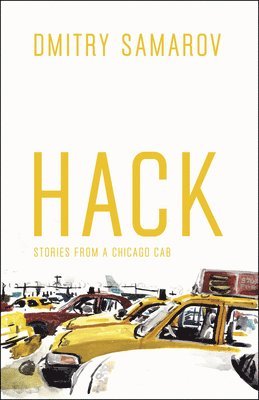
Cabdrivers and their yellow taxis are as much a part of the cityscape as the high-rise buildings and the subway. We hail them without thought after a wearying day at the office or an exuberant night on the town. And, undoubtedly, taxi drivers have stories to tell - of farcical local politics, of colorful passengers, of changing neighborhoods and clandestine shortcuts. No one knows a city's streets - and thus its heart - better than its cabdrivers. And from behind the wheel of his taxi, Dmitry Samarov has seen more of Chicago than most Chicagoans could hope to experience in a lifetime. An artist and painter trained at the School of the Art Institute of Chicago, Samarov began driving a cab in 1993 to make ends meet, and he's been working as a taxi driver ever since. In "Hack: Stories from a Chicago Cab", he recounts tales that will delight, surprise, and sometimes shock even the most seasoned urbanite. We follow Samarov through the rhythms of a typical week, as he waits hours at the garage to pick up a shift, ferries comically drunken passengers between bars, delivers prostitutes to their johns, and inadvertently observes drug deals.There are long waits with other cabbies at O'Hare, vivid portraits of street corners and their regular denizens, amorous Cubs fans celebrating after a game at Wrigley Field, and customers who are pleasantly surprised that Samarov is white - and tell him so. Throughout, Samarov's own drawings - of his fares, of the taxi garage, and of a variety of Chicago street scenes - accompany his stories. In the grand tradition of Nelson Algren, Saul Bellow, Mike Royko, and Studs Terkel, Dmitry Samarov has rendered an entertaining, poignant, and unforgettable vision of Chicago and its people.
World Is Always Coming to an End
Pulling Together and Apart in a Chicago Neighborhood
Häftad, Engelska, 2020
161 kr
Skickas inom 7-10 vardagar
An urban neighborhood remakes itself every day--and unmakes itself, too. Houses and stores and streets define it in one way. But it's also people--the people who make it their home, some eagerly, others grudgingly. A neighborhood can thrive or it can decline, and neighbors move in and move out. Sometimes they stay but withdraw behind fences and burglar alarms. If a neighborhood becomes no longer a place of sociability and street life, but of privacy indoors and fearful distrust outdoors, is it still a neighborhood? In the late 1960s and 1970s Carlo Rotella grew up in Chicago's South Shore neighborhood--a place of neat bungalow blocks and desolate commercial strips, and sharp, sometimes painful social contrasts. In the decades since, the hollowing out of the middle class has left residents confronting--or avoiding--each other across an expanding gap that makes it ever harder for them to recognize each other as neighbors. Rotella tells the stories that reveal how that happened--stories of deindustrialization and street life; stories of gorgeous apartments with vistas onto Lake Michigan and of Section 8 housing vouchers held by the poor. At every turn, South Shore is a study in contrasts, shaped and reshaped over the past half-century by individual stories and larger waves of change that make it an exemplar of many American urban neighborhoods. Talking with current and former residents and looking carefully at the interactions of race and class, persistence and change, Rotella explores the tension between residents' deep investment of feeling and resources in the physical landscape of South Shore and their hesitation to make a similar commitment to the community of neighbors living there. Blending journalism, memoir, and archival research, The World Is Always Coming to an End uses the story of one American neighborhood to challenge our assumptions about what neighborhoods are, and to think anew about what they might be if we can bridge gaps and commit anew to the people who share them with us. Tomorrow is another ending.
129 kr
Skickas inom 7-10 vardagar
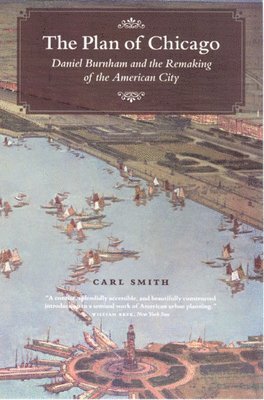
Arguably the most influential document in the history of urban planning, Daniel Burnham's "1909 Plan of Chicago", co-authored by Edward Bennett and produced in collaboration with the Commercial Club of Chicago, proposed many of the city's most distinctive features. Carl Smith's fascinating history reveals the Plan's central role in shaping the ways people envision the cityscape and urban life itself. His concise and accessible narrative begins with a survey of Chicago's stunning rise from a tiny frontier settlement to the nation's second-largest city. He then offers an illuminating exploration of the Plan's creation and reveals how it embodies the renowned architect's belief that cities can and must be remade for the better. Smith points out the ways the Plan continues to influence debates, even a century after its publication, about how to create a vibrant and habitable urban environment. Richly illustrated and incisively written, this insightful book will be indispensable to our understanding of Chicago, Burnham, and the emergence of the modern city.
193 kr
Skickas
A former public defender testifies to the vivid human suffering at the heart of America’s criminal justice system. As a public defender, Allen Goodman faced cross-examination from family and friends every day: How could he work to help criminals? How could he live with himself? Presumed guilty by association, Goodman quickly learned that people didn’t really want an answer; they wanted a justification, perhaps even an apology. Ever the idealist, Goodman answered anyway: Everyone deserves justice.Everyone against Us is Goodman’s testimony of his life as a public defender. In it, he documents his efforts to defend clients, both guilty and innocent, against routine police abuse, prosecutorial misconduct, and unjust sentencing. To work in criminal justice, Goodman shows, is to confront and combat vivid human suffering, of both victims and perpetrators. From sex trafficking, murder, and abuse to false conviction, torture, and systemic racism, Goodman describes the daily experiences that both rattled his worldview and motivated him to work ever harder. Part memoir, part exposé, Everyone against Us is the moving story of an embattled civil servant who staves off the worst abuses of the criminal justice system, at great personal cost.
191 kr
Skickas inom 7-10 vardagar
A wry, no-holds-barred memoir of Nelson’s time controlling some of Chicago's most beautiful spots while facing some of its ugliest traditions.In 1987, the city of Chicago hired a former radical college chaplain to clean up rampant corruption on the waterfront. R. J. Nelson thought he was used to the darker side of the law—he had been followed by federal agents and wiretapped due to his antiwar stances in the sixties—but nothing could prepare him for the wretched bog that constituted the world of a Harbor Boss. Dirty Waters is the wry, no-holds-barred memoir of Nelson’s time controlling some of the city’s most beautiful spots while facing some of its ugliest traditions. Nelson takes us through Chicago's beloved “blue spaces” and deep into the city’s political morass, revealing the different moralities underlining three mayoral administrations and navigating the gritty mechanisms of the city’s political machine. Ultimately, Dirty Waters is a tale of morality, of what it takes to be a force for good in the world and what struggles come from trying to stay ethically afloat in a sea of corruption.
210 kr
Skickas inom 7-10 vardagar
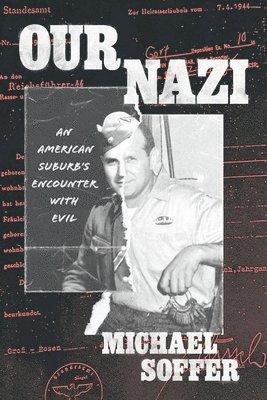
The first book to lay bare the life of a Nazi camp guard who settled in a Chicago suburb and to explore how his community and others responded to discoveries of Nazis in their midst. Reinhold Kulle seemed like the perfect school employee. But in 1982, as his retirement neared, his long-concealed secret came to light. The chief custodian at Oak Park and River Forest High School outside Chicago had been a Nazi, a member of the SS, and a guard at a brutal slave labor camp during World War II. Similar revelations stunned communities across the country. Hundreds of Reinhold Kulles were gradually discovered: men who had patrolled concentration camps, selected Jews for execution, and participated in mass shootings—and who were now living ordinary suburban lives. As the Office of Special Investigations raced to uncover Hitler’s men in the United States, neighbors had to reconcile horrific accusations with the helpful, kind, and soft-spoken neighbors they thought they knew. Though Nazis loomed in the American consciousness as evil epitomized, in Oak Park—a Chicago suburb renowned for its liberalism—people rose to defend Reinhold Kulle, a war criminal. Drawing on archival research and insider interviews, Oak Park and River Forest High School teacher Michael Soffer digs into his community’s tumultuous response to the Kulle affair. He explores the uncomfortable truths of how and why onetime Nazis found allies in American communities after their gruesome pasts were uncovered.
231 kr
Kommande
The remarkable story of pastor Donald Gay and his family’s lasting contributions to gospel music and Chicago culture.When the preacher Gregory Donald Gay joined his sisters onstage at Carnegie Hall in 1950, on a sold-out bill they shared with Mahalia Jackson and the Clara Ward Singers, he became a participant in a landmark moment: the first concert in the venue to feature entirely gospel music. He was just five years old.The Gay Sisters—Evelyn, Geraldine, and Mildred—were key figures in gospel’s Golden Age, and their youngest brother had a front-row seat. Evelyn and Geraldine each innovated singular approaches to gospel piano, while Mildred sang. Together, they toured and performed on a series of influential gospel recordings from 1948 to 1973, playing the Apollo Theatre and crossing paths with musical luminaries like Sister Rosetta Tharpe, Sam Cooke, Pops Staples, and Dizzy Gillespie. But despite a hit record and prodigious talent, the Gay Sisters faded from the limelight. In the ensuing years, they weathered personal trials while their mother, Fannie, devoted her attention to another family undertaking: starting a church.Can I Get a Witness! is a call-and-response between Steven B. Dolins, founder of The Sirens Records, and Donald Gay, who vividly describes his boyhood in Chicago’s Woodlawn neighborhood, his family’s remarkable place in gospel history, his mother’s work as a faith leader, and his own calling as a pastor. The book spotlights the rich contributions of a family remembered not only for the songs they recorded but also for their unwavering kindness to others, a legacy that the legendary Sonny Rollins recounts in a moving foreword.
Scream! Bleed! Take Off Your Clothes!
Stuart Gordon and Chicago’s Organic Theater Company
Inbunden, Engelska, 2026
342 kr
Kommande
A first-hand account of Chicago’s groundbreaking, tumultuous Organic Theater Company.When the founder of the Organic Theater Company died in 2020, the Chicago Tribune asked, “Did One Person Invent Chicago Theater? If So, It Was Stuart Gordon.” And yet, this iconic theater group is arguably the most influential Chicago company whose story has never been told in full. In its heyday, from 1969 through 1985, the Organic’s scrappy and close-knit company created more than thirty idiosyncratic works over long periods of development. A launching pad for playwright David Mamet and for the television series ER, it also fueled the careers of many well-known actors, including Joe Mantegna, André De Shields, Meshach Taylor, and Dennis Franz. Scream! Bleed! Take Off Your Clothes! is the story of a young theater company that always pushed the boundaries with an anarchic exuberance. Drawing on extensive interviews and archival research, this insiders’ account, assembled by three Organic members and an artistic associate, details those exciting productions and the company’s complicated internal dynamics, while also positioning it within Chicago’s vibrant theater scene and the larger culture of the time.