Carlo Rotella - Böcker
Visar alla böcker från författaren Carlo Rotella. Handla med fri frakt och snabb leverans.
11 produkter
11 produkter
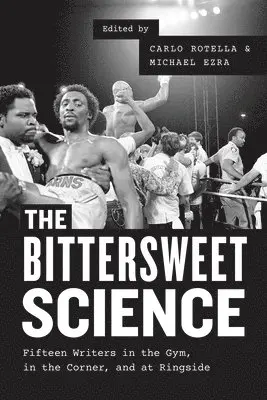
Bittersweet Science – Fifteen Writers in the Gym, in the Corner, and at Ringside
Häftad, Engelska, 2017
200 kr
Skickas inom 7-10 vardagar
Weighing in with a balance of the visceral and the cerebral, boxing has attracted writers for millennia. Yet few of the writers drawn to it have truly known the sport and most have never been in the ring. Moving beyond the typical sentimentality, romanticism, or cynicism common to writing on boxing, The Bittersweet Science is a collection of essays about boxing by contributors who are not only skilled writers but also have extensive firsthand experience at ringside and in the gym, the corner, and the ring itself. Editors Carlo Rotella and Michael Ezra have assembled a roster of fresh voices, ones that expand our understanding of the sport's primal appeal. The contributors to The Bittersweet Science journalists, fiction writers, fight people, and more explore the fight world's many aspects, considering boxing as both craft and business, art form and subculture. From manager Charles Farrell's unsentimental defense of fixing fights to former Gold Glover Sarah Deming's complex profile of young Olympian Claressa Shields, this collection takes us right into the ring and makes us feel the stories of the people who are drawn to or sometimes stuck in the boxing world.We get close-up profiles of marquee attractions like Bernard Hopkins and Roy Jones Jr., as well as portraits of rising stars and compelling cornermen, along with first-person, hands-on accounts from fighters' points of view. We are schooled in not only how to hit and be hit, but why and when to throw in the towel. We experience the intimate immediacy of ringside as well as the dim back rooms where the essentials come together. And we learn that for every champion there's a regiment of journeymen, dabblers, and anglers for advantage, for every aspiring fighter, a veteran in painful decline. Collectively, the perspectives in The Bittersweet Science offer a powerful in-depth picture of boxing, bobbing and weaving through the desires, delusions, and dreams of boxers, fans, and the cast of managers, trainers, promoters, and hangers-on who make up life in and around the ring.Contributors: Robert Anasi, Brin-Jonathan Butler, Donovan Craig, Sarah Deming, Michael Ezra, Charles Farrell, Rafael Garcia, Gordon Marino, Louis Moore, Gary Lee Moser, Hamilton Nolan, Gabe Oppenheim, Carlo Rotella, Sam Sheridan, and Carl Weingarten.
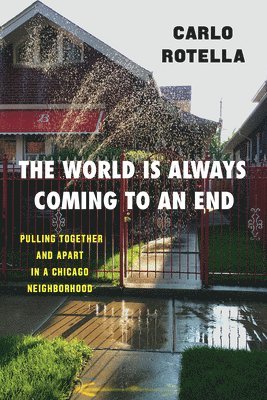
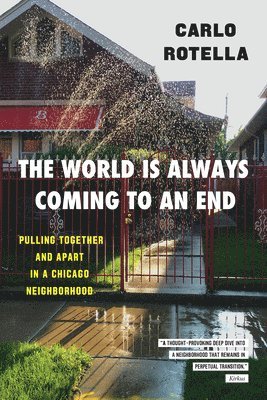
World Is Always Coming to an End
Pulling Together and Apart in a Chicago Neighborhood
Inbunden, Engelska, 2019
243 kr
Skickas inom 7-10 vardagar
An urban neighborhood remakes itself every day—and unmakes itself, too. Houses and stores and streets define it in one way. But it’s also people—the people who make it their home, some eagerly, others grudgingly. A neighborhood can thrive or it can decline, and neighbors move in and move out. Sometimes they stay but withdraw behind fences and burglar alarms. If a neighborhood becomes no longer a place of sociability and street life, but of privacy indoors and fearful distrust outdoors, is it still a neighborhood? In the late 1960s and 1970s Carlo Rotella grew up in Chicago’s South Shore neighborhood—a place of neat bungalow blocks and desolate commercial strips, and sharp, sometimes painful social contrasts. In the decades since, the hollowing out of the middle class has left residents confronting—or avoiding—each other across an expanding gap that makes it ever harder for them to recognize each other as neighbors. Rotella tells the stories that reveal how that happened—stories of deindustrialization and street life; stories of gorgeous apartments with vistas onto Lake Michigan and of Section 8 housing vouchers held by the poor. At every turn, South Shore is a study in contrasts, shaped and reshaped over the past half-century by individual stories and larger waves of change that make it an exemplar of many American urban neighborhoods. Talking with current and former residents and looking carefully at the interactions of race and class, persistence and change, Rotella explores the tension between residents’ deep investment of feeling and resources in the physical landscape of South Shore and their hesitation to make a similar commitment to the community of neighbors living there. Blending journalism, memoir, and archival research, The World Is Always Coming to an End uses the story of one American neighborhood to challenge our assumptions about what neighborhoods are, and to think anew about what they might be if we can bridge gaps and commit anew to the people who share them with us. Tomorrow is another ending.
149 kr
Skickas inom 7-10 vardagar
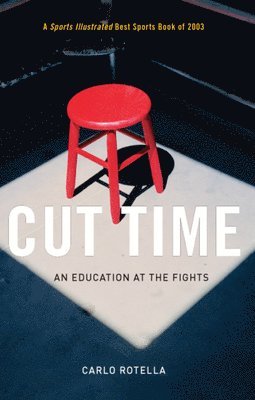
Boxing is not just fighting," writes Carlo Rotella. "It is also training and living right and preparing to go the distance in the broadest sense of the phrase, a relentless managing of self that anyone who gets truly old must learn." Rotella's "Cut Time" chronicles his immersion in the fight world, from the brutal classroom of the gym to the spectacle of fight night. An award-winning writer and ringside veteran, Rotella unearths the hidden wisdom in any kind of fight, from barroom brawl to HBO extravaganza. Tracing the consequences of hurt and craft, the two central facts of boxing, Rotella reveals moving resonances between the worlds inside and outside the ropes. The brief, disastrous fistic career of one of his students pinpoints the moment when adulthood arrives; the hard-won insight of a fellow fan shows Rotella how to reckon with a car crash. Mismatches, resilience, pride, pain, and aging - Rotella's lessons from the ring extend far beyond the sport. In "Cut Time", Rotella achieves the near-impossible: he makes the fight world relevant to us, whether we're fans or not.
279 kr
Skickas inom 7-10 vardagar
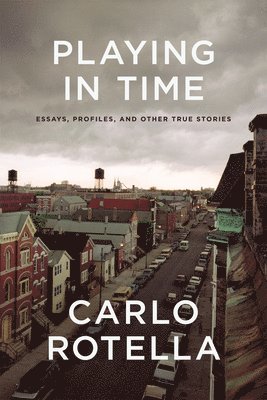
From jazz fantasy camp to running a movie studio; from a fight between an old guy and a fat guy to a fear of clowns - Carlo Rotella's "Playing in Time" delivers good stories full of vivid characters, all told with the unique voice and humor that have garnered him devoted readers in the "New York Times Magazine", "Boston Globe", and "Washington Post Magazine", among others. The two dozen essays in "Playing in Time" revolve around the themes and obsessions that have characterized Rotella's writing from the start: boxing, music, writers, and cities. "Playing in time" refers to how people make beauty and meaning while working within the constraints and limits forced on them by life, and in his writing Rotella transforms the craft and beauty he so admires in others into an art of his own. Rotella is best known for his writings on boxing, and his essays here do not disappoint. It's a topic that he turns to for its colorful characters, compelling settings, and formidable life lessons both in and out of the ring.He gives us tales of an older boxer who keeps unretiring and a welterweight who is "about as rich and famous as a 147-pound fighter can get these days," and a hilarious rumination on why Muhammad Ali's phrase "I am the greatest" began appearing (in the mouth of Epeus) in translations of the "Iliad" around 1987. His essays on blues, crime and science fiction writers, and urban spaces are equally engaging, combining an artist's eye for detail with a scholar's sense of research, whether taking us to visit detective writer George Pelecanos or to dance with the proprietress of the Baby Doll Polka Club in Chicago. Rotella's essays are always smart, frequently funny, and consistently surprising. This collection will be welcomed by his many fans and will bring his inimitable style and approach to an even wider audience.
World Is Always Coming to an End
Pulling Together and Apart in a Chicago Neighborhood
Häftad, Engelska, 2020
161 kr
Skickas inom 7-10 vardagar
An urban neighborhood remakes itself every day--and unmakes itself, too. Houses and stores and streets define it in one way. But it's also people--the people who make it their home, some eagerly, others grudgingly. A neighborhood can thrive or it can decline, and neighbors move in and move out. Sometimes they stay but withdraw behind fences and burglar alarms. If a neighborhood becomes no longer a place of sociability and street life, but of privacy indoors and fearful distrust outdoors, is it still a neighborhood? In the late 1960s and 1970s Carlo Rotella grew up in Chicago's South Shore neighborhood--a place of neat bungalow blocks and desolate commercial strips, and sharp, sometimes painful social contrasts. In the decades since, the hollowing out of the middle class has left residents confronting--or avoiding--each other across an expanding gap that makes it ever harder for them to recognize each other as neighbors. Rotella tells the stories that reveal how that happened--stories of deindustrialization and street life; stories of gorgeous apartments with vistas onto Lake Michigan and of Section 8 housing vouchers held by the poor. At every turn, South Shore is a study in contrasts, shaped and reshaped over the past half-century by individual stories and larger waves of change that make it an exemplar of many American urban neighborhoods. Talking with current and former residents and looking carefully at the interactions of race and class, persistence and change, Rotella explores the tension between residents' deep investment of feeling and resources in the physical landscape of South Shore and their hesitation to make a similar commitment to the community of neighbors living there. Blending journalism, memoir, and archival research, The World Is Always Coming to an End uses the story of one American neighborhood to challenge our assumptions about what neighborhoods are, and to think anew about what they might be if we can bridge gaps and commit anew to the people who share them with us. Tomorrow is another ending.
630 kr
Skickas inom 3-6 vardagar
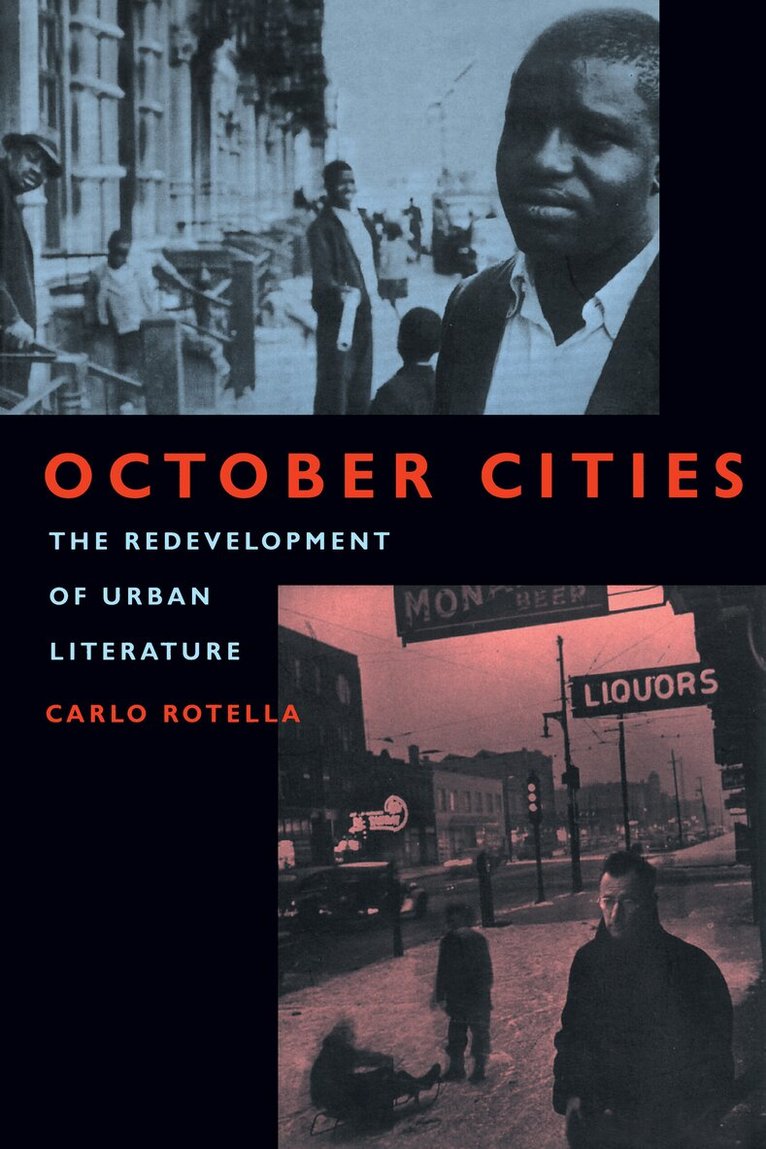
Returning to his native Chicago after World War II, Nelson Algren found a city transformed. The flourishing industry, culture, and literature that had placed prewar Chicago at center stage in American life were entering a time of crisis. The middle class and economic opportunity were leaving the inner city, and Black Southerners arriving in Chicago found themselves increasingly estranged from the nation's economic and cultural resources. For Algren, Chicago was becoming 'an October sort of city even in the spring', and as Carlo Rotella demonstrates, this metaphorical landscape of fall led Algren and others to forge a literary form that traced the American city's transformation. Narratives of decline, like the complementary narratives of black migration and inner-city life written by Claude Brown and Gwendolyn Brooks, became building blocks of the postindustrial urban literature. "October Cities" examines these narratives as they played out in Chicago, Philadelphia, and Manhattan. Through the work of Algren, Brown, Brooks, and other urban writers, Rotella explores the relationship of this new literature to the cities it draws upon for inspiration.The stories told are of neighborhoods and families molded by dramatic urban transformation on a grand scale with vast movements of capital and people, racial succession, and an intensely changing urban landscape.
Good with Their Hands
Boxers, Bluesmen, and Other Characters from the Rust Belt
Häftad, Engelska, 2004
577 kr
Skickas inom 3-6 vardagar
This eloquent, streetwise book is a paean to America's Rust Belt and a compelling exploration of four milieus caught up in a great transformation of city life. With loving attention to detail and a fine sense of historical context, Carlo Rotella explores women's boxing in Erie, Pennsylvania; Buddy Guy and the blues scene in Chicago; police work and crime stories in New York City, especially as they converged in the making of the movie "The French Connection"; and attempts at urban renewal in the classic mill city of Brockton, Massachusetts. Navigating through accrued layers of cultural, economic, and personal history, Rotella shows how stories of city life can be found in a boxing match, a guitar solo, a chase scene in a movie, or a landscape. The stories he tells dramatize the coming of the postindustrial era in places once defined by their factories, a sweeping set of changes that has remade the form and meaning of American urbanism.A native of the Rust Belt whose own life resonates with these stories, Rotella has gone to the home turfs of his characters, hanging out in boxing gyms and blues clubs, riding along with cops and moviemakers, discussing the future of Brockton with a visionary artist and a pitbull-fancying janitor who both plan to save the city's soul. These people make culture with their hands, and hands become an expressive metaphor for Rotella as he traces the links between their individual talents and the urban scenes in which they flourish. His writing elegantly connects what happens on the street to the larger story of urban transformation, especially the shift from a way of life that demanded individuals be 'good with their hands' to one that depends on the intellectual and social skills fostered by formal education and service work. Strong feelings emerge in this book about what has been lost and gained in the long, slow aging-out of the industrial city. But Rotella's journey through the streets has its ultimate reward in discovering deep-rooted instances of what he calls 'truth and beauty in the Rust Belt.'
What Can I Get Out of This?
Teaching and Learning in a Classroom Full of Skeptics
Inbunden, Engelska, 2025
733 kr
Skickas inom 7-10 vardagar
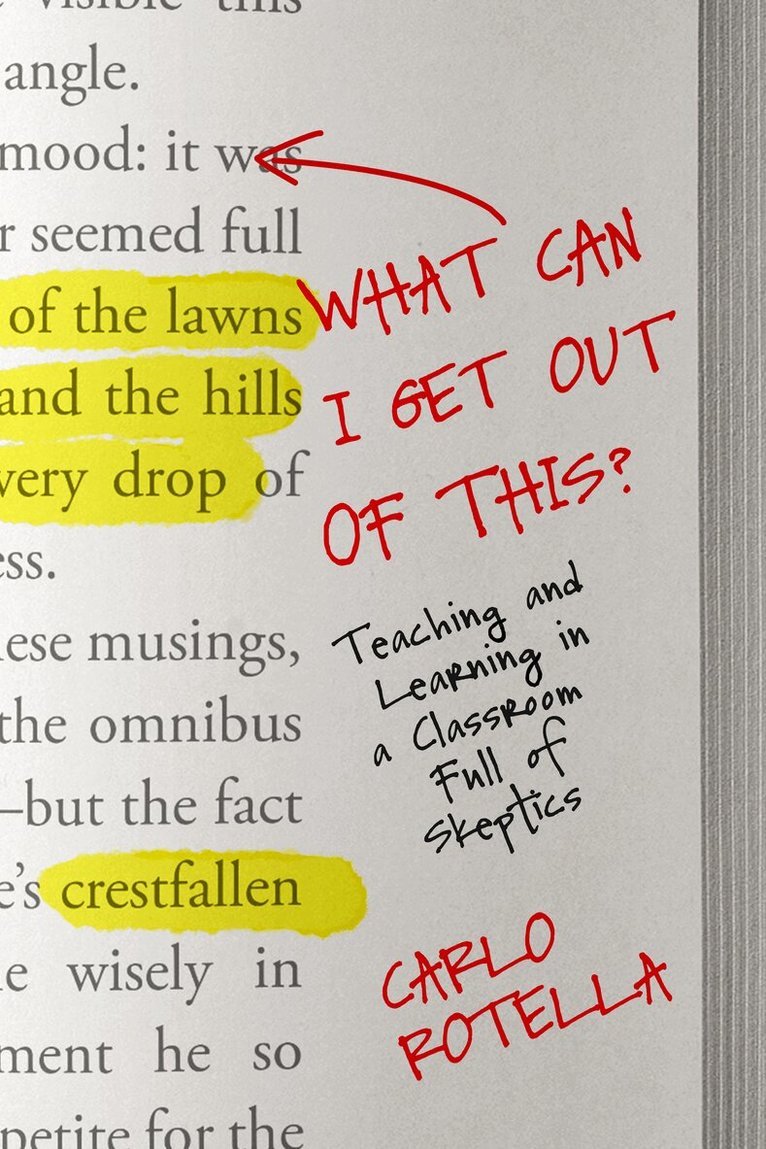
A Forbes Best Higher Education Book Of 2025A moving story from a formidable teacher that doubles as a guide to teaching the humanities today. At a time when college students and their parents often question the "return on investment" from humanities courses, accomplished feature writer and English professor Carlo Rotella invites us into the minds of a group of skeptical first-year students who are ultimately transformed by a required literature class. In What Can I Get Out of This? he follows thirty-three students through his class to provide an intimate look at teaching and learning from their perspectives as well as his own. The students' reluctance—"How does this get me a job?"—transforms into insight as they wrestle with challenging books, share ideas, discover how to think critically, and form a community. In all these ways, they learn how to extract meaning from the world around them, an essential life skill. Confronting skeptics of higher education, this compassionate and inspiring book reveals the truth of what students actually experience in college.
What Can I Get Out of This?
Teaching and Learning in a Classroom Full of Skeptics
Häftad, Engelska, 2025
198 kr
Skickas inom 7-10 vardagar
A Forbes Best Higher Education Book Of 2025A moving story from a formidable teacher that doubles as a guide to teaching the humanities today. At a time when college students and their parents often question the "return on investment" from humanities courses, accomplished feature writer and English professor Carlo Rotella invites us into the minds of a group of skeptical first-year students who are ultimately transformed by a required literature class. In What Can I Get Out of This? he follows thirty-three students through his class to provide an intimate look at teaching and learning from their perspectives as well as his own. The students' reluctance—"How does this get me a job?"—transforms into insight as they wrestle with challenging books, share ideas, discover how to think critically, and form a community. In all these ways, they learn how to extract meaning from the world around them, an essential life skill. Confronting skeptics of higher education, this compassionate and inspiring book reveals the truth of what students actually experience in college.
277 kr
Skickas inom 3-6 vardagar
A lifesaving handbook for parents of children who are occasionally, or too often, ?out of control? from a Yale University psychology and child psychiatry professor.
744 kr
Skickas inom 10-15 vardagar
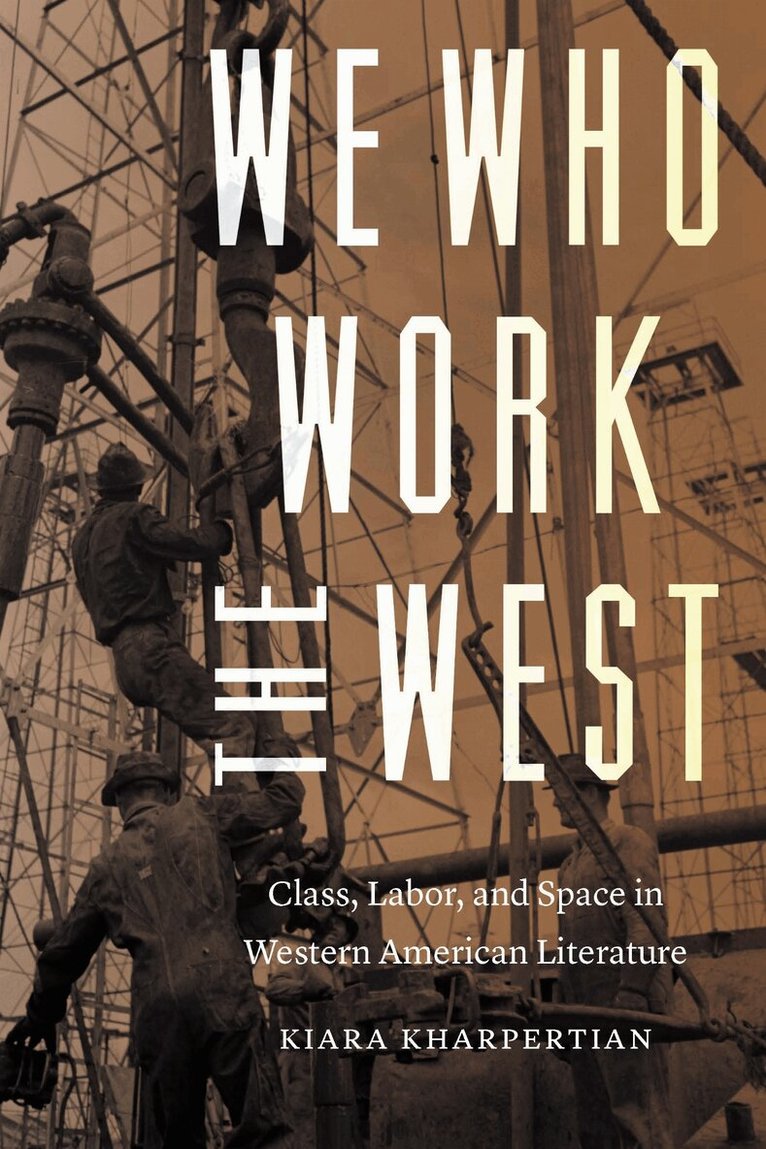
We Who Work the West examines literary representations of class, labor, and space in the American West from 1885 to 2012. Moving from MarÍa Amparo Ruiz de Burton’s representations of dispossessed Californio ranchers in the mid-nineteenth century to the urban grid of early twentieth-century San Francisco in Frank Norris’s McTeague to working and unemployed cowboys in the contemporary novels of Cormac McCarthy and Larry McMurtry, Kiara Kharpertian provides a panoramic look at literary renderings of both individual labor-physical, tangible, and often threatened handwork-and the epochal transformations of central institutions of a modernizing West: the farm, the ranchero, the mine, the rodeo, and the Native American reservation.The West that emerges here is both dynamic and diverse, its on-the-ground organization of work, social class, individual mobility, and collective belonging constantly mutating in direct response to historical change and the demands of the natural environment. The literary West thus becomes more than a locus of mythic nostalgia or consumer fantasy about the American past. It becomes a place where the real work of making that West, as well as the suffering and loss it often entailed, is reimagined.