Classical Diaspora - Böcker
Visar alla böcker i serien Classical Diaspora. Handla med fri frakt och snabb leverans.
9 produkter
9 produkter
712 kr
Skickas inom 5-8 vardagar
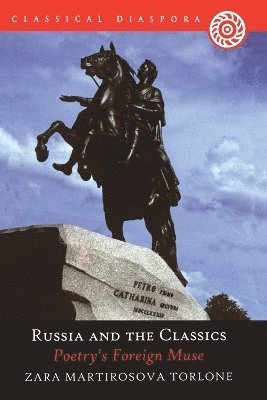
This important study, the first in a new series on "Classical Diaspora", explores the reception of classical antiquity in Russian poetry with a particular focus on the writings of several significant twentieth-century poets: Innokentii Annenskii, Viacheslav Ivanov, Marina Tsvetaeva, Osip Mandelshtam and Joseph Brodsky. These poets' engagement with the classics is analysed within the wider context of Russia's relationship with Greco-Roman heritage as a gateway to European culture. The earlier phase of the development of classical reception in Russian poetry is traced from Antiokh Kantemir and Mikhailo Lomonosov to Alexander Pushkin. Thus the book offers a concise chronology of Russian poetry's self-construction as a legitimate Euopean heir to the legacy of Greece and Rome. The Russian poetic reception of classical literature has its own distinctive features such as a preoccupation with mythological tragedy and with the reception of Ovid's poetry of exile, setting it apart from the traditions and movements associated with Western European classicism.This fascinating study combines historicist scholarship with a sophisticated alertness to recent developments in reception theory, producing a compelling account of a hitherto neglected aspect of the classical tradition.
694 kr
Skickas inom 5-8 vardagar
The teaching and research of the Classics in South Africa are deeply rooted in the racial, political and educational inequalities which have characterised its turbulent history. In this original study, Michael Lambert opens three windows on to this history, using the creation of identities as his theoretical lens. The foundation of the Classical Association of South Africa in 1956 and the cultural reinforcement of Afrikaner nationalist identity; the deployment of British colonial identity in public discourses about the role of the Classics in apartheid South Africa at an English-speaking university; and the exploration of black African identities in response to the teaching of the Classics at missionary institutions, where 'vocational training' was locked in combat with a classical education, regarded by an educated black elite as the means for upward social mobility in a highly-stratified colonial society. The book will be of interest to students of many subjects, including Classics, Cultural Studies, African Studies and History of Education.
1 245 kr
Skickas inom 10-15 vardagar
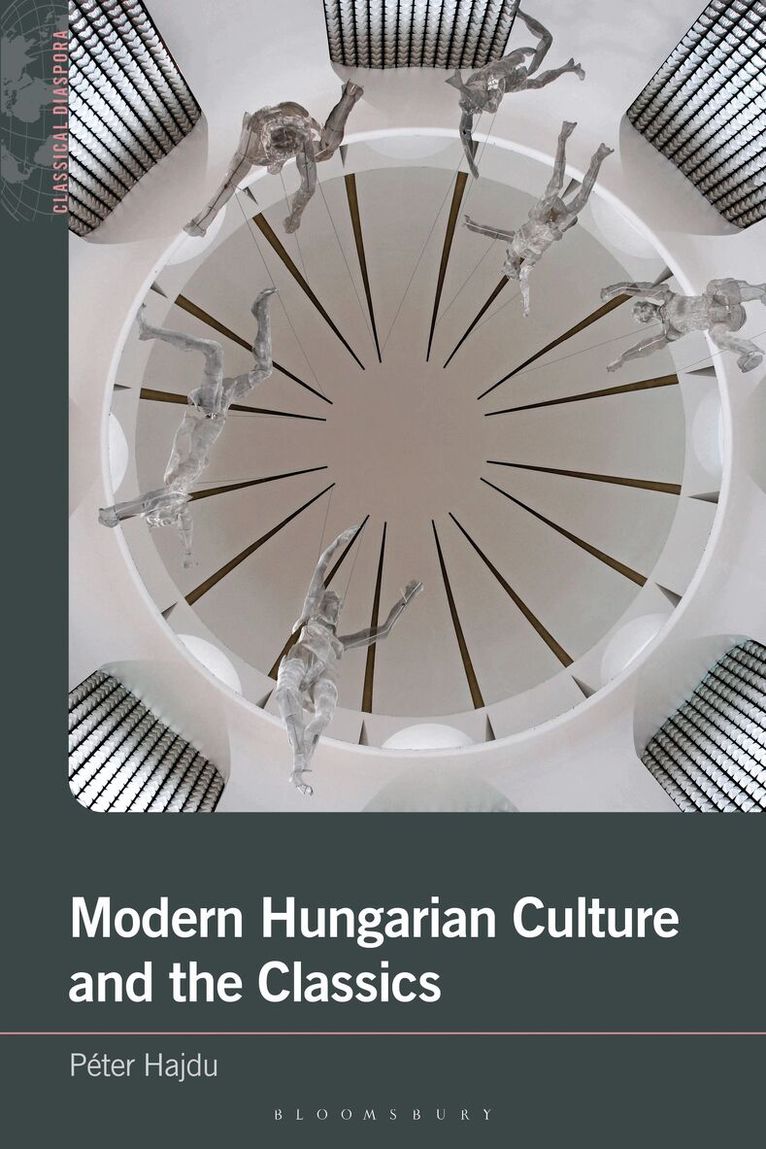
Péter Hajdu examines the cultivation of the Classics as an intellectual framework and crucial ingredient of the western aspect of Hungarian national identity. This book approaches the relationship of modern Hungarian culture to classical heritage from the various viewpoints of identity politics, education, translation history, scholarship, and its impact on literature. When the Hungarian nation-building project developed ideas of national identity, it necessarily incorporated the historical narrative according to which the Hungarians arrived at their current homeland in the Middle Ages, and only later did it adopt European culture. The duplicity of a mostly imagined Asian, pagan, barbaric or nomadic culture, and a Western, Christian, civilized identity, deeply rooted in European culture, has played and continues to play a role in the Hungarian discourse.Hajdu also studies the gradual disappearance of classics from the Hungarian school education since the 19th century, which has been accompanied by fervid political debates. However, over this period, translations of classical texts paradoxically became more frequent and popular with the decline of a classical education, even though fewer readers had access to the original texts. Despite this change, the translation strategies tended to remain school-bound. The knowledge of classical literature still leaves traces on Hungarian literature, which Hajdu explores using examples from nineteenth-century novels and contemporary poetry. This book sheds light on a topic of classical reception that has remained largely unexplored in this part of Europe, but one which has an incredibly rich history, culture and literary tradition.
406 kr
Skickas inom 10-15 vardagar
Péter Hajdu examines the cultivation of the Classics as an intellectual framework and crucial ingredient of the western aspect of Hungarian national identity. This book approaches the relationship of modern Hungarian culture to classical heritage from the various viewpoints of identity politics, education, translation history, scholarship, and its impact on literature. When the Hungarian nation-building project developed ideas of national identity, it necessarily incorporated the historical narrative according to which the Hungarians arrived at their current homeland in the Middle Ages, and only later did it adopt European culture. The duplicity of a mostly imagined Asian, pagan, barbaric or nomadic culture, and a Western, Christian, civilized identity, deeply rooted in European culture, has played and continues to play a role in the Hungarian discourse.Hajdu also studies the gradual disappearance of classics from the Hungarian school education since the 19th century, which has been accompanied by fervid political debates. However, over this period, translations of classical texts paradoxically became more frequent and popular with the decline of a classical education, even though fewer readers had access to the original texts. Despite this change, the translation strategies tended to remain school-bound. The knowledge of classical literature still leaves traces on Hungarian literature, which Hajdu explores using examples from nineteenth-century novels and contemporary poetry. This book sheds light on a topic of classical reception that has remained largely unexplored in this part of Europe, but one which has an incredibly rich history, culture and literary tradition.
1 467 kr
Skickas inom 10-15 vardagar
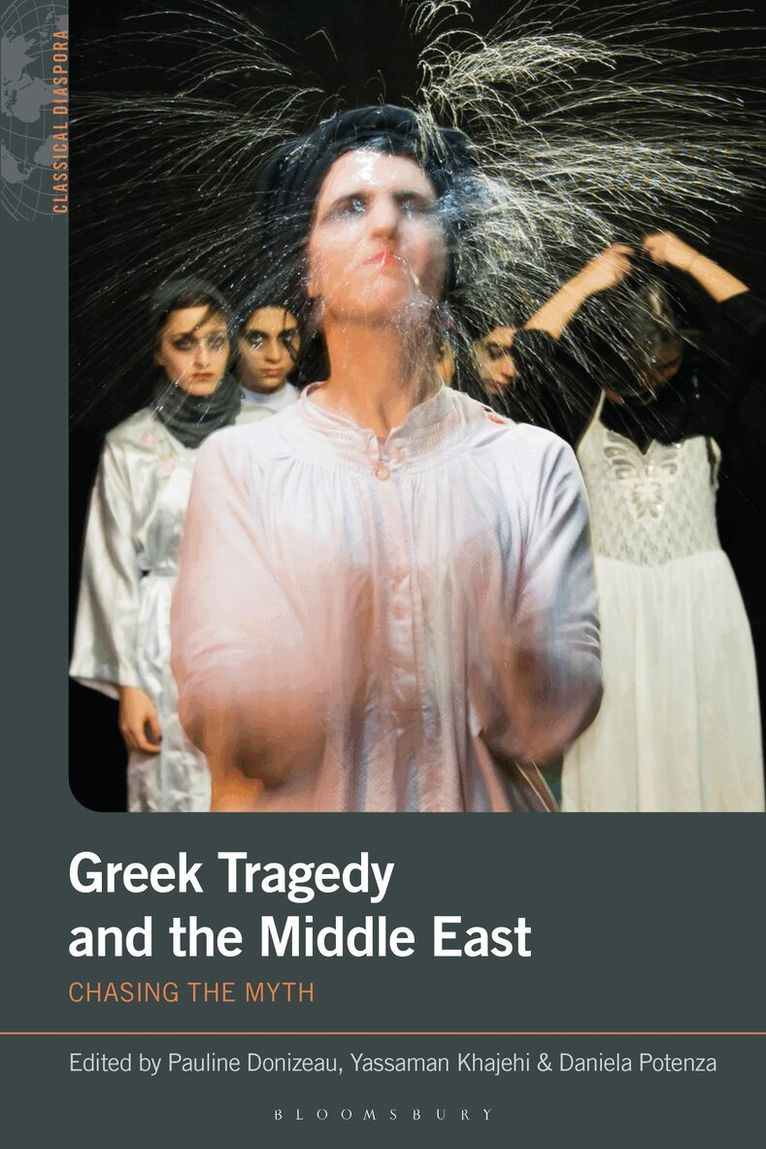
Employing the idea of interculturality to study Middle Eastern adaptations of Greek tragedy from the turn of 20th century until the present day, this book first explores the earlier phase of the development of Greek classical reception in Middle Eastern theatre. It then moves to focus on modern Arabic, Persian and Turkish adaptations of Greek tragedy both in the early post-colonial and contemporary periods in the MENA and in Europe. Case by case, this book examines how the classical sources are reworked and adapted, as well as how they engage with interculturality, hybridisation and the circulation of aesthetics and models. At the same time, it explores the implications and consequences of expressing socio-political concerns through classical Greek sources.While Muslim thinkers and translators introduced Greek philosophy – in particular Aristotle’s Poetics – to the West in the Middle Ages, adaptations of Greek tragedies only appeared in the MENA region at the very beginning of the 20th century. For this reason, the development of Greek tragedy in the Middle East is difficult to disentangle from colonialism and cultural imperialism. Encompassing language differences and offering for the first time a broad approach on the Middle-Eastern reception of Greek tragedy, this book produces a renewed focus on a fascinating aspect of the classical tradition.
453 kr
Skickas inom 10-15 vardagar
Employing the idea of interculturality to study Middle Eastern adaptations of Greek tragedy from the turn of 20th century until the present day, this book first explores the earlier phase of the development of Greek classical reception in Middle Eastern theatre. It then moves to focus on modern Arabic, Persian and Turkish adaptations of Greek tragedy both in the early post-colonial and contemporary periods in the MENA and in Europe. Case by case, this book examines how the classical sources are reworked and adapted, as well as how they engage with interculturality, hybridisation and the circulation of aesthetics and models. At the same time, it explores the implications and consequences of expressing socio-political concerns through classical Greek sources.While Muslim thinkers and translators introduced Greek philosophy – in particular Aristotle’s Poetics – to the West in the Middle Ages, adaptations of Greek tragedies only appeared in the MENA region at the very beginning of the 20th century. For this reason, the development of Greek tragedy in the Middle East is difficult to disentangle from colonialism and cultural imperialism. Encompassing language differences and offering for the first time a broad approach on the Middle-Eastern reception of Greek tragedy, this book produces a renewed focus on a fascinating aspect of the classical tradition.
1 366 kr
Skickas inom 7-10 vardagar
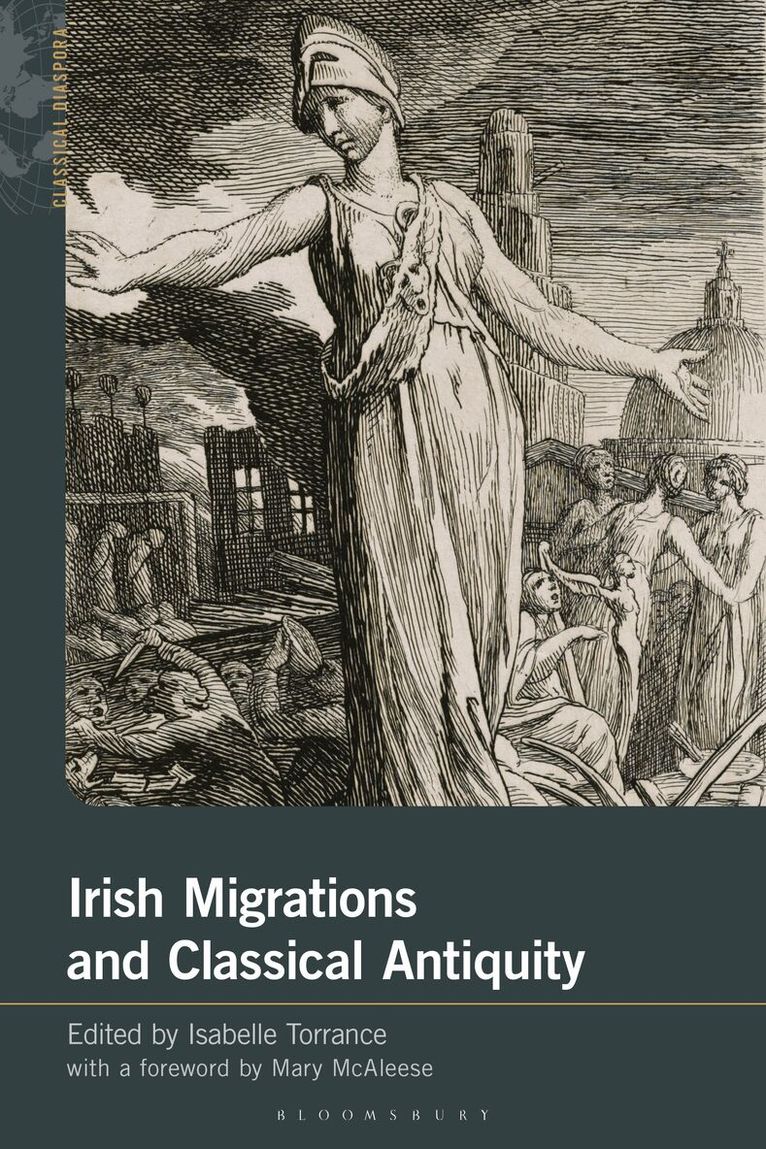
Why should classical antiquity matter to Irish migration? Irish Migrations and Classical Antiquity argues that ancient Greece and Rome have shaped Irish migration narratives from the earliest texts to the 21st century. These classical models emerge in response to four key drivers of migration: war, economic need, religious motivation and the pursuit of education. Rather than passive inheritances, Graeco-Roman forms are used both to join and to challenge dominant frameworks, offering tools for cultural participation and strategies of resistance to exclusion.The book traces classical reception in contexts ranging from early Irish origin legends and medieval Latin learning to 21st-century cultural politics, including Irish-language translation, diaspora literature and gendered experiences. Participation appears in assertions of Irish civilisation, synchronistic histories, literary cosmopolitanism and transnational exchange. Resistance surfaces in critiques of marginalisation, defence of minority languages and challenges to aesthetic or political canons. This book rethinks how Irish identities travel across borders, languages and centuries by showing how the ancient world underwrites both movement and its meanings.The ebook editions of this book are available open access under a CC BY-NC-ND 4.0 licence on bloomsburycollections.com. Open access was funded by the European Research Council.
544 kr
Skickas inom 10-15 vardagar
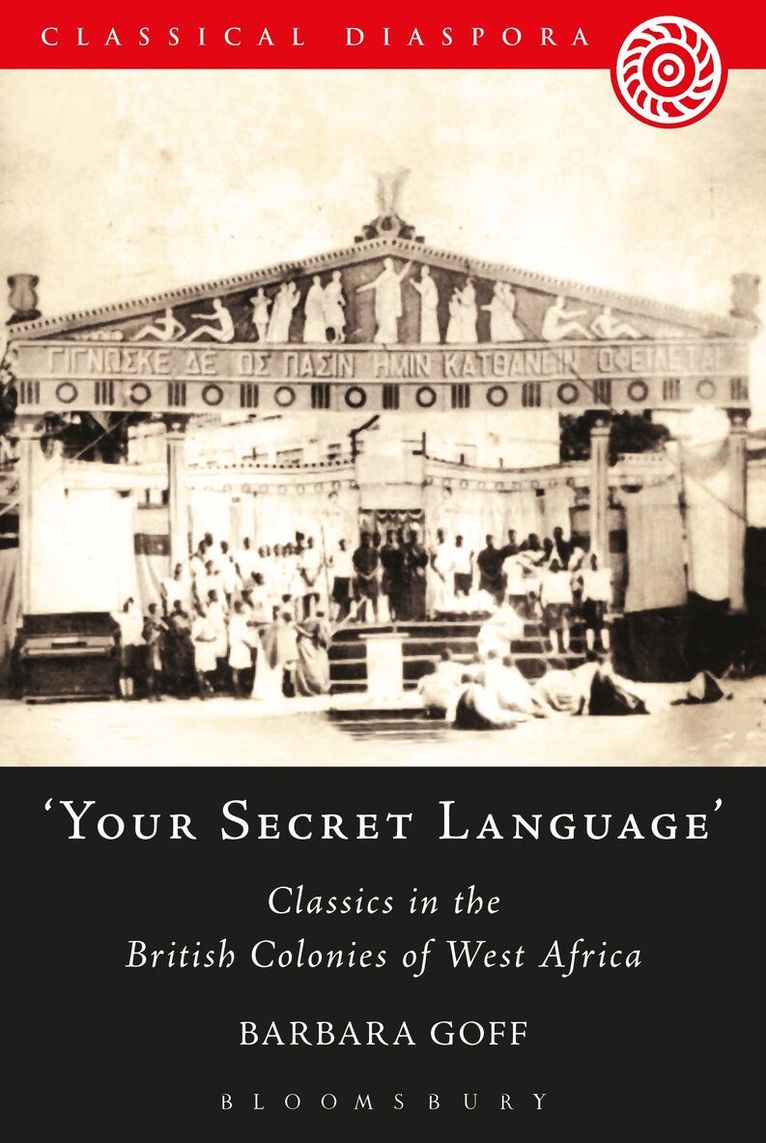
This book is the first to examine the complex and contradictory history of Classics in Sierra Leone, Ghana and Nigeria. It investigates how Classical Studies, as an integral part of colonial education, enforced a notion of cultural inferiority on African subjects, but conversely played an enabling role in nationalist expression. The enquiry is structured around three main questions: how Classics contributed to the formation of a new class of Europeanising West Africans in the late 19th century; how Classics was implicated in the ideological struggles of the early twentieth century over the desirability of 'practical' or 'agricultural' education; and how the uses of Classics changed in the years leading up to independence.
2 157 kr
Skickas inom 10-15 vardagar
This book is the first to examine the complex and contradictory history of Classics in Sierra Leone, Ghana and Nigeria. It investigates how Classical Studies, as an integral part of colonial education, enforced a notion of cultural inferiority on African subjects, but conversely played an enabling role in nationalist expression. The enquiry is structured around three main questions: how Classics contributed to the formation of a new class of Europeanising West Africans in the late 19th century; how Classics was implicated in the ideological struggles of the early twentieth century over the desirability of 'practical' or 'agricultural' education; and how the uses of Classics changed in the years leading up to independence.