CMAS Mexican American Monograph - Böcker
Visar alla böcker i serien CMAS Mexican American Monograph. Handla med fri frakt och snabb leverans.
5 produkter
5 produkter
233 kr
Skickas inom 10-15 vardagar
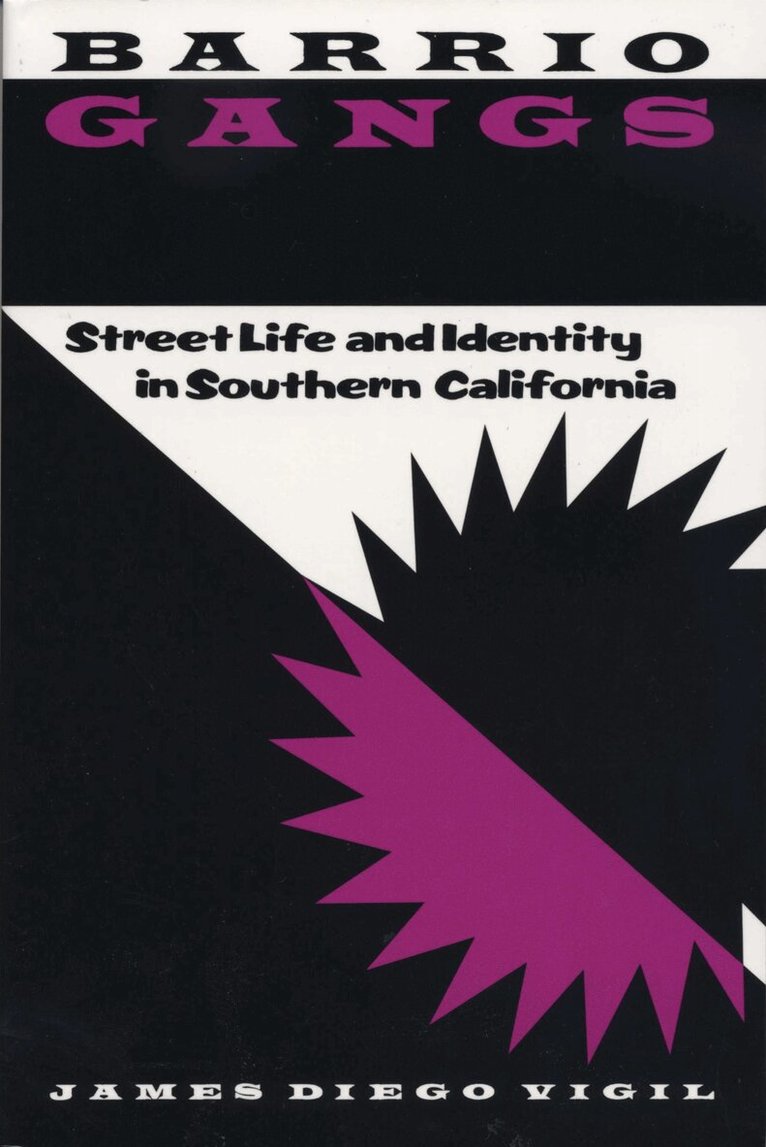
Within the Mexican American barrios of Los Angeles, gang activity, including crime and violent acts, has grown and flourished. In the past, community leaders and law enforcement officials have approached the problem, not as something that needs to be understood, but only as something to be gotten rid of. Rejecting that approach, James D. Vigil asserts that only by understanding the complex factors that give birth and persistence to gangs can gang violence be ended. Drawing on many years of experience in the barrios as a youth worker, high school teacher, and researcher, Vigil identifies the elements from which gangs spring: isolation from the dominant culture, poverty, family stress and crowded households, peer pressure, and the adolescent struggle for self-identity. Using interviews with actual gang members, he reveals how the gang often functions as parent, school, and law enforcement in the absence of other role models in the gang members' lives. And he accounts for the longevity of gangs, sometimes over decades, by showing how they offer barrio youth a sense of identity and belonging nowhere else available.
212 kr
Skickas inom 10-15 vardagar
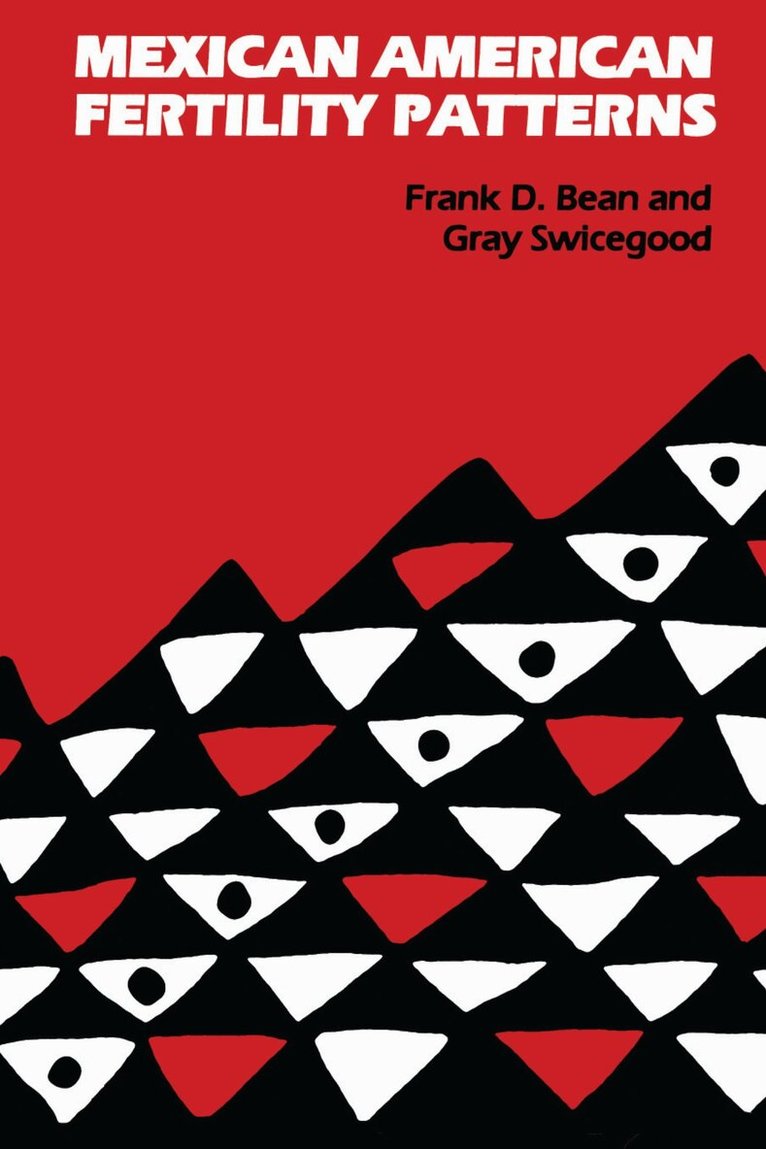
The Mexican American population is the fastest growing major racial/ethnic group in the United States. During the decade 1970–1980, the Mexican origin population increased from 4.5 million to 8.7 million persons. High fertility, not immigration, was responsible for nearly two-thirds of this growth. Recent and historical evidence shows that women of Mexican origin or descent bear significantly more children than other white women in the United States. Mexican American Fertility Patterns clarifies the nature and magnitude of these fertility differences by analyzing patterns of childbearing both across ethnic groups and within the Mexican American population. Using data from the 1970 and 1980 U.S. Censuses and from the 1976 Survey of Income and Education, the authors evaluate various hypotheses of cultural, social, demographic, and/or economic factors as determinants of fertility differences. Empirical analyses center on the interrelationships between fertility and generational status, language usage and proficiency, and female education. This timely report concludes that Mexican American fertility is closest to that of other whites under conditions of greater access to the opportunity structures of the society.
237 kr
Skickas inom 10-15 vardagar
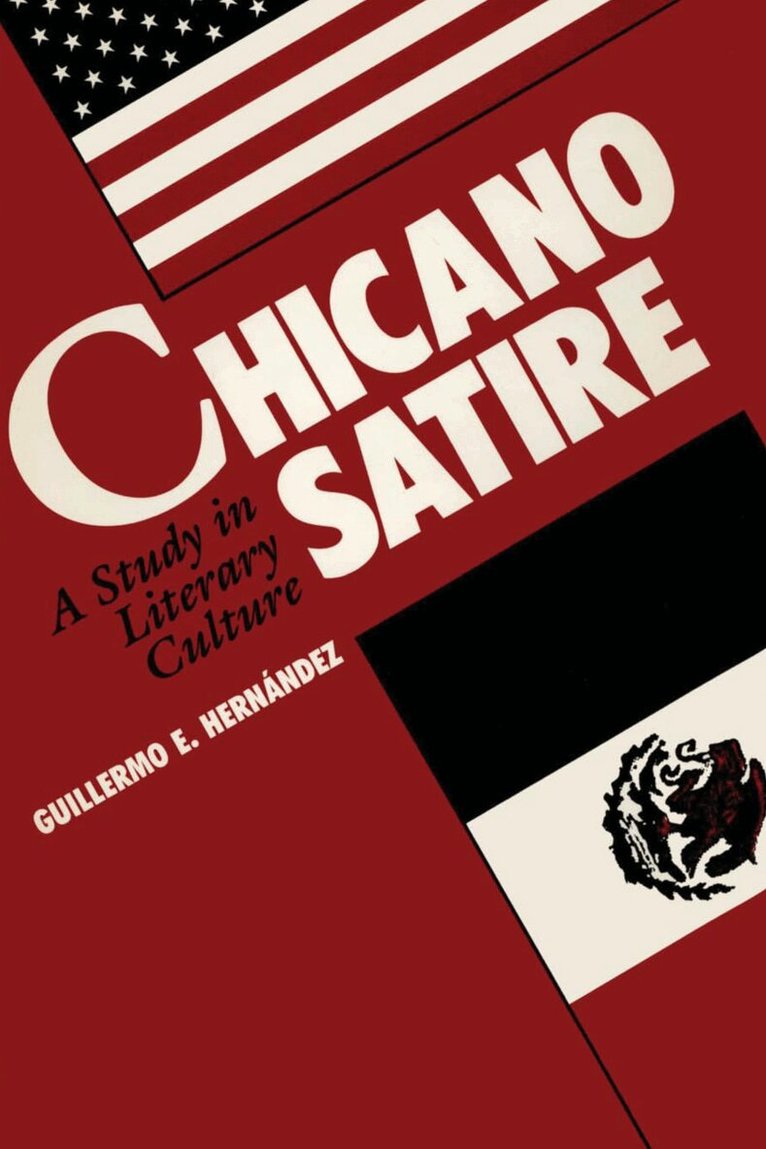
Geographically close to Mexico, but surrounded by Anglo-American culture in the United States, Chicanos experience many cultural tensions and contradictions. Their lifeways are no longer identical with Mexican norms, nor are they fully assimilated to Anglo-American patterns. Coping with these tensions-knowing how much to let go of, how much to keep-is a common concern of Chicano writers, who frequently use satire as a means of testing norms and deviations from acceptable community standards. In this groundbreaking study, Guillermo HernÁndez focuses on the uses of satire in the works of three authors-Luis Valdez, Rolando Hinojosa, and JosÉ Montoya-and on the larger context of Chicano culture in which satire operates.HernÁndez looks specifically at the figures of the pocho (the assimilated Chicano) and the pachuco (the zoot-suiter, or urbanized youth). He shows how changes in their literary treatment-from simple ridicule to more understanding and respect-reflect the culture's changes in attitude toward the process of assimilation.HernÁndez also offers many important insights into the process of cultural definition that engaged Chicano writers during the 1960s and 1970s. He shows how the writers imaginatively and syncretically formed new norms for the Chicano experience, based on elements from both Mexican and United States culture but congruent with the historical reality of Chicanos.With its emphasis on culture change and creation, Chicano Satire will be of interest across a range of human sciences.
263 kr
Skickas inom 7-10 vardagar
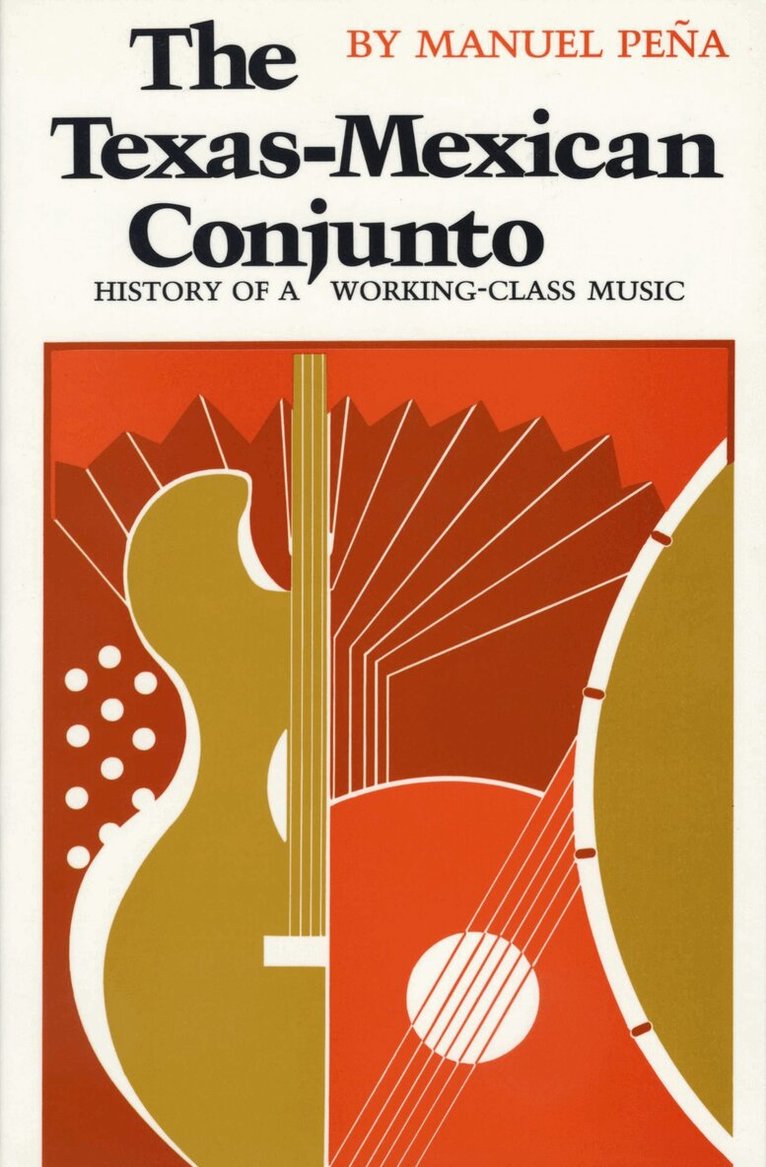
Around 1930, a highly popular and distinctive type of accordion music, commonly known as conjunto, emerged among Texas-Mexicans. Manuel PeÑa's The Texas-Mexican Con;unto is the first comprehensive study of this unique folk style. The author's exhaustive fieldwork and personal interviews with performers, disc jockeys, dance promoters, recording company owners, and conjunto music lovers provide the crucial connection between an analysis of the music itself and the richness of the culture from which it sprang. Using an approach that integrates musicological, historical, and sociological methods of analysis, PeÑa traces the development of the conjunto from its tentative beginnings to its preeminence as a full-blown style by the early 1960s. Biographical sketches of such major early performers as Narciso MartÍnez (El HuracÁn del Valle), Santiago JimÉnez (El Flaco), Pedro Ayala, Valerio Longoria, Tony de la Rosa, and Paulino Bernal, along with detailed transcriptions of representative compositions, illustrate the various phases of conjunto evolution. PeÑa also probes the vital connection between conjunto's emergence as a powerful symbolic expression and the transformation of Texas-Mexican society from a pre-industrial folk group to a community with increasingly divergent socioeconomic classes and ideologies. Of concern throughout the study is the interplay between ethnicity, class, and culture, and PeÑa's use of methods and theories from a variety of scholarly disciplines enables him to tell the story of conjunto in a manner both engaging and enlightening. This important study will be of interest to all students of Mexican American culture, ethnomusicology, and folklore.
212 kr
Skickas inom 10-15 vardagar
Los Angeles, the summer of 1943. For ten days in June, Anglo servicemen and civilians clashed in the streets of the city with young Mexican Americans whose fingertip coats and pegged, draped trousers announced their rebellion. At their height, the riots involved several thousand men and women, fighting with fists, rocks, sticks, and sometimes knives. In the end none were killed, few were seriously injured, and property damage was slight and yet, even today, the zoot-suit riots are remembered and hold emotional and symbolic significance for Mexican Americans and Anglos alike. The causes of the rioting were complex, as Mazón demonstrates in this illuminating analysis of their psychodynamics. Based in part on previously undisclosed FBI and military records, this engrossing study goes beyond sensational headlines and biased memories to provide an understanding of the zoot-suit riots in the context of both Mexican American and Anglo social history.