Collected Works of Wyndham Lewis – serie
Visar alla böcker i serien Collected Works of Wyndham Lewis. Handla med fri frakt och snabb leverans.
3 produkter
3 produkter
3 570 kr
Skickas inom 5-8 vardagar
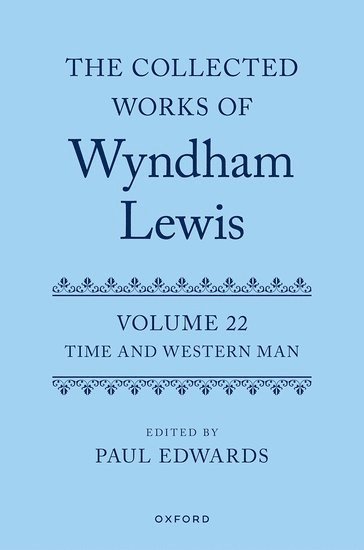
The Collected Works of Wyndham Lewis brings together for the first time all of the published writings of Wyndham Lewis (1882-1957), a major contributor to literary modernism and one of the most important British painters of the first half of the twentieth century.This is the first comprehensive edition of Time and Western Man, with explanatory notes, previously unpublished drafts, a history of composition, and an account of its critical reception. Originally published in 1927, Time and Western Man is one of Lewis's most important books, and a pioneering work of cultural criticism. It contains scathing criticism of his fellow modernist writers, Ezra Pound, James Joyce, and Gertrude Stein. The second part of the book analyses and attacks the philosophy of 'Time', focusing especially on Henri Bergson, A. N. Whitehead, Samuel Alexander, and Oswald Spengler. Many of Lewis's most penetrating arguments are in the drafts that are printed in this edition for the first time.
2 555 kr
Skickas inom 5-8 vardagar
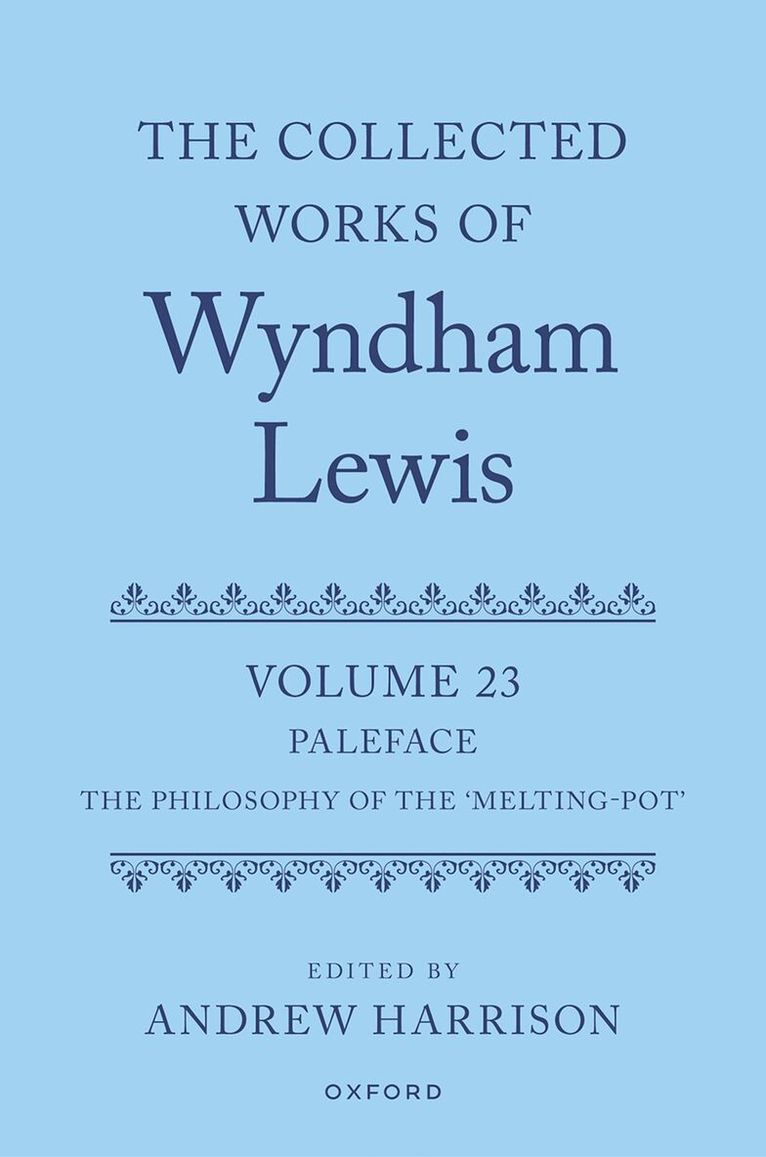
The Collected Works of Wyndham Lewis brings together for the first time all of the published writings of Wyndham Lewis (1882-1957), a major contributor to literary modernism and one of the most important British painters of the first half of the twentieth century.This is the first ever critical edition of Wyndham Lewis's Paleface. It reproduces, with corrections, the text first published by Chatto and Windus in May 1929. Explanatory Notes trace the many sources which Lewis quotes from and alludes to; clear annotations are provided to guide the reader to a nuanced understanding of the book's cultural and intellectual range. The Afterword describes the historical context of racism against Black Americans and explores the nature of Lewis's position-taking in relation to debates about race in the USA in the 1920s. It also offers a detailed account of the composition of the book, from its first essay form published in Lewis's journal The Enemy, No. 2 (September 1927), to its revision for publication as a standalone volume, plus a comprehensive analysis of the book's reception on publication and its subsequent critical reputation. The Textual Appendix collates the text published in 1929 against the version in The Enemy, an essay Lewis published in The Monthly Criterion in July 1927 and incorporated into the Introduction to Part II, and surviving earlier manuscript states of the parts Lewis added to produce the book; it includes a transcription of the post-publication changes which Lewis proposed making to the book for a planned (but never realised) foreign edition. The volume makes possible a fresh re-evaluation of this deeply divisive book praised by T. S. Eliot for its 'brilliant exposure' of D. H. Lawrence, acknowledged by some for its pioneering 'cultural studies' approach to literary works, but often reviled today for its racist assumptions, language and arguments.
2 555 kr
Skickas inom 5-8 vardagar
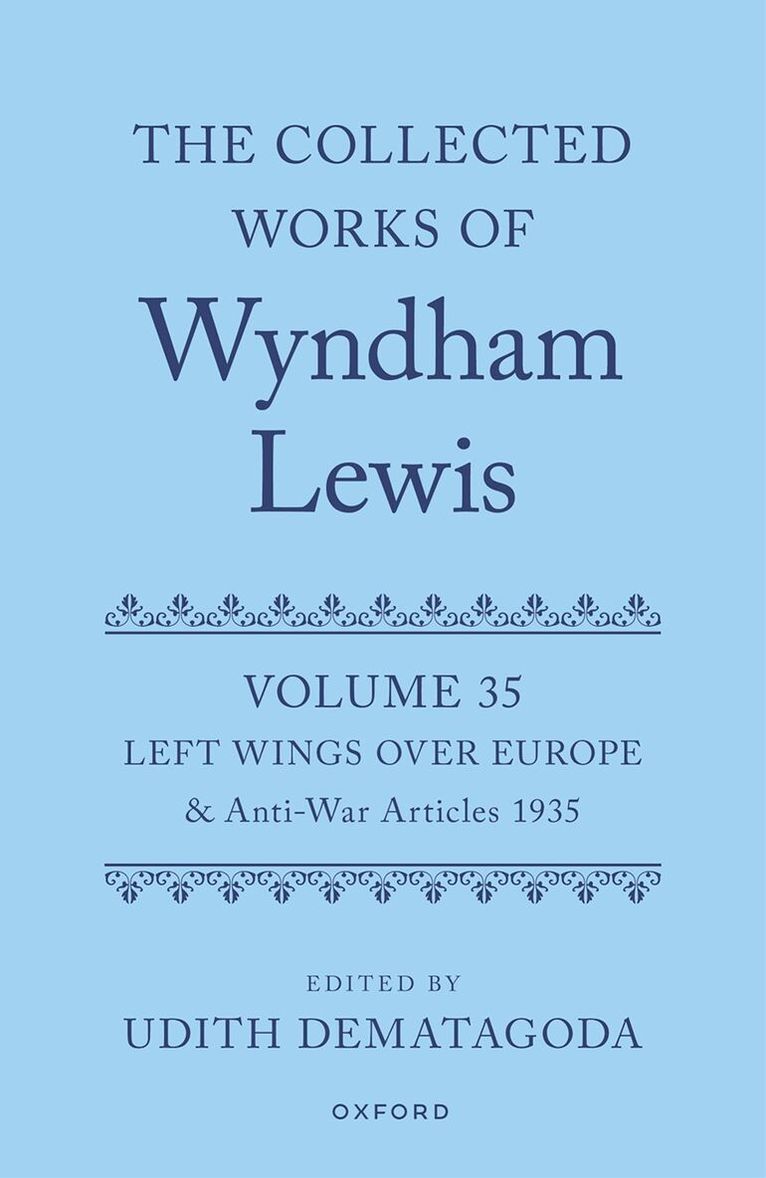
The Collected Works of Wyndham Lewis brings together for the first time all of the published writings of Wyndham Lewis (1882–1957), a major contributor to literary modernism and one of the most important British painters of the first half of the twentieth century.Composed hastily and with little foresight as to its potential consequences, Left Wings Over Europe: or How to Make a War about Nothing was published in 1936. The book is one of three works of political invective written by Wyndham Lewis against the international order of the western powers, the Soviet Union, and sympathetic towards the fascist regimes in Italy and Nazi Germany. Lewis's interest in political writing emerged in the aftermath of the First World War, where he had served as an artillery officer and official war artist. Motivated by this experience all of his subsequent non-fictional works were in some sense 'anti-war', and Left Wings is no exception. Though replete with a range of mercurial analysis and somewhat agitated in tone, this work and the related essays and articles preceding it collected together for the first time, provide a highly subjective yet fascinating contemporary account of the day-to-day diplomatic crises and political struggles that defined Europe in the mid-1930s.