Columbia Guides to American History and Cultures – serie
Visar alla böcker i serien Columbia Guides to American History and Cultures. Handla med fri frakt och snabb leverans.
17 produkter
17 produkter
982 kr
Tillfälligt slut
The experience of women in the nineteenth century has generated a wealth of interdisciplinary research in recent decades. The Columbia Guide to American Women in the Nineteenth Century presents the best of the recent scholarship available in a concise, "one-stop" resource, providing students of women's history and nineteenth-century American culture with an authoritative source of information and interpretation. The authors emphasize areas in which scholars have identified important changes (such as suffrage and reform), topics in which researchers are now making great strides (such as racial, ethnic, religious, and regional diversity), and innovative and relatively recent explorations (for example, work on female sexuality). Accessible overview articles and alphabetical encyclopedia-like entries are combined in a comprehensive, easy-to-use volume. Part 1 contains a historiographical essay followed by a ten-chapter narrative overview. These chapters include discussions of families and households, labor and the workforce, religion and morality, feminism and equal rights, reform and voluntarism, and more.Part 2 is an A-to-Z listing of concise entries on key terms, notable figures, political movements, social and religious organizations, and legislation. Part 3 is an annotated chronology placing events in historical context. Part 4 is a topically organized selection of the best resources for further research, including general historical works, biographies and autobiographies, journals, archives, web sites, novels, and films.
621 kr
Skickas inom 3-6 vardagar
The experience of women in the nineteenth century has generated a wealth of interdisciplinary research in recent decades. The Columbia Guide to American Women in the Nineteenth Century presents the best of the recent scholarship available in a concise, "one-stop" resource, providing students of women's history and nineteenth-century American culture with an authoritative source of information and interpretation. The authors emphasize areas in which scholars have identified important changes (such as suffrage and reform), topics in which researchers are now making great strides (such as racial, ethnic, religious, and regional diversity), and innovative and relatively recent explorations (for example, work on female sexuality). Accessible overview articles and alphabetical encyclopedia-like entries are combined in a comprehensive, easy-to-use volume. Part 1 contains a historiographical essay followed by a ten-chapter narrative overview. These chapters include discussions of families and households, labor and the workforce, religion and morality, feminism and equal rights, reform and voluntarism, and more.Part 2 is an A-to-Z listing of concise entries on key terms, notable figures, political movements, social and religious organizations, and legislation. Part 3 is an annotated chronology placing events in historical context. Part 4 is a topically organized selection of the best resources for further research, including general historical works, biographies and autobiographies, journals, archives, web sites, novels, and films.
1 310 kr
Skickas inom 7-10 vardagar
How and why have Americans living at particular times and places used and transformed their environment? How have political systems dealt with conflicts over resources and conservation? This is the only major reference work to explore all the major themes and debates of the burgeoning field of environmental history. Humanity's relationship with the natural world is one of the oldest and newest topics in human history. The issue emerged as a distinct field of scholarship in the early 1970s and has been growing steadily ever since. The discipline's territory and sources are rich and varied and include climactic and geological data, court records, archaeological digs, and the writings of naturalists, as well as federal and state economic and resource development and conservation policy. Environmental historians investigate how and why natural and human-created surroundings affect a society's development.Merchant provides a context-setting overview of American environmental history from the beginning of the millennium; an encyclopedia of important concepts, people, agencies, and laws; a chronology of major events; and an extensive bibliography including films, videos, CD-Roms, and websites. This concise "first stop" reference for students and general readers contains an accessible overview of environmental history; a mini-encyclopedia of ideas, people, legislation, and agencies; a chronology of events and their significance; and a bibliography of books, magazines, and journals as well as films, videos, CD-ROMs, and online resources. In addition to providing a wealth of factual information, The Columbia Guide to American Environmental History explores contentious issues in this much-debated field, from the idea of wilderness to global warming. How and why have Americans living at particular times and places used and transformed their environment? How have political systems dealt with conflicts over resources and conservation? This is the only major reference work to explore all the major themes and debates in the burgeoning field of environmental history.Humanity's relationship with the natural world is one of the oldest and newest topics in human history. The issue emerged as a distinct field of scholarship in the early 1970s and has been growing steadily ever since. The discipline's territory and sources are rich and varied and include climatic and geological data, court records, archaeological digs, and the writings of naturalists, as well as federal and state economic and resource development and conservation policy. Environmental historians investigate how and why natural and human-created surroundings affect a society's development. Merchant provides a context-setting overview of American environmental history from the precolonial land-use practice of Native Americans and concluding with twenty-first concerns over global warming. The book also includes a glossary of important concepts, people, agencies, and legislation; a chronology of major events; and an extensive bibliography including films, videos, CD-ROMs, and websites.This concise reference for students and general readers contains an accessible overview of American environmental history; a mini-encyclopedia of ideas, people, legislation, and agencies; a chronology of events and their significance; and a bibliography of books, magazines, and journals as well as films, videos, CD-ROMs, and online resources. In addition to providing a wealth of factual information, The Columbia Guide to American Environmental History explores contentious issues in this much-debated field, from the idea of wilderness to global warming.
333 kr
Skickas inom 7-10 vardagar
How and why have Americans living at particular times and places used and transformed their environment? How have political systems dealt with conflicts over resources and conservation? This is the only major reference work to explore all the major themes and debates of the burgeoning field of environmental history. Humanity's relationship with the natural world is one of the oldest and newest topics in human history. The issue emerged as a distinct field of scholarship in the early 1970s and has been growing steadily ever since. The discipline's territory and sources are rich and varied and include climactic and geological data, court records, archaeological digs, and the writings of naturalists, as well as federal and state economic and resource development and conservation policy. Environmental historians investigate how and why natural and human-created surroundings affect a society's development.Merchant provides a context-setting overview of American environmental history from the beginning of the millennium; an encyclopedia of important concepts, people, agencies, and laws; a chronology of major events; and an extensive bibliography including films, videos, CD-Roms, and websites. This concise "first stop" reference for students and general readers contains an accessible overview of environmental history; a mini-encyclopedia of ideas, people, legislation, and agencies; a chronology of events and their significance; and a bibliography of books, magazines, and journals as well as films, videos, CD-ROMs, and online resources. In addition to providing a wealth of factual information, The Columbia Guide to American Environmental History explores contentious issues in this much-debated field, from the idea of wilderness to global warming. How and why have Americans living at particular times and places used and transformed their environment? How have political systems dealt with conflicts over resources and conservation? This is the only major reference work to explore all the major themes and debates in the burgeoning field of environmental history.Humanity's relationship with the natural world is one of the oldest and newest topics in human history. The issue emerged as a distinct field of scholarship in the early 1970s and has been growing steadily ever since. The discipline's territory and sources are rich and varied and include climatic and geological data, court records, archaeological digs, and the writings of naturalists, as well as federal and state economic and resource development and conservation policy. Environmental historians investigate how and why natural and human-created surroundings affect a society's development. Merchant provides a context-setting overview of American environmental history from the precolonial land-use practice of Native Americans and concluding with twenty-first concerns over global warming. The book also includes a glossary of important concepts, people, agencies, and legislation; a chronology of major events; and an extensive bibliography including films, videos, CD-ROMs, and websites.This concise reference for students and general readers contains an accessible overview of American environmental history; a mini-encyclopedia of ideas, people, legislation, and agencies; a chronology of events and their significance; and a bibliography of books, magazines, and journals as well as films, videos, CD-ROMs, and online resources. In addition to providing a wealth of factual information, The Columbia Guide to American Environmental History explores contentious issues in this much-debated field, from the idea of wilderness to global warming.
2 793 kr
Skickas inom 3-6 vardagar
The 1960s continue to be the subject of passionate debate and political controversy, a touchstone in struggles over the meaning of the American past and the direction of the American future. Amid the polemics and the myths, making sense of the Sixties and its legacies presents a challenge. This book is for all those who want to take it on. Because there are so many facets to this unique and transformative era, this volume offers multiple approaches and perspectives. The first section gives a lively narrative overview of the decade's major policies, events, and cultural changes. The second presents ten original interpretative essays from prominent historians about significant and controversial issues from the Vietnam War to the sexual revolution, followed by a concise encyclopedia articles organized alphabetically. This section could stand as a reference work in itself and serves to supplement the narrative. Subsequent sections include short topical essays, special subjects, a brief chronology, and finally an extensive annotated bibliography with ample information on books, films, and electronic resources for further exploration.With interesting facts, statistics, and comparisons presented in almanac style as well as the expertise of prominent scholars, The Columbia Guide to America in the 1960s is the most complete guide to an enduringly fascinating era.
760 kr
Skickas inom 3-6 vardagar
The 1960s continue to be the subject of passionate debate and political controversy, a touchstone in struggles over the meaning of the American past and the direction of the American future. Amid the polemics and the myths, making sense of the Sixties and its legacies presents a challenge. This book is for all those who want to take it on. Because there are so many facets to this unique and transformative era, this volume offers multiple approaches and perspectives. The first section gives a lively narrative overview of the decade's major policies, events, and cultural changes. The second presents ten original interpretative essays from prominent historians about significant and controversial issues from the Vietnam War to the sexual revolution, followed by a concise encyclopedia articles organized alphabetically. This section could stand as a reference work in itself and serves to supplement the narrative. Subsequent sections include short topical essays, special subjects, a brief chronology, and finally an extensive annotated bibliography with ample information on books, films, and electronic resources for further exploration.With interesting facts, statistics, and comparisons presented in almanac style as well as the expertise of prominent scholars, The Columbia Guide to America in the 1960s is the most complete guide to an enduringly fascinating era.
2 492 kr
Skickas inom 3-6 vardagar
More than a quarter of a century after the last Marine Corps Huey left the American embassy in Saigon, the lessons and legacies of the most divisive war in twentieth-century American history are as hotly debated as ever. Why did successive administrations choose little-known Vietnam as the "test case" of American commitment in the fight against communism? Why were the "best and brightest" apparently blind to the illegitimacy of the state of South Vietnam? Would Kennedy have pulled out had he lived? And what lessons regarding American foreign policy emerged from the war? The Columbia Guide to the Vietnam War helps readers understand this tragic and complex conflict. The book contains both interpretive information and a wealth of facts in easy-to-find form. Part I provides a lucid narrative overview of contested issues and interpretations in Vietnam scholarship. Part II is a mini-encyclopedia with descriptions and analysis of individuals, events, groups, and military operations. Arranged alphabetically, this section enables readers to look up isolated facts and specialized terms. Part III is a chronology of key events.Part IV is an annotated guide to resources, including films, documentaries, CD-ROMs, and reliable Web sites. Part V contains excerpts from historical documents and statistical data.
715 kr
Skickas inom 3-6 vardagar
More than a quarter of a century after the last Marine Corps Huey left the American embassy in Saigon, the lessons and legacies of the most divisive war in twentieth-century American history are as hotly debated as ever. Why did successive administrations choose little-known Vietnam as the "test case" of American commitment in the fight against communism? Why were the "best and brightest" apparently blind to the illegitimacy of the state of South Vietnam? Would Kennedy have pulled out had he lived? And what lessons regarding American foreign policy emerged from the war? The Columbia Guide to the Vietnam War helps readers understand this tragic and complex conflict. The book contains both interpretive information and a wealth of facts in easy-to-find form. Part I provides a lucid narrative overview of contested issues and interpretations in Vietnam scholarship. Part II is a mini-encyclopedia with descriptions and analysis of individuals, events, groups, and military operations. Arranged alphabetically, this section enables readers to look up isolated facts and specialized terms. Part III is a chronology of key events.Part IV is an annotated guide to resources, including films, documentaries, CD-ROMs, and reliable Web sites. Part V contains excerpts from historical documents and statistical data.
2 191 kr
Skickas inom 3-6 vardagar
Offering a rich and insightful road map of Asian American history as it has evolved over more than 200 years, this book marks the first systematic attempt to take stock of this field of study. It examines, comments, and questions the changing assumptions and contexts underlying the experiences and contributions of an incredibly diverse population of Americans. Arriving and settling in this nation as early as the 1790s, with American-born generations stretching back more than a century, Asian Americans have become an integral part of the American experience; this cleverly organized book marks the trajectory of that journey, offering researchers invaluable information and interpretation. * Part 1 offers a synoptic narrative history, a chronology, and a set of periodizations that reflect different ways of constructing the Asian American past. * Part 2 presents lucid discussions of historical debates-such as interpreting the anti-Chinese movement of the late 1800s and the underlying causes of Japanese American internment during World War II-and such emerging themes as transnationalism and women and gender issues.* Part 3 contains a historiographical essay and a wide-ranging compilation of book, film, and electronic resources for further study of core themes and groups, including Chinese, Japanese, Filipino, Hmong, Indian, Korean, Vietnamese, and others.
625 kr
Skickas inom 3-6 vardagar
Offering a rich and insightful road map of Asian American history as it has evolved over more than 200 years, this book marks the first systematic attempt to take stock of this field of study. It examines, comments, and questions the changing assumptions and contexts underlying the experiences and contributions of an incredibly diverse population of Americans. Arriving and settling in this nation as early as the 1790s, with American-born generations stretching back more than a century, Asian Americans have become an integral part of the American experience; this cleverly organized book marks the trajectory of that journey, offering researchers invaluable information and interpretation. * Part 1 offers a synoptic narrative history, a chronology, and a set of periodizations that reflect different ways of constructing the Asian American past. * Part 2 presents lucid discussions of historical debates-such as interpreting the anti-Chinese movement of the late 1800s and the underlying causes of Japanese American internment during World War II-and such emerging themes as transnationalism and women and gender issues.* Part 3 contains a historiographical essay and a wide-ranging compilation of book, film, and electronic resources for further study of core themes and groups, including Chinese, Japanese, Filipino, Hmong, Indian, Korean, Vietnamese, and others.
1 363 kr
Skickas inom 3-6 vardagar
Once seen as threats to mainstream society, Irish Americans have become an integral part of the American story. More than 40 million Americans claim Irish descent, and the culture and traditions of Ireland and Irish Americans have left an indelible mark on U.S. society. Timothy J. Meagher fuses an overview of Irish American history with an analysis of historians' debates, an annotated bibliography, a chronology of critical events, and a glossary discussing crucial individuals, organizations, and dates. He addresses a range of key issues in Irish American history from the first Irish settlements in the seventeenth century through the famine years in the nineteenth century to the volatility of 1960s America and beyond. The result is a definitive guide to understanding the complexities and paradoxes that have defined the Irish American experience. Throughout the work, Meagher invokes comparisons to Irish experiences in Canada, Britain, and Australia to challenge common perceptions of Irish American history. He examines the shifting patterns of Irish migration, discusses the role of the Catholic church in the Irish immigrant experience, and considers the Irish American influence in U.S.politics and modern urban popular culture. Meagher pays special attention to Irish American families and the roles of men and women, the emergence of the Irish as a "governing class" in American politics, the paradox of their combination of fervent American patriotism and passionate Irish nationalism, and their complex and sometimes tragic relations with African and Asian Americans.
618 kr
Skickas inom 7-10 vardagar
Few aspects of American military history have been as vigorously debated as Harry Truman's decision to use atomic bombs against Japan. In this carefully crafted volume, Michael Kort describes the wartime circumstances and thinking that form the context for the decision to use these weapons, surveys the major debates related to that decision, and provides a comprehensive collection of key primary source documents that illuminate the behavior of the United States and Japan during the closing days of World War II. Kort opens with a summary of the debate over Hiroshima as it has evolved since 1945. He then provides a historical overview of thye events in question, beginning with the decision and program to build the atomic bomb. Detailing the sequence of events leading to Japan's surrender, he revisits the decisive battles of the Pacific War and the motivations of American and Japanese leaders. Finally, Kort examines ten key issues in the discussion of Hiroshima and guides readers to relevant primary source documents, scholarly books, and articles.
1 061 kr
Tillfälligt slut
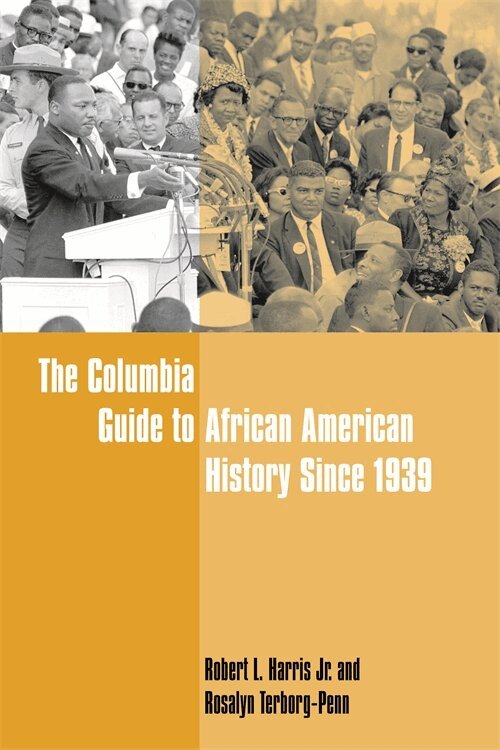
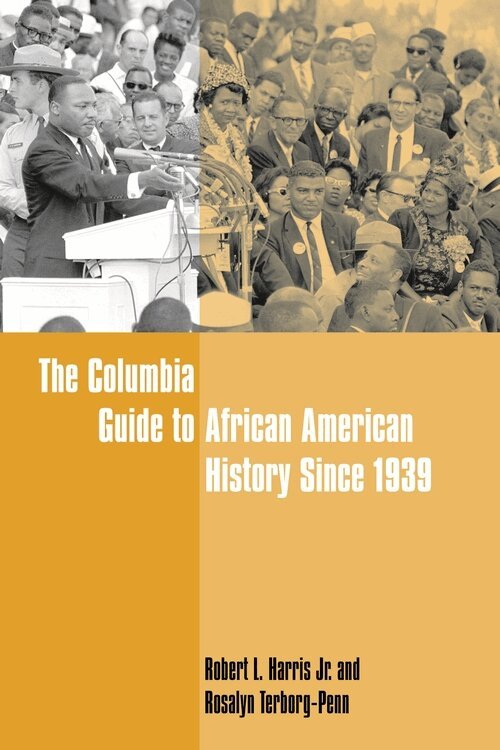
This book is a multifaceted approach to understanding the central developments in African American history since 1939. It combines a historical overview of key personalities and movements with essays by leading scholars on specific facets of the African American experience, a chronology of events, and a guide to further study. Marian Anderson's famous 1939 concert in front of the Lincoln Memorial was a watershed moment in the struggle for racial justice. Beginning with this event, the editors chart the historical efforts of African Americans to address racism and inequality. They explore the rise of the Civil Rights and Black Power movements and the national and international contexts that shaped their ideologies and methods; consider how changes in immigration patterns have complicated the conventional "black/white" dichotomy in U.S. society; discuss the often uneasy coexistence between a growing African American middle class and a persistent and sizable underclass; and address the complexity of the contemporary African American experience.Contributors consider specific issues in African American life, including the effects of the postindustrial economy and the influence of music, military service, sports, literature, culture, business, and the politics of self-designation, e.g.,"Colored" vs. "Negro," "Black" vs. "African American". While emphasizing political and social developments, this volume also illuminates important economic, military, and cultural themes. An invaluable resource, The Columbia Guide to African American History Since 1939 provides a thorough understanding of a crucial historical period.
374 kr
Skickas inom 7-10 vardagar
This book is a multifaceted approach to understanding the central developments in African American history since 1939. It combines a historical overview of key personalities and movements with essays by leading scholars on specific facets of the African American experience, a chronology of events, and a guide to further study. Marian Anderson's famous 1939 concert in front of the Lincoln Memorial was a watershed moment in the struggle for racial justice. Beginning with this event, the editors chart the historical efforts of African Americans to address racism and inequality. They explore the rise of the Civil Rights and Black Power movements and the national and international contexts that shaped their ideologies and methods; consider how changes in immigration patterns have complicated the conventional "black/white" dichotomy in U.S. society; discuss the often uneasy coexistence between a growing African American middle class and a persistent and sizable underclass; and address the complexity of the contemporary African American experience.Contributors consider specific issues in African American life, including the effects of the postindustrial economy and the influence of music, military service, sports, literature, culture, business, and the politics of self-designation, e.g.,"Colored" vs. "Negro," "Black" vs. "African American". While emphasizing political and social developments, this volume also illuminates important economic, military, and cultural themes. An invaluable resource, The Columbia Guide to African American History Since 1939 provides a thorough understanding of a crucial historical period.
798 kr
Tillfälligt slut
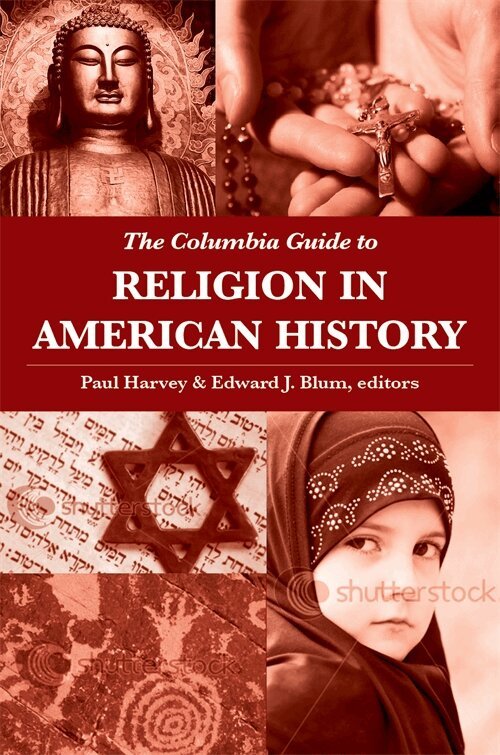
The first guide to American religious history from colonial times to the present, this anthology features twenty-two leading scholars speaking on major themes and topics in the development of the diverse religious traditions of the United States. These include the growth and spread of evangelical culture, the mutual influence of religion and politics, the rise of fundamentalism, the role of gender and popular culture, and the problems and possibilities of pluralism. Geared toward general readers, students, researchers, and scholars, The Columbia Guide to Religion in American History provides concise yet broad surveys of specific fields, with an extensive glossary and bibliographies listing relevant books, films, articles, music, and media resources for navigating different streams of religious thought and culture. The collection opens with a thematic exploration of American religious history and culture and follows with twenty topical chapters, each of which illuminates the dominant questions and lines of inquiry that have determined scholarship within that chapter's chosen theme.Contributors also outline areas in need of further, more sophisticated study and identify critical resources for additional research. The glossary, "American Religious History, A-Z," lists crucial people, movements, groups, concepts, and historical events, enhanced by extensive statistical data.
2 492 kr
Skickas inom 3-6 vardagar
By studying the many ways diverse peoples have changed, shaped, and conserved the natural world over time, environmental historians provide insight into humanity's unique relationship with nature and, more importantly, are better able to understand the origins of our current environmental crisis. Beginning with the precolonial land-use practice of Native Americans and concluding with our twenty-first century concerns over our global ecological crisis, American Environmental History addresses contentious issues such as the preservation of the wilderness, the expulsion of native peoples from national parks, and population growth, and considers the formative forces of gender, race, and class. Entries address a range of topics, from the impact of rice cultivation, slavery, and the growth of the automobile suburb to the effects of the Russian sea otter trade, Columbia River salmon fisheries, the environmental justice movement, and globalization. This illustrated reference is an essential companion for students interested in the ongoing transformation of the American landscape and the conflicts over its resources and conservation.It makes rich use of the tools and resources (climatic and geological data, court records, archaeological digs, and the writings of naturalists) that environmental historians rely on to conduct their research. The volume also includes a compendium of significant people, concepts, events, agencies, and legislation, and an extensive bibliography of critical films, books, and Web sites.
333 kr
Skickas inom 7-10 vardagar
By studying the many ways diverse peoples have changed, shaped, and conserved the natural world over time, environmental historians provide insight into humanity's unique relationship with nature and, more importantly, are better able to understand the origins of our current environmental crisis. Beginning with the precolonial land-use practice of Native Americans and concluding with our twenty-first century concerns over our global ecological crisis, American Environmental History addresses contentious issues such as the preservation of the wilderness, the expulsion of native peoples from national parks, and population growth, and considers the formative forces of gender, race, and class. Entries address a range of topics, from the impact of rice cultivation, slavery, and the growth of the automobile suburb to the effects of the Russian sea otter trade, Columbia River salmon fisheries, the environmental justice movement, and globalization. This illustrated reference is an essential companion for students interested in the ongoing transformation of the American landscape and the conflicts over its resources and conservation.It makes rich use of the tools and resources (climatic and geological data, court records, archaeological digs, and the writings of naturalists) that environmental historians rely on to conduct their research. The volume also includes a compendium of significant people, concepts, events, agencies, and legislation, and an extensive bibliography of critical films, books, and Web sites.