Comparative Research on Iconic and Performative Texts - Böcker
Visar alla böcker i serien Comparative Research on Iconic and Performative Texts. Handla med fri frakt och snabb leverans.
10 produkter
10 produkter
1 177 kr
Skickas inom 5-8 vardagar
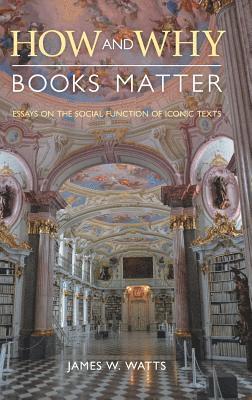
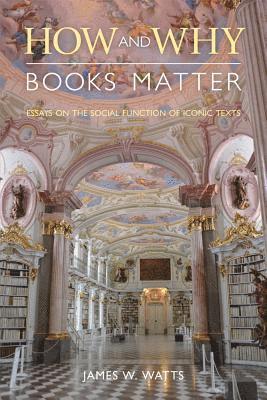
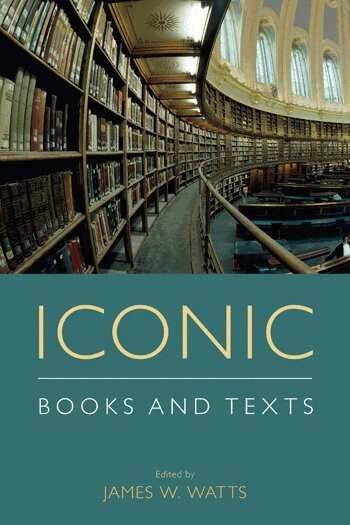
Religious and secular communities ritualize some books in one, two, or three dimensions. They ritualize the dimension of semantic interpretation through teaching, preaching, and scholarly commentary. This dimension receives almost all the attention of academic scholars. Communities also ritualize a text’s expressive dimension through public reading, recitation, and song, and also by reproducing its contents in art, theatre and film. This dimension is receiving increasing scholarly attention, especially in religious studies and anthropology. A third textual dimension, the iconic dimension, gets ritualized by manipulating the physical text, decorating it, and displaying it. This dimension has received almost no academic attention, yet features prominently in the most common news stories about books, whether about e-books, academic libraries, rare manuscript discoveries, or scripture desecrations. By calling attention to the iconic dimension of books, James Watts argues that we can better understand how physical books mediate social value and power within and between religious communities, nations, academic disciplines, and societies both ancient and modern.How and Why Books Matter will appeal to a wide range of readers interested in books, reading, literacy, scriptures, e-books, publishing, and the future of the book. It also addresses scholarship in religion, cultural studies, literacy studies, biblical studies, book history, anthropology, literary studies, and intellectual history.
370 kr
Skickas inom 5-8 vardagar
Religious and secular communities ritualize some books in one, two, or three dimensions. They ritualize the dimension of semantic interpretation through teaching, preaching, and scholarly commentary. This dimension receives almost all the attention of academic scholars. Communities also ritualize a text’s expressive dimension through public reading, recitation, and song, and also by reproducing its contents in art, theatre and film. This dimension is receiving increasing scholarly attention, especially in religious studies and anthropology. A third textual dimension, the iconic dimension, gets ritualized by manipulating the physical text, decorating it, and displaying it. This dimension has received almost no academic attention, yet features prominently in the most common news stories about books, whether about e-books, academic libraries, rare manuscript discoveries, or scripture desecrations. By calling attention to the iconic dimension of books, James Watts argues that we can better understand how physical books mediate social value and power within and between religious communities, nations, academic disciplines, and societies both ancient and modern.How and Why Books Matter will appeal to a wide range of readers interested in books, reading, literacy, scriptures, e-books, publishing, and the future of the book. It also addresses scholarship in religion, cultural studies, literacy studies, biblical studies, book history, anthropology, literary studies, and intellectual history.
1 177 kr
Skickas inom 5-8 vardagar
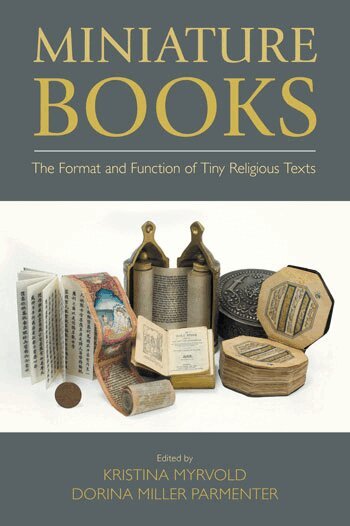
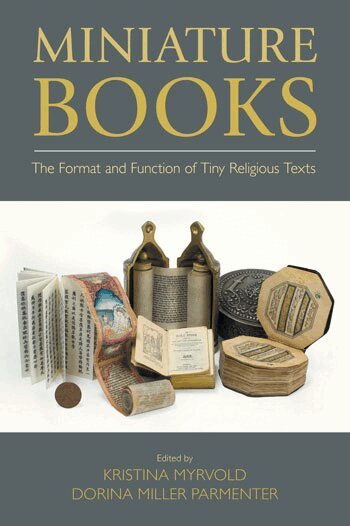
Miniature books, handwritten or printed books in the smallest format, have fascinated religious people, printers, publishers, collectors, and others through the centuries because of their unique physical features, and continue to captivate people today. The small lettering and the delicate pages, binding, and covers highlight the material form of texts and invite sensory engagement and appreciation. This volume addresses miniature books with a special focus on religious books in Jewish, Christian, Muslim, Hindu and Buddhist traditions. The book presents various empirical contexts for how the smallest books have been produced, distributed, and used in different times and cultures and also provides theoretical reflections and comments that discuss the divergent formats and functions of books.
463 kr
Skickas inom 5-8 vardagar
Miniature books, handwritten or printed books in the smallest format, have fascinated religious people, printers, publishers, collectors, and others through the centuries because of their unique physical features, and continue to captivate people today. The small lettering and the delicate pages, binding, and covers highlight the material form of texts and invite sensory engagement and appreciation. This volume addresses miniature books with a special focus on religious books in Jewish, Christian, Muslim, Hindu and Buddhist traditions. The book presents various empirical contexts for how the smallest books have been produced, distributed, and used in different times and cultures and also provides theoretical reflections and comments that discuss the divergent formats and functions of books.
1 024 kr
Skickas
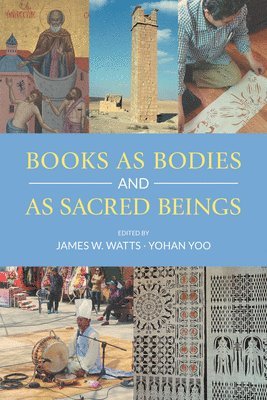
Human cultures, especially religious groups but also secular artists and performers, often ritualize bodies as sacred books and books as divine beings. An international team of scholars addresses this theme of books as sacred beings in this volume through an impressively diverse range of primary material and perspectives. These studies show the wide variety of ways in which books, bodies, and beings intermingle in material sacred texts manipulated by human bodies, and also in literary and artistic depictions of transcendent textual bodies. The boundary between material immanence and spiritual transcendence turns out to be very thin indeed when people use books. The chapters on specific book practices in different cultures are bracketed by an introduction to the collection and by a concluding essay that extrapolates on the widespread theme of books as sacred beings.
479 kr
Skickas inom 5-8 vardagar
Human cultures, especially religious groups but also secular artists and performers, often ritualize bodies as sacred books and books as divine beings. An international team of scholars addresses this theme of books as sacred beings in this volume through an impressively diverse range of primary material and perspectives. These studies show the wide variety of ways in which books, bodies, and beings intermingle in material sacred texts manipulated by human bodies, and also in literary and artistic depictions of transcendent textual bodies. The boundary between material immanence and spiritual transcendence turns out to be very thin indeed when people use books. The chapters on specific book practices in different cultures are bracketed by an introduction to the collection and by a concluding essay that extrapolates on the widespread theme of books as sacred beings.
1 177 kr
Skickas inom 5-8 vardagar
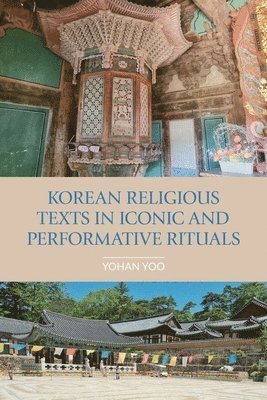
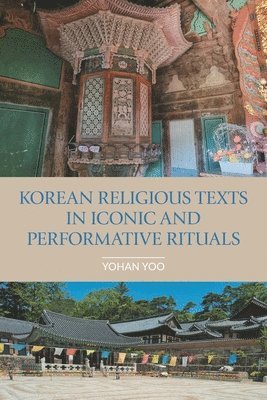
This book examines the ways in which scriptures are accepted and appropriated by religious people in Korea. It explores how sacred texts in various religions, including Protestantism, Buddhism, Confucianism, and Shamanism, attain their sacred status and power. It also delves into how the performative aspect of scriptures is often intrinsically linked to their iconic status. The book highlights the close relationship between the performative use and the iconic nature of these scriptures, showing how they are ritualized and performed in religious practices. In Korea, a distinct mix of religions coexists, each contributing to the country's religious diversity. Christianity, as the largest religion, represents a significant portion of the population, yet Buddhism, as Korea's major traditional religion, holds a comparable influence. Confucianism, with its deep historical roots and impact on Korean customs and values, continues to shape the society, particularly through ancestral rites and customs that prioritize elders. Many contemporary Koreans still resort to shamanic rituals and divinations, which have prevailed among the common people for thousands of years. Examples from these religions in Korea vividly illustrate that the iconic and performative dimensions of scriptures are generally witnessed in religions that recognize sacred texts. The interplay and complementary functions of these dimensions in the lives of the religious are also examined. The book presents compelling examples showing how the content, physical form, recitations, written characters, and imagery of scriptures are ritualized to exert sacred power
372 kr
Skickas
This book examines the ways in which scriptures are accepted and appropriated by religious people in Korea. It explores how sacred texts in various religions, including Protestantism, Buddhism, Confucianism, and Shamanism, attain their sacred status and power. It also delves into how the performative aspect of scriptures is often intrinsically linked to their iconic status. The book highlights the close relationship between the performative use and the iconic nature of these scriptures, showing how they are ritualized and performed in religious practices. In Korea, a distinct mix of religions coexists, each contributing to the country's religious diversity. Christianity, as the largest religion, represents a significant portion of the population, yet Buddhism, as Korea's major traditional religion, holds a comparable influence. Confucianism, with its deep historical roots and impact on Korean customs and values, continues to shape the society, particularly through ancestral rites and customs that prioritize elders. Many contemporary Koreans still resort to shamanic rituals and divinations, which have prevailed among the common people for thousands of years. Examples from these religions in Korea vividly illustrate that the iconic and performative dimensions of scriptures are generally witnessed in religions that recognize sacred texts. The interplay and complementary functions of these dimensions in the lives of the religious are also examined. The book presents compelling examples showing how the content, physical form, recitations, written characters, and imagery of scriptures are ritualized to exert sacred power
Gender and Sacred Textures
Entanglements of Materiality, Embodiment, and Sacred Texts in Religious Identities
Inbunden, Engelska, 2025
1 177 kr
Skickas inom 5-8 vardagar
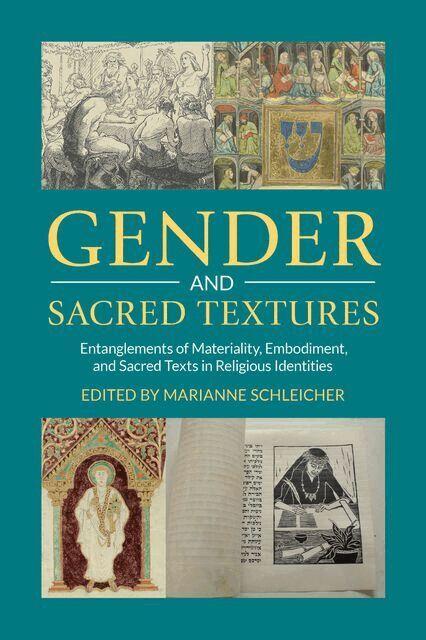
This anthology asks how the handling, use, and embodied enactments of sacred texts regulate, entangle, occlude, tolerate, or even subvert religious and gendered identities. While many studies have looked at the semantic content of sacred texts to answer this question, the volume mends a knowledge gap by looking at the effects on gender that follow both from uses of sacred texts as directly accessible, material objects and from embodied enactments of sacred texts in indirect ways. To signify the embodied enactment of sacred texts, not directly at hand, Marianne Schleicher coins the term sacred texture in the introduction to extend sacred text studies to capture both the textuality of poetic and narrative expressions in oral cultures and how most lay people, often women, have expressed their religiosity through indirect uses of sacred texts through bodily enactments. Among the insights this volume offers are how Old Norse women's composition of oral sacred textures renders their gender fluid, how a sacred text in Numbers 5 is used to handle a woman and simultaneously bolsters the masculinities of the involved men, how Jewish women through centuries have been intelligible as such by enabling men's direct access to sacred texts or by bodily enacting sacred textures themselves, how both Christian women and sacred texts should leave adornments behind to embody Jerome's ascetic ideals, how four women in contemporary American Judaism write Esther scrolls according to halakhic rules to become intelligible as scribes despite their female gender, how American Evangelical women have compensated for the absence of a directly accessible Bible at work by bodily enacting fragments of the Bible, and how Muslim family members in Denmark bodily enact and navigate Qur'anic prescriptions on filial piety up against its prescriptions concerning the naked body.
Gender and Sacred Textures
Entanglements of Materiality, Embodiment, and Sacred Texts in Religious Identities
Häftad, Engelska, 2025
372 kr
Skickas
This anthology asks how the handling, use, and embodied enactments of sacred texts regulate, entangle, occlude, tolerate, or even subvert religious and gendered identities. While many studies have looked at the semantic content of sacred texts to answer this question, the volume mends a knowledge gap by looking at the effects on gender that follow both from uses of sacred texts as directly accessible, material objects and from embodied enactments of sacred texts in indirect ways. To signify the embodied enactment of sacred texts, not directly at hand, Marianne Schleicher coins the term sacred texture in the introduction to extend sacred text studies to capture both the textuality of poetic and narrative expressions in oral cultures and how most lay people, often women, have expressed their religiosity through indirect uses of sacred texts through bodily enactments. Among the insights this volume offers are how Old Norse women's composition of oral sacred textures renders their gender fluid, how a sacred text in Numbers 5 is used to handle a woman and simultaneously bolsters the masculinities of the involved men, how Jewish women through centuries have been intelligible as such by enabling men's direct access to sacred texts or by bodily enacting sacred textures themselves, how both Christian women and sacred texts should leave adornments behind to embody Jerome's ascetic ideals, how four women in contemporary American Judaism write Esther scrolls according to halakhic rules to become intelligible as scribes despite their female gender, how American Evangelical women have compensated for the absence of a directly accessible Bible at work by bodily enacting fragments of the Bible, and how Muslim family members in Denmark bodily enact and navigate Qur'anic prescriptions on filial piety up against its prescriptions concerning the naked body.