Comparative Urban Studies - Böcker
Visar alla böcker i serien Comparative Urban Studies. Handla med fri frakt och snabb leverans.
7 produkter
7 produkter
695 kr
Skickas inom 10-15 vardagar
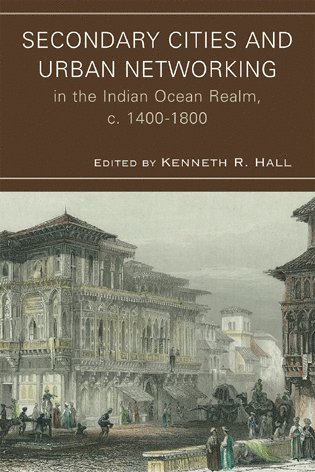
With the closure of the overland Silk Road in the fourteenth century following the collapse of the Mongol empire, the Indian Ocean provided the remaining vital link for wider cultural, political, and societal integrations prior to the Western colonial presence. Collectively, these studies explore the history of non-metropolitan urban settings c. 1400-1800 in the Indian Ocean realm, from the Ottoman Empire and the African coastline at the mouth of the Red Sea in the west to China in the east. This was an age of heightened international commercial exchange that pre-dated the European arrival, which in the Indian Ocean paired Islamic expansionism and political authority, and, alternately, in the case of mainland Southeast Asia, partnered Buddhism with new centralizing monarchies. While grounded in multi-disciplinary urban studies literature, the twelve studies in this collection explore secondary center networking, as this networking distinguishes secondary cities from metropolitan centers, which have traditionally received the most scholarly attention. The book features the research of international scholars, whose work addresses the representative history of small cities and urban networking in various parts of the Indian Ocean world in an era of change, allowing them the opportunity to compare approaches, methods, and sources in the hopes of discovering common features as well as notable differences. This volume is the result of a 2007 conference on "The Small City in Global Context," hosted by the Center for Middletown Studies at Ball State University, Muncie, Indiana, intended to expand the field of urban studies by encouraging scholars of diverse global interests and specializations to explore the history of non-metropolitan urban settings.
Evolution of the Ancient City
Urban Theory and the Archaeology of the Fertile Crescent
Inbunden, Engelska, 2010
1 383 kr
Skickas inom 10-15 vardagar
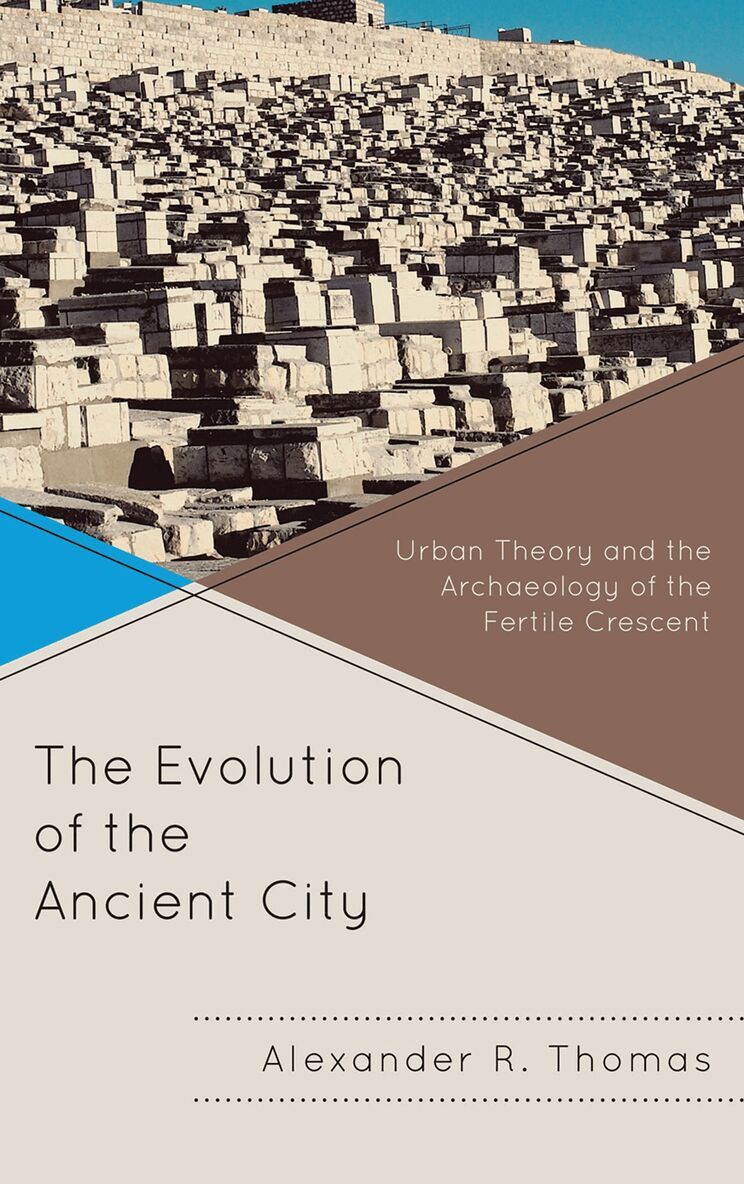
Urban theory and archaeology merge to create a readable discussion of how ancient cities came to be. Although many consider our modern social ills to be the consequence of Capitalism, many urban problems are traceable to pre-Capitalist times and thus are more related to Urbanization. Ancient cities shared many characteristics with modern cities. For instance, the ancient cities of Rome and Carthage at the time of Christ had population densities approaching that of Manhattan Island today. The Canaanites, fifteen hundred years before, lived in cities oriented toward trade and dependent upon mass production of such items as wine, olive oil, and the pottery to contain such goods. Over three thousand years before the Common Era, the city of Uruk was part of a larger "global system" that resembled in its own way the globalization that we know today. Cities first arose in Mesopotamia about 5,500 years ago, but for 5,500 years before the rise of cities the small agricultural village was the most complex form of human social organization—clearly there was nothing inevitable about the city. The Evolution of the Ancient City explores what we can learn of modern cities by tracing the development of ancient cities.
Evolution of the Ancient City
Urban Theory and the Archaeology of the Fertile Crescent
Häftad, Engelska, 2012
599 kr
Skickas inom 10-15 vardagar
Urban theory and archaeology merge to create a readable discussion of how ancient cities came to be. Although many consider our modern social ills to be the consequence of Capitalism, many urban problems are traceable to pre-Capitalist times and thus are more related to Urbanization. Ancient cities shared many characteristics with modern cities. For instance, the ancient cities of Rome and Carthage at the time of Christ had population densities approaching that of Manhattan Island today. The Canaanites, fifteen hundred years before, lived in cities oriented toward trade and dependent upon mass production of such items as wine, olive oil, and the pottery to contain such goods. Over three thousand years before the Common Era, the city of Uruk was part of a larger "global system" that resembled in its own way the globalization that we know today. Cities first arose in Mesopotamia about 5,500 years ago, but for 5,500 years before the rise of cities the small agricultural village was the most complex form of human social organization—clearly there was nothing inevitable about the city. The Evolution of the Ancient City explores what we can learn of modern cities by tracing the development of ancient cities.
1 343 kr
Skickas inom 10-15 vardagar
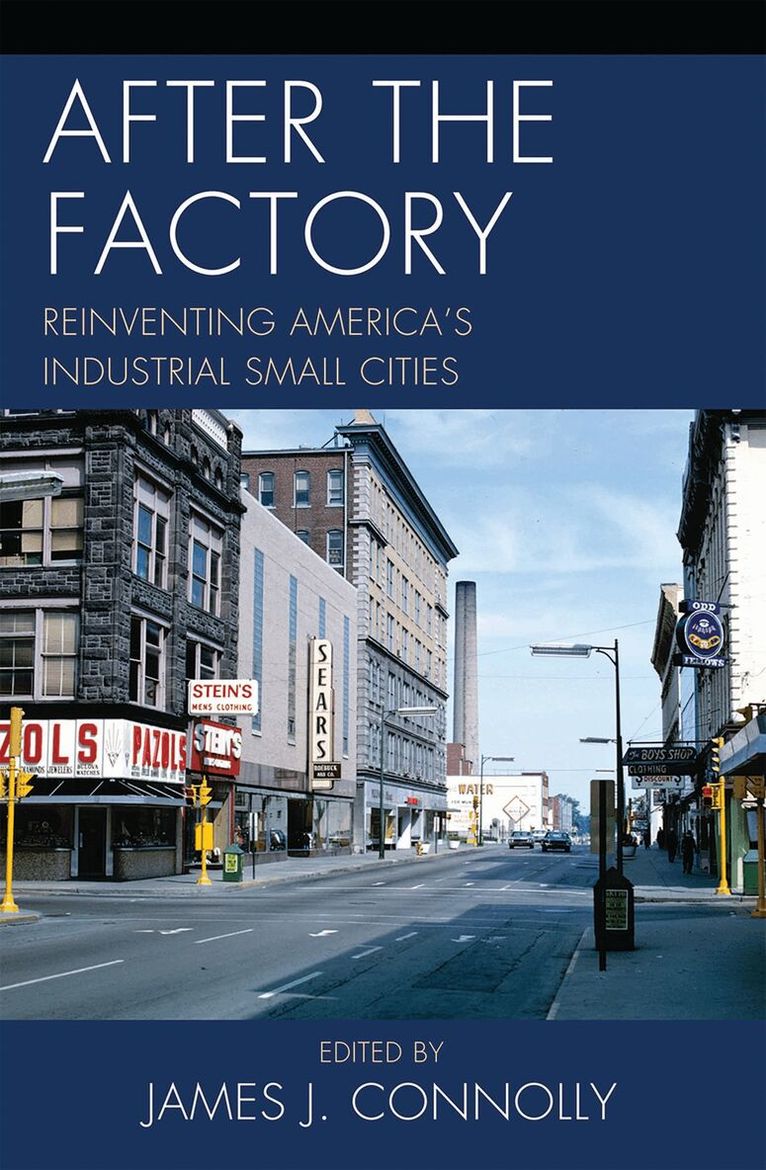
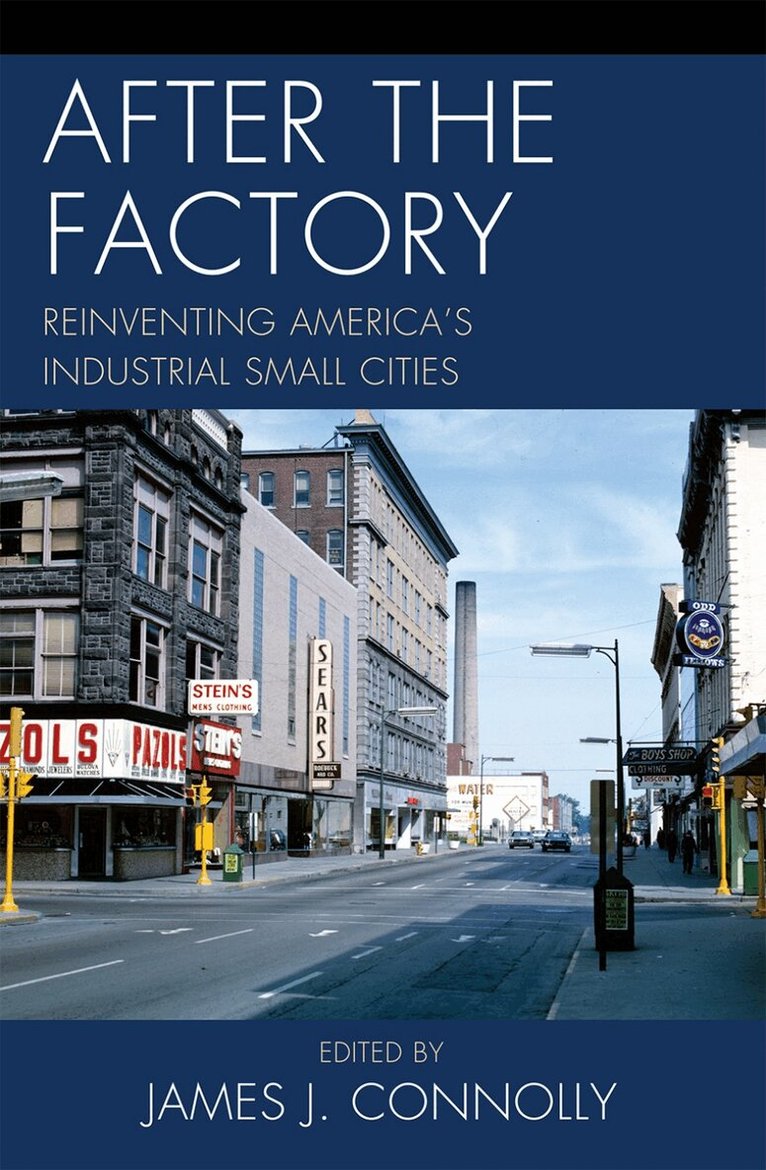
The most pressing question facing the small and mid-sized cities of America's industrial heartland is how to reinvent themselves. Once-thriving communities in the Northeastern and Midwestern U. S. have decayed sharply as the high-wage manufacturing jobs that provided the foundation for their prosperity disappeared. A few larger cities had the resources to adjust, but most smaller places that relied on factory work have struggled to do so. Unless and until they find new economic roles for themselves, the small cities will continue to decline. Reinventing these smaller cities is a tall order. A few might still function as nodes of industrial production. But landing a foreign-owned auto manufacturer or a green energy plant hardly solves every problem. The new jobs will not be unionized and thus will not pay nearly as much as the positions lost. The competition among localities for high-tech and knowledge economy firms is intense. Decaying towns with poor schools and few amenities are hardly in a good position to attract the "creative-class" workers they need. Getting to the point where they can lure such companies will require extensive retooling, not just economically but in terms of their built environment, cultural character, political economy, and demographic mix. Such changes often run counter to the historical currents that defined these places as factory towns. After the Factory examines the fate of industrial small cities from a variety of angles. It includes essays from a variety of disciplines that consider the sources and character of economic growth in small cities. They delve into the history of industrial small cities, explore the strategies that some have adopted, and propose new tacks for these communities as they struggle to move forward in the twenty-first century. Together, they constitute a unique look at an important and understudied dimension of urban studies and globalization.
626 kr
Skickas inom 10-15 vardagar
The most pressing question facing the small and mid-sized cities of America's industrial heartland is how to reinvent themselves. Once-thriving communities in the Northeastern and Midwestern U. S. have decayed sharply as the high-wage manufacturing jobs that provided the foundation for their prosperity disappeared. A few larger cities had the resources to adjust, but most smaller places that relied on factory work have struggled to do so. Unless and until they find new economic roles for themselves, the small cities will continue to decline. Reinventing these smaller cities is a tall order. A few might still function as nodes of industrial production. But landing a foreign-owned auto manufacturer or a green energy plant hardly solves every problem. The new jobs will not be unionized and thus will not pay nearly as much as the positions lost. The competition among localities for high-tech and knowledge economy firms is intense. Decaying towns with poor schools and few amenities are hardly in a good position to attract the "creative-class" workers they need. Getting to the point where they can lure such companies will require extensive retooling, not just economically but in terms of their built environment, cultural character, political economy, and demographic mix. Such changes often run counter to the historical currents that defined these places as factory towns. After the Factory examines the fate of industrial small cities from a variety of angles. It includes essays from a variety of disciplines that consider the sources and character of economic growth in small cities. They delve into the history of industrial small cities, explore the strategies that some have adopted, and propose new tacks for these communities as they struggle to move forward in the twenty-first century. Together, they constitute a unique look at an important and understudied dimension of urban studies and globalization.
Growth of Non-Western Cities
Primary and Secondary Urban Networking, c. 900–1900
Häftad, Engelska, 2011
695 kr
Skickas inom 10-15 vardagar
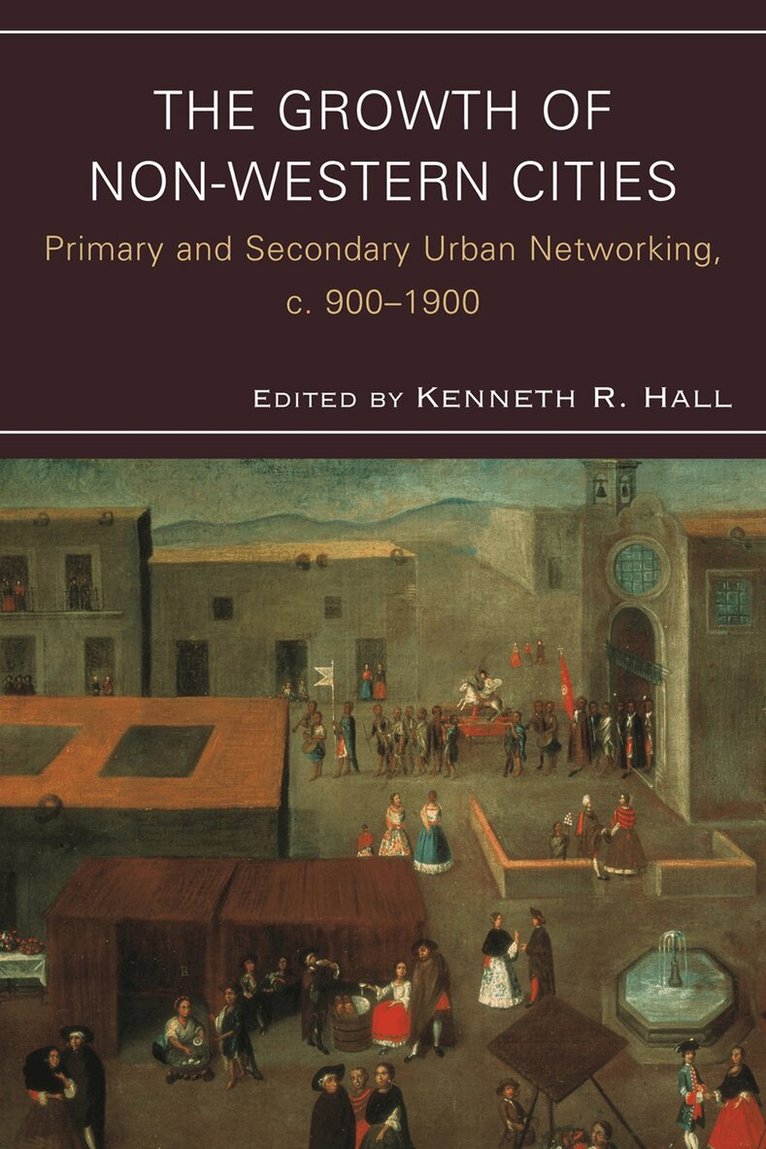
These interdisciplinary studies address pre-1900 non-Western urban growth in the African Sudan, Mexico, the Ottoman Middle East, and South, Southeast, and East Asia. Therein, primary and secondary cities served as functional societal agents that were viable and potentially powerful alternatives to the diversity of kinship-based local or regional networks, the societal delegated spaces in which local and external agencies met and interacted in a wide variety of political, economic, spiritual, and military forms. They were variously transportation centers, sites of a central temples, court and secular administration centers, fortified military compounds, intellectual (literary) activity cores, and marketplace and/or craft production sites. One element of these urban centers' existence might have been more important than others, as a political capital, a cultural capital, or an economic capital. In the post-1500 era of increasing globalization, especially with the introduction of new technologies of transport, communication, and warfare, non-Western cities even more became the hubs of knowledge, societal, and cultural formation and exchange because of the location of both markets and political centers in urban areas. New forms of professionalism, militarization, and secular bureaucratization were foundational to centralizing state hierarchies that could exert more control over their networked segments. This book's authors consciously attempt to balance the histories of functional urban agency between the local and the exogenous, giving weight to local activities, events, beliefs, institutions, communities, individuals, and historical narratives. In several studies, both external and internal societal prejudices and the inability of key decision makers to understand indigenous reality led to negative consequences both in the local environment and in the global arena.
1 520 kr
Skickas inom 10-15 vardagar
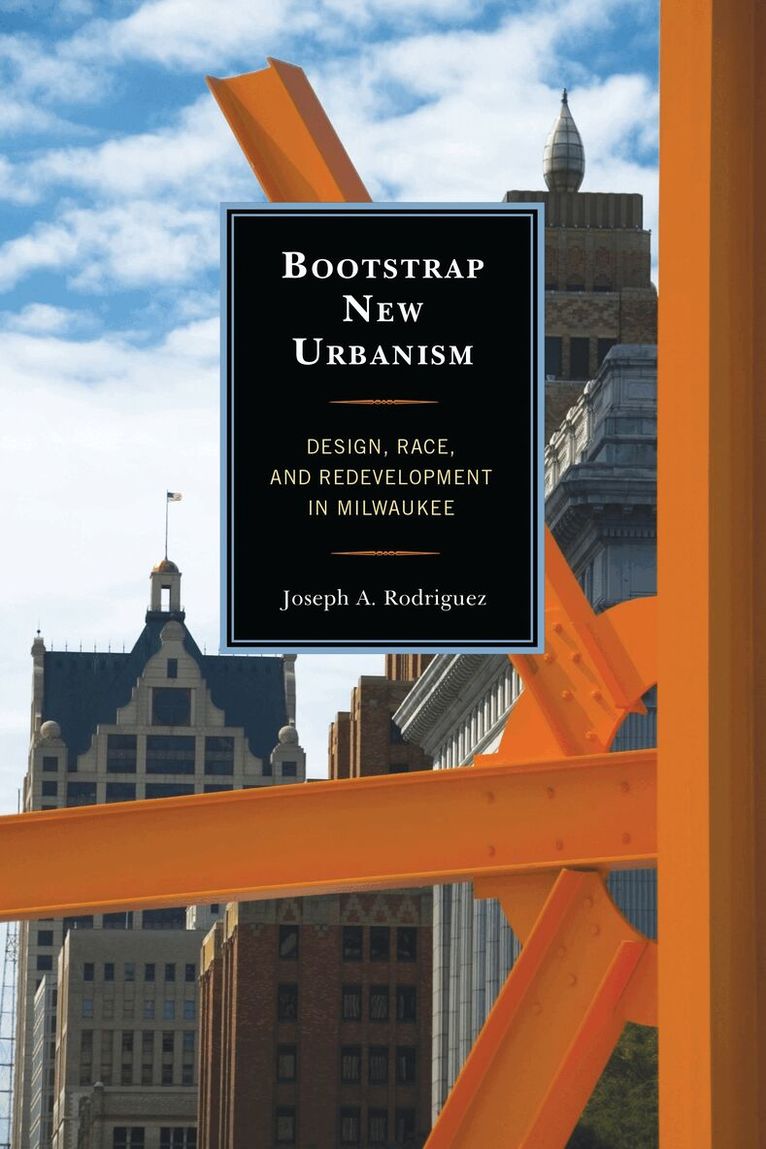
Joseph A. Rodriguez critically examines the urban design and revitalization initiatives undertaken by both the government and the people of Milwaukee, Wisconsin. In the 1990s, New Urbanists followed a city tradition of using urban design to solve problems while seeking to elevate the city’s national reputation and status. While New Urbanism was not the only design element undertaken to further Milwaukee’s redevelopment, the elite focus on New Urbanism reflected an attempt to fashion a self-help narrative for the revitalization of the city. This approach linked New Urbanist design to the strengthening of grassroots community organizing and volunteerism to solve urban problems. Bootstrap New Urbanism: Design, Race, and Redevelopment in Milwaukee uncovers a practice with implications for urban history, architectural history, planning history, environmental design, ethnic studies, and urban politics.