Contemporary Cuba - Böcker
Visar alla böcker i serien Contemporary Cuba. Handla med fri frakt och snabb leverans.
14 produkter
14 produkter
664 kr
Skickas inom 10-15 vardagar
Unlikely to gratify those with strong views on either side of the political divide, Max Azicri's study provides an intelligent, scholarly response to the current questions posed by the Cuban Revolution. Covering the turbulent period of the 1990s, the book examines such issues as the impact on Cuba of the Soviet Union's collapse, the country's social malaise under economic scarcity, the reorganization of its economy, changes in its political system, problems in its relations with the United States, and the renaissance of Cuban religious life in the aftermath of the pope's visit. Azicri offers an objectively researched study that addresses many of the assumptions made by partisan participants. Demonstrating how Cuba's ongoing reform process has allowed it to avoid the fate of other Soviet bloc regimes, he maintains that Havana has continually reinvented the nature of Cuban socialism. Drawing on original sources and scholarly studies from Cuba, the United States and elsewhere, he argues that a more restrained and limited socialism is suitable to today's Cuba and explains why such a system probably will prevail beyond Castro.
256 kr
Skickas inom 7-10 vardagar
In his analysis of the broad scope of revolutionary Cuba's foreign relations, H. Michael Erisman emphasizes two key aspects: Cuba's adjustment since the disintegration of the Soviet Bloc and the ongoing confrontation between Cuba and the United States. Using revolutionary Cuba's foreign relations as a case study in counterdependency politics, he proposes that the country has always been highly sensitive to the danger of overdependence on an external power and examines Havana's implementation of this stance in both the Cold War and post-Cold War periods. As the first comprehensive single-author treatment of the subject, Erisman not only tells readers what happened to Cuba's foreign relations but also offers a basis for understanding them.
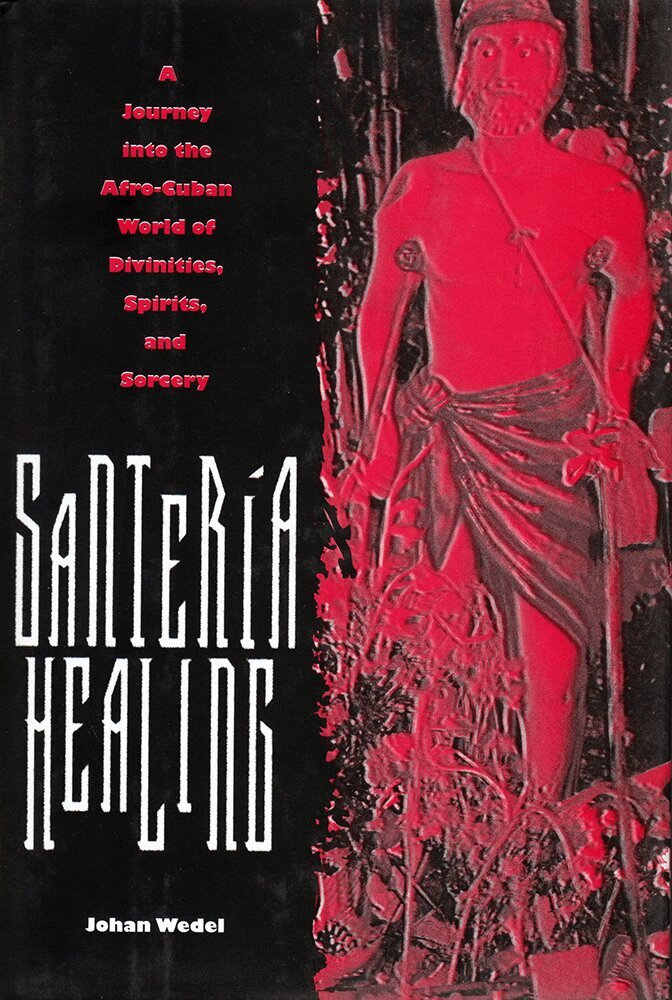
SANTERIA HEALING: a JOURNEY INTO the AFRO-CUBAN WORLD of DIVINITIES, SPIRITS SORCER
Häftad, Engelska, 2003
259 kr
Skickas inom 10-15 vardagar
655 kr
Skickas inom 7-10 vardagar
Does a civil society actually exist in Cuba today and if so what are its nature and role? In seeking answers to this hotly contested and highly politicized question, Alexander Gray and Antoni Kapcia have assembled an impressive and diverse group of contributors.The essays in ""The Changing Dynamic of Cuban Civil Society"" range from general discussion of the private sector to case studies about volunteer work, religious entities, and nongovernmental organizations (NGOs). Since the fall of the Soviet Union and the economic crisis in 1990, the Cuban state has experienced severe challenges, and individuals have been forced to respond in unexpected ways to ensure their economic survival. Avoiding polemics and preconceptions, this volume brings a fresh and welcome perspective to one of the most vexing issues in Cuban society today.
312 kr
Skickas inom 10-15 vardagar
335 kr
Skickas inom 10-15 vardagar
Cuba in a Global Context
International Relations, Internationalism, and Transnationalism
Inbunden, Engelska, 2014
804 kr
Skickas inom 10-15 vardagar
There is a great deal more to Cubas place on the global stage than its contentious relationship with the United States. Taking a refreshing look at Cuban international relations, contributors to this volume from both inside and outside the island explore the myriad ways in which it has not only maintained but often increased its reach and influence. In Latin America, Europe, Africa, and Asia, Cuba has assumed a geopolitical role of unlikely prominence. Even in the face of the ongoing U. S. embargo, Cubans have seen improvement in the quality of their lives. Shedding new light on Cuban diplomacy with communist China as well as with Western governments such as Great Britain and Canada, these essays reveal how the promotion of increased economic and political cooperation between Cuba and Venezuela served as a catalyst for the Petrocaribe group. Links established with countries in the Caribbean and Central America have increased tourism, medical diplomacy, and food sovereignty across the region. Cuban transnationalism has also succeeded in creating people-to-people contacts involving those who have remained on the island and members of the Cuban diaspora. While the specifics of Cubas international relations are likely to change as new leaders take over, the role of Cubans working to assert their sovereignty has undoubtedly, as this volume demonstrates, impacted every corner of the globe. Cubas domestic and political successes may even serve as models for other developing countries.
259 kr
Skickas inom 10-15 vardagar
As large-scale industrial agriculture comes under increasing scrutiny because of its petroleum- and petrochemical-based input costs and environmentally objectionable consequences, increasing attention has been focused on sustainable, local, and agro-ecological techniques in food production. Cuba was forced by historical circumstances to be one of the pioneers in the massive application of these techniques.After the demise of the Soviet Union in the early 1990s, Cuba was left without access to external support needed to carry on with industrial agriculture. The economic crisis led the country to reconsider their former models of resource management. Cuba retooled its agricultural programs to focus on urban agriculture—sustainable, ecologically sound farming close to densely populated areas. Food now takes far less time to get to the people, who are now better nourished because they have easier access to whole foods. Moreover, urban farming has become a source of national pride—Cuba has one of the best urban agriculture programs in the world, with a thousand-fold increase in urban agricultural output since 1994.Sinan Koont has spent the last several years researching urban agriculture in Cuba, including field work at many sustainable farms on the island. He tells the story of why and how Cuba was able to turn to urban food production on a large scale with minimal use of chemicals, petroleum, and machinery, and of the successes it achieved—along with the continuing difficulties it still faces in reducing its need for food imports.
842 kr
Skickas inom 10-15 vardagar
Cuba has more medical personnel serving abroad - over 50,000 in 66 countries - than all of the G-7 countries combined and more than the World Health Organization. For the last five decades, they have been a leading force in the developing world, providing humanitarian aid (or “cooperation,” as Cuba’s communist government prefers) and initiating programs for preventative care and medical training.In Healthcare without Borders, John Kirk examines the role of Cuban medical teams in disaster relief, biotechnology joint ventures, and in the Latin American School - the largest medical faculty in the world. He looks at their responses to various crises worldwide, including the 1960 earthquake in Chile, the Chernobyl disaster in the Ukraine, the earthquake that wracked Haiti in 2010 and the subsequent cholera outbreak, and the 2014 Ebola epidemic in West Africa.Kirk issues an informative and enlightening corrective for what he describes as the tendency of the industrialized world’s media to ignore or underreport this phenomenon as one of the positive aspects of the ongoing Cuban revolution. In the process, he explores the philosophical underpinnings of human rights and access to medical care at the core of Cuba’s medical internationalism programs and partnerships.
787 kr
Skickas inom 10-15 vardagar
In the early twentieth century, laborers from the British West Indies immigrated to Cuba, attracted by employment opportunities. The Anglo-Caribbean diaspora flourished,but the years after the 1959 revolution saw the dismantling of many of their cultural institutions: the revolution dictated that in the name of unity there would be no hyphenated Cubans. This book turns an ethnographic lens on their descendants who - during the Special Period in the 1990s - moved to “rescue their roots” by revitalizingtheir ethnic associations and reestablishing transnational ties.Based on Andrea Queeley’s fieldwork in Santiago and Guantánamo, Rescuing Our Roots looks at local and regional identity formations as well as racial politics in revolutionary Cuba. Queeley argues that, as the island experienced a resurgence in racism due in part to the economy’s reliance on tourism, Anglo-Caribbean Cubans sought transnational connections not just in the hope of material support but also to challenge the association between blackness, inferiority, and immorality. Their desire for social mobility, political engagement, and a better economic situation operated alongside the fight for black respectability.Unlike most studies of black Cubans, which focus on Afro-Cuban religion or popular culture, Queeley’s penetrating investigation offers a view of strategies and modes of black belonging that shift across ideological, temporal, and spatial boundaries.
212 kr
Skickas inom 10-15 vardagar
As a U.S.-born journalist who has called Havana home for almost a quarter century, Mark Frank has observed in person the best days of the revolution, the fall of the Soviet bloc, the great depression of the 1990s, the stepping aside of Fidel Castro, and the reforms now being devised by his brother. In Cuban Revelations, Frank offers a first-hand account of daily life in Cuba at the turn of the twenty-first century, the start of a new and dramatic epoch for islanders and the Cuban diaspora.Examining the effects of U.S. policy toward Cuba, Frank analyzes why Cuba has entered an extraordinary, irreversible period of change and considers what the island’s future holds. The enormous social engineering project taking place today under Raúl’s leadership is fraught with many dangers, and Cuban Revelations follows the new leader’s efforts to overcome bureaucratic resistance and the fears of a populace that stand in his way.In addition, Frank offers a colorful chronicle of his travels across the island’s many and varied provinces, sharing candid interviews with people from all walks of life. He takes the reader outside the capital to reveal how ordinary Cubans live and what they are thinking and feeling as fifty-year-old social and economic taboos are broken. He shares his honest and unbiased observations on extraordinary positive developments in social matters, like healthcare and education, as well as on the inefficiencies in the Cuban economy.Ultimately, Cuban Revelations is an objective account by a reporter who has lived with the Cubans for many years as their old world falls apart and they set about trying to build a new one.
Cuba in a Global Context
International Relations, Internationalism, and Transnationalism
Häftad, Engelska, 2016
322 kr
Skickas inom 10-15 vardagar
There is a great deal more to Cuba's place on the global stage than its contentious relationship with the United States. Taking a refreshing look at Cuban international relations, contributors to this volume from both inside and outside the island explore the myriad ways in which it has not only maintained but often increased its reach and influence. In Latin America, Europe, Africa, and Asia, Cuba has assumed a geopolitical role of unlikely prominence.
281 kr
Skickas inom 10-15 vardagar
From the forewords: "At a time when Cuba is undergoing immense economic and social changes, race becomes a kind of cultural litmus test for the national identity. . . . This anthology illustrates fully that it is possible to be both revolutionary and black in Cuba." - Manning Marable, Columbia University "The authors of Afro-Cuban Voices, also key actors in the new, unfolding dialogue about race in Cuba, make a seminal contribution through a forthright critique of 'racial blind spots' in official history and present-day racial discrimination." - James Early, director of cultural studies and communication, Smithsonian Institution From the series editor: "A courageous attempt to deal head-on with the issue of race in Cuba today. . . . PÉrez Sarduy and Stubbs [seek to] put a human face on this debate, and do so well. The book will be received with relief by some and with frustration by others. Controversial it will undoubtedly be, since - as with most things Cuban-strong emotions are a given assumption. It will be an admirable beginning for the series and, it is hoped, will spark a much-needed debate in the United States on many aspects of the 'Cuban question.' It is about time." - John M. Kirk Based on the vivid firsthand testimony of prominent Afro-Cubans who live in Cuba, this book of interviews looks at ways that race affects daily life on the island. While celebrating their racial and national identity, the collected voices express an urgent need to end the silences and distortions of history in both pre- and postrevolutionary Cuba. The 14 people interviewed - of different generations and from different geographic areas of Cuba - come from the arts, the media, industry, academia, and medicine. They include a doctor who calls for joint U.S.-Cuban studies on high blood pressure and a craftsman who makes the batÁ drums used in Yoruba worship ceremonies. All responded to four controversial questions: What is it like to be black in Cuba? How has the revolution made a difference? To what extent is that difference true today? What can be done? Exposing the contradictions of both racial stereotyping and cultural assimilation, their eloquent answers make the case that the issue of race in Cuba, no matter how hard to define, will not be ignored.
286 kr
Skickas inom 10-15 vardagar
An insightful ethnographic account of the lives of Santería practitioners in CubaHow do Santería practitioners in Cuba create and maintain religious communities amidst tensions, disagreements, and competition among them, and in the absence of centralized institutional authority? What serves as the "glue" that holds practitioners of different backgrounds together in the creation of a moral community? Examining the religious lives of santeros in Santiago de Cuba, Wirtz argues that these communities hold together not because members agree on their interpretations of rituals but because they often disagree.Religious life is marked by a series of "telling moments"—not only the moments themselves but their narrated representations as they are retold and mined for religious meanings. Long after they occur, spiritually elevated experiences circulate in narratives that may express skepticism or awe and hold the promise of more such experiences. The author finds that these episodes resonate in gossip and other forms of public commentary about the experiences of their fellow Santería practitioners.Drawing on ethnographic research about Santería beliefs and practices, Wirtz observes that practitioners are constantly engaged in reflection about what they and other practitioners are doing, how the orichas (deities) have responded, and what the consequences of their actions were or will be. By focusing their reflective attention on particular events, santeros re-create, moment to moment, what their religion is. Wirtz also argues that Santeria cannot be considered in isolation from the complex religious landscape of contemporary Cuba, in which African-based traditions are viewed with a mix of fascination, folkloric pride, and suspicion. Interactions among the conflicting discourses about these religions—as sacred practices, folklore, or dangerous superstitions, for example—have played a central role in constituting them as social entities. This book will interest scholars of religion, the African diaspora, the Caribbean, and Latin America, as well as linguistic and cultural anthropologists.