Courtauld Gallery - Böcker
Visar alla böcker i serien Courtauld Gallery. Handla med fri frakt och snabb leverans.
3 produkter
3 produkter
348 kr
Skickas inom 7-10 vardagar
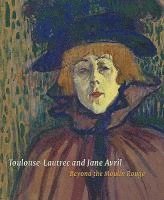
This publication celebrates for the first time the important creative collaboration between the artist Henri Toulouse-Lautrec (1864–1901) and his muse, the dancer Jane Avril (1868–1943). Avril was one of the stars of Moulin Rouge in the 1890s, and was nicknamed ‘La Mélinite’ after a form of explosive. She was known for her alluring style and exotic persona, and her fame was assured by a series of dazzlingly inventive posters designed by Lautrec.
177 kr
Skickas inom 7-10 vardagar
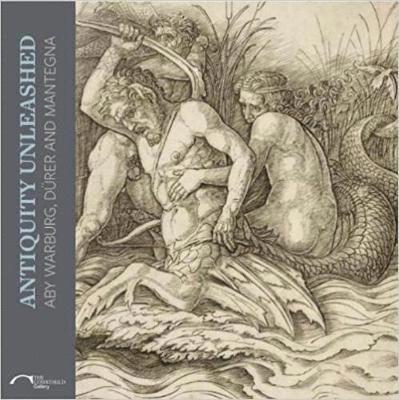
The Hamburg banker’s son Aby Warburg (1866–1929) was one of the most influential art historians and cultural theorists of the 20th century. His life’s work was devoted to tracing antique formulas of representation in the depiction of human passions in Renaissance art. For this epoch-spanning relationship, he developed the term ‘pathos formula’ (Pathosformel). In a lecture given in 1905 in the Konzerthaus in Hamburg, focusing on the young Albrecht Du¨rer’s Death of Orpheus, Warburg outlined his thoughts in front of the original drawing, which he had borrowed from the rich holdings of the Kunsthalle in order to better illustrate his idea. This drawing, pivotal in the young artist’s development as an ambitious response to classical antiquity, was displayed during the lecture alongside a group of engravings and woodcuts which included not only some of Du¨rer’s own seminal later prints, such as Melencolia I, but also engravings by Andrea Mantegna which Du¨rer copied in 1494, the same year he drew the Death of Orpheus. Warburg’s ‘pop-up exhibition’ of eleven works has here been reconstructed and analyzed, using his fascinating lecture notes, sketches and slide lists. First developed by the Hamburger Kunsthalle in 2011, subsequently on view in Cologne in the Wallraf-Richartz Museum and now at The Courtauld Gallery, each institution has interpreted the material slightly differently, while retaining the core Warburg group. Aby Warburg aimed at unlocking the meaning of an art work by excavating its roots in its cultural context. By restaging his legendary display of 1905 with Du¨rer’s Death of Orpheus at its heart, the exhibition and accompanying book present some of the most skillful and ambitious works on paper ever produced and also seek to introduce into Warburg’s rich intellectual universe to a broader public, hoping thereby to offer both sheer enjoyment and food for thought.
177 kr
Skickas inom 7-10 vardagar
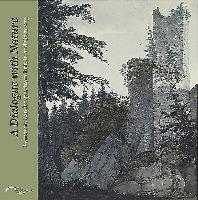
“The artist should not only paint what he sees before him,” claimed Caspar David Friedrich, “but also what he sees in himself”. He should have “a dialogue with Nature”. Friedrich’s words encapsulate two central elements of the Romantic conception of landscape: close observation of the natural world and the importance of the imagination. Exploring aspects of Romantic landscape drawing in Britain and Germany from its origins in the 1760s to its final flowering in the 1840s, this exhibition catalogue considers 26 major drawings, watercolors and oil sketches from The Courtauld Gallery, London, and the Morgan Library and Museum, New York, by artists such as J.M.W. Turner, Samuel Palmer, Caspar David Friedrich and Karl Friedrich Lessing. It draws upon the complementary strengths of both collections: the Morgan’s exceptional group of German drawings and The Courtauld’s wide-ranging holdings of British works. A Dialogue with Nature offers the opportunity to consider points of commonality as well as divergence between two distinctive schools. The legacy of Claude Lorrain’s idealizing vision is visible in Jakob Hackert’s magisterial view of ruins at Tivoli, near Rome, as well as in a more intimate but purely imaginary rural scene by Thomas Gainsborough, while cloud and tree studies by John Constable and Johann Georg von Dillis demonstrate the importance of drawing from life and the observation of natural phenomena. The important visionary strand of Romanticism is brought to the fore in a group of works centered on Friedrich’s evocative Moonlit Landscape and Samuel Palmer’s Oak Tree and Beech, Lullingstone Park. Both are exemplary of their creators’ intensely spiritual vision of nature as well as their strikingly different techniques, Friedrich’s painstakingly fine detail contrasting with the dynamic freedom of Palmer’s penwork. The most expansive and painterly works include Turner’s St Goarshausen and Katz Castle, the luminous simplicity of Francis Towne’s watercolor view of a wooded valley in Wales, and Friedrich’s subtle wash drawing of a coastal meadow on the remote Baltic island of Rügen. Three small-scale drawings reveal a more introspective and intimate facet of the Romantic approach to landscape: Theodor Rehbenitz’s fantastical medievalising scene, Palmer’s meditative Haunted Stream, and lastly, Turner’s Cologne, made as an illustration for The Life and Works of Lord Byron (1833).