Critical Authors and Issues - Böcker
Visar alla böcker i serien Critical Authors and Issues. Handla med fri frakt och snabb leverans.
11 produkter
11 produkter
422 kr
Skickas inom 10-15 vardagar
In Institutions of the English Novel, Homer Obed Brown takes issue with the generally accepted origin of the novel in the early eighteenth century. Brown argues that what we now call the novel did not appear as a recognized single "genre" until the early nineteenth century, when the fictional prose narratives of the preceding century were grouped together under that name.After analyzing the figurative and thematic uses of private letters and social gossip in the constitution of the novel, Brown explores what was instituted in and by the fictions of Defoe, Fielding, Sterne, and Scott, with extensive discussion of the pivotal role Scott's work played in the novel's rise to institutional status. This study is an intriguing demonstration of how these earlier narratives are involved in the development and institution of such political and cultural concepts as self, personal identity, the family, and history, all of which contributed to the later possibility of the novel.
323 kr
Skickas inom 10-15 vardagar
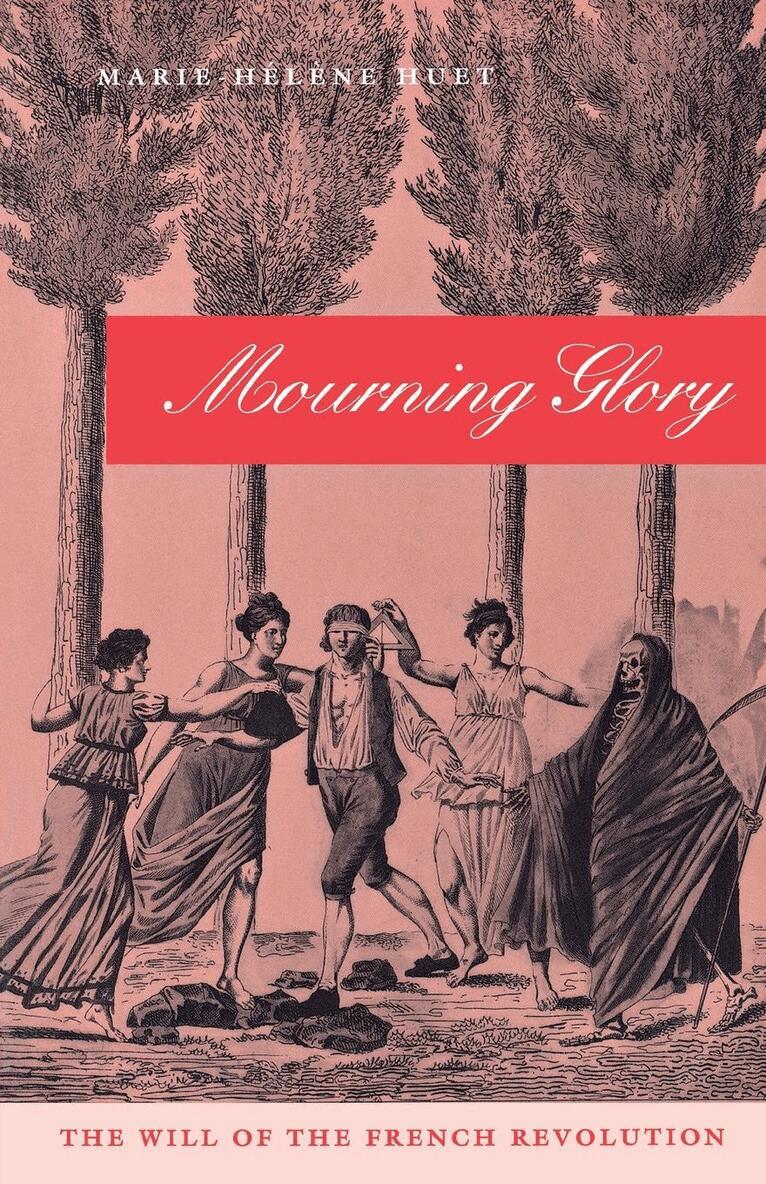
Mourning Glory sheds light on troubled times as it shows how passion and prejudice, grief and denial all contributed to the continuing creation of a revolutionary legacy that still affects our understanding of the nature of language and history.
361 kr
Skickas inom 10-15 vardagar
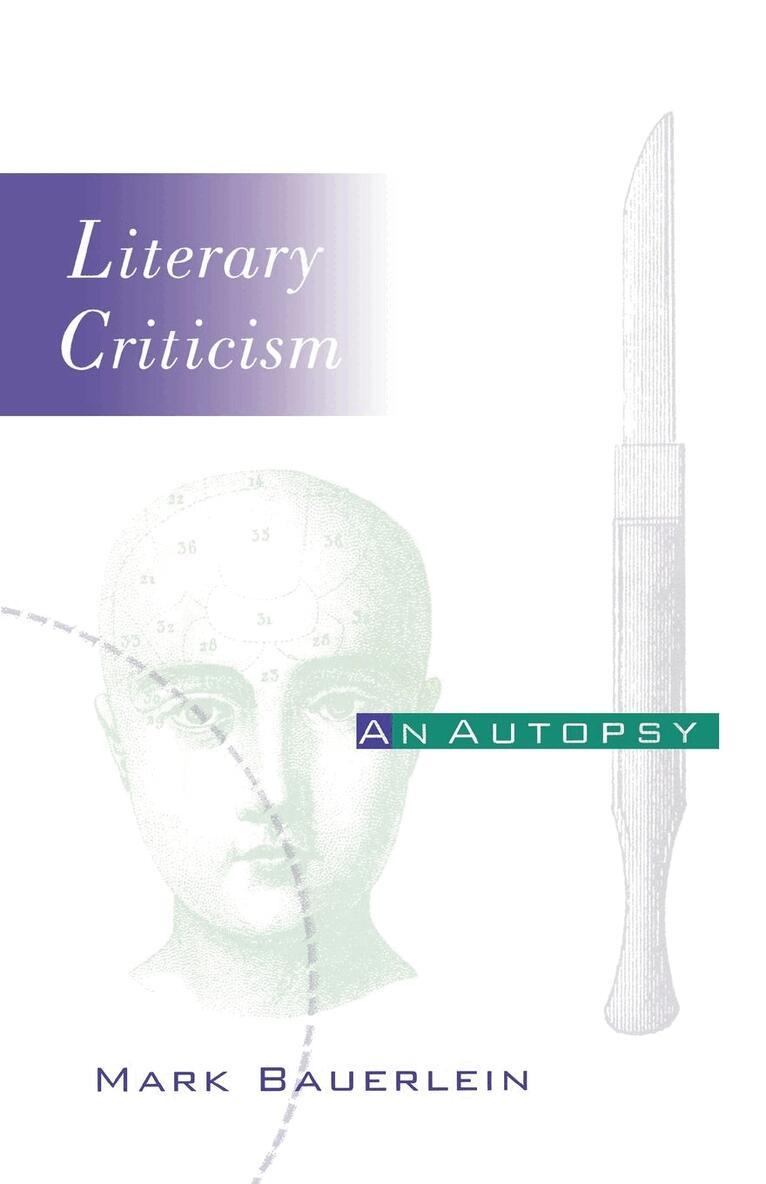
As the study of literature has extended to cultural contexts, critics have developed a language all their own. Yet, argues Mark Bauerlein, scholars of literature today are so unskilled in pertinent sociohistorical methods that they compensate by adopting cliches and catchphrases that serve as substitutes for information and logic. Thus by labeling a set of ideas an "ideology" they avoid specifying those ideas, or by saying that someone "essentializes" a concept they convey the air of decisive refutation. As long as a paper is generously sprinkled with the right words, clarification is deemed superfluous.Bauerlein contends that such usages only serve to signal political commitments, prove membership in subgroups, or appeal to editors and tenure committees, and that current textual practices are inadequate to the study of culture and politics they presume to undertake. His book discusses 23 commonly encountered terms-from "deconstruction" and "gender" to "problematize" and "rethink"-and offers a diagnosis of contemporary criticism through their analysis. He examines the motives behind their usage and the circumstances under which they arose and tells why they continue to flourish.A self-styled "handbook of counterdisciplinary usage," Literary Criticism: An Autopsy shows how the use of illogical, unsound, or inconsistent terms has brought about a breakdown in disciplinary focus. It is an insightful and entertaining work that challenges scholars to reconsider their choice of words-and to eliminate many from critical inquiry altogether.
314 kr
Skickas inom 10-15 vardagar
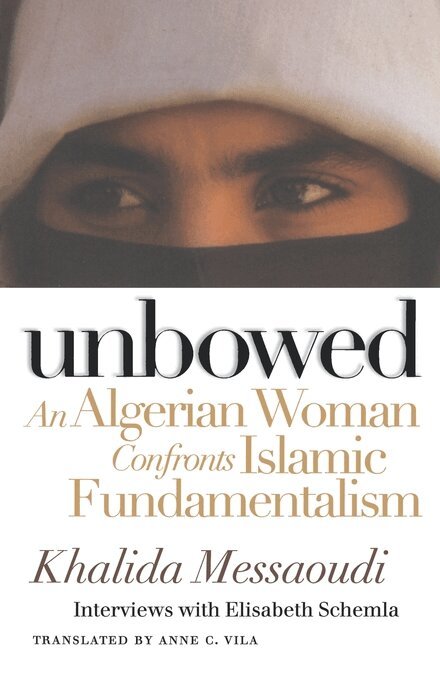
In 1993, a handwritten envelope arrived in Khalida Messaoudi's mailbox. In it was an official communique announcing that she had been condemned to death by the Islamic Salvation Front. This letter came after a series of threats and an attempt on her life in retaliation for her role as a leader of the feminist and democratic movements in Algeria and a fierce opponent of Islamic fundamentalism.Messaoudi did not flee from this threat by seeking refuge outside her country. Instead, she went into hiding within Algeria, where she continues her fight for emancipation and independence from religious extremism. Her battle continues today with the same goal-to restore in Algeria what she describes as "the basics of dignity"-a woman's right to pursue her studies, practice a profession, make a living, marry and divorce freely, and walk the streets without a veil.Readers of Unbowed will have the unique opportunity to sit in on a series of intensely personal conversations between Messaoudi and renowned journalist Elisabeth Schemla. In their discussions, Messaoudi gives a first-hand perspective of the situation in her homeland. She remembers the Algeria of her youth, recounts the changes that have gradually consumed her country, and laments the horrifying realities that face Algerian women today. She also tells her own story of terror, despair, hope, and determination.
929 kr
Skickas inom 10-15 vardagar
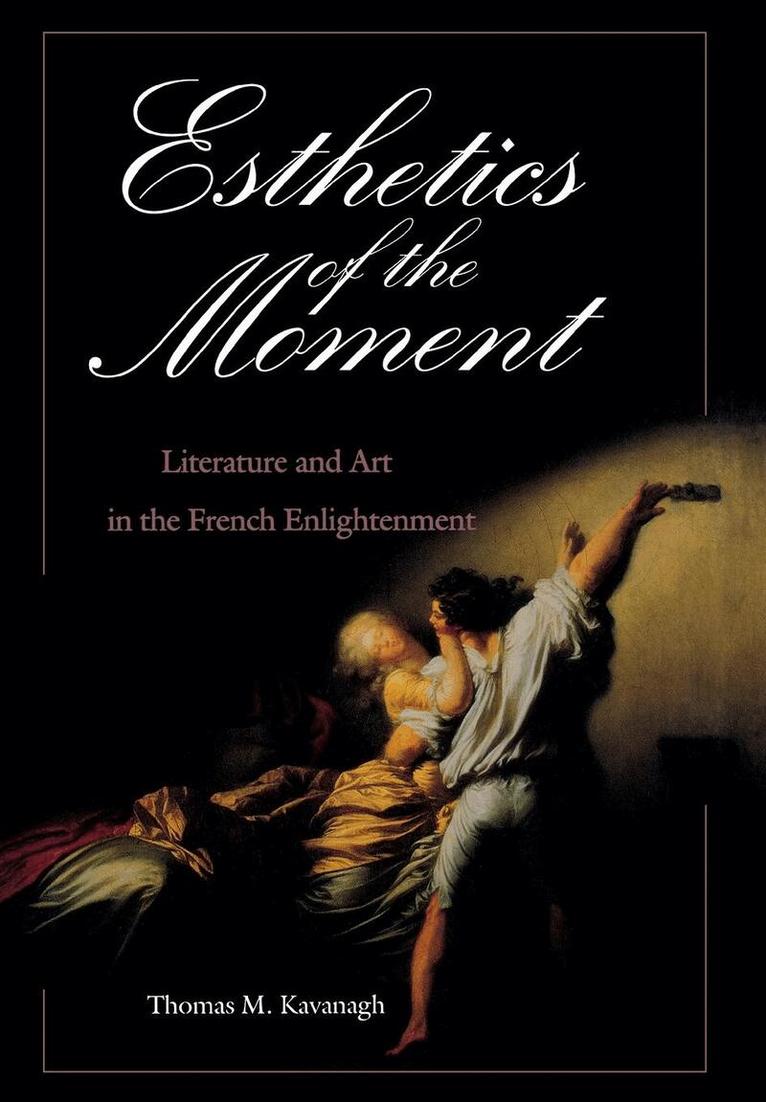
The literature and art of the French Enlightenment is everywhere marked by an intense awareness of the moment. The parallel projects of living in, representing, and learning from the moment run through the Enlightenment's endeavors as tokens of an ambition and a heritage imposing its only and ultimately impossible cohesion. In this illuminating study, Thomas M. Kavanagh argues that Enlightenment culture and its tensions, contradictions, and achievements flow from a subversive attention to the present as present, freed from the weight of past and future.Examining a wide sweep of literary and artistic culture, Kavanagh argues against the traditional view of the Age of Reason as one of coherent, recognizable ideology expressed in a structured narrative form. In literature, he analyzes the moment at work in the inebriating lightness of Marivaux's repartee; the new-found freedom of Lahontan's and Rousseau's ideals of a consciousness limited to the present; Diderot's championing of Epicurean epistemology; Graffigny's portrayal of abrupt cultural displacement; and Casanova's penchant for chance's redefining moment. The moment in art theory and practice is explored in such forms as de Piles's defense of color; Du Bos's foregrounding of perception; Watteau's indulgence in a corporeal present; Chardin's dismantling of mimesis; and Boucher's and Fragonard's thematics of desire.
722 kr
Skickas inom 10-15 vardagar
In The Haunting Past, French historian Henry Rousso discusses the varied and controversial treatments of French collaboration with the Nazis during the Vichy regime, focusing specifically on the roles played by historians, and history itself, in the postwar trials of accused collaborators.While discussion of Nazi collaboration was mostly suppressed in the years immediately following World War II, recent changes in public sentiment paved the way for formal trials of former Vichy officials charged with collaborating with Nazi Germany. In a series of pointed interviews conducted by journalist Philippe Petit, Rousso considers events of the recent past-especially the emotionally charged Papon trial in France and the revelations that have come to light with the opening of Communist archives.While Rousso was one of the historians called to testify at a number of sensational political trials, he was also one of the few who chose not to, arguing that history is constantly changing and being rewritten and therefore should not be taken into consideration as judicial evidence. Throughout the course of these trials, the public repeatedly claimed that historians had failed to account for the crimes of Vichy and that the time had come for the truth to be known and justice delivered. Rousso, on the other hand, argued against the combination of history and justice, claiming that justice is a matter of ethics or law, while history should be free from judgment.The Haunting Past explores the methods historians employ to understand and frame varying perspectives on knowledge and truth, the ways an open society can or should manage information, and the moral and civic responsibilities of the intellectual elite in a democracy. In light of the sensational part often played by the modern media, this is a timely critique of institutions and of the relationship among politics, the courts, and the press. Rousso raises profound questions regarding the way true knowledge of the recent past is attained, untangling the roles of the historians, judges, and journalists empowered by society to bring forth historical truth and communicate it to the public.
687 kr
Skickas inom 10-15 vardagar
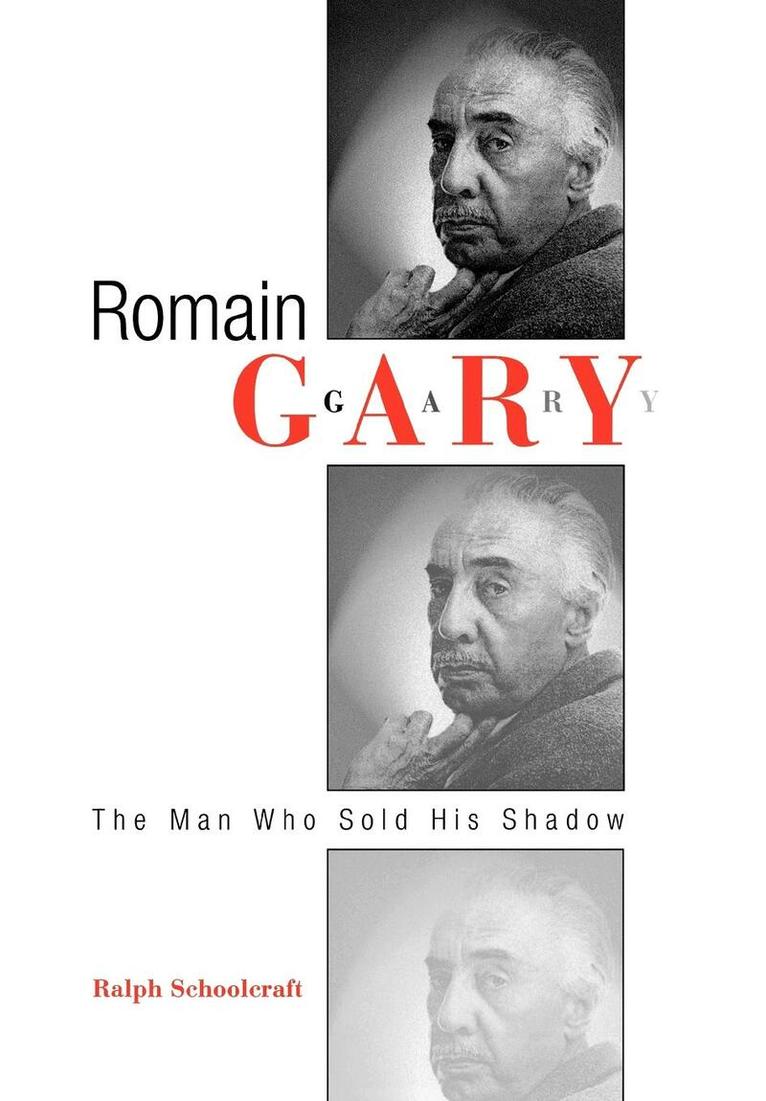
In this book Ralph Schoolcraft explores the extraordinary career of the modern French author, film director, and diplomat-a romantic and tragic figure whose fictions extended well beyond his books. Born Roman Kacew, he overcame an impoverished boyhood to become a French Resistance hero and win the coveted Goncourt Prize under the pseudonym-and largely invented persona-Romain Gary. Although he published such acclaimed works as The Roots of Heaven and Promise at Dawn, the Gaullist traditions that he defended in the world of French letters fell from favor, and his critical fortunes suffered at the hands of a hostile press. Schoolcraft details Gary's frustrated struggle to evolve as a writer in the eye of a public that now considered him a known quantity. Identifying the daring strategies used by this mysterious character as he undertook an elaborate scheme to reach a new readership, Schoolcraft offers new insight into the dynamics of authorship and fame within the French literary institutions.In the early 1970s Gary made his departure from the conservative literary establishment, publishing works that boasted a quirky, elliptical style under a variety of pseudonymous personae, the most successful of which was that of an Algerian immigrant by the name of Emile Ajar. Moving behind the mask of his new creation, Gary was able to win critical and popular acclaim and a second Goncourt in 1975. But as Schoolcraft suggests, Gary may have "sold his shadow"-that is, lost his authorial persona-by marketing himself too effectively. Going so far as to recruit a cousin to stand in as the public face of this phantom author, Gary kept the secret of his true authorship until his violent death in 1980 from a self-inflicted gunshot wound. The press reacted with resentment over the scheme, and he was shunned into the ranks of literary oddities.Schoolcraft draws from archives of the several thousand documents related to Gary housed at the French publishing firms of Gallimard and Mercure de France, as well as the Butler Library at Columbia University. Exploring the depths of a story that has long remained shrouded in mystery, Romain Gary: The Man Who Sold His Shadow is as much a fascinating biographical sketch as it is a thought-provoking reflection on the assumptions made about identities in the public sphere.
777 kr
Skickas inom 10-15 vardagar
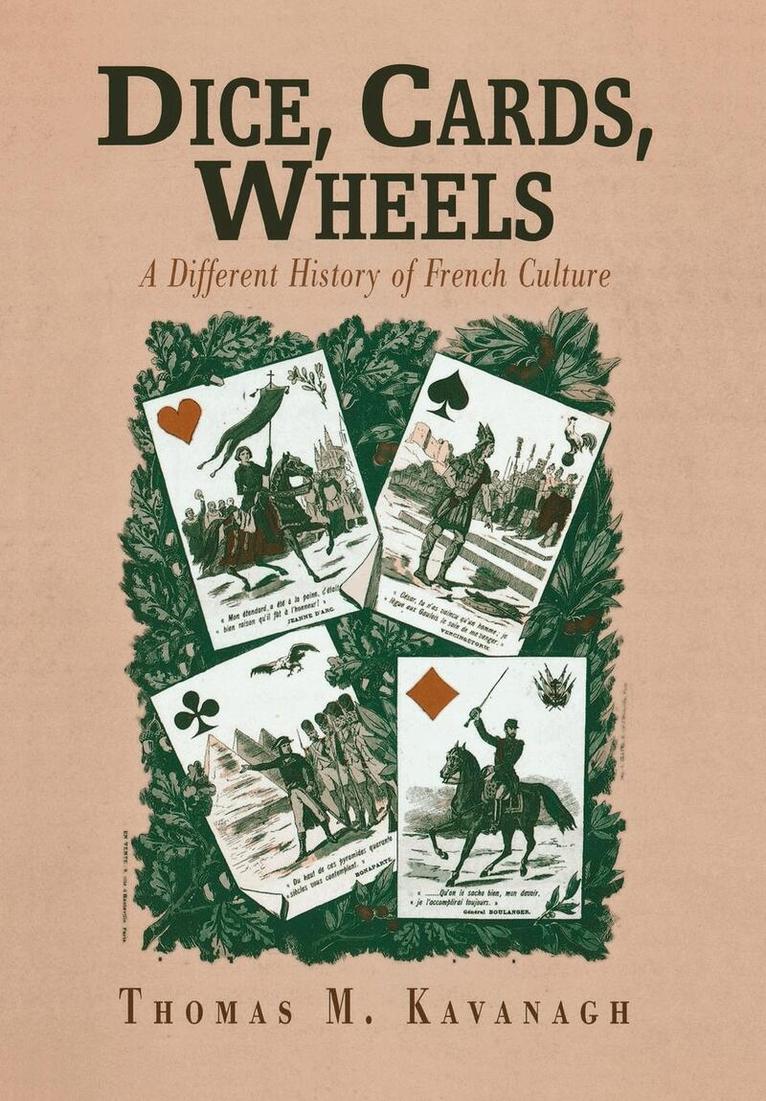
Gambling has been a practice central to many cultures throughout history. In Dice, Cards, Wheels, Thomas M. Kavanagh scrutinizes the changing face of the gambler in France over a period of eight centuries, using gambling and its representations in literature as a lens through which to observe French culture. Kavanagh argues that the way people gamble tells us something otherwise unrecognized about the values, conflicts, and cultures that define a period or class. To gamble is to enter a world traced out by the rules and protocols of the game the gambler plays. That world may be an alternative to the established order, but the shape and structure of the game reveal indirectly hidden tensions, fears, and prohibitions.Drawing on literature from the Middle Ages to the present, Kavanagh reconstructs the figure of the gambler and his evolving personae. He examines, among other examples, Bodel's dicing in a twelfth-century tavern for the conversion of the Muslim world; Pascal's post-Reformation redefinition of salvation as the gambler's prize; the aristocratic libertine's celebration of the bluff; and Balzac's, Barbey d'Aurevilly's, and Bourget's nineteenth-century revisions of the gambler.Dice, Cards, Wheels embraces the tremendous breadth of French history and emerges as a broad-ranging study of the different forms of gambling, from the dice games of the Middle Ages to the digital slot machines of the twenty-first century, and what those games tell us about French culture and history.
867 kr
Skickas inom 10-15 vardagar
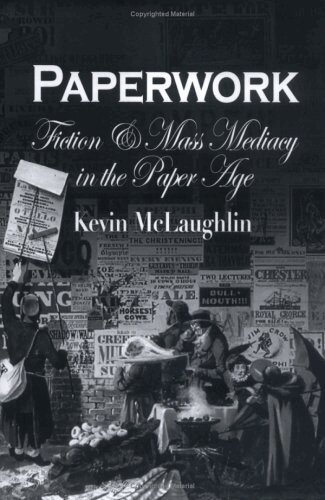
"The Paper Age" is the phrase coined by Thomas Carlyle in 1837 to describe the monetary and literary inflation of the French Revolution-an age of mass-produced "Bank-paper" and "Book-paper." Carlyle's phrase is suggestive because it points to the particular substance-paper-that provides the basis for reflection on the mass media in much popular fiction appearing around the time of his historical essay. Rather than becoming a metaphor, however, paper in some of this fiction seems to display the more complex and elusive character of what Walter Benjamin evocatively calls "the decline of the aura." The critical perspective elaborated by Benjamin serves as the point of departure for the readings of paper proposed in Paperwork.Kevin McLaughlin argues for a literary-critical approach to the impact of the mass media on literature through a series of detailed interpretations of paper in fiction by Poe, Stevenson, Melville, Dickens, and Hardy. In this fiction, he argues, paper dramatizes the "withdrawal," as Benjamin puts it, of the "here and now" of the traditional work of art into the dispersing or distracting movement of the mass media. Paperwork seeks to challenge traditional concepts of medium and message that continue to inform studies of print culture and the mass media especially in the wake of industrialized production in the early nineteenth century. It breaks new ground in the exploration of the difference between mass culture and literature and will appeal to cultural historians and literary critics alike.
867 kr
Skickas inom 10-15 vardagar
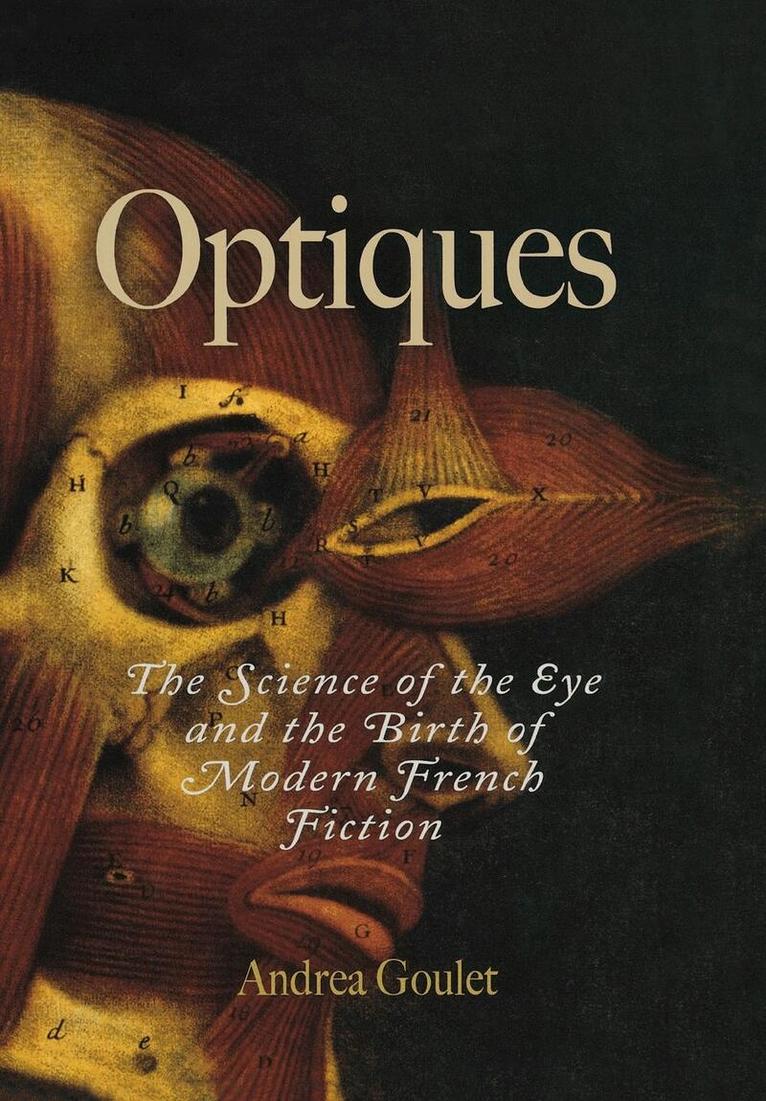
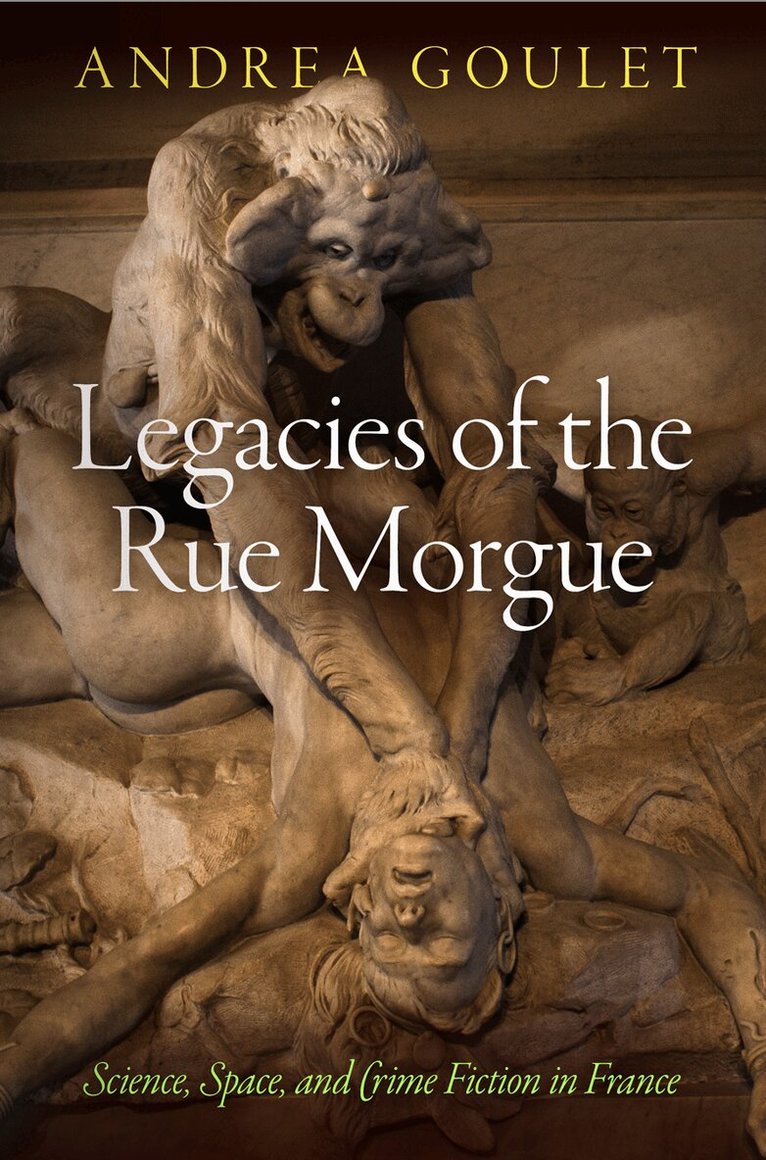
Andrea Goulet takes the study of the novel into the realm of the visual by situating it in the context of nineteenth-century scientific and philosophical discourse about the nature of sight. She argues that French realism, detective fiction, science fiction, and literature of the fantastic from 1830 to 1910 reflected competition between two modern visual modes: a not-yet-outdated idealism and an empiricism that located truth in the body. More specifically, the book argues that key narrative forms of the nineteenth century were shaped by a set of scientific debates: between idealism and materialism in HonorÉ Balzac's ComÉdie humaine, between deduction and induction in early French detective fiction, and between objective vision and subjective vision in the "optogram" fictions of Jules Verne and others.Goulet aims to revise critical views on the modern novel in a number of ways. For instance, although many literary studies focus on the impact of cinema, photography, and painting, Optiques asserts the materialist bases of realism by establishing a genealogy of popular fictional genres as fundamentally optical, that is, as articulated according to bodily notions of sight.With its chronological and interdisciplinary scope, Optiques stands to contribute an important chapter to the study of literary modernity in its scientific context.
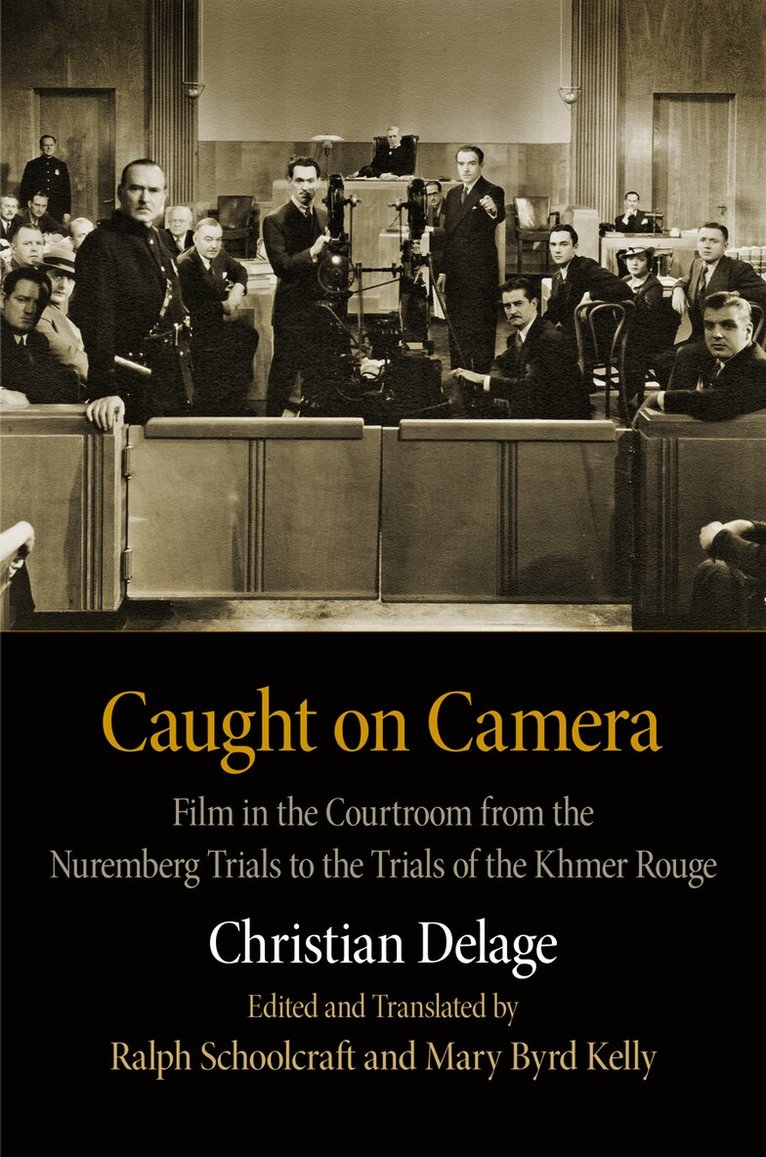
Caught on Camera
Film in the Courtroom from the Nuremberg Trials to the Trials of the Khmer Rouge
Inbunden, Engelska, 2013
781 kr
Skickas inom 7-10 vardagar
When the Allied forces of World War II formed an international tribunal to prosecute Nazi war crimes, they introduced two major innovations to court procedure. The prosecution projected film footage and newsreels shot by British, Soviet, and American soldiers as they discovered Nazi camps. These images, presented as human testimony and material evidence, were instrumental in naming and prosecuting war crimes. At the same time, the Nuremberg tribunal was filmed so that the memory of "the greatest trial in history" would remain strong in future generations. In the decades that followed, the use of film in the courtroom greatly influenced the conduct of the Eichmann trial-and subsequently the trials of Klaus Barbie, Paul Touvier, and Maurice Papon in France, as well as the proceedings against Slobodan MiloŠević and the Khmer Rouge Kang Kek lew.Combining the practical knowledge of a renowned director with the perspective of a historian and media specialist, Christian Delage examines archival footage from these trials and explores the conditions and consequences of using film for the purposes of justice and memory. Revised and expanded from the original French publication, Caught on Camera retraces the steps by which the United States pioneered jurisprudence that sanctioned the introduction of film as evidence and then established the precedent of preserving an audiovisual record of those proceedings. From the Nuremberg trials to the current Khmer Rouge trials, Delage considers how national attitudes toward the introduction of filmic evidence in court vary widely, and how different countries have sought to use film as a recordkeeping medium. Caught on Camera demonstrates how reproduced images, as evidence, testimony, and archival documentation, have influenced the writing of modern history.